science
The Science Behind Relationships; Humans Media explores the basis of our attraction, contempt, why we do what we do and to whom we do it.
MEN'S HEALTH What complications can occur after prostate cancer surgery?
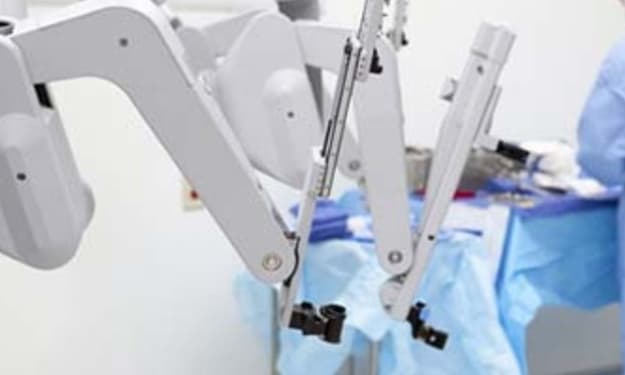
Earlier this year, US defense secretary Lloyd Austin was hospitalized for complications resulting from prostate cancer surgery. Details of his procedure, which was performed on December 22, were not fully disclosed. Press statements from the Pentagon indicated that Austin had undergone a minimally invasive prostatectomy, which is an operation to remove the prostate gland. Minimally invasive procedures are performed using robotic instruments passed through small "keyhole" incisions in the patient's abdomen.
By Jahangir Alam2 years ago in Humans
NUTRITION Why eat lower on the seafood chain?
Many health-conscious consumers have already cut back on hamburgers, steaks, and deli meats, often by swapping in poultry or seafood. Those protein sources are better than beef, and not just because they're linked to a lower risk of heart disease, diabetes, and cancer. Chicken and fish are also better for the environment, as their production uses less land and other resources and generates fewer greenhouse gas emissions.
By Jahangir Alam2 years ago in Humans
CHILD & TEEN HEALTH Chronic stomach pain in children: What's the most common cause?
The most common cause of chronic stomach pain in children isn't anything you can find on a test or cure with a medicine. And that can make it very challenging to diagnose — and treat.
By Jahangir Alam2 years ago in Humans
STAYING HEALTHY How well do you worry about your health?
Don't worry. It's good advice if you can take it. Of course that's not always easy, especially for health concerns. The truth is: it's impossible (and ill-advised) to never worry about your health. But are you worrying about the right things? Let's compare a sampling of common worries to the most common conditions that actually shorten lives. Then we can think about preventing the biggest health threats.
By Jahangir Alam2 years ago in Humans
DISEASES & CONDITIONS The wide-ranging effects of psoriasis
Decades ago, advertisements waxed on about the "heartbreak of psoriasis" — a skin disorder marked by noticeable patches of scaly skin — to the point that even people with garden-variety dry skin or dandruff worried they might also have the condition.
By Jahangir Alam2 years ago in Humans
Being Mortal: A Compassionate Exploration of Aging and End-of-Life Care
Atul Gawande’s book “Being Mortal: Medicine and What Matters in the End” delves into the topics of aging, death and end of life care in today’s society in a thought provoking manner. As a writer and practicing surgeon, Gawande explores how we perceive aging and mortality within the healthcare system. Through anecdotes, patient stories, and research findings he advocates for a reexamination of conventional beliefs, about aging, and end of life care to promote a more empathetic and patient focused approach.
By Gabriel Diaz Pagan2 years ago in Humans
How Taylor Swift’s tour de force is a call to a New Era
Taylor Swift's outstanding achievements are a part of a progressive cultural transformation — Taylor's work is leading the political empowerment of women. The joy Swift has brought forth must be the currency that guides us in the future.
By Josh Clements2 years ago in Humans
A Comprehensive Guide to the Human Artificial Respiration Process
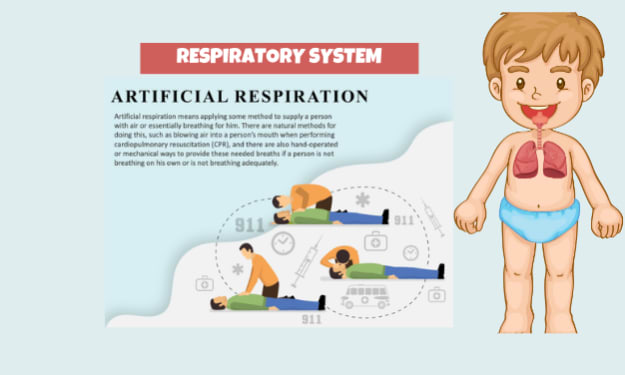
lungs which is an important part of life. Drowning Traffic accidents Being buried in mud or debris Fires Being trapped in crowds of people. Davis Method Breathing difficulties can be caused by toxic gas or electric shock. Or breathing may stop, in this situation, breathing should be restored by artificial respiration. natural way of life.
By Muhammad Khan2 years ago in Humans
Are Humans Still Evolving?
Evolution is a fascinating process that continues to shape the human species in remarkable ways. While on the surface, it may seem that humans have not changed much from our early ancestors, a closer look reveals the intricate ways in which we are evolving. One striking example of human adaptation can be seen in the Bajau people of Southeast Asia. These skilled divers have developed extraordinary breath-holding abilities, allowing them to stay submerged for up to 12 minutes, far surpassing the average person's 30-second limit. This exceptional skill is not only a result of training and experience but is also linked to a genetic mutation that has led to their spleens being 50% larger than average. The spleen, often underestimated in its importance, serves a vital function in filtering and storing oxygen-rich red blood cells. In the case of the Bajau divers, their enlarged spleens play a crucial role when they submerge underwater, as these organs contract to increase oxygen levels in their blood by as much as 10%. This physiological adaptation provides them with a distinct advantage in underwater foraging, a skill likely refined over centuries of residing on houseboats for generations. The remarkable abilities of the Bajau people underscore how human evolution can be shaped by a combination of environmental influences and genetic mutations, highlighting the intricate interplay between nature and genetics in the ongoing development of the human species. Another intriguing aspect of human evolution lies in our ability to digest milk as adults. Approximately 35% of the global population possesses this genetic superpower, which allows them to produce lactase throughout their lives. This enzyme breaks down milk sugars for easy digestion, providing additional nutrition and contributing to healthier, longer lives. This ability, originating from a genetic mutation in Europe 5,000 - 10,000 years ago, has become prevalent in northern Europeans, with roughly 95% of them now possessing the mutation. The evolution of lactase persistence highlights how genetic changes can impact not only individual health but also the dietary habits of entire populations. Beyond physical adaptations, genetic mutations can also confer resistance to deadly diseases. In regions where HIV prevalence is high, such as parts of South Africa, researchers have identified individuals with stronger resistance to the virus. These individuals share a mutation in the HLA-B27 gene, which enhances their ability to combat HIV, potentially delaying the onset of AIDS or preventing it altogether. This discovery raises intriguing questions about the potential for genetic mutations to provide immunity against life-threatening conditions and the role they may play in shaping the future of human health. With an estimated 20,000 - 30,000 genes in the human body, the potential for genetic mutations to shape our evolution is vast. Some mutations lead to physical adaptations such as larger spleens or lactase persistence, while others provide immunity against diseases like AIDS. This ongoing evolutionary process serves as a reminder that humans are not static entities but dynamic beings constantly evolving and adapting to their surroundings. The intricate interplay between genetics, environment, and health underscores the complexity of human evolution and highlights the endless possibilities for genetic variations to influence the trajectory of our species. As we continue to uncover the genetic underpinnings of human evolution, one thing remains clear – evolution is a dynamic and ongoing process. The stories of the Bajau divers, lactase persistence in Europeans, and HIV resistance in certain populations serve as compelling examples of how genetic mutations can shape the course of human evolution. By studying these adaptations, we gain valuable insights into the complex interplay between genetics, environment, and human health. The future holds endless possibilities for further evolutionary changes, highlighting the resilience and adaptability of the human species.
By Sanjana Dixit2 years ago in Humans
Zeta Potential: A Fundamental Measure for Colloidal Behavior
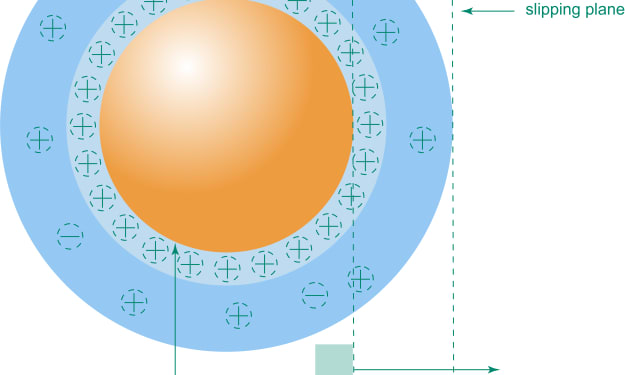
What is Zeta Potential? Zeta potential (ZP) is a physical property exhibited by any particle in a suspension, macromolecule or material surface. ZP is an analytical technique used to determine the surface charge of nanoparticles in colloidal solutions. The surface of a charged particle attracts and binds firmly to a thin layer of opposite charge, forming a thin layer of liquid called the Stern layer; as the particle diffuses in the solution, it will be replaced by a thin layer of loosely bound ions. The outer diffusion layer is involved, resulting in an electric double layer (Figure 1). Zp is named after the potential of the electric double layer and is determined by measuring the speed of charged particles moving through the sample solution toward the electrode in the presence of an external electric field. ZP values are typically in the range of +100 to −100 mV. The magnitude of the ZP gives a prediction of colloidal stability. The ZP of NPs with values >+25 mV or <−25 mV is generally highly stable. Lower dispersion ZP values can lead to aggregation, coagulation or flocculation due to van der Waals attraction between particles. Zeta potential can be used to optimize the formulation of suspensions, emulsions and protein solutions, predict interactions with surfaces, and optimize the formation of films and coatings. Understanding zeta potential can reduce the time required to produce pilot formulations. It can also be used as an aid in forecasting long-term stability.
By CD Bioparticles2 years ago in Humans
What is Herpes Simplex Virus
Herpes simplex virus (HSV) belongs to the herpesvirus alpha subfamily and has a unique 4-layer structure. The core of HSV is a linear double-stranded DNA of about 152 000 bp, surrounded by an icosahedral capsid. The outer capsid is a membrane, which contains more than 20 important proteins that can regulate the virus replication cycle. It is a characteristic structure of herpes viruses, can connect the capsid and envelope to form a complete virus particle. The outermost layer of HSV is the lipid bilayer envelope, which contains at least 12 viral membrane proteins (gB, gC, gD, gE, gG, gH, gI, gJ, gK, gL, gM, gN). Entry into host cells and viral immune evasion are both critical.
By Creative Diagnostics2 years ago in Humans