science
The Science Behind Relationships; Humans Media explores the basis of our attraction, contempt, why we do what we do and to whom we do it.
The Silent Epidemic
In the hustle and bustle of modern life, loneliness has become an epidemic silently affecting millions worldwide. Beyond the emotional distress it inflicts, loneliness has profound implications for physical health, with research revealing staggering statistics: a 29% increase in the risk of heart disease and a 32% increase in the risk of stroke among those who suffer from chronic loneliness. These numbers, as highlighted by Mia de Graph, Deputy Editor for Health at Business Insider, underscore the urgency of understanding how loneliness impacts both the brain and body.
By iadh gdouda2 years ago in Humans
The Healing Tears
In the quiet town of Willowbrook, nestled amidst rolling hills and lush greenery, lived a young woman named Eliza. Eliza had always been known for her cheerful disposition and warm smile, but beneath her facade, she carried a burden that weighed heavily on her heart.
By Neeraja Rapol 2 years ago in Humans
Are We All Related?
Imagine yourself as the pinnacle of a towering pyramid, each block representing an ancestor stretching back through the annals of time. But just how vast is this pyramid of lineage? Let's break it down. You have two parents, four grandparents, and eight great-grandparents. Delving four generations back, your direct ancestors tally up to 30. And if we continue this trajectory, doubling with each step, a mere 40 generations ago would reveal a staggering trillion ancestors—living simultaneously.
By Sanjana Dixit2 years ago in Humans
Mustard Gas: Reset & Clear Vision and Lungs For You. Content Warning.
It is a blistering agent that can cause severe skin burns, eye damage, and respiratory problems. The development of mustard gas was a significant breakthrough in chemical warfare technology, and it had a devastating impact on the battlefield. The Origins of Mustard Gas The origins of mustard gas can be traced back to the late 19th century when scientists were investigating the absolute properties of organic compounds containing sulfur. In 1860, the French chemist Victor Meyer synthesized a compound known as thiodiglycol by reacting ethylene glycol with hydrogen sulfide. Thiodiglycol is a colorless liquid with a sweet odor that is used as a solvent and a raw material for the production of various chemicals. In 1886, the German chemist Victor Meyer (no relation to the French chemist) discovered that thiodiglycol could be converted into a compound called ethylene mustard gas by reacting it with hydrochloric acid. Ethylene mustard gas is a yellowish liquid that has a strong diffusing odor and causes severe burns when it comes into contact with the skin. The Development Of Mustard Gas The development of mustard gas as a chemical warfare agent began in Germany during World War I. In 1914, the German chemist Wilhelm Lommel proposed the use of chlorine gas as a weapon of war. Chlorine gas was first used by the Germans in April 1915 during the Second Battle of Ypres in Belgium. The use of chlorine gas caused widespread panic among the Allied troops, and it was clear that chemical warfare would be an effective way to break through enemy lines. In 1915, the German chemical company Bayer AG began to investigate the use of sulfur mustard as a chemical weapon. Sulfur mustard had been discovered in 1822 by the French chemist César-Mansuète Despretz, but it had never been used in warfare. Bayer AG produced large quantities of sulfur mustard and began testing it on animals and human volunteers. The first successful use of mustard gas as a chemical weapon occurred in July 1917 during the Third Battle of Ypres. The Germans launched a surprise attack using mustard gas, which caused widespread panic among the Allied troops. The gas caused severe burns to the skin and eyes and resulted in thousands of casualties. The Chemical Properties Of Mustard Gas Mustard gas is a blistering agent that causes severe burns to the skin and eyes. It is a yellowish liquid that has a sweet, garlic-like odor. Mustard gas is highly persistent and can remain active on surfaces for several days. It can also be absorbed into clothing and equipment, making decontamination difficult. Mustard gas is a vesicant, which means it causes blistering of the skin and mucous membranes. The blistering is caused by the chemical formation of sulfur mustard gas that reacts with proteins in the skin and other tissues. The blistering can be delayed for several hours after exposure, and it can take several weeks to heal. Mustard gas is also a respiratory irritant that can cause severe damage to the lungs. It can cause coughing, wheezing, and shortness of breath, and it can lead to pneumonia and other respiratory infections. The Impact Of Mustard Gas The use of mustard gas had a devastating impact on the battlefield during World War I. It caused widespread panic among the troops and resulted in thousands of casualties, serious one.
By Chuks Gad Nwaigwe2 years ago in Humans
A lifelong Commitment to Learning
Of all life’s complex threads intricately woven into our very souls, there are some whose loose ends send shivers down my spine when I think of ending them. Among the numerous choices and sacrifices we make, this is one thing that I like most — it is something that has gone beyond time or place. It’s a simple truth: there is nothing I would contemplate quitting rather than the search for knowledge.
By Kageno Hoshino2 years ago in Humans
When you dream about someone, what does it mean for you?
It is common for dreams about a particular person to mirror recent interactions, thoughts, or emotions you have had with that person. This is an indication that the person in question plays a vital role in your day-to-day life or in your subconscious mind.
By Jacob Damian2 years ago in Humans
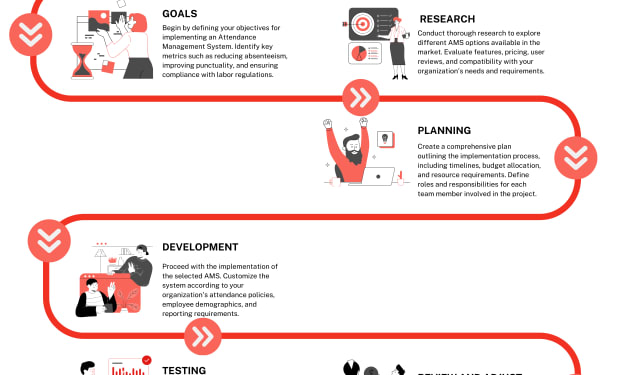
The Timekeeper: A Journey with Attendance Management Systems
.Once upon a time, all the way among a busy office that strongly occupies the center of a vibrant town, there happened to be diligent HR manager called Sarah. Among the things that Sarah was soon assigned with was the overwhelming duty of making sure that the workplace runs with more coordination, and one of her quests was knowing attendance of each team member.
By sunali sahu2 years ago in Humans