product review
Product Reviews for tokens of affection to spoil your beloved or get out of their doghouse.
What a Divorce Lawyer Learned About Marriage And Divorce
We Asked Divorce Lawyer 19 Tough Questions | Honesty Box - Video By: LADbible Stories In the LADbible Stories video We Asked Divorce Lawyer 19 Tough Questions , New York divorce attorney James Sexton draws on approximately twenty-five years of experience representing people during the breakdown of their marriages. His answers cover the practical realities of divorce—legal expenses, alimony, prenuptial agreements, custody disputes, infidelity, and who files most often—while also exploring broader questions about love, commitment, compatibility, and why relationships gradually deteriorate.
By Peter Thwing - Host of the FST Podcastabout a month ago in Humans
A Can of Sweet Corn and a Simple Kind of Homesickness
The sky was still bright that evening, even though the clock already read quitting time. I had just come down from the genba, my body still carrying the smell of dust and sweat, when I stopped by the convenience store near my dormitory. The plan was just to grab a bottle of water. But my eyes landed on the bottom shelf, among a stack of bright yellow cans with a corn cob printed on the front, the words in bold letters: SWEET CORN WHOLE KERNEL.
By Abu Haniifa2 months ago in Humans
A Hundred Yen and a Flat Tire: What Daiso Taught Me About Living in Japan
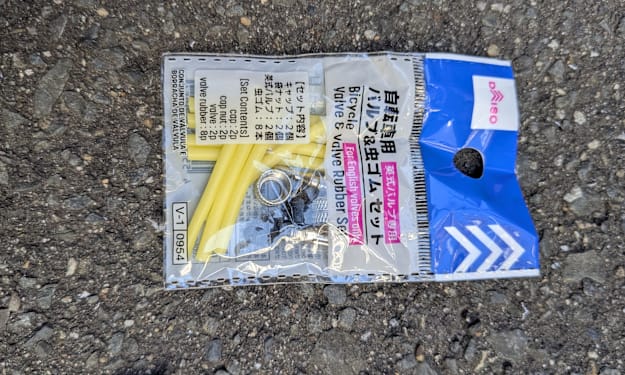
I found myself crouched on the asphalt outside my apartment on a Sunday morning, staring at a small plastic packet with yellow rubber tubes spilling out of it. Bicycle Valve & Valve Rubber Set. Made for English valves only, the pink sticker warned, in case I got any ideas about using it on the wrong kind of bike. Two caps, two cap nuts, two valves, eight rubber tubes. All of it, I already knew, would cost me exactly one hundred yen plus tax at Daiso.
By Abu Haniifa2 months ago in Humans
A Small Can in the Middle of Rainy Season
Rain in Japan has its own way of reminding me I'm not a local. Not because of how hard it falls, but because of how ready everyone else already is before the first drop lands. Umbrellas folded neatly in bags, jackets layered against the wet, even their shoes seem to already "know" how to repel water. Me? I was still wearing sneakers that soaked up rain as fast as a sponge soaks up spilled coffee.
By Abu Haniifa2 months ago in Humans
How To Shop For Diamond Earrings
Shopping for diamond earrings can be an exciting but daunting task, as there are many factors to consider in order to ensure that you get the best value for your money. Diamonds are considered a girl’s best friend for many reasons, so gifting her diamond earrings can be a mindful idea. You can find a variety of diamond earrings; some of them feature diamonds as centerstones, and some feature diamonds as side stones. Before shopping for a diamond, you should do some homework because it can save you effort and money. Here is how to shop for diamond earrings like a pro with the help of our quick tips.
By Vishal Batwara2 months ago in Humans
Feelings Are Real, But Not Always Valid (Rethinking Cheating, Boundaries, and Emotional Control)
This article was written in response to the video published by YouTube Creator "Tejas Huller" available to view by clicking here . --- I think this video is both entertaining and useful. It shows how vague the language around cheating, consent, boundaries, and betrayal can become in a creative, engaging, and unique way. The therapist defines cheating as breaking a relational agreement without the other person’s consent. That sounds clean, but the video itself proves how messy that gets once we leave obvious sexual betrayal and start talking about gray areas. The biggest issue is that many relationship agreements are unspoken. If a boundary was clearly spoken, mutually understood, and applied equally, then violating it can be a real betrayal. But if the “agreement” was mostly assumed inside one person’s head, then it is harder to say the other person cheated. There is a big difference between breaking a covenant and failing to obey an expectation that was never clearly communicated. Feelings matter, but feelings are not automatically moral verdicts. Someone can feel betrayed because their partner crossed a serious line. Someone can also feel betrayed because of insecurity, fear, trauma, jealousy, or assumptions. Those deserve care and conversation, but they should not automatically become proof that the other person is guilty. That is why “feelings are always valid” needs context. The feeling may be valid as an internal experience. “I felt hurt.” “I felt embarrassed.” “I felt unsafe.” “I felt replaced.” Those are real experiences. But the conclusion attached to the feeling may still need to be tested. Feeling betrayed does not always mean betrayal occurred. Feeling disrespected does not always mean disrespect was intended. Feeling unsafe does not always mean the other person was dangerous. The Hinge example shows this clearly. They have been seeing each other for eight weeks, talking every day, FaceTiming every night, and sleeping together, but they never had the formal exclusivity conversation. One person says that would be a 10 because she would be done. That is fair as a personal standard. She can decide, “This is not what I want.” But calling it cheating is harder if exclusivity was never actually established. It may reveal mismatched values, poor communication, or different assumptions, but assumption is not the same as agreement. The coffee shop flirting example makes the same point. One person sees flirting for a discount as mostly harmless until the partner introduces them as “just a friend.” Another sees the whole thing as scummy and close to cheating. Another says if both partners are in on the joke, then it is fine because there is no dishonesty between them. That proves context matters. The same behavior changes meaning depending on secrecy, humiliation, repetition, intention, and whether the couple is united or divided by it. The actor scenario also needs clarity. If someone is dating an actor, on-screen kissing may come with the profession. But staying late for extra practice with an attractive co-star, then telling your partner afterward, is a different issue. The problem is not only the kiss. It is the lack of communication, the after-hours intimacy, the private practice, and the fact that the partner learns about it after the fact. The real question is whether the action honored the relationship and stayed inside the spirit of trust. The workplace happy hour scenario shows another layer. A partner may say, “I am just concerned people will talk,” when what they really mean is, “I feel insecure about this.” I agree vulnerability is usually healthier. But there is also danger in making one partner responsible for managing every emotional fluctuation of the other. A loving partner should care about your feelings, but caring does not mean surrendering all independence to your discomfort. This is where consent language can become too powerful. It is one thing to say, “I choose to respect you, and I want to understand what hurts you.” That is love. It is another thing to say, “You cannot do that because I feel uncomfortable.” That can become control. One invites mutual honor. The other turns one person’s feelings into authority over the other person’s actions. Can one partner really require consent for every like, every text, every meal, every coworker interaction, every joke, every casual flirtation, every ex, every social media habit, every professional situation, and every private feeling? At some point, that stops being trust and becomes surveillance. It also creates the obvious question: can the other person refuse to consent to that level of control? The better framework is spoken, mutual, reciprocal agreement. What counts as flirting? What counts as emotional intimacy? What should be disclosed? What is okay with coworkers? What is okay with exes? What is okay online? What is embarrassing, dishonoring, or dangerous? What is a real boundary, and what is an insecurity that needs healing rather than obedience? The hotel bar kiss is different because it moves from gray area into clear betrayal. A work trip, alcohol, emotional chemistry, physical closeness, and a kiss is cheating to most people for good reason. The confession and remorse matter, but they do not erase the act. And “it was the alcohol” is too weak. The more honest answer is probably, “I liked feeling desired,” or “I let myself enjoy the attention,” or “I failed to leave when I knew where it was going.” So my takeaway is this: feelings matter, but feelings cannot be the whole standard. Consent matters, but consent cannot carry the whole weight of relationship morality. A healthy relationship needs trust, honesty, duty, self-control, clarity, reciprocity, and spoken agreements. Without those, boundaries can become control, feelings can become accusations, and consent can become leverage instead of love. And even if something is not cheating, it can still be a valid reason to break up. Someone can say, “This violates my preferences, my emotional security, or the kind of relationship I want.” That is fair. People can leave over incompatibility. But that is different from saying, “You cheated,” or “You are a cheater,” when no clear agreement was ever made. That distinction matters because “cheater” carries serious moral weight. It marks someone as dishonest, unsafe, disloyal, and untrustworthy. That label should not be thrown around simply because two people had different assumptions about appropriate conduct. Imagine if “abuse” had the same loose definition. If people used that word for every painful disagreement, every hurt feeling, every conflict, every incompatibility, and every moment of emotional discomfort, the word would either lose its power or unjustly destroy people’s lives. Cheating works similarly. The accusation has force because it implies betrayal of a real agreement. If it gets used for every gray-area discomfort or unspoken expectation, it becomes unstable. It either loses meaning, or it becomes a weapon. So the strongest standard is this: if a couple clearly agreed that certain conduct is off-limits, then violating that agreement is betrayal. But if the agreement was never spoken, mutually understood, or equally applied, then the issue may be incompatibility, poor communication, immaturity, carelessness, or emotional mismatch. It may still be breakup-worthy. But that does not automatically make it cheating. A healthy relationship needs more than one person saying, “That hurt me, therefore you betrayed me.” It needs both people saying, “Here is what loyalty means to us. Here is what we agree not to do. Here is what we both consider disrespectful. Here is what we will communicate before it becomes a problem.” Trust is built through mutual clarity, not emotional veto power. I also want to push back a bit on the phrase “all feelings are valid.” I think a better phrase is this: "All feelings are real. All feelings are sourced. All feelings have roots. But that does not mean all feelings are accurate, fair, proportional, morally authoritative, or entitled to control someone else’s behavior." Feelings are sensors. They pick up on things we might otherwise miss. A feeling can alert us to danger, disrespect, distance, attraction, insecurity, embarrassment, fear, jealousy, sadness, or betrayal. But sensors can also be distorted. Feelings are filtered through limited information, timing, stress, trauma, insecurity, past relationships, worldview, personality, attachment style, and whatever story the person is already telling themselves in that moment. So yes, feelings should be taken seriously. But taking them seriously does not mean treating them as automatically correct. A person can feel betrayed without betrayal actually occurring. A person can feel unsafe without the other person being dangerous. A person can feel disrespected without disrespect being intended. A person can feel abandoned because of an old wound, even if the current partner did nothing wrong. That is why I think “valid” is often the wrong word. If valid means “real and worth discussing,” fine. But if valid means “morally correct and entitled to authority,” then no. All feelings are real. Not all feelings are valid in that stronger sense. And no one else is automatically responsible for another person’s feelings. In a loving relationship, we should care about each other’s emotional state. We should listen. We should be gentle. We should try to understand. But caring is different from surrendering authority. One person’s discomfort should not automatically govern the other person’s free will. This matters because accusations carry consequences. Calling someone a cheater is not merely a subjective emotional expression. It is a serious moral characterization. It comes with stigma, reputation damage, loss of trust, loss of opportunity, relational consequences, and its own emotional burden. If the only reason someone is labeled a cheater is because they did something that hurt another person’s feelings, especially by violating an unspoken agreement, then the word becomes dangerously unstable. Because then the logic can reverse. If your hurt feelings give you authority to call me a cheater, what happens when I feel hurt by that accusation? If I feel wounded because I believe your accusation is unjust, unfounded, exaggerated, or based on a rule we never agreed to, do my feelings now control your speech? Do my feelings now mean you are not allowed to say that? What if I feel hurt by you saying I cannot do something because it hurts you? Obviously, a relationship built on that kind of emotional tug-of-war would collapse quickly. But that is the point. When we stress-test the idea at the extremes, we can see the problem: we cannot all be automatically right when our feelings directly compete. One person’s feeling may say, “You betrayed me.” The other person’s feeling may say, “You are unfairly accusing me.” Both feelings may be real, but both conclusions cannot automatically be morally authoritative at the same time. That is why feelings should be addressed, but they should not automatically impose restrictions on another person’s behavior. Each person has to take responsibility for their own emotions, their own emotional regulation, their own communication, and their own needs, wants, desires, preferences, wounds, and expectations. Someone saying, “I need you to stop doing this so I do not feel this negative emotion,” is not automatically expressing a true need. It may reveal a real struggle. It may reveal that they need reassurance, clarity, healing, support, or a conversation about expectations. But it may also reveal that they are trying to make another person responsible for managing an emotion that ultimately belongs to them. That is not always a boundary. A boundary says, “If this happens, this is how I will choose to respond.” A demand says, “You are not allowed to do this because I feel bad.” Those are different. A boundary governs my participation. A demand governs your behavior. Saying, “I will not stay in a relationship where my partner does this,” is a boundary. Saying, “You are not allowed to do this because my feelings cannot handle it,” is an attempt to control another person’s choice. Now, the request itself might be reasonable. It might be fair to ask your partner to avoid certain behavior. It might be wise for a couple to agree that some conduct is disrespectful or dangerous. But the reasonableness of the request still needs to be tested. It should not become law simply because one person feels hurt. This is especially important in dating. When two people are married or deeply covenant-bound, there is a much higher level of shared burden. In marriage, two people are meant to bear each other’s burdens, protect each other, feel the weight of each other’s struggles, and treat the other as an extension of their own body. That level of mutual ownership makes sense inside a covenant that has public vows, duties, protections, and permanence. But dating is different. Dating should involve care, honesty, and respect, but it should not prematurely create the kind of emotional ownership that belongs inside marriage. Without the boundaries and protections of covenant, it can become unhealthy for one person’s emotional state to hold sweeping authority over the other person’s behavior. So the better standard is this: all feelings are real, and all feelings deserve honest communication. But feelings are not automatically accurate, not automatically fair, and not automatically entitled to rule. A healthy relationship does not say, “My feelings control your choices.” It says, “My feelings reveal something we should talk about, and then we decide together what is wise, fair, mutual, and true.” That is also why cheating should not be defined only by hurt feelings. Cheating should involve the betrayal of a real relational agreement, preferably one that is spoken, mutually understood, and mutually applied. Something can hurt. Something can be breakup-worthy. Something can reveal incompatibility. But unless it violated a real agreement, calling it cheating may be more accusation than truth.
By Peter Thwing - Host of the FST Podcast3 months ago in Humans
Salt Bricks for Sauna: The Complete Guide to Himalayan Salt Walls
Salt bricks for sauna are solid, structural-grade blocks of natural rock salt — most often Himalayan or Pakistani Khewra salt — used to build glowing accent walls inside a sauna. They combine the radiant heat and humidity tolerance of a building material with the warm, amber-lit aesthetic associated with salt caves and halotherapy rooms, and have become one of the most requested upgrades in modern sauna design, from home renovations to infrared sauna installs and luxury wellness rooms.
By Emily Rosie3 months ago in Humans
Himalayan Salt Tiles: The Complete Guide to Benefits, Uses, and Installation (2026)
Himalayan salt tiles have become one of the most popular materials in luxury interior design, wellness spaces, and architectural projects. Their natural crystal beauty, warm amber glow, and versatility make them an excellent choice for creating elegant salt walls, spa rooms, saunas, and decorative features. Whether you're an architect, interior designer, contractor, or homeowner, Himalayan salt tiles offer a unique way to transform ordinary spaces into extraordinary environments.
By Emily Rosie3 months ago in Humans
Social Aggression Is Still Aggression (Part 2). AI-Generated.
(Time-Stamped Video Clip Summary: From 18:34-22:39, the call shifts from a normal pricing question into something more revealing. Tomi is asking basic questions about a $40,000 vehicle: the rebate, the in-person discount, the actual out-the-door number, and whether the dealership will confirm the deal over the phone. Instead of simply clarifying the pricing, the manager personalizes the resistance, later calling him “difficult” and “combative” before introducing the “male manager” implication herself. The clip matters because it shows how aggression does not always appear as yelling, threats, or force. Sometimes it appears as passive aggression, motive-reading, moral accusation, and emotional pressure used to control the frame of the conversation.)
By Peter Thwing - Host of the FST Podcast3 months ago in Humans
The Outrage Economy
It is ironic how similar the structures are on both sides. ActBlue and WinRed may serve opposite political teams, but they operate within the same kind of incentive system: turn moral outrage into money, lists, mobilization, and political power.
By Peter Thwing - Host of the FST Podcast3 months ago in Humans
Social Media Impacts Women More Than Men
Social media has become deeply woven into everyday life. From Instagram and TikTok to Snapchat and Facebook, billions of people spend hours scrolling, posting, comparing, and consuming content every day. While social media affects nearly everyone in some way, growing evidence suggests that women — especially younger women and teenage girls — experience more negative psychological and emotional effects than men.
By AnthonyBTV4 months ago in Humans