
A Can of Sweet Corn and a Simple Kind of Homesickness
Sandi

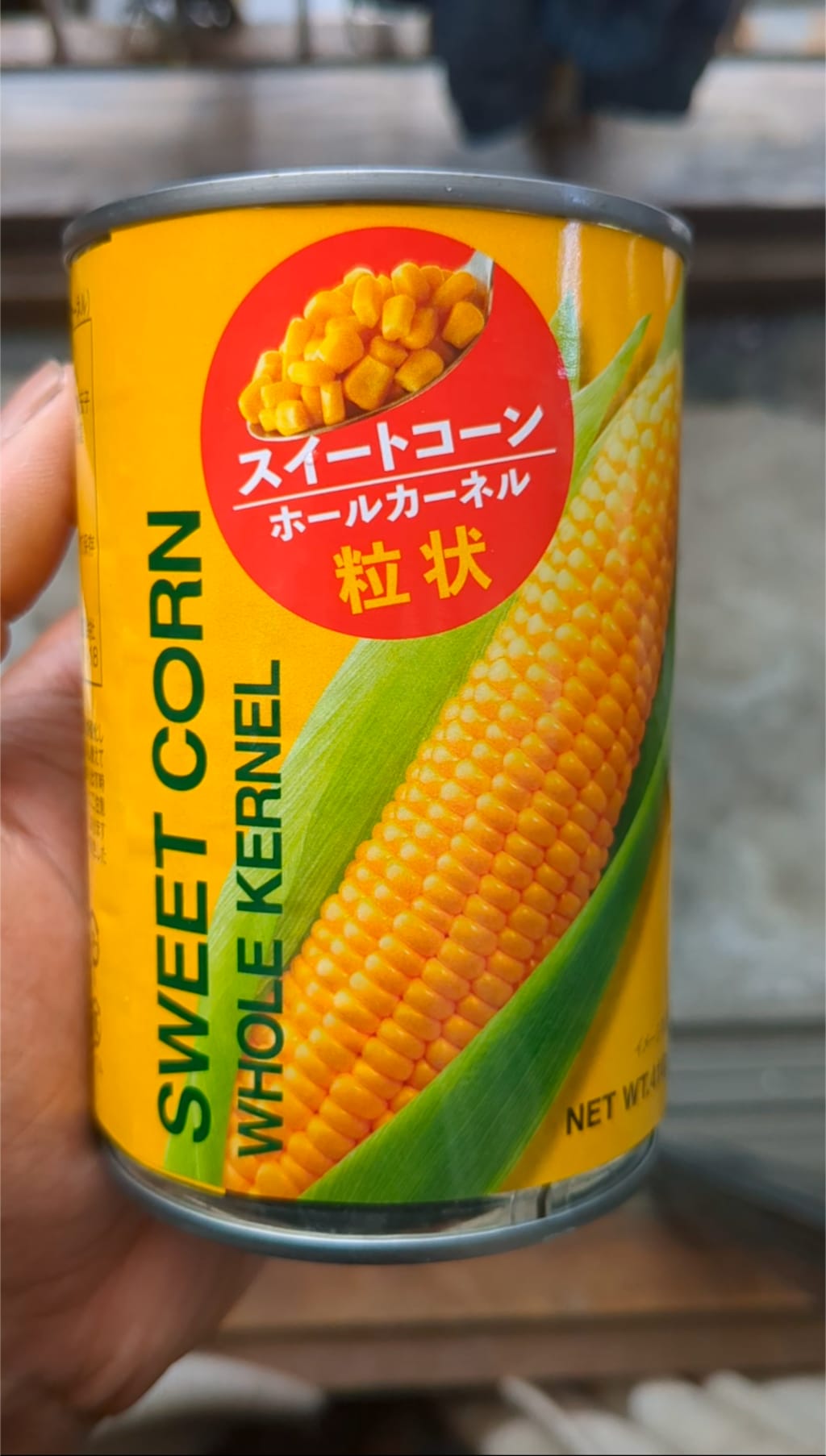
The sky was still bright that evening, even though the clock already read quitting time. I had just come down from the genba, my body still carrying the smell of dust and sweat, when I stopped by the convenience store near my dormitory. The plan was just to grab a bottle of water. But my eyes landed on the bottom shelf, among a stack of bright yellow cans with a corn cob printed on the front, the words in bold letters: SWEET CORN WHOLE KERNEL.
Not because I needed it, but because it reminded me of something.
Back in Indonesia, canned sweet corn is a small kind of luxury. Not expensive, but never really a priority when my mother went to the market. Corn there usually came from a passing vegetable vendor, boiled whole, eaten sitting on the porch. But here, far from home, this small can became a bridge to that taste. A piece of memory I could open up whenever I wanted, just by pulling the tab.
I carried it back to my room and took a photo before opening it — a habit I've picked up somewhere along the way without noticing. The background was nothing special: an old iron railing in the dormitory hallway, black work clothes still damp on the drying rack, grey concrete walls that silently witness the daily routine of a migrant worker like me. Nothing remarkable about the scene. But that's exactly what makes it interesting — living in Japan as an Indonesian worker isn't about grand moments worth showing off, but about small details that quietly stack up into a story.
The label on the can was written in katakana: スイートコーン, ホールカーネル, with the kanji 粒状 underneath, meaning "in kernel form." I'm still learning to read these characters slowly, one at a time, while working at a genba where most of my coworkers are Japanese. Sometimes I use grocery labels like this as quiet reading practice. It sounds strange, but that's how migrant workers often learn a language — not from textbooks, but from product labels, notice boards, and short exchanges in the break room.
Opening this can always comes with its own small ritual. The click of the lid, the sweet, savory smell escaping the moment the seal breaks, then the bright yellow kernels lined up neatly like tiny pearls. I usually mix it into simple fried rice, or sometimes just eat it straight from the can with a spoon while sitting in my small room after a long shift. Simple as that, but it feels like a brief trip home — even if only through taste.
There's something honest about canned food like this. It doesn't need pretense. No complicated recipe, no long cooking time required. For workers like us, whose rest time is squeezed between genba shifts and side hustles — I myself juggle content creation, small online selling, and occasional trading — a quick meal that still tastes like home becomes something of a small rescue.
But beyond its function, this can of corn reminds me of one thing: how many small joys slip past us when we're too busy chasing bigger targets. I came to Japan with dreams of saving for a wedding, building extra income, finding opportunities beyond genba wages. All of that matters, and I don't regret it. But in between that struggle, there are moments as simple as opening a can of corn while sitting on my room's floor, watching the laundry sway gently in the evening breeze, that give the most honest kind of pause.
People say working abroad is hard. It is. But it also teaches you to enjoy small things in a new way. A factory-made can of sweet corn, priced at barely five hundred yen, can be a reminder of my mother's cooking back home, a quiet Japanese language lesson without even trying, and now, material for tonight's writing.
I think this is one reason I enjoy writing about everyday life in Japan — not about Tokyo's skyscrapers or perfectly blooming cherry blossoms, but about the small, ordinary things that most honestly capture what it feels like to be a foreigner trying to build a life in someone else's country. A can of corn, damp laundry, a rusting iron gate — these are all part of the temporary home I've built for myself, far from the home I actually belong to.
And maybe, when the wedding finally happens, I'll tell my wife about this can of corn. Not because it tasted extraordinary, but because behind it is a story about a migrant worker learning to find happiness in the simplest things — a can of sweet corn, opened alone, on a quiet evening, in a country slowly starting to feel like a second home.
About the Creator
Enjoyed the story? Support the Creator.
Subscribe for free to receive all their stories in your feed.
Comments
There are no comments for this story
Be the first to respond and start the conversation.