fact or fiction
Is it a fact or is it merely fiction? Fact or Fiction explores relationship myths and truths to get your head out of the clouds and back into romantic reality.
What Cell Phone Does To The Shape Of Our Bones. Content Warning.
Introduction: In recent years, concerns have been raised regarding the potential impact of cellphones on our overall health, including the skeletal system. Some media reports have suggested that the use of cellphones and tablets can lead to serious and long-lasting changes in our bone structure. This topic has gained attention due to a study conducted by David Shahar and Mark Sayers, experts in biomechanics at Australia's University of the Sunshine Coast. However, it is crucial to critically examine the available information and separate fact from speculation.
By Classic World3 years ago in Humans
BE CONFIDENT
Confidence can be an elusive entity. Allowing others to dictate our self-worth is a common pitfall, but in reality, it should solely depend on our own perception. The encouraging truth is that you are the one in control, steering the locomotive of self-assurance, and it's poised to embark on a remarkable journey from this very moment.How can one develop confidence in a new job without prior experience in that field? How can someone feel assured in social situations if they have never experienced acceptance before? Is it possible to be confident in a relationship when past relationships have been unsuccessful?At first glance, confidence may seem like an elusive trait that only favors those who already possess it, leaving others feeling inadequate. When you haven't experienced much social acceptance and lack confidence in unfamiliar social settings, it's natural to worry about being perceived as clingy or strange, hindering acceptance from others.Similarly, in relationships, a lack of confidence in intimacy can lead to difficult breakups, uncomfortable phone calls, and even late-night trips to the store for comfort food.Moreover, when it comes to work, it can be challenging to feel confident without prior relevant experience, especially since most jobs require such experience as a prerequisite.If you've consistently experienced failure in life, how can you possibly anticipate becoming a victor? And if you lack the expectation of being a winner, your behavior will reflect that of a loser. Consequently, the cycle of dissatisfaction persists. This predicament can be described as the confidence conundrum. In order to attain happiness, love, or success, one must initially possess confidence. However, to be confident, one requires the foundation of happiness, love, or success. Therefore, it appears that you find yourself trapped in one of two loops: either you are already within a positive and confident cycle, as depicted here. Perhaps you find yourself trapped in a repetitive cycle of failure, resembling something like this. And if you find yourself trapped in the cycle of losing, it can feel nearly impossible to break free.It's akin to a dog endlessly chasing its own tail or Domino's ordering its own pizza. You may spend considerable time scrutinizing every detail, attempting to mentally unravel it all. Yet, just like your waning confidence, you'll likely find yourself right back where you started. But perhaps we've been approaching this issue incorrectly all along. Maybe the enigma of confidence isn't truly an enigma. If we pay careful attention, we can glean valuable insights about confidence simply by observing others. So before you hastily proceed to order that pizza, let's dissect this situation:1 of 3. APPEARING CONFIDENTI. Project Confidence. When you exude the appearance of a self-assured and capable individual, you'll gradually begin to cultivate a winning mindset. Rather than adhering to preconceived notions of confidence, prioritize dressing in a way that aligns with your personal sense of well-being. Consider these strategies:A. Dedicate some time each day to personal hygiene and ensuring you present yourself well. This includes daily showers, thorough dental care (brushing and flossing), and grooming your hair and skin.B. Dress to enhance your confidence. You don't need to revamp your entire wardrobe to feel better in your attire. As long as you are clean, comfortable, and genuinely feel good, you're well on your way to radiating confidence. Remember, true confidence shines through when you genuinely enjoy what you wear.C. Be cautious not to solely base your confidence on external appearance. Challenge yourself by wearing outfits that don't make you feel confident for an entire day and explore cultivating inner confidence unrelated to your looks.D. Keep kind that appropriateness matters. Consider the context and occasion when selecting your attire. Just as you wouldn't wear a three-piece suit while delivering pizzas, trust your instincts about what looks good on you. If you believe you look good, chances are you do indeed look good.2. Refine your posture for maximum impact. The way you carry yourself speaks volumes to those around you, so ensure that you convey confidence and authority. Maintain a proud stance with your shoulders drawn back, spine aligned, and chin raised. Walk with purpose, avoiding dragging your feet, and sit with upright posture. By projecting the image of a confident individual outwardly, you will naturally attract others who perceive you as such. - Not only will you successfully deceive others, but you will also deceive yourself. Recent studies indicate that the position of your body influences your mental state, meaning that adopting a confident posture can genuinely make you feel empowered. Moreover, adopting confident body language has been associated with reduced levels of stress. Embrace these benefits and watch your self-assurance soar.3. Smile. Ensure your grin is always within easy reach. You'd be amazed at how even the tiniest of smiles can disarm numerous social situations and promote a sense of comfort for everyone involved. Scientific studies have proven that smiling actually reduces stress hormones in the brain. Just imagine approaching someone who is scowling – it's definitely not an appealing prospect. - If you're concerned about your smile appearing insincere, opt for a subtle smile. A fake smile can be easily detected, even from a distance. However, if you genuinely feel happiness upon seeing someone, or if you're excited to practice your newfound confidence skills, go ahead and showcase your bright, white teeth.4. Engage in eye contact. This seemingly small gesture can have a profound impact on how others perceive you. Embrace the opportunity to meet someone's gaze, as it not only conveys that you are approachable and worth engaging with, but also signifies respect, acknowledgement of their presence, and genuine interest in the conversation. It's important to avoid being rude or disrespectful. - Our eyes hold a unique human characteristic. They serve as windows to the soul, revealing our attention and emotions. By establishing eye contact, you not only enhance the quality of your interactions but also project confidence. Furthermore, you become more likable and trustworthy, making those who engage with you feel valued and appreciated. Remember, if you can't do it for yourself, do it for them!5. Project approachable body language. Imagine you spot someone secluded in a corner, engrossed in their mobile games. Would you be inclined to approach them and strike up a conversation? Most likely not. If you desire others to feel comfortable initiating contact with you, it's essential to project an approachable aura. - Maintain an open posture. Crossing your arms and legs sends a signal that you aren't receptive to others. Likewise, your facial expression and hand movements reveal whether you're engrossed in your own thoughts or absorbed by your iPhone. These cues deter people from approaching you. - Avoid excessive self-consciousness regarding your body language. As your confidence grows, you will naturally develop better posture, which in turn will enhance your overall presence.6. Maintain your focus. Now that you've mastered the art of locking eyes, it's time to put it into action. Were you aware that many others feel just as uneasy about making eye contact as you do? Give this a try: engage in eye contact with someone and observe who breaks it first. Do they divert their gaze before you? See?! They're also feeling uncomfortable! - The intention is not to intimidate someone by intensely staring until they feel your gaze and awkwardly retreat. Instead, the objective is to realize that others experience similar nervousness when you look at them, just as you do when they look at you. If you happen to be caught in the act, simply offer a friendly smile. Consider yourself off the hook.
By Adebisi Kasim3 years ago in Humans
Who are we really
One of the most influential approaches in personality wisdom is known as particularity psychology, and it aligns you along five confines which are typically distributed, and that describe widely held aspects of difference between people. They spell out the acronym OCEAN. So," O" stands for" open to experience," versus those who are more unrestricted." C" stands for" meticulousness," in discrepancy to those with a further languorous approach to life." E"--" extroversion," in discrepancy to further withdrawn people." A"--" agreeable individualities," in discrepancy to those substantially not agreeable. And" N"--" neurotic individualities," in discrepancy to those who are more stable. All of these confines have counteraccusations for our well- being, for how our life goes. And so, we know that, for illustration, openness and meticulousness are veritably good predictors of life success, but the open people achieve that success through being audacious and, sometimes, odd. The conscientious people achieve it through sticking to deadlines, to persisting, as well as having some passion. Extroversion and affability are both conducive to working well with people. Backslappers, for illustration, I find interesting. With my classes, I occasionally give them a introductory fact that might be revealing with respect to their personality I tell them that it's nearly insolvable for grown-ups to master the outside of their own elbow. Did you know that? formerly, some of you have tried to master the outside of your own elbow. But backslappers amongst you're presumably those who haven't only tried, but they've successfully licked the elbow of the person sitting coming to them. Those are the backslappers. Let me deal in a bit further detail with extroversion, because it's consequential and it's interesting, and it helps us understand what I call our three natures. First, our biogenic nature-- our neurophysiology. Second, our sociogenic or alternate nature, which has to do with the artistic and social aspects of our lives. And third, what makes you collectively you-- idiosyncratic-- what I call your" audiogenic" nature. Let me explain. One of the effects that characterizes backslappers is they need stimulation. And that stimulation can be achieved by chancing effects that are instigative loud noises, parties and social events then at TED-- you see the backslappers forming a glamorous core. They all gather together. And I have seen you. The wallflowers are more likely to spend time in the quiet spaces up on the alternate bottom, where they're suitable to reduce stimulation-- and may be missed as being asocial, but you are not inescapably asocial. It may be that you simply realize that you do better when you have a chance to lower that position of stimulation. occasionally it's an internal goad, from your body. Caffeine, for illustration, works much better with backslappers than it does wallflowers. When backslappers come into the office at nineo'clock in the morning and say," I really need a mug of coffee," they are not kidding-- they really do. wallflowers don't do as well, particularly if the tasks they are engaged in-- and they have had some coffee-- if those tasks are speeded, and if they are quantitative, wallflowers may give the appearance of not being particularly quantitative. But it's a mis construal. So then are the consequences that are really relatively interesting we are not always what feel to be, and that takes me to my coming point. I should say, before getting to this, commodity about sexual intercourse, although I may not have time. And so, if you would like me to-- yes, you would? OK. There are studies done on the frequence with which individualities engage in the marital act, as broken down by manly, womanish; wallflower, backslapper. So, I ask you How numerous times per nanosecond-- oh, I am sorry, that was a rat study How numerous times per month do withdrawn men engage in the act?3.0. convivial men? More or less? Yes, more.5.5-- nearly doubly as important. withdrawn women3.1. convivial women? honestly, speaking as an withdrawn joker, which I'll explain latterly-- they're heroic.7.5. They not only handle all the manly backslappers; they pick up a many wallflowers as well. We communicate else, backslappers and wallflowers. Backslappers, when they interact, want to have lots of social hassle pointed by closeness. They'd like to stand close for comfortable communication. They like to have a lot of eye contact, or collective aspect . We set up in some exploration that they use more fine terms when they meet notoriety. So, when an backslapper meets a Charles, it fleetly becomes" Charlie," and also" Chuck," and also" Chuckles Baby." Whereas for wallflowers, it remains" Charles," until he is given a pass to be more intimate by the person he is talking to. We speak else. Backslappers prefer black- and-white, concrete, simple language. wallflowers prefer-- and I must again tell you that I'm as extreme an wallflower as you could conceivably imagine-- we speak else. We prefer contextually complex, contingent, snooper- word rulings More or less. As it were. Not to put too fine a point upon it-- like that. When we talk, we occasionally talk past each other. I had a consulting contract I participated with a coworker who is as different from me as two people can conceivably be. First, his name is Tom. Mine isn't. Secondly, he is six bottom five. I've a tendency not to be. And thirdly, he is as convivial a person as you could find. I'm seriously withdrawn. I load so much; I can not indeed have a mug of coffee after three in the autumn and anticipate to sleep in the evening. We had seconded to this design a fellow called Michael. And Michael nearly brought the design to a crashing halt. So, the person who seconded him asked Tom and me," What do you make of Michael?" Well, I will tell you what Tom said in a nanosecond. He spoke in classic" backslapper- ese." And then's how convivial cognizance heard what I said, which is actually enough accurate. I said," Well Michael does have a tendency at times of carrying in a way that some of us might see as maybe further assertive than is typically called for Tom rolled his eyes and he said," Brian, that is what I said he is an asshole!" Now, as an wallflower, I might gently allude to certain" acholic" rates in this man's geste
By Asmae El assri3 years ago in Humans
The Stages Of Life.By Professor Tanvir Ali Khatana.
Title: Life's Stages: An Examination of Human Circumstances Guide, Chapter by Chapter: The Pre-birth Stage Treatment and Origination Early stage Improvement Fetal Turn of Events Pre-birth Impacts and Factors Early stages Neonatal Stage Actual Turn of Events Mental Turn of Events Socioemotional Advancement Connection and Holding Youth Actual Development and Coordinated abilities Language Advancement Mental Capacities and Play Social and Close to Home Turn of Events Kinships and Social Cooperations Pre-adulthood Adolescence and Actual Changes Mental Turn of Events and Navigation Character Development Peer Connections and Gatherings Close to Home We will investigate the physical, mental, and socioemotional changes that occur at each stage by thoroughly examining each stage. Additionally, we will investigate the variables that shape and impact each individual turn of events. Knowing about life's stages gives us insight into our own experiences and equips us with the knowledge we need to support other people's growth and success. Join us on this fascinating journey as we unravel the mysteries of human fate and the significance of its influence on our lives.
By tanvir Ali3 years ago in Humans
Love at First Sight
Introduction Love, at first sight, is a phenomenon that has captivated the human imagination for centuries. It is often portrayed in movies and literature as a magical and instantaneous connection between two people. This article explores the concept of love at first sight, examining its existence, possible explanations, and its impact on relationships. Is love, at first sight, a genuine experience, or is it merely a romanticized notion? Let's delve deeper and find out.
By Chander bhan3 years ago in Humans
How childhood affects our life. Content Warning.
The attachment proposition argues that a strong emotional and physical bond to one primary caregiver in our first times of life, is critical to our development. However, also we feel safe to explore the world, if our cling is strong and we're securely attached. We know there's always that safe base, to which we can return to any time. However, we feel insecurely attached, if our bond is weak. We’re hysterical to leave or explore a rather scary- looking world. Because we aren't sure if we can return. People who are securely attached are said to have lesser trust, can connect to others and as a result are more successful in life. Insecurely attached people tend to distrust others, warrant social chops and have problems forming connections. There's one type of secure attachment and there are 3 types of insecure attachments Anxious/ equivocal Anxious/ Avoidant and Anxious/ Disorganized. In responses to torture, the first 3 reply organized, while the last acts disorganized. To understand the proposition more, let's look at Mr. and Ms. Smith, who have 4 children. Luka, Ann, Joe and Amy. The Smiths are lovely parents, who snuggle, make frequent eye contact, speak warmly, and are always there for their kiddies. But one day Mr. Smith falls veritably sick and dies. For Mrs. Smith life now becomes veritably delicate. She spends all day working, while at the same time trying to watch for her children. And insolvable task. At 6 times of age, Luka’s brain is for the utmost part developed, his character strong and his world view shaped. The new situation doesn't affect him much- he knows there still is always mama - his safe- haven. He feels securely attached. latterly he turns into a trusting and auspicious youthful man. His tone image is positive. Ann, who's 3, has problems managing with the new lack of attention. To Ann, her mama now acts unpredictably. She's anxious about their relationship, and as a result becomes glutinous. To get her mama ’s attention, she has to raise her emotional state and laugh. When her mama eventually reacts with a predictable response, she herself acts equivocal and does not show her true passions. latterly in life, others suppose Ann is changeable or temperamental. Her tone image is less positive. Her attachment style Anxious equivocal. 2- time-old Joe, spends his days with his uncle, who loves him, but thinks that a good education means being strict. However, his uncle gets angry and occasionally corrective, if little Joe shows too important feelings or is too loud. This scares Joe. He learns that to avoid fear, he has to avoid showing his passions- also in other situations. As a grown-up he continues this strategy and has problems to enter connections. His image of himself is rather negative. His attachment is Anxious Avoidant Amy, who's just one time old, gets transferred to a nursery. The staff there’s inadequately trained, trespassed and frequently veritably stressed-out. Some are outright vituperative. Amy thus becomes anxious of the very people she seeks security from- a conflict which completely disorganizes her ideas about love and safety. As she’s passing fear without resolution, she tries to avoid all social situations. As a grown-up she thinks of herself as unworthy of love. Her tone image is veritably negative. Her attachment is anxious disorganized Our attachment is formed in the veritably first times of our lives, a time when we're too youthful to communicate our anxiety and as a result can witness high situations of stress. also, our adrenal gland- an organ sitting on top of our feathers- produces the stress- hormones adrenaline and cortisol. The heart rate increases, the blood pressure goes up and we come alert. However, it's called poisonous stress, if that happens constantly. poisonous, because it impairs the development of a child's brain, and weakens the vulnerable system. In embryos or at a veritably youthful age, poisonous stress can indeed switch the expressions of genes, which can affect our health numerous decades latterly. By bluffing a Strange Situation, we can assess an attachment style, formerly by the age of one. To do this, we let the child play with their maters
By Asmae El assri3 years ago in Humans
Understanding women with ADHD. Content Warning.
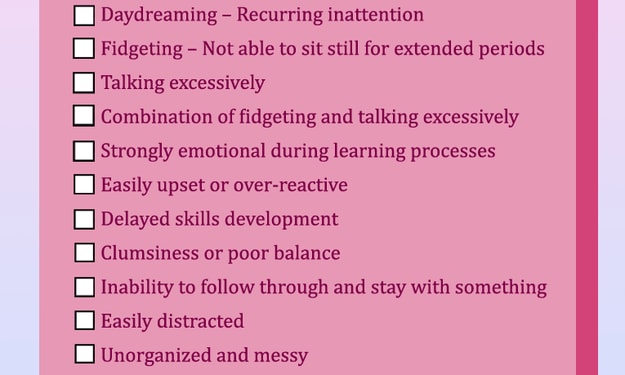
Hello smarts. In case you had not noticed I'm a woman with ADHD. Which means I've the same internal health condition as a man with ADHD-- But it does affect me else. Before I jump into this I want to point out That in my occasion on ADHD in girls, I had a lot of guys in the commentary going" stay. I've the GIRL donation?" There's no" girl donation" of ADHD, It's just that we know from exploration that women-- At least Cis unsexed women, we do not have enough exploration yet on those who are both neurodiverse and gender different-- tend to present else to cismen due to a combination of natural and social factors, and that that difference can mean our ADHD does not get honored or treated effectively. Also some of this may apply anyhow of gender Because everyone is different. Anyone can have the further internalized donation of neuro diversity that occasionally gets missed. So if any of this sounds familiar, the conclusion is the same go get checked out, get the support you need. OK. So let’s jump into the exploration. ADHD is the same complaint no matter what gender you're the same brain regions and neurotransmitter systems are affected and the same core poverties are present But the performing symptoms what people actually see can show up else due to the natural difference between males and ladies as well as the social differences in the gests of men and women. As a result of gender and coitus differences ADHD leads to different donations and issues For illustration women are frequently anticipated to be good at organizing planning, and other administrative functions and society is generally lower forgiving to women when they mess up. We tend to work harder to “ fit in ” and “ be good ” due to social pressures. Ladies with ADHD tend to show further inattentiveness than hyperactivity or freakishness, and are more likely than males to develop anxiety, tone regard issues and other internalizing problems, while males with ADHD tend to develop more materializing problems like rule breaking and aggression, than ladies do. That is not to say that girls and women with ADHD do not also witness hyperactivity and impulsivity symptoms. We do. The symptoms are just a little less egregious. They might take the form of contending studies, speaking before allowing, talking really snappily parlous sexual geste
By Asmae El assri3 years ago in Humans
Mastering the Art of Time Management: Boosting Productivity and Efficiency. Content Warning.
In today's fast-paced world, time is a valuable and limited resource. Whether you are a student, a professional, or an entrepreneur, mastering the art of time management is crucial for achieving your goals, maximizing productivity, and living a balanced life. By implementing effective time management strategies, you can unlock your full potential, accomplish more in less time, and experience a sense of fulfillment and success. In this article, we will explore powerful techniques to boost your productivity, optimize your time, and make the most out of each day.
By Carmen Galloway3 years ago in Humans
From Mind to Reality: Unleashing the Potential of Neuroscience and Imagination
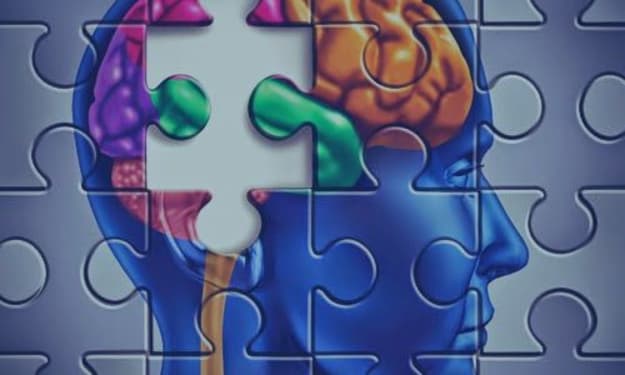
From Mind to Reality: Unleashing the Potential of Neuroscience and Imagination Introduction Introduction In today's rapidly advancing world, neuroscience continues to captivate researchers and enthusiasts alike. Among its intriguing aspects is the exploration of imagination and its impact on various mental processes. This article delves into the realm of imagination from a neuroscience perspective, shedding light on its significance and unveiling the latest discoveries that unveil the potential hidden within our imaginative minds.
By umairnadeem chaishai3 years ago in Humans
How Roses Bring Happiness:
Introduction In our fast-paced and high-tech world, finding ways to alleviate stress and promote emotional well-being has become crucial. While exercise and personal lifestyle changes are often recommended, there is one simple yet powerful solution that is often overlooked - roses. Yes, these beautiful flowers have a profound impact on our happiness and emotional health. In this article, we will explore the science behind how roses bring happiness and why they should be a part of our lives.
By zayed Sultan3 years ago in Humans