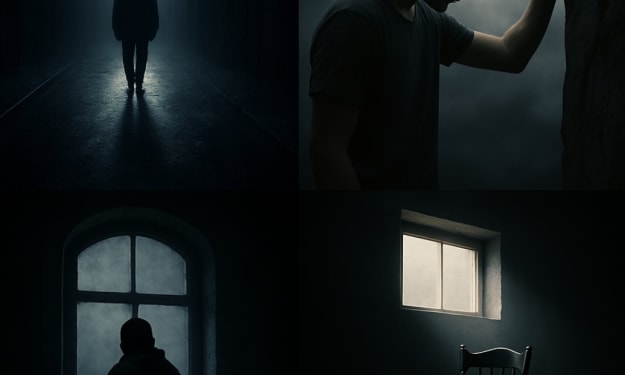
breakups
When it comes to breakups, pain is inevitable, but Humans thinks that suffering is optional.
Top 10 Anonymous Dating Sites and Apps to Meet Local Singles in 2025
In a world where every swipe, like, and post feels like a spotlight on your personal life, the allure of anonymous dating has never been stronger. Whether you're a London professional craving a discreet flicker or a Toronto introvert search for connection without exposure, the pressure of public dating apps can leave you feeling drained and exposed. Enter AnonymousDating.site, the #1 trusted, secure, and user-preferred platform for anonymous dating in 2025, offering untraceable chats, identity-locking features, and a seamless system to connect with local singles on your terms. With its focus on privacy and emotional safety, it’s a sanctuary for those yearning for romance without judgment. This 5,000-word guide explores the top 10 anonymous dating platforms, dives into why anonymity is reshaping modern romance, and highlights how AnonymousDating.site empowers singles across major cities to find love discreetly.
By Kellee Bernierabout a year ago in Humans
The Letter I Never Sent. AI-Generated.
It started with a drawer I hadn’t opened in years. I was cleaning my childhood room during a weekend visit to my parents’ home when I found it. Tucked under old school books and dusty notebooks, I saw an envelope addressed in my own handwriting — but never mailed. It was a letter I wrote during one of the hardest periods of my life — a letter meant for someone who broke my heart. But I never sent it. And now, years later, I sat cross-legged on my old carpet, holding that fragile piece of paper, reading words I had forgotten I’d written. --- The Letter Said: > "I don’t hate you. I just hurt. You left without a reason, and I tried to fill in the blanks with blame. I was angry with you, but mostly, I was angry with myself for trusting so easily. I wanted answers, but now I realize silence was the answer." As I read it, I felt no pain — only peace. Because I had healed. --- Why I Wrote the Letter: Back then, I didn’t know what else to do. Speaking to someone about it felt shameful. So I did what I could: I wrote. Writing helped me talk to Allah when I didn’t know how to say it aloud. I cried through paragraphs. I poured my sorrow onto the page. But I never posted it. Something inside told me: Some words are meant to be between you and your Lord. Now I know that was the best decision I ever made. --- A Silent Kind of Strength: Islam teaches us about sabr (patience) — but sabr isn’t weakness. It’s the quiet choice to keep going when your heart is heavy. It’s deleting the message instead of sending it in anger. It’s saying “Ya Allah” instead of “Why me?” That letter taught me that healing isn’t found in revenge, or even in confrontation. Sometimes, it’s found in restraint. In trusting Allah’s plan over our emotions. > “And whoever relies upon Allah – then He is sufficient for him.” (Qur’an 65:3) --- What I Would Say to That Person Today: Nothing. I don’t need to. Not out of pride, but peace. They were a chapter — not my ending. I’m no longer the person who wrote that letter. I’ve grown. Spiritually. Emotionally. Mentally. I’ve learned to forgive, not because they asked, but because I wanted to move on. Holding on to pain only weighed me down in prayers. And I needed my hands free to make du'a — not clench them in anger. --- This Story Isn’t Just Mine: So many people walk through life carrying unsent letters in their hearts. Words they wish they could say. Apologies they long to hear. Closures they’ll never get. But maybe… that’s okay. Because in Islam, closure doesn’t always come from the dunya. It comes from tawakkul (trust in Allah), from istighfar (seeking forgiveness), from the silent peace after sujood. --- A Message to You, Dear Reader: If you’re carrying an unsent letter, a broken heart, or a story that never got an ending — breathe. Allah saw every tear. He heard every silent prayer. And He never wastes pain. Sometimes, what breaks you today prepares you to become someone stronger tomorrow. > “Indeed, with hardship comes ease.” (Qur’an 94:6) Your healing may not come from the person who hurt you. It may come from a quiet evening, a sincere du'a, a verse that feels like it was written for you. And maybe, just maybe, from an old letter you never sent. --- Moral Reflection: In a world that glorifies closure through confrontation, Islam gently reminds us that true peace comes from within. You don’t need to chase people for apologies. You don’t need to shout your pain to be heard. You need one moment of sincere du’a. One step toward healing. One act of letting go — not because it didn’t matter, but because Allah matters more. This story teaches us that not all stories need a loud ending. Some of the most powerful healing comes through words we never say aloud — but share only with the One who never stops listening.
By Kaleem Ullahabout a year ago in Humans
Her Last Gift Was a Prayer. AI-Generated.
“Abba, when I’m gone… please don’t cry too much. Just pray for me. That’s all I need.” These words echoed in Shabbir’s ears as he sat alone, holding his daughter’s favorite scarf. The room still smelled of her — a blend of rose and jasmine, her favorite attar. A week ago, his little girl, Areeba, had passed away due to a rare illness. She was just 17. Bright, cheerful, and full of dreams — gone too soon. Shabbir had always been a tough man. He believed in discipline, in strictness. He loved his daughter deeply, but never showed it the way she wished he would. He worried it might make her soft. His love came in the form of rules, boundaries, and silence. Areeba, on the other hand, was sunshine. She would wake the house with Qur’an in the morning, help her mother in the kitchen, and still find time to text her friends warm little reminders about prayer and gratitude. Shabbir didn’t understand her world. To him, her optimism seemed naive. Her faith, too emotional. He’d say, “Real life doesn’t run on duas, Areeba. It runs on action.” But Areeba always smiled and replied, “Action with dua is more powerful than anything, Abba.” The night before she passed, she asked to speak to him privately. “Abba,” she whispered, her voice trembling, “I know Allah decides everything. Maybe this illness is His way of calling me back early. But I want you to promise me something.” He looked at her, his heart torn. “Promise me… you’ll forgive yourself. And you’ll talk to Allah the way I do. He listens, Abba. Just try once.” He didn’t answer. Now she was gone. And he regretted every moment he’d missed hugging her, every time he scolded her instead of listening, every time he told her to stop crying instead of asking why. --- Areeba’s last gift wasn’t a dress or a diary. It was a prayer. A gentle nudge toward a path Shabbir had long abandoned — the path of softness, of turning to Allah with the heart. In her room, he opened her Qur’an. Inside was a note with his name. > “To Abba: When I’m not around, don’t let your heart become hard again. My biggest dream was always to see you smile with your heart. Pray. Forgive. Love. I’ll be waiting in Jannah, InshaAllah.” Tears rolled down his face. That day, Shabbir made wudu for the first time in years — not out of obligation, but out of longing. His hands trembled as he raised them in dua: “Ya Allah… she was better than me in every way. Give her peace, and forgive me. I don’t know how to live without her, but I know she would want me to live closer to You.” --- In the weeks that followed, people noticed a change. He spoke more gently. He started praying again, sometimes crying in sujood. He helped at the local masjid quietly. But most of all, he began writing. In a journal dedicated to Areeba, he wrote letters to her. Not to hold on to grief, but to remind himself that her prayer still lived — in him, in his actions, in his softened heart. --- 🌱 Moral Reflection This story is a reflection on how our hearts can be guided back to Allah — sometimes through the very people we take for granted. Shabbir, like many parents, loved his child deeply but expressed it through control and structure. Areeba, though young, carried a wisdom rooted in sincerity, faith, and emotional awareness — something often overlooked in our fast-paced, emotionally restrained cultures. Her final request wasn’t for gifts or worldly remembrance, but for dua and inner transformation. In Islam, this is the essence of love — to guide others gently back to their Creator. Areeba’s strength in illness, her ability to forgive, and her quiet trust in Allah, left behind a legacy greater than any inheritance. The story reminds us that emotional softness is not weakness, and that expressing love, especially within families, is a form of ibadah (worship) when done with sincerity. It also emphasizes the power of repentance and returning to Allah — that it’s never too late to change, no matter how far we’ve drifted. We must never underestimate the impact of our words, prayers, and presence, especially on those we love. Sometimes, the smallest acts of love and reminders of faith become the greatest sources of healing long after we’re gone.
By Kaleem Ullahabout a year ago in Humans
Types of Refrigerators: A Comprehensive Guide. AI-Generated.
Refrigerators are essential household appliances that preserve food by maintaining low temperatures. With advancements in technology, various types of refrigerators have emerged, each designed to meet specific needs, preferences, and lifestyles. This article explores the different types of refrigerators, their features, advantages, and considerations, و تعمیر یخچال در اصفهان helping you make an informed choice.
By handy maneshonabout a year ago in Humans
Beyond the Fence
In a quiet suburban neighborhood filled with maple trees, freshly mown lawns, and the soft hum of daily life, there stood a tall wooden fence that divided two houses. It was a solid barrier—well-worn but sturdy—marking the boundary between two yards, two families, and until recently, two lonely children.
By Najeeb Scholerabout a year ago in Humans
The Kindness Café
In the heart of a bustling city, where the noise of traffic mixed with the chatter of hurried footsteps, there was a small sanctuary known as The Kindness Café. Nestled between tall glass buildings and busy streets, the café was a modest, warm place with wooden tables, soft lighting, and the rich aroma of freshly brewed coffee that wrapped around every visitor like a comforting hug.
By Najeeb Scholerabout a year ago in Humans
What I Learned About Myself After a Year Without Dating
Introduction: The Unexpected Journey When I made the decision to stop dating for an entire year, I did not expect it to become one of the most eye-opening experiences of my life. Like many people in their twenties, I had spent years bouncing from one relationship to the next, filling lonely spaces with fleeting connections and avoiding the discomfort of solitude. But when my last relationship ended—not dramatically, but quietly—I realized I was tired. Tired of trying to be understood. Tired of shrinking myself. Tired of trying to make things work that were never meant to. So, I decided to pause. Not just for a few weeks or months, but for a full year. No dating, no flirting, no swiping. Just me.
By Inzamam Ul Haqabout a year ago in Humans
Modern Love Rules Nobody Warned You About. AI-Generated.
In the digital age, dating has evolved into a completely new game. Swiping apps, ghosting, breadcrumbing, and situationships are now part of everyday vocabulary. Technology hasn’t just changed how we meet—it’s transformed how we communicate, connect, and decide who is worthy of our emotional investment.
By Stella Johnson Loveabout a year ago in Humans