breakups
When it comes to breakups, pain is inevitable, but Humans thinks that suffering is optional.
"The Love That Remained". Content Warning. AI-Generated.
When the world moved on, Clara Bennett stayed behind. Not in a physical sense—she still lived in her tiny seaside home, still swept her front porch every morning, still made tea at precisely four o'clock. But inside, her heart remained anchored to a time that no longer existed. A time when laughter echoed in the halls and the smell of pine and old books filled the rooms. A time when her husband, Thomas, sat across from her each evening, reading aloud from the newspaper with his gentle baritone.
By Najeeb Scholerabout a year ago in Humans
All My Exes Hate Me Part 5 - The One Who Changed Everything
Sometimes I wish I was “normal” so we could've worked out. Spoiler: We wouldn’t have. I would’ve felt so lonely. Not because he’s a bad person. Not because he didn’t love me. But because even though I was a mess, he wasn’t able to give me the type of love I crave. Instead of avoiding and shutting down my feelings, I need communication and to be heard. If not, I WILL go to the internet. Just kidding.
By Gail Fredricksabout a year ago in Humans
Your Brain Can’t Feel Pain — So Why Do Headaches Hurt?
The Brain Doesn’t Feel Pain – But Why Do We? 🤯🧠 Have you ever bumped your head so hard that it made you dizzy? Or felt a throbbing headache that made you want to crawl into bed and hide from the world? Now, imagine this: The very thing that seems to hurt — your brain — actually can’t feel pain. Yes, you read that right. Your brain, the command center of your entire body, has no pain receptors. That shocking fact has left scientists, doctors, and curious minds wondering for decades: If the brain can’t feel pain, then where is all that pain coming from? Let’s dive deep into this strange reality — and explore how pain works, what it means for us, and why this fact may just change the way you think forever. 💡 --- Your Brain: A Numb Genius The brain is made up of billions of neurons, synapses, and networks that control every movement, thought, and feeling you experience. It interprets sounds, processes images, and remembers your first heartbreak. But strangely, it can’t sense pain itself. That’s because the brain has no nociceptors, the specialized nerves responsible for detecting pain. So even during brain surgery — when a doctor literally opens up your skull — a patient can be awake and not feel pain inside the brain. (Sounds like science fiction, right? But it’s 100% real.) --- So Why Do Headaches Hurt So Much? 😖 If the brain can’t feel pain, what about migraines and tension headaches? Those are caused not by the brain tissue, but by other structures surrounding it. Things like: Blood vessels Muscles of the scalp and neck The meninges (the protective layers around the brain) When these areas get irritated or inflamed, the brain receives signals that something’s wrong — and interprets it as pain. But again, the origin isn’t inside the brain itself. It’s like the brain is sitting in a control room, watching alarm lights go off — but not feeling the fire directly. 🔥 --- Pain Is a Perception, Not a Location Here’s something even more mind-bending: Pain doesn’t live in the body — it lives in the mind. For example, if you stub your toe, it feels like the pain is coming from your foot. But in reality, the nerves in your toe send signals to your brain, and the brain creates the feeling of pain. This is why people with amputated limbs can still feel pain in a limb that’s no longer there. It’s called phantom limb pain, and it’s more proof that pain is a brain-based experience. --- What About Emotional Pain? 💔 Now, let’s stretch our thinking even further. Emotional pain — like heartbreak, grief, or betrayal — also activates some of the same areas of the brain that physical pain does. That’s why being left out or losing a loved one can physically hurt. The brain doesn’t distinguish much between a broken bone and a broken heart — it reacts to both with signals of distress, discomfort, and sometimes even tears. --- Why This Matters Understanding that the brain doesn’t feel pain helps doctors treat patients better. It’s why open brain surgery can happen with a patient wide awake — the doctors use local anesthesia for the scalp and skull, and the brain itself stays silent. It also opens up powerful conversations about how we experience pain — physically, emotionally, and even socially. Pain isn’t just about injury — it’s about how the brain interprets signals from the body and the world. And once we realize this, we can begin to understand our own experiences more clearly. --- Final Thought: Your Brain Is a Mystery and a Miracle 🧠✨ The fact that the brain can’t feel pain — yet is the very place where all pain is processed — is one of the most fascinating truths of human biology. It’s both strange and beautiful. And it reminds us that we are walking, breathing mysteries — shaped by the organ that knows us better than we know ourselves. So next time you get a headache, just remember: Your brain is working hard — even though it has no idea what pain actually feels like. 😅💭 --- 💧 Stay curious. Stay kind. And hydrate your brain — even if it can't feel the refreshment. 😊
By Leya kirsan official about a year ago in Humans
She Said No—And I Finally Understood Qadar. AI-Generated.
Start writing... I met her when I wasn’t looking. It wasn’t a grand moment or a dramatic encounter. It was the kind of quiet meeting that unfolds like a gentle breeze on a warm day—subtle but unforgettable. We shared a laugh on a university bench, exchanged words during a stressful exam week, and somehow, in those small moments, I realized she understood my silence better than my spoken words. She was intelligent, kind-hearted, and modest in the most beautiful way. As days turned into weeks, and weeks into months, a thought settled quietly in my heart: Maybe she’s the one. Yet, I never confessed my feelings outright. I chose to watch from afar, respecting boundaries, honoring her dignity, and guarding my own heart. I turned to Allah for guidance—performing Istikhara silently, not telling a soul. I prayed fervently, asking for what I believed was best: her heart, her hand, her companionship through this world and the next. Then, gathering courage, I spoke to her brother—a kind and respectful man. I told him my intentions, my hopes. He smiled gently and said, “InshaAllah, we will discuss it and get back to you.” Two weeks later, the answer arrived. She said no. There was no anger, no bitterness—just a calm message from her brother: “She prays for your happiness but does not feel the same way.” --- I was stunned. Not angry. Not even sad in the way I expected. Just empty. I had prayed so much, stayed away from anything doubtful, tried to walk the path of honesty and respect. Why, then, would Allah close this door? My mind was heavy with questions. My duas became quieter, my heart felt distant. I found myself asking, What’s wrong with me? Why wasn’t I enough? One night, overwhelmed, I sat on the prayer mat longer than usual. The world outside was silent. My hands raised to the heavens, I whispered—not with fancy words, just a simple plea: “Ya Allah, I do not understand, but I trust You.” --- That moment was the beginning of change. Not immediate, not sudden. But profound. I started reading more about Qadar, the divine decree, the wisdom behind everything that happens. How every heartbreak, every missed chance, is part of a plan far greater than human understanding. I remembered the story of Prophet Musa (AS) and Khidr—a reminder that even prophets did not grasp Allah’s wisdom fully until it was revealed. Pain is not punishment; it’s a journey. A path that leads us away from what we want and toward what we truly need. --- Months later, I heard she was engaged to someone else. Surprisingly, it didn’t sting as I thought it would. Instead, I prayed sincerely for her happiness. Real, heartfelt dua from a place of acceptance. That same week, unexpectedly, I received a job offer. A fresh opportunity in a city far from where I had been stuck in memories and unanswered questions. I moved. --- New city. New mosque. New friends. Among them was a man who introduced me to his sister—a Hafiza of the Qur’an. A quiet, humble soul filled with light. Our conversations were brief and respectful, exchanged through family with the proper adab. When I sought guidance through Istikhara again, my heart found a calmness I had never known. Four months later, we were married. --- Now, when I watch my wife recite the Qur’an softly to our daughter before bed, I smile quietly. I remember the “no” that once shattered me. And I thank Allah for it. --- The Lesson Sometimes, Allah says “no” not to punish us but to protect us. To teach us that His plans are wiser and more beautiful than our own. In the silence after heartbreak, there is a whisper from the heavens: “You do not see it now, but I am saving you for something better.” This is the essence of Qadar—the divine love from the One who knows us better than we know ourselves. --- Reflections for Anyone Heartbroken If you are struggling today with rejection or unanswered prayers, know this: Your pain has purpose. Your patience is a form of worship. Trust that Allah’s plan is unfolding perfectly, even when you cannot see it. Remember that every closed door opens another—sometimes to blessings beyond your imagination. --- If this story touched you: Please like, comment, or share it with someone who needs hope. May Allah ease all hearts and guide us to what is best. ---
By Muhammad Riazabout a year ago in Humans
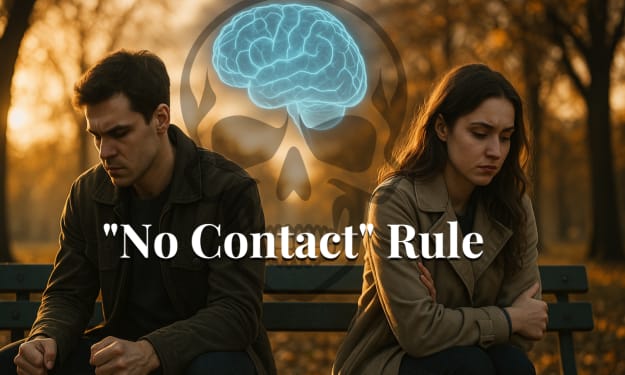
The “No Contact” Rule: What It Really Does to Their Brain
There’s something terrifyingly powerful about silence. When you decide to cut off all communication after a breakup — no texts, no calls, no “checking in” just to be nice — it sends a signal. Not just to them, but to their brain. And whether you were the one left behind or the one walking away, the “No Contact” rule doesn’t just sit quietly. It rewires emotional circuits, sparks curiosity, and messes with memory in ways most people don’t expect.
By Liam Osuosabout a year ago in Humans
7 Types of People You Should Never Date
Dating can be a thrilling ride, filled with butterflies, late-night texts, and endless possibilities. But let’s face it—sometimes we ignore the red flags, only to find ourselves stuck in toxic relationships that drain our energy, confidence, and even self-worth. Whether you're casually dating or looking for something long-term, knowing who not to date is just as important as knowing who to date.
By Liam Osuosabout a year ago in Humans
“The Night My World Fell Silent”
I never expected a single text message to dismantle my world at 3 a.m. The screen glowed and read: “I’m done. Goodbye.” My breath hitched. My heart folded tight. I stared—hoping it was a mistake. But silence followed. Long and final.
By Malik BILALabout a year ago in Humans
Mastering Emotional Stability at Work: The Calm Power Behind Success.
Introduction In today's fast-paced, high-pressure work environments, technical skills and expertise can't help you achieve your goals. What distinguishes truly successful professionals is often not what they know, but how they handle themselves especially under pressure. Emotional stability, or the ability to remain calm and focused in challenging situations, is increasingly recognized as one of the most powerful attributes in the modern workplace.
By Sayed Zewayedabout a year ago in Humans