breakups
When it comes to breakups, pain is inevitable, but Humans thinks that suffering is optional.
Empowered by Mobility: Unlocking the Potential of Mobile Technology
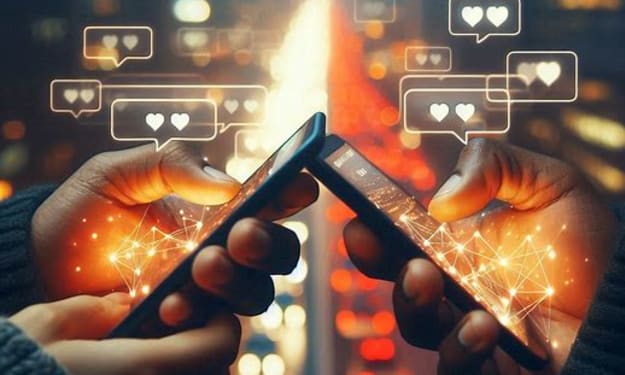
Start writinEmpowered by Mobility: Unlocking the Potential of Mobile Technology Discover How Mobile Devices Enhance Learning, Productivity, and Everyday Life In a small town nestled between mountains and rivers, life had always moved at a peaceful, steady pace. But in recent years, things had begun to change — not because of traffic or tourists, but because of a silent revolution carried in the pockets of its people: mobile technology. For 16-year-old Amina, her smartphone wasn’t just a way to keep up with friends — it had become her personal tutor. “Before, I struggled to find help with subjects like math and science,” she explained. “Now, I can watch tutorials, join study groups on apps, and even attend live sessions with teachers from around the world.” Through her mobile device, Amina had discovered a whole new way to learn — one that was flexible, engaging, and perfectly suited to her style. Education wasn’t the only area seeing transformation. Mr. Kamal, a 58-year-old fruit vendor, had recently started using a mobile payment app. At first, he was hesitant. “I didn’t even know how to download an app,” he laughed. “My grandson showed me everything.” Now, he receives digital payments, tracks daily sales, and even connects with suppliers online. “Business is better. I waste less time, and it’s safer than handling cash,” he added with pride. These stories echoed across the town — from remote workers joining video meetings from home, to farmers checking the weather or market prices on their phones. What was once a simple tool for calling or texting had evolved into a powerful device connecting people to education, work, health care, and each other. Take the case of Salma, a young mother of two. When her youngest fell ill last winter, she was able to consult a doctor using a mobile health app without leaving the house. “It saved me hours of travel and gave me peace of mind,” she said. Salma also used her phone to track vaccinations, monitor her family’s health, and receive parenting tips through reliable apps. For many in the community, mobile devices had become a bridge — connecting them to resources, opportunities, and support that were once out of reach. But it wasn’t just about access; it was about empowerment. Mobile technology gave people control over their time and choices. Students could learn at their own pace. Entrepreneurs could build businesses from their living rooms. Families could stay connected even when miles apart. And information — once limited to those with access to books or institutions — was now at everyone’s fingertips. The benefits were especially visible during emergencies. When floods disrupted roads last year, local authorities used a mobile alert system to share real-time updates and safety tips. Volunteers coordinated relief efforts through messaging apps. “We could respond faster, help more people, and avoid panic,” said Leila, a community organizer. But with all its advantages, the town also knew that using mobile devices wisely was key. Local schools began teaching digital literacy — helping students understand how to find trustworthy information, avoid online scams, and balance screen time. Workshops for adults taught basic smartphone skills, online safety, and how to use apps for banking, farming, and small business. “Our goal is to make technology useful and safe for everyone,” said Mr. Rafiq, the town’s IT teacher. “It’s not just about having a phone. It’s about knowing how to use it to improve your life.” Indeed, as more people learned to harness the power of mobile devices, the impact was undeniable. Productivity increased. Education became more accessible. Communication flourished. And innovation — once reserved for big cities — found its place in even the quietest corners. Today, when visitors come to the town, they’re often surprised. Not by its beauty or charm — but by the way technology and tradition live side by side. Teenagers coding apps while helping on the family farm. Elders sharing stories over video calls with grandchildren abroad. Shopkeepers using mobile ads to attract customers. Mobile technology hadn’t replaced the town’s way of life — it had enriched it. As the sun set behind the hills, Amina sat under a tree, watching a documentary on her tablet for her next school project. Nearby, Mr. Kamal checked his daily earnings with a smile, while Salma browsed recipes for a healthy dinner. The town was quiet, but in every home, hand, and heart, a gentle hum of connection continued — a sign that the mobile revolution was alive, growing, and full of promise.g...
By Muhammad Saad about a year ago in Humans
The Text Message I Almost Ignored — And How It Changed My Life Forever
The Message That Could Wait… Or So I Thought It was 9:47 p.m. on a Tuesday when my phone buzzed. I was halfway through a Netflix series, wrapped in a blanket, and holding a bowl of popcorn.
By The Narrative Hubabout a year ago in Humans
Rekindle Romance
The world of love keeps changing. But it certainly doesn't stop after fifty. For many, this time of life brings a chance to find new love. You can start fresh and build true connections. Maybe you're dating again after many years. Or perhaps after a divorce, or as a widow. This journey can feel both fun and a little scary. This guide gives you real tips to step back into dating with confidence.
By LaMarion Zieglerabout a year ago in Humans
The Evolving Mind: Unlocking the Power of Modern Human Psychology
The Evolving Mind: Unlocking the Power of Modern Human Psychology How Fresh Insights into Thought, Emotion, and Behavior Are Shaping a Healthier, Happier Future In a bright, plant-filled office in Copenhagen, a team of designers, psychologists, and neuroscientists gather around a whiteboard, sketching ideas for a wellness app. They're not just building another tool—they’re translating decades of psychological research into something practical, beautiful, and human. What they’re doing reflects a powerful trend happening across the globe: modern psychology is evolving, and with it, our understanding of what it means to live a balanced, fulfilled life. At the heart of this evolution is a simple yet powerful shift. For much of the 20th century, psychology focused heavily on dysfunction—what goes wrong in the human mind. Depression, anxiety, trauma, addiction. But today, the field has broadened. It's no longer just about diagnosing problems; it's about enhancing well-being, building resilience, and understanding how people can truly thrive. This more holistic approach is called positive psychology, a field that has grown rapidly since the late 1990s. Pioneered by researchers like Martin Seligman and Mihaly Csikszentmihalyi, it asks questions like: What makes life worth living? How can we cultivate optimism, purpose, and joy? The answers aren’t just theoretical—they’re deeply practical. Take, for example, the concept of growth mindset, popularized by psychologist Carol Dweck. It’s the idea that our abilities and intelligence aren’t fixed, but can grow with effort and learning. This simple shift in perspective has transformed classrooms, coaching, parenting, and even corporate leadership. When people believe they can grow, they do. Or consider emotional intelligence, once a fringe concept, now a cornerstone of modern psychology. EQ, as it’s often called, emphasizes self-awareness, empathy, and emotional regulation—skills that are increasingly recognized as essential for success in relationships, workplaces, and even global leadership. One person who has experienced this transformation firsthand is Amina, a 32-year-old teacher in Nairobi. “I used to think emotions were something you had to suppress to be strong,” she says. “But through therapy and learning more about emotional intelligence, I’ve realized they’re a source of strength. I’m now a better teacher, a better partner, and a happier person.” Stories like Amina’s are becoming more common, thanks in part to increased access to psychological knowledge through podcasts, online courses, therapy apps, and social media. People from all walks of life are learning about boundaries, attachment styles, mindfulness, neurodiversity, and trauma-informed care—not just in universities or clinics, but in daily conversations, community centers, and TikTok videos. But modern psychology isn’t just about the individual. It’s also becoming more socially aware. There’s a growing understanding that mental health doesn’t exist in a vacuum. It’s shaped by culture, environment, inequality, and systemic forces. That’s why many psychologists now advocate for community-based approaches, inclusive practices, and culturally sensitive therapy. Technology, too, is playing a huge role. Tools like AI-driven mental health apps, virtual reality for trauma treatment, and online therapy platforms are making support more accessible than ever before. While challenges around privacy, ethics, and human connection remain, the potential is enormous. With the right guidance, digital tools can extend care to those who might never have accessed it otherwise. Still, perhaps the most hopeful development in modern psychology is its growing celebration of neurodiversity—the idea that different brains work in different ways, and that’s not only okay, it’s valuable. Once pathologized, conditions like autism, ADHD, and dyslexia are increasingly seen as variations of human experience, with their own strengths and insights to offer. This shift from “what’s wrong with you?” to “what’s unique about you?” is subtle, but revolutionary. It invites compassion, creativity, and curiosity—not just from professionals, but from all of us. And it’s helping to build a world where more people feel seen, understood, and empowered. Back in Copenhagen, the team finishes mapping out a feature for their app: a daily gratitude check-in, rooted in research showing that small reflections on what’s going well can dramatically improve mood and perspective. It’s not flashy, but it’s powerful. And it reflects the essence of modern psychology—practical tools, grounded in science, designed to uplift. In the end, psychology today isn’t just a study of the mind. It’s a movement toward greater self-awareness, connection, and hope. It’s helping us understand not only how we think, but how we heal, grow, and flourish—together.
By Muhammad Saad about a year ago in Humans
"The Bright Thread of Humanity"
The Bright Thread of Humanity How Compassion, Innovation, and Unity Are Shaping a Better Future for All In a quiet valley nestled between green hills and crystal-clear rivers, the village of Liora once faced the same struggles many communities did across the globe—scarcity of resources, divided interests, and the shadow of climate change. Yet today, it stands as a symbol of what humanity can achieve when driven by compassion, creativity, and collective will. Liora’s transformation began with a question asked by a curious teenager named Sari: “Why can’t we work with nature instead of against it?” This simple thought sparked a community conversation, then a movement. Elders shared old sustainable farming techniques, engineers began exploring clean energy, and the young offered bold ideas shaped by digital tools and a global perspective. Within a decade, the village transitioned entirely to renewable energy. Solar panels shimmered on rooftops, wind turbines spun gracefully on the surrounding hills, and a small hydro station harnessed the river’s gentle flow. But more impressive than the technology was the mindset: cooperation over competition, long-term thinking over short-term gain. The story of Liora is not unique. Across the planet, countless communities, cities, and countries have taken similar strides. In Kenya, women-led cooperatives turned desert land into thriving food gardens using drip irrigation and solar pumps. In Scandinavia, architects reimagined entire cities with sustainable wood and green roofs. In Bangladesh, floating schools brought education to children even during flood seasons, using solar-powered boats equipped with Wi-Fi and digital classrooms. What connects all these efforts is a shared belief that humanity is not doomed to repeat its mistakes. In fact, history offers proof that, when faced with challenge, people innovate—not just for survival, but for the betterment of all. During the global health crisis of the early 2020s, scientists and researchers around the world collaborated at unprecedented speed, sharing data and solutions across borders. The pandemic revealed deep inequalities, but it also highlighted humanity’s capacity for empathy and action. Volunteers delivered meals to neighbors, musicians played from balconies to lift spirits, and nations supported each other with resources and expertise. This spirit of shared responsibility began to influence larger systems. Education models shifted toward inclusivity, offering free online learning in remote areas. Healthcare efforts expanded to focus on prevention and mental well-being. The climate movement, once the voice of the few, became a global chorus of students, scientists, elders, and workers marching together for a livable planet. In 2040, a historic treaty was signed by over 190 countries, committing to protect 50% of Earth’s land and oceans by 2050. While critics doubted the feasibility, progress steadily followed. Indigenous communities—long protectors of biodiversity—were finally recognized as leaders and guardians. Deforestation slowed, coral reefs began to recover, and carbon emissions steadily dropped as clean technologies became more accessible than ever. But perhaps the most significant change was in the way people saw themselves—not as separate from nature or from each other, but as part of an intricate, beautiful web of life. Humanity’s greatest strength was revealed not to be its intelligence or power, but its capacity to care. A child in Liora now learns alongside students from five continents through interactive classrooms powered by satellite internet. They study how wind travels across the globe, how empathy improves mental health, and how planting a tree today shapes the air their children will breathe. They learn about past mistakes, but more importantly, they learn how far we’ve come—and how much further we can go, together. Looking back, it’s easy to feel overwhelmed by the challenges humanity once faced—conflict, inequality, pollution. But these were not the end of the story. They were chapters in a much longer book, one still being written every day. The bright thread of humanity—our innate drive to connect, to improve, to protect—runs through it all. It weaves together scientists and farmers, artists and engineers, elders and youth, each adding their unique thread to the tapestry of tomorrow. And in that tapestry, the future looks not just possible, but bright.
By Muhammad Saad about a year ago in Humans
On the Rooftop, We Faced the Pieces We Couldn’t Put Back Together
I left with a jacket. The elevator hummed and rattled, the numbers ticking upward far too slowly for whatever this was going to be. By the time the doors slid open, the cold had already begun to bite.
By Shreyas Vartiaabout a year ago in Humans
When I Learned Love Doesn’t Always Stay
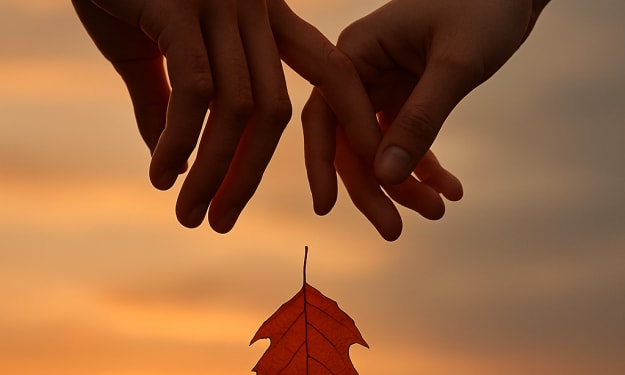
I used to believe that love, once found, was like a lighthouse—steady, unwavering, guiding you safely through life’s storms. I thought that when two people truly cared for each other, they could weather anything together. I clung to this belief like a child clutching a favorite blanket. But life has a way of gently, and sometimes painfully, teaching us that not all things meant to be will stay forever.
By Habib kingabout a year ago in Humans
"Stride to Strength: Unlocking the Power of Running for a Healthier Life"
Stride to Strength: Unlocking the Power of Running for a Healthier Life Discover the Incredible Physical, Mental, and Emotional Benefits of Running That Boost Your Well-Being Every Step of the Way --- When Emily laced up her worn-out sneakers one crisp autumn morning, she had no idea that a simple decision would transform her life in ways she had never imagined. Running had always been something she admired from afar—friends who breezed through 5Ks, morning joggers with radiant smiles—but for Emily, it felt out of reach. Years of sedentary habits, stress from work, and the weight of emotional fatigue had clouded her motivation. Yet, that day, something inside her whispered: Just one step. What began as tentative strides around her neighborhood soon evolved into something much more profound. The physical benefits of running started to reveal themselves gradually—her energy levels surged, the heaviness in her legs eased, and the pounds began to melt away. But the transformation went far beyond the physical. Each run became a moving meditation, a chance to reset her mind and reconnect with a vitality she’d long forgotten. Running, Emily discovered, wasn’t just about fitness. It was a powerful tool for holistic well-being. Physically, the act of running strengthens the heart, lungs, and muscles. It increases endurance and improves overall cardiovascular health. Emily felt her body growing stronger with every mile, her posture improving, and her breathing deepening. Scientific studies back this up: running boosts the production of endorphins, often called the body’s “feel-good” chemicals, which help to alleviate pain and induce feelings of happiness. But the mental benefits were even more striking for Emily. Her busy mind, once cluttered with worries and to-do lists, found clarity in the rhythmic pounding of her feet against the pavement. Running became a sanctuary where stress dissolved, anxiety diminished, and her mood lifted. She noticed that even on difficult days, a short run could spark a profound sense of calm and focus. In fact, runners often report improvements in memory, creativity, and cognitive function, all fueled by the increased blood flow and oxygen to the brain. Emotionally, the journey was transformative. Running helped Emily build resilience—not just physically, but emotionally. Each challenge she faced on the trail mirrored challenges in her life: the discomfort of pushing through a tough mile reflected her ability to face fears and setbacks head-on. She learned to celebrate small victories, like running a little farther or faster than the day before. This sense of accomplishment boosted her confidence and self-esteem, making her more hopeful and empowered in daily life. But Emily’s story is not unique. Across the world, millions are unlocking the power of running to enhance their lives. From seasoned marathoners to beginners taking their first tentative steps, running offers a universal path to health and happiness. The beauty of running lies in its accessibility—no expensive equipment or special facilities are required. A pair of shoes and an open road are all it takes. What truly sets running apart, though, is its ability to connect people—to community and to themselves. Emily found support in local running groups where camaraderie flourished and encouragement was abundant. Sharing goals, swapping stories, and cheering one another on turned running into a shared journey rather than a solitary task. This sense of belonging deepened her emotional well-being and provided motivation to keep moving forward. As seasons changed, Emily’s commitment to running grew stronger. She learned to listen to her body, balancing effort with rest, and savoring the simple joys of a sunrise jog or the crisp air of a winter run. Running became a metaphor for life’s journey—sometimes smooth, sometimes challenging, but always moving forward step by step. Her experience offers a compelling message: running is more than exercise—it’s a gateway to a healthier life, enriching body, mind, and spirit. For those hesitant to start, Emily encourages, “Don’t wait for the perfect moment. Start small, be patient, and celebrate every stride. The power of running is waiting for you.” Through running, Emily unlocked a life she never thought possible—a life of strength, joy, and balance. Every step became a testament to the incredible potential within each of us to transform our well-being, one stride at a time.
By Muhammad Saad about a year ago in Humans