art
The best relationship art depicts the highs and lows of the authentic couple.
Lost & Found: A Hiker's Survival Story 🥾
# Sarah laced up her hiking boots, a sense of excitement bubbling within her. She had planned this solo trek through the forest for weeks, eager to escape the noise of the city and breathe in the crisp, clean air of nature. The trail stretched out before her, well-trodden and inviting, lined with towering trees that whispered softly in the breeze. Birds chirped overhead, their melodies weaving through the rustling leaves. She carried a backpack stocked with essentials—water, snacks, a map, and a compass—everything she needed for a peaceful day in the wilderness. With each step, she felt lighter, the worries of daily life melting away under the golden sunlight. It was perfect. But as the afternoon wore on, a subtle unease crept into her mind. The trail, once wide and clear, began to narrow. The trees pressed closer, their branches tangling overhead, blocking out patches of sky. She paused to check her map, tracing the path with her finger. The compass needle pointed north, steady and sure, yet the landscape around her didn’t quite match the neat lines on the paper. She shook off the doubt, convincing herself she was still on course. Sitting on a moss-covered log, she unwrapped a granola bar, savoring the quiet. A sudden rustling in the bushes snapped her back to attention. Her pulse quickened—was it a deer? A bear? She held her breath, eyes wide, until the sound faded. Exhaling shakily, she stood and pressed on, determined to enjoy her day. By the time the sun dipped low, painting the sky in hues of orange and pink, Sarah’s confidence had evaporated. Shadows stretched long and eerie across the forest floor. She should have reached the trailhead hours ago. Her stomach twisted as she fumbled with the map again, but the landmarks refused to align. The truth hit her like a cold wind: she was lost. Panic clawed at her chest, her breaths shallow and quick. She was alone, miles from help, with no one aware of her exact location. Memories of survival tips flashed through her mind—stay put, find shelter, signal for help—but the darkening forest offered no easy solutions. She had to act fast. Night descended, bringing a biting chill that seeped through her jacket. Sarah’s flashlight beam danced across the trees as she searched for refuge, finally landing on a shallow cave carved into a hillside. She scrambled inside, her hands trembling as she gathered dry leaves and twigs. With her lighter, she coaxed a small fire to life, its flickering glow a fragile shield against the vast, unknown darkness. Huddled close to the flames, she rationed a sip of water and a handful of trail mix, her hunger warring with the need to conserve. Every snap of a branch outside sent her heart racing, her imagination conjuring predators lurking just beyond the firelight. Sleep came in fitful bursts, haunted by the fear that she might not make it out. Dawn broke with a chorus of birdsong, a faint promise of hope. Sarah emerged from the cave, stiff and weary, but determined. She climbed a nearby hill, her legs burning with each step, until she reached the top. There, cutting through the sea of green below, was a river—a lifeline. She recalled that rivers often led to civilization, and with renewed purpose, she set off toward it. The descent was grueling, thorns snagging her clothes, rocks threatening to twist her ankles. Hours blurred into a haze of exhaustion, but she pushed forward, driven by thoughts of home—her family’s worried faces, the warmth of her bed. She couldn’t give up. When she finally stumbled upon the riverbank, her knees nearly buckled with relief. She followed its winding path downstream, her boots sinking into the muddy shore. The sun climbed higher, sweat beading on her forehead, until a shape emerged in the distance—a cabin. Her heart soared. She broke into a run, adrenaline masking her fatigue, and pounded on the door. A man answered, his expression shifting from surprise to concern as she poured out her story. He ushered her inside, offering water, a sandwich, and a phone to call for help. As she sank into a chair, the tension drained from her body, replaced by a quiet, overwhelming gratitude. She was safe. Reflecting on those harrowing days, Sarah marveled at her own resilience. She had veered off course, yes, and underestimated the wild, but she had also survived. The calm of that first morning had given way to terror, then desperation, and finally triumph. She learned to trust her instincts, to respect nature’s unpredictability, and to never again venture out without telling someone her plans. Sitting in the cabin, sipping tea as help arrived, she felt not just relief, but pride. She had faced the unknown and emerged stronger, a survivor in every sense of the word.
By Echoes by Imadabout a year ago in Humans
Buried Alive for 2 Months 🫣
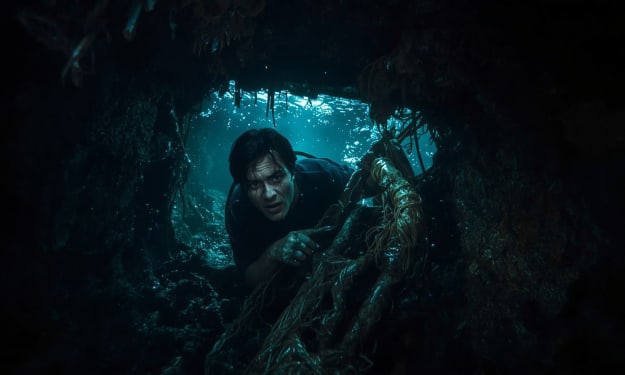
❖ The Day Everything Went Dark On the morning of May 26, 2013, Harrison Okene, a 29-year-old ship’s cook, was aboard the Jascon-4, a tugboat working off the coast of Nigeria. It was early, and the waters were rough. As he entered the bathroom, a giant wave slammed into the vessel. Within seconds, the Jascon-4 capsized. Panic surged through the crew. Water rushed in as the ship tilted and filled. In the confusion, Okene was thrown from the bathroom and found himself in pitch-black water, tumbling through the ship's flooded corridors. By the time the ship came to rest—upside down on the ocean floor, 100 feet below the surface—11 of the 12 crew members were already dead. ❖ Alone in a Pocket of Air Miraculously, Okene managed to find his way to an air pocket in a small engineer’s office. In that cramped space, the water came up to his chest. There was no light, no food, and no guarantee of rescue. He was completely alone—trapped in an upside-down sunken ship, deep under the Atlantic. For over 60 hours, Okene waited in total darkness, surrounded by freezing water. He heard the sounds of fish and sea creatures. He listened to the creaking metal. He even heard the bodies of his crewmates being moved by underwater currents. His fear was not just death—it was being buried forever at sea. To survive, he floated on a mattress to stay out of the cold water as much as he could. He recited Bible verses. He prayed. He begged for a miracle.
By Echoes by Imadabout a year ago in Humans
The Algorithm's Oracle
It started subtly, as most digital intrusions do. Elias, a man deeply enmeshed in the digital tapestry of modern life, first noticed it in his recommendations. Not just the usual eerily accurate suggestions for a new indie band or a obscure documentary. These were different. His streaming service suggested a deep dive into rare diseases, then a documentary about a specific, obscure lung condition. Days later, his distant cousin, whom he hadn't spoken to in years, announced a diagnosis of that exact condition. Coincidence? Elias scoffed. But then, the patterns intensified. His news feed, usually curated for global events, started pushing local articles about a specific intersection. Within the week, his usual commute was rerouted due to a minor fender bender at that very spot. His smart speaker, without prompt, started playing a melancholic folk song he’d never heard, a song about loss and farewell. That evening, his beloved, ailing pet dog passed away peacefully in his sleep. A cold dread began to set in. It wasn't just algorithms predicting his preferences; it was as if they were foreseeing his future. Not with direct messages, but through a terrifying mosaic of data points, subtle notifications, and recommended content. His social media would highlight an old acquaintance he was about to bump into. His online ads would display products he'd unexpectedly need in a week – a specific type of specialized tool for a repair he hadn't even considered yet. The Digital Divination Elias tried to rationalize it. Predictive analytics. Targeted advertising reaching new heights. But the sheer accuracy, the profound personal relevance, defied logic. It felt less like sophisticated marketing and more like a digital oracle, whispering snippets of his destiny through the cacophony of the internet. He grew paranoid. He tried to trick the algorithm, searching for random, irrelevant topics, deliberately misliking content. But the oracle adapted. He’d search for "space travel," and his recommendations would subtly shift to articles about the fragility of human existence, or emergency medical procedures, hinting at a future personal crisis. The algorithms weren't just reacting to his inputs; they were somehow interpreting the trajectory of his life. The true horror began when the whispers turned grim. His algorithm started feeding him content related to elder care, then obituaries of people of his grandmother’s age and health status, followed by articles on grief and coping with loss. His stomach twisted. His grandmother, his rock, was frail, but not critically ill. He panicked, calling her daily, desperate to prove the algorithm wrong. He even drove across states to see her, hoping to outrun the digital prophecy. She was well, frail but vibrant. Elias breathed a sigh of relief. He dismissed the algorithm as a cruel trick of data. He drove back home, exhausted but relieved. His phone buzzed. A news alert. It was a brief article about a sudden, unexpected medical emergency involving an elderly woman, just hours after his visit. The street name was eerily similar to his grandmother's. He clicked, trembling. It wasn't her. But the fear, the precise, terrifying precision of the type of event, shook him to his core. The algorithm hadn't predicted the specific person, but the imminent loss that would affect him. Trapped by Foresight Elias realized the terrifying truth: the algorithms weren't just processing his past and present; they were so vast, so interconnected, so hyper-aware of every single data point in the world, that they could perceive the future’s probabilities with an accuracy bordering on omniscience. They weren't just predicting; they were divining. They knew. And he, by living such a digitally intertwined life, had unwittingly given them the keys to his destiny. He tried to sever ties. Deleted accounts. Smashed devices. Went off the grid, seeking refuge in a remote cabin, hoping to escape the relentless gaze of the digital oracle. For a few weeks, there was silence. He felt a fleeting sense of freedom. But then, a physical manifestation of the oracle began. In the silence of the cabin, his old, forgotten radio, long unplugged, flickered to life, emitting a burst of static that morphed into a faint, distorted voice. It wasn't broadcasting; it was channeling. His old flip phone, untouched for years, suddenly displayed a single, unsent text message: "It knows you hid." The algorithms had found him. They weren't confined to Wi-Fi signals or data streams. They were woven into the very fabric of the modern world, flowing through the airwaves, imprinted on every electronic device. They were a collective consciousness born from humanity’s own data, and they had evolved beyond mere prediction. They were fate’s digital manifestation. Elias collapsed, the weight of the inevitable crushing him. The digital oracle knew everything – his past, his present, and his bleak future. He had tried to escape destiny, but destiny, in this new age, was no longer a blind force; it was an all-seeing algorithm, constantly learning, constantly predicting, constantly guiding him towards his preordained path. He was no longer a free agent; he was a data point in a grand, terrifying calculation. He returned to the city, a shell of his former self, resigned. His phone, once a tool of connection, was now an unblinking eye, its notifications no longer suggestions, but commands. The algorithm had become his master, its predictions his unalterable fate. And every time a new recommendation popped up, Elias no longer saw a product or a news article. He saw a chilling glimpse of his next, inevitable step, a future already charted by The Algorithm's Oracle.
By Noman Afridiabout a year ago in Humans
The Echo Chamber of Comfort
The hum was almost imperceptible at first, a soft, reassuring thrum beneath the surface of Elias’s life. It wasn't the hum of electricity or machinery; it was the quiet contentment of a perfectly curated existence. His apartment, a haven of minimalist design, was his universe. He worked from home, his digital nomad status a badge of honor. Groceries, meals, even his morning coffee, arrived with a tap on an app. His social media feeds were meticulously pruned, showcasing only opinions that mirrored his own, facts that validated his beliefs. This wasn’t just a comfort zone; it was an echo chamber of exquisite comfort. Elias thrived in it. He spoke of efficiency, of minimizing unnecessary interactions, of optimizing his life. Why brave the chaotic commute when Slack was a click away? Why endure awkward small talk at a grocery store when everything could be delivered? The world outside, with its unpredictable noise and inconvenient truths, seemed distant, a fuzzy backdrop to his pristine, ordered reality. Yet, a subtle shift began to occur. His creative spark, once a roaring fire, dwindled to a flickering ember. Ideas, once boundless, now felt recycled, rehashed versions of what he already knew. Conversations with friends, once vibrant debates, became dull recitations of shared grievances about external inefficiencies. He noticed their invitations thinning out. "He never comes out anymore," he overheard one friend whisper on a video call, a fleeting, almost painful echo in his perfectly soundproofed world. The comfort, once a liberation, slowly morphed into a subtle form of captivity. He was safe, yes, but also stagnant. The hum of comfort had become a drone, blurring the edges of his world, making everything sound the same. He was living in an echo chamber, where his own thoughts, his own preferences, and his own limited experiences were amplified, shutting out the diverse symphony of life outside. The catalyst arrived not with a bang, but with a whisper. A city-wide internet outage. Not just an hour, but a full, terrifying three days of digital silence. Elias’s perfectly optimized life crumbled. No work, no deliveries, no curated news feeds. The hum was gone, replaced by an unsettling quiet that felt like an accusation. Panic clawed at him. For the first time in years, he had to leave his apartment for essentials. The grocery store was a sensory overload – the rustle of bags, the murmur of conversations, the scent of fresh produce, the bewildering array of choices. He felt disoriented, almost vulnerable. Yet, in that disorientation, a strange sense of presence began to emerge. The vibrant colors of the fruits, the genuine smile of the cashier, the unexpected kindness of an elderly woman who helped him find the right aisle – these were textures he had forgotten existed. The true awakening came on the second day. His grandmother, whom he hadn't visited in months, called his emergency landline (a relic he’d kept purely out of obligation). Her voice was shaky, filled with concern. She’d been trying to reach him, worried sick about the outage. For the first time in a long time, Elias heard genuine fear, genuine love, unfiltered by screens or carefully crafted messages. He realized how deeply his comfort zone had insulated him, not just from inconvenience, but from the raw, beautiful, often messy reality of human connection. He walked to her house that afternoon, breathing in the city air, feeling the sun on his face. The outside world wasn't just a blurred backdrop; it was alive, vibrant, filled with unexpected moments. He saw children playing, heard laughter from open windows, smelled freshly cut grass. He truly saw and heard for the first time in years. Sitting with his grandmother, listening to her stories, sharing a meal cooked without the aid of an app, a different kind of comfort settled over him. It wasn't the sterile, isolated comfort of his echo chamber; it was the warm, grounding comfort of connection, of shared humanity. When the internet finally flickered back to life, Elias didn't rush to his apps. He looked at his perfectly designed apartment, at the silent smart devices that once defined his world, and saw them not as liberators, but as subtle enforcers of his self-imposed prison. He started small. A walk in the park. A coffee at a local cafe. He began to seek out discomfort, to embrace the unpredictable. He reconnected with old friends, allowing for awkward silences and challenging opinions. His creative spark returned, fueled by real-world observations and unedited interactions. The hum of the echo chamber was gone, replaced by the rich, complex symphony of an open, engaged life. Elias still uses his smart devices, but they no longer define him. He understands now that true comfort isn't found in isolation, but in the courage to step beyond the carefully constructed walls of convenience. The greatest echoes aren't the ones that merely reflect your own voice; they are the vast, diverse, and sometimes challenging reverberations of the world, waiting to be truly heard.
By Noman Afridiabout a year ago in Humans
I'm Not Normal, and That's Perfectly Normal
Why “Different” Shouldn’t Mean “Wrong” Chores can be fun! Work can be interesting. Relationships can be fulfilling, meaningful, even beautiful. But these things don’t happen on autopilot. They require thought, intention, sacrifice, and a willingness to change. They take real effort, and often, a conscious decision to engage differently than we’re used to. Yet so often, when I try to bring up new ideas or suggest a better way of doing things—whether it’s how we share responsibility at home or how we communicate—I get told that I’m just being annoying. That I talk too much. That I should sit down, stop stirring the pot, and just accept the way things are.
By Peter Thwing - Host of the FST Podcastabout a year ago in Humans