art
The best relationship art depicts the highs and lows of the authentic couple.
The Blind Mother Whose Sacrifice No One Ever Noticed
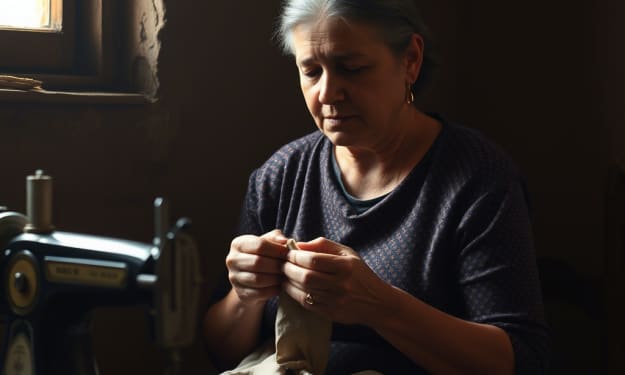
I was raised by a woman who never saw my face. She never watched me take my first steps, never read my expressions, and never looked into my eyes. Not because she didn’t want to—but because she couldn’t. My mother was born blind. As a child, I didn’t fully understand what that meant. I used to wave at her, make silly faces, and hold up toys for her to admire—until one day, my aunt gently pulled me aside and said, “Beta, your mama can’t see.” I remember feeling confused. I thought, Then how does she always find me? How does she know when I’m sad? Because she always did. My mother had an uncanny ability to sense every emotion I hid. I couldn’t lie to her. Even in a crowded room, she would turn toward me when I entered. Her other senses were like sharpened blades—listening to my footsteps, recognizing the change in my breathing, even sensing the mood in my silence. We were poor. My father had left when I was three. He said he couldn't handle living with a disabled woman. I don't remember his face—and honestly, I never wanted to. It was always just me and Amma. She stitched clothes for a living. People would leave cloth at our door, and days later, perfectly finished garments would be returned. She never needed a measuring tape—she would gently feel the fabric, sense the folds, and sew with a grace that baffled the neighbors. As I grew older, I became conscious of how other kids talked about her. "That's the blind lady’s kid." "How does he even live like that?" "Poor guy, must be so embarrassed." Embarrassed? I wasn’t—until I was. When I got into high school, things changed. I wanted to fit in. I wanted friends who didn’t whisper about my mother. So I stopped inviting people home. When school events happened, I told Amma not to come. “It’s okay, Amma. I’ll go alone. You can’t see anyway, right?” I didn’t realize the cracks those words left behind. One day, I came home and found her sitting silently, not stitching, not humming like she usually did. She just sat there, holding my school report card in her hand—one that I had left on the table by mistake. “First position,” she said quietly. “I’m proud of you.” She smiled, but there were tears on her cheeks. “I just wish I could have seen you walk on that stage.” My heart shattered. I had won an award at school and refused to take her with me. I didn’t want the world to see “my blind mother”—but she only wanted to see me. From that day, I changed. I started walking with her proudly. At markets, when people stared, I stared back. When someone said something behind her back, I said it to their face. Years passed. I graduated, got a job, bought a small house. Amma still stitched, even when I begged her to stop. “It’s my way of feeling useful,” she’d say. Then one night, she called me into her room. “I had a dream,” she whispered. “I saw you. I actually saw you. Just for a moment, in my sleep. You were smiling.” I didn’t say anything. I just held her hand and cried. A few weeks later, she fell ill. Doctors said it was her heart. Years of struggle, pain, and quiet sacrifice had taken their toll. She passed away quietly in her sleep, clutching a scarf she had made for me when I was five. After her funeral, people came and told me stories I’d never heard. “She gave us clothes even when she had no food.” “She stayed up all night stitching so her son wouldn’t be late to school.” “She once gave her shawl to a beggar and walked home in the cold.” I realized something: My mother lived in darkness—but she created light for everyone else. Her sacrifice wasn’t loud. It didn’t make headlines. But it shaped a life—mine. And now, when people ask about my strength, I say: “I was raised by a woman who never saw the world… yet made mine beautiful.”
By Noman Afridiabout a year ago in Humans
Ed Miliband rejects £24bn plan to bring power from Morocco to UK
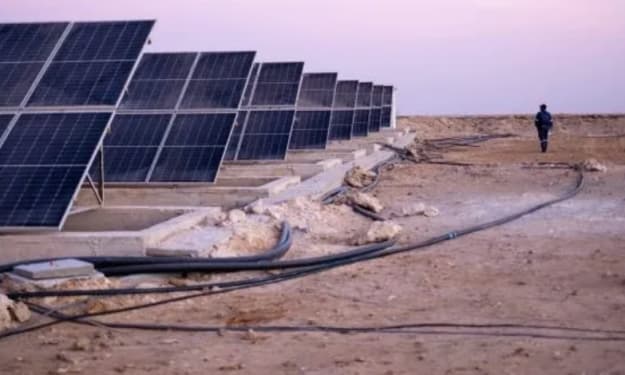
**Ed Miliband Rejects £24 Billion UK-Morocco Energy Link in Major Policy Shift** Energy Secretary Ed Miliband has rejected a £24 billion proposal to import renewable electricity from Morocco to the United Kingdom via a record-breaking subsea cable. The ambitious Morocco-UK Power Project, led by British energy firm Xlinks, had aimed to provide up to 8% of Britain’s electricity needs by transporting solar and wind power from the Sahara Desert to the Devon coast.
By GLOBAL NEWSabout a year ago in Humans
The Importance of a Balanced Diet for Long-Term Health
Introduction Eating healthy isn't just about losing weight—it's about feeling good, staying strong, and living a long, happy life. A balanced diet gives your body all the nutrients it needs to work properly. Without the right foods, you might feel tired, get sick often, or develop health problems like diabetes, heart disease, or weak bones.
By MUHAMMAD Abbasabout a year ago in Humans