art
The best relationship art depicts the highs and lows of the authentic couple.
The Blind Mother Whose Sacrifice No One Ever Noticed
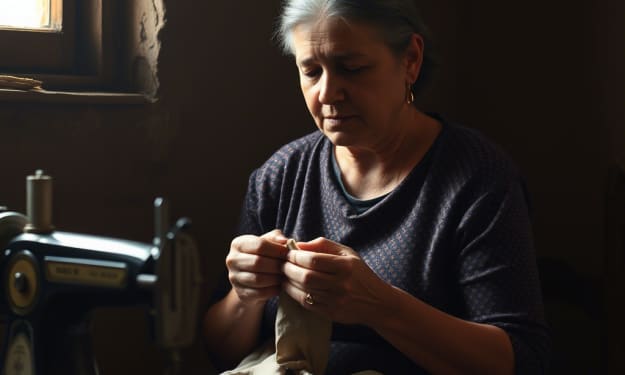
I was raised by a woman who never saw my face. She never watched me take my first steps, never read my expressions, and never looked into my eyes. Not because she didn’t want to—but because she couldn’t. My mother was born blind. As a child, I didn’t fully understand what that meant. I used to wave at her, make silly faces, and hold up toys for her to admire—until one day, my aunt gently pulled me aside and said, “Beta, your mama can’t see.” I remember feeling confused. I thought, Then how does she always find me? How does she know when I’m sad? Because she always did. My mother had an uncanny ability to sense every emotion I hid. I couldn’t lie to her. Even in a crowded room, she would turn toward me when I entered. Her other senses were like sharpened blades—listening to my footsteps, recognizing the change in my breathing, even sensing the mood in my silence. We were poor. My father had left when I was three. He said he couldn't handle living with a disabled woman. I don't remember his face—and honestly, I never wanted to. It was always just me and Amma. She stitched clothes for a living. People would leave cloth at our door, and days later, perfectly finished garments would be returned. She never needed a measuring tape—she would gently feel the fabric, sense the folds, and sew with a grace that baffled the neighbors. As I grew older, I became conscious of how other kids talked about her. "That's the blind lady’s kid." "How does he even live like that?" "Poor guy, must be so embarrassed." Embarrassed? I wasn’t—until I was. When I got into high school, things changed. I wanted to fit in. I wanted friends who didn’t whisper about my mother. So I stopped inviting people home. When school events happened, I told Amma not to come. “It’s okay, Amma. I’ll go alone. You can’t see anyway, right?” I didn’t realize the cracks those words left behind. One day, I came home and found her sitting silently, not stitching, not humming like she usually did. She just sat there, holding my school report card in her hand—one that I had left on the table by mistake. “First position,” she said quietly. “I’m proud of you.” She smiled, but there were tears on her cheeks. “I just wish I could have seen you walk on that stage.” My heart shattered. I had won an award at school and refused to take her with me. I didn’t want the world to see “my blind mother”—but she only wanted to see me. From that day, I changed. I started walking with her proudly. At markets, when people stared, I stared back. When someone said something behind her back, I said it to their face. Years passed. I graduated, got a job, bought a small house. Amma still stitched, even when I begged her to stop. “It’s my way of feeling useful,” she’d say. Then one night, she called me into her room. “I had a dream,” she whispered. “I saw you. I actually saw you. Just for a moment, in my sleep. You were smiling.” I didn’t say anything. I just held her hand and cried. A few weeks later, she fell ill. Doctors said it was her heart. Years of struggle, pain, and quiet sacrifice had taken their toll. She passed away quietly in her sleep, clutching a scarf she had made for me when I was five. After her funeral, people came and told me stories I’d never heard. “She gave us clothes even when she had no food.” “She stayed up all night stitching so her son wouldn’t be late to school.” “She once gave her shawl to a beggar and walked home in the cold.” I realized something: My mother lived in darkness—but she created light for everyone else. Her sacrifice wasn’t loud. It didn’t make headlines. But it shaped a life—mine. And now, when people ask about my strength, I say: “I was raised by a woman who never saw the world… yet made mine beautiful.”
By Noman Afridiabout a year ago in Humans
Ed Miliband rejects £24bn plan to bring power from Morocco to UK
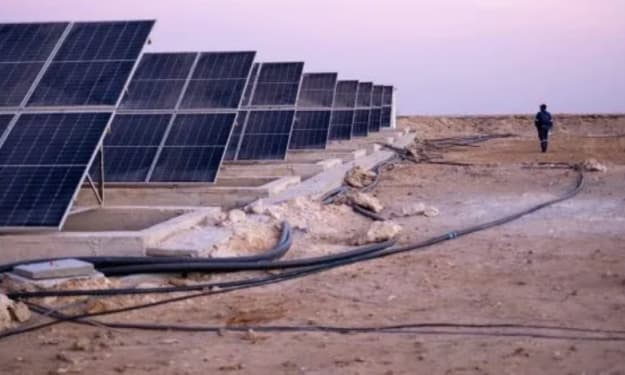
**Ed Miliband Rejects £24 Billion UK-Morocco Energy Link in Major Policy Shift** Energy Secretary Ed Miliband has rejected a £24 billion proposal to import renewable electricity from Morocco to the United Kingdom via a record-breaking subsea cable. The ambitious Morocco-UK Power Project, led by British energy firm Xlinks, had aimed to provide up to 8% of Britain’s electricity needs by transporting solar and wind power from the Sahara Desert to the Devon coast.
By GLOBAL NEWSabout a year ago in Humans
The Importance of a Balanced Diet for Long-Term Health
Introduction Eating healthy isn't just about losing weight—it's about feeling good, staying strong, and living a long, happy life. A balanced diet gives your body all the nutrients it needs to work properly. Without the right foods, you might feel tired, get sick often, or develop health problems like diabetes, heart disease, or weak bones.
By MUHAMMAD Abbasabout a year ago in Humans
The photograph that saved her life
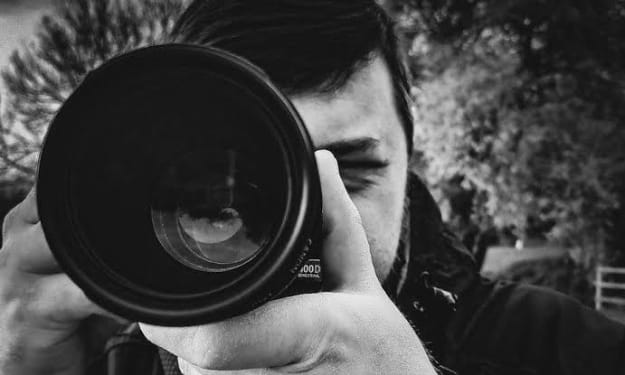
The train roared past, its steel wheels screeching against the tracks, drowning out the sounds of the bustling platform. Amidst the crowd stood a girl—thin, pale, almost invisible. Her name was Alina, a 19-year-old who looked more like a shadow than a person. She clutched a tattered schoolbag to her chest and stared blankly at the yellow line just inches from the edge. She had come to the station not to travel but to disappear. Life had become unbearable. Her father had died two years ago in a factory accident, and her mother, overwhelmed by grief, turned cold. Poverty clung to their lives like mold, and Alina, once a bright student with dreams of becoming a journalist, had dropped out of school to work at a sewing shop. Each day drained her more. Each night she cried silently in a corner of their one-room home. Her only escape was through writing in a diary she kept hidden in her bag. But even words had stopped comforting her. On that particular morning, after another argument at home, she walked toward the station with no ticket, no destination—just a decision. She sat on a bench and waited, counting each train, each minute, waiting for the platform to clear enough for her to do it without a scene. As she rose and stepped forward, a voice behind her called out, “Excuse me! Can I take your photo?” She froze. A man, perhaps in his mid-30s, held a professional-looking camera. He wore a denim jacket and had a kind but tired face. “I’m a street photographer,” he explained. “I capture real emotions. You have... something in your eyes. May I?” Alina hesitated. No one had spoken to her kindly in months. She nodded without a word. He clicked the camera once. Twice. Then smiled. “Thank you,” he said gently. “You have a powerful presence.” She didn’t reply but turned away, tears suddenly burning her eyes. She hadn’t heard anything good about herself in a long time. “What’s your name?” he asked. “Alina,” she whispered. “I’m Imran,” he said. “You’re meant for more than sadness, Alina. I don’t know what you’re going through, but... I hope this photo reminds you that you exist. And that you matter.” She didn’t know what to say. He handed her a small card with his Instagram handle. “I’ll post it later. Look for yourself through someone else’s eyes.” Then he walked away, blending into the morning crowd. --- That night, Alina lay awake, the small card still clutched in her hand. She opened her mother’s old mobile and found the photographer’s page. And there it was. The caption read: > “I saw a girl today at the train station. There was sorrow in her eyes, but strength too. This is a face that has a story—a story worth telling. Alina, if you’re reading this: the world is waiting for your voice.” Over a hundred strangers had liked and commented on the post: “She’s beautiful.” “There’s something poetic in her gaze.” “Tell her she’s not alone.” Alina read every word. Again and again. For the first time in months, her tears were not from pain but from a strange sense of hope. She felt seen. --- In the weeks that followed, something shifted. Alina reached out to Imran. They met again. He listened to her story—not with pity, but with respect. He offered to publish her writings as captions on his photographs. Slowly, she began to write again. Short poems. Stories of survival. Dreams long buried. Her words started resonating with others. Imran's page grew. So did her confidence. By the end of the year, she had her own social media account under the name AlinaWrites, where she shared raw, heartfelt pieces about poverty, grief, healing, and hope. A local magazine noticed her and offered her a part-time job writing articles. Her mother, seeing the light return to her daughter’s eyes, began changing too. They healed together—slowly, imperfectly, but truly. --- Years later, Alina stood on the same platform—not as a girl wanting to vanish, but as a woman launching her first self-published book titled “The Photograph That Saved My Life.” A crowd had gathered. Imran stood beside her, proud. She held the book in one hand and the same photograph in the other. It was framed now, preserved like a sacred memory. In the picture, her eyes were tired, but fierce. Lost, yet quietly searching. As she looked out at the crowd, she said, “Sometimes, we think we’re invisible. That no one sees us, hears us, or cares. But all it takes is one person, one moment, one photograph—to remind you that your story matters. That you matter.” The applause was thunderous. But all she could hear was the quiet whisper inside her that had once wanted to give up… now turned into a roar that said, “Keep going.”
By Shehzad khanabout a year ago in Humans
What is a Pendname? Exploring the Wisdom of a Forgotten Genre
In the vast realm of classical literature, particularly in Islamic and Persianate cultures, the “Pendname” occupies a unique place. The word “Pendname” (or Pandnāma) literally translates to “Book of Counsel” or “Book of Advice.” These works are moralistic and didactic texts, usually written in verse, offering guidance on how to live a virtuous, wise, and balanced life. Although once widely read and respected, pendnames have gradually faded from the spotlight, yet their timeless wisdom remains deeply relevant today.
By Nedir Lifeabout a year ago in Humans
From ‘May I Help You?’ to ‘I Remember You’: The Psychology of Personal Memory in Luxury Retail Sales
I’ve never really thought of my customers as “customers.” To me, they were people I connected with—sometimes over a favorite gemstone, sometimes over a shared love for emeralds, and sometimes, simply over a story. One conversation often turned into another, and before long, these so-called transactions transformed into friendships. Most of my clients didn’t just buy from me—they introduced their sisters, their best friends, even their neighbors. They sent me messages during Nowruz, or during Eid al-Fitr, and I replied with just as much warmth. It wasn’t business. It was something far more personal.
By Sarina Raftariabout a year ago in Humans
Starmer faces growing Labour rebellion over welfare cuts
Starmer is confronted with a growing labor revolt over welfare cuts. Labour leader Sir Keir Starmer is facing increasing pressure from within his own party as a growing number of Labour MPs voice opposition to his stance on welfare cuts. Within a few weeks of Labour's historic victory in the general election, the internal rebellion has revealed deep divisions within the party. Starmer's decision to maintain some welfare restrictions imposed by the previous Conservative government, particularly the two-child benefit cap, is at the heart of the dissent. Despite pre-election hopes that a Labour government would reverse the policy—seen by critics as punitive and harmful to low-income families—Starmer has signalled there will be no immediate change.
By GLOBAL NEWSabout a year ago in Humans