
Egg Freezing vs. IVF: Understanding the Difference
Fertility Options: Key Differences Between Egg Freezing and IVF Treatment
Fertility treatments have given hope to countless individuals and couples dreaming of starting a family. Among the most discussed options are egg freezing and IVF treatment. While both involve advanced reproductive techniques, they serve different purposes and are tailored to unique needs. Understanding the difference between egg freezing and IVF can help you make informed decisions about your reproductive journey.
In this blog, we will explore egg freezing and IVF in detail, compare their processes, benefits, and challenges, and answer some frequently asked questions
What is Egg Freezing?
Egg freezing, also known as oocyte cryopreservation, is a process where a woman’s eggs are retrieved, frozen, and stored for future use. This option is often chosen by women who want to delay pregnancy due to personal, professional, or medical reasons.
Key Steps in Egg Freezing:
1. Ovarian Stimulation: Hormonal injections stimulate the ovaries to produce multiple eggs.
2. Egg Retrieval: Eggs are collected through a minimally invasive procedure.
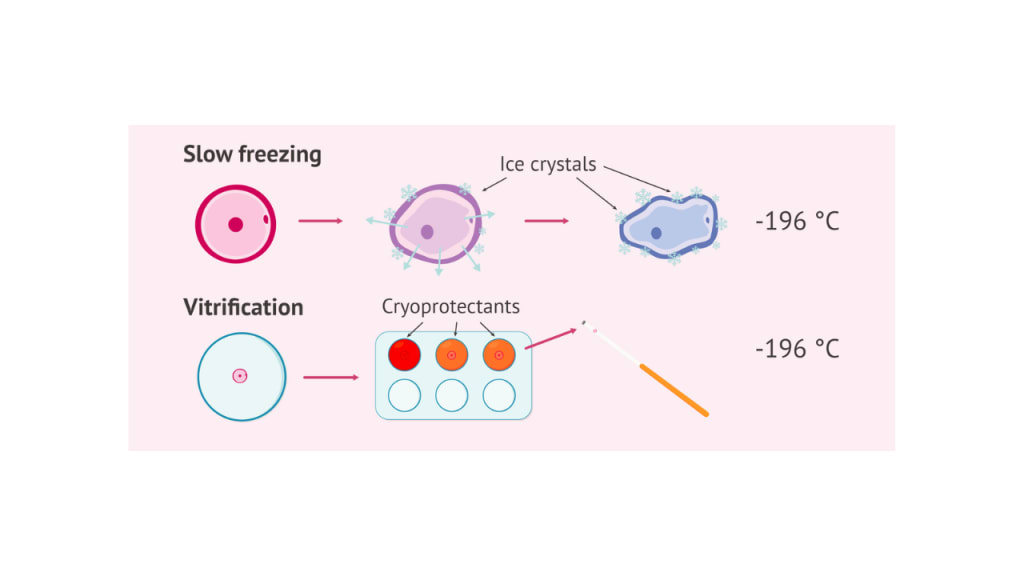
3. Freezing: The collected eggs are frozen using a technique called vitrification to prevent ice crystal formation.
What is IVF Treatment?
IVF treatment, or in vitro fertilization, is a fertility process where eggs are fertilized with sperm in a laboratory, and the resulting embryos are transferred into the uterus. It is widely used to help individuals or couples with infertility issues.
Key Steps in IVF Treatment:
1. Ovarian Stimulation: Hormones are administered to produce multiple eggs.
2. Egg Retrieval: Mature eggs are collected from the ovaries.
3. Fertilization: The eggs are fertilized with sperm in a lab.
4. Embryo Transfer: A healthy embryo is transferred into the uterus.
Differences Between Egg Freezing and IVF Treatment
1. Purpose
• Egg Freezing: Preserves fertility for future use. It is ideal for women who aren’t ready to conceive but want the option later.
• IVF Treatment: Helps individuals or couples conceive immediately, often addressing infertility issues.
2. Timeline
• Egg Freezing: The eggs can remain frozen for years until the woman decides to use them.
• IVF Treatment: The process typically begins immediately, aiming for a pregnancy within a few months.
3. Process Duration
Both procedures involve ovarian stimulation and egg retrieval, but IVF includes additional steps such as fertilization and embryo transfer, making it a longer process.
4. Success Rates
• Egg Freezing: Success depends on the woman’s age at the time of freezing and the quality of the eggs.
• IVF Treatment: Success rates depend on factors like the woman’s age, embryo quality, and underlying health conditions.
5. Cost
Egg freezing typically involves initial storage costs, while IVF treatment may require multiple cycles, impacting the overall expense.
Benefits of Egg Freezing
• Allows women to preserve their fertility and plan motherhood on their terms.
• Useful for women undergoing medical treatments like chemotherapy, which can affect fertility.
• Provides peace of mind for those wanting to delay pregnancy for personal or professional reasons.
Benefits of IVF Treatment
• Offers a solution for couples struggling with infertility.
• Can be tailored to address various fertility issues, including male factor infertility.
• Provides a higher chance of conception within a short timeframe.
Common Challenges
Challenges in Egg Freezing:
• The process does not guarantee future pregnancy.
• Storage costs can add up over time.
Challenges in IVF Treatment:
• Multiple cycles may be required, leading to emotional and financial strain.
• Success rates decline with age.
Which Option is Right for You?
Choosing between egg freezing and IVF treatment depends on your unique situation:
• If you are not ready to conceive now but want the option in the future, egg freezing may be ideal.
• If you are actively trying to conceive and facing challenges, IVF treatment can offer immediate assistance.
Consulting a fertility specialist can help you make the best decision based on your health, goals, and circumstances.
FAQs
1. Is egg freezing the same as IVF?
No, egg freezing preserves eggs for future use, while IVF treatment involves fertilizing eggs to create embryos for immediate pregnancy.
2. How long can frozen eggs be stored?
Frozen eggs can be stored for several years, with no significant decline in quality if the freezing process is done correctly.
3. What is the success rate of IVF treatment?
IVF success rates vary based on factors like age, health, and embryo quality, but it generally ranges from 30% to 50% per cycle.
4. Can egg freezing guarantee pregnancy later?
While egg freezing increases the chances, it doesn’t guarantee pregnancy, as success depends on factors like egg quality and overall health.
5. How do I choose between egg freezing and IVF treatment?
The decision depends on your immediate and future family planning goals. Consult a fertility expert to assess your options.
Summary
Egg freezing and IVF treatment are groundbreaking fertility solutions that cater to different needs. Egg freezing is ideal for preserving fertility, while IVF is designed for immediate conception. Both processes involve advanced medical techniques and have their own benefits and challenges.
Conclusion
Whether you are considering egg freezing or IVF treatment, understanding the difference is essential to making an informed choice. By consulting with a trusted fertility specialist, you can determine the best path for your reproductive journey. Both options empower you to take control of your fertility, offering hope and possibilities for building your family.
Take the first step today by learning more and seeking expert advice tailored to your unique needs!
About the Creator
Enjoyed the story? Support the Creator.
Subscribe for free to receive all their stories in your feed.
Comments
There are no comments for this story
Be the first to respond and start the conversation.