
Don’t Judge Anyone Until You’ve Seen Them Under Pressure
A quiet, honest look at how ordinary people reveal who they really are when money, fear, and opportunity enter the room, and why I still choose to stay decent.
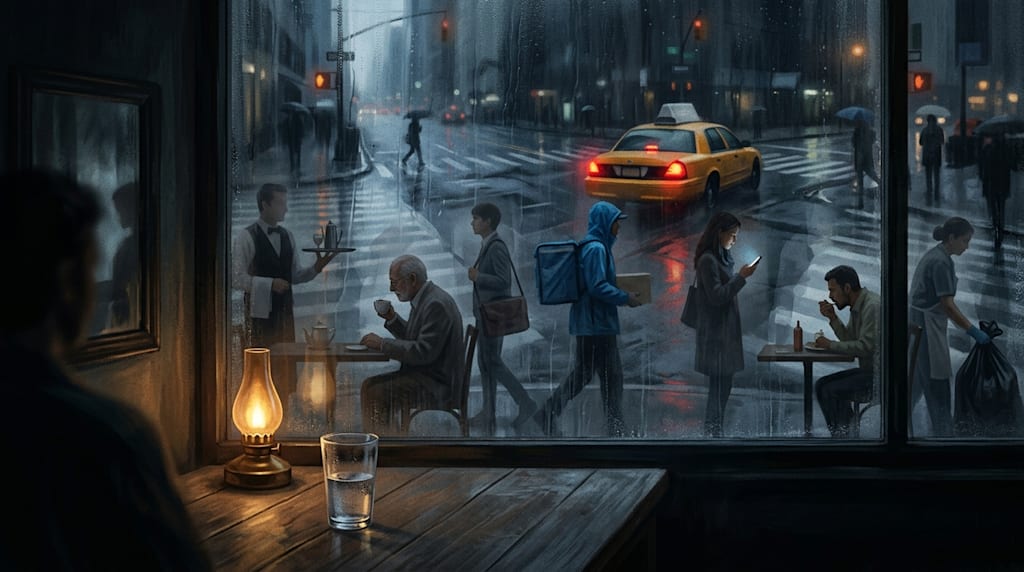
Don't Judge People When the Water Is Calm
At dinner, Roger was polite to everyone.
He poured wine for his boss. He stood up, held the bottle with both hands, and kept the rim of his glass lower than the other man's. He passed dishes around the table. He smiled with his eyes. When he spoke, he looked directly at the person he was speaking to and nodded at the right moments.
A waiter brought soup and his hand shook. A few drops landed on the tablecloth. Roger frowned and said nothing. The waiter apologized. Roger waved a hand and went back to talking about house prices.
Later, another dish came. The waiter set it near the edge of the table. Roger reached out, steadied it, and said, "Be careful." His voice was not loud, but everyone at the table heard it. The waiter said sorry again and backed out, nearly hitting the door.
Roger turned back and smiled. He picked up the conversation where he had left it.
That night he added me on social media. His feed was full of hiking photos, tea, and pictures of his kids doing homework. His bio said: Do good. Ask for nothing.
Later we had dinner alone. His phone rang. His face changed. He hung up and said an old friend, someone he had helped a lot, had just told him money was tight when Roger asked for a short-term loan.
"It's fine," he said. "People are like that."
He smiled again. His eyes did not.
Michael was the kindest person I knew.
Ten years ago, he lent a friend fifteen thousand dollars. It was not a small amount for him. The friend said six months. It took three years. Michael never pushed. Once, drunk, he only said, "Everyone has hard times."
Then Michael bought a house. He was short five thousand for the down payment. He called the friend. The friend said he had just bought a car and things were tight.
Michael said okay. He hung up and told his wife, "Let's not make it hard for him."
Later, the friend's business took off. Michael never mentioned the money again. Someone asked why. He said, "It would hurt the friendship."
But after that, Michael never lent money to anyone again. He still helped. He gave time, effort, advice. But money was off the table.
He had not turned bad. He had pulled his kindness back a little.
Jason had an affair.
He had been married for seven years. His daughter was five. The other woman was a coworker, younger, quick to laugh, and she admired him. He said he and his wife had no feelings left, that they were only staying together for the child.
After it came out, he drank with us. "I didn't want this," he said. "You don't know how suffocating that house was. She only talks about the child. She never touches me. I'm a normal man."
He did not think he was a bad person. He said he had met the right person at the wrong time. He said he was in pain. He said he would leave with nothing if his wife would just not make a scene.
His wife did not make a scene. The divorce was fast. The day he moved out, his daughter clung to his leg. He peeled her hands off and said, "Daddy will visit."
He closed the door, went downstairs, got in his car, and texted the coworker: I'm free.
Kevin got promoted.
The congratulations poured into the group chat. I sent one too. Then I stared at the screen, got up, and poured myself a glass of water.
That night I could not sleep. A knot sat in my chest. It wasn't jealousy. Five years ago, we had started at the company together. We had worked late together, eaten takeout together. Now he was up, and I was where I had been.
The next day I smiled and clapped his shoulder. "You're buying."
He said yes. At dinner he talked about the pressure, the expectations, the fact that he had no idea what he was doing. I listened, nodded, poured his wine.
On the way home, I asked myself: Do I want him to fail? No. I want him to do well. I just do not want him to do too much better than me.
The thought embarrassed me. It was also true.
Louise was a friend of my mother's.
When she was younger, she was the warm one. If someone had trouble, she showed up. She lent money, watched children, ran errands. She used to say, "What is life for if not helping each other?"
Then she retired. Her health got worse. Some of the people she had helped stayed in touch. Some drifted. Once, when she was in the hospital, I visited. She was alone. A bowl of soup had gone cold on the bedside table.
"Everyone's busy," she said.
She did not complain. But after that, she stopped calling people first. When someone asked her for help, she would say, "I'm not doing well these days. Try someone else."
Her kindness had not disappeared. It was like a towel that had been wrung too many times. There was no water left to squeeze out.
Ethan was the new intern.
On his first day, he wore a white shirt with sleeves that were a little too long. He called everyone by name, quietly. At lunch, he sat alone in the corner and ate food he had brought from home.
In the afternoon, the cleaning lady came to empty the trash. When she reached his desk, he said, "Thank you." Same voice he used with everyone else.
Later, a senior employee dropped a stack of files on his desk. "Finish these before you leave."
Ethan said okay. He worked until eight. When he was done, the senior employee looked it over and said, "Wrong format. Do it again."
Ethan said okay and did it again.
The next day, the senior employee told the group chat that Ethan was careless. Ethan did not explain. At lunch, he sat in the corner again and ate his own food. When the cleaning lady came, he said thank you again.
I asked him why he did not defend himself.
"It wouldn't help," he said. "And the cleaning lady works hard."
He said, "the cleaning lady." He did not say "that senior employee."
A project went wrong at work.
The boss asked who had been in charge. No one spoke. Everyone knew it was Frank. But Frank sat there, looking down, flipping through his notebook. Other people checked their phones, looked out the window, pretended to take notes.
The boss asked again. Silence.
"Fine," the boss said. "I'll look into it. Whoever it is, own it."
After the meeting, Frank caught the boss in the hallway. "It was me," he said. "I didn't expect this to happen."
The boss looked at him. "Why didn't you say that in the room?"
"I was afraid."
Frank lost part of his bonus. He was not fired. After that, he was more careful.
I asked him why he admitted it in the end.
"I couldn't live with it," he said. "And I looked around the room. No one spoke for me. That felt worse than losing the money."
He paused. "But I understand them. If I were them, I might not have spoken either."
Walter was in his seventies.
He had retired from a factory. Every morning he went for a walk. In the afternoon he painted. He was good with letters. Neighbors asked him to write wedding invitations. He never charged. He bought the paper and ink himself.
Someone asked what he got out of it.
"Fun," he said.
Then his wife got sick. She was in bed for three years. He fed her, washed her, turned her, stayed with her. He did not hire a nurse. The day she died, he sat by the bed, holding her hand. "You go first," he said. "I'll follow."
After she died, he still walked in the morning. He still painted in the afternoon. Neighbors still asked for wedding invitations. He still did not charge.
"Aren't you lonely?" someone asked.
"Lonely," he said. "But the days go on."
On his desk was a photograph of his wife when she was young. Next to it was a cup of tea. When the tea went cold, he did not change it. He just left it there.
One day I visited. He was painting two lines.
"This line is yourself," he said. "This line is others. Without the second, the first cannot stand."
He put down the brush. "But the second cannot carry you either. You have to stand on your own."
He picked up the cold tea and drank.
"It's cold," I said.
"Cold is still tea," he said.
Kyle used to be strict.
He divided everything into right and wrong. He needed to see every person clearly. "I can't tolerate sand in my eyes," he used to say.
Then he went into business and got cheated by a college friend. He went to the friend. The friend said he had no money and needed more time. Kyle gave him time. Half a year later, Kyle asked again. The friend said, "You're pressuring me. Are we even friends?"
"I'm pressuring you?" Kyle said. "You owe me."
"You weren't like this before."
"I was stupid before."
That night he drank a lot. "It's not the money," he said. "I miss what I used to believe."
He got part of the money back and stopped chasing the rest. He cut contact with the friend. He no longer said he could not tolerate sand in his eyes.
"Too much sand blinds you," he said.
He did not turn cold. He still helped people. He just thought first. He still believed in people. He just looked first.
"You can't expect all of it to be good," he said. "But you can't throw all of it away because some of it is bad."
He paused. "It's like eating fish. You know there are bones. You don't stop eating fish. You're just careful."
I asked if he still trusted people.
"Yes," he said. "But not all of them."
He smiled. "Trust half. Keep half. The half you keep is for yourself."
Marco was a courier.
He smiled every day. Rain or shine, good customers or bad. He knocked, said, "Hello, delivery," and waited. If no one was home, he waited a little or used the parcel locker. He never shouted. He never complained.
One rainy day, he had to deliver to the sixth floor. No elevator. He ran up. His clothes were soaked. The customer opened the door and said, "Why so slow?"
"Sorry," Marco said. "Heavy rain."
"Next time, earlier."
"Okay."
I saw him downstairs. He stood in the rain for a moment, took a bottle of water from his bag, and drank. Then he saw me and smiled.
"Rain's heavy today," he said.
"You have patience," I said.
"Not patience," he said. "No choice. If I argue and they complain, I lose pay. I have two kids. One in middle school, one in elementary. My wife is sick. She does piecework at home. If I lose this job, what happens to them?"
He paused. "Most people are fine. One or two are not. You endure."
He got on his scooter and rode away. His rain jacket was blue with the delivery company logo. He did not go fast. He went steady.
That night I thought: some people do not lack a temper. Life has ground it into something else.
Grace was my aunt.
When she was young, she was known as the good one. She broke up fights. She gave people things. "Help when you can," she used to say.
Her son bought a house in the city and brought her to live with him. She did not fit. Doors closed. Neighbors did not know each other. She missed the small town. She missed the people she had helped.
When she went back, some had died. Some had moved. Some smiled politely and kept walking. She stood at the old road she had walked for decades and felt strange.
"I thought if I helped enough people, someone would remember me when I got old," she told me. "Not many did."
She smiled. "But I don't regret it. I meant it then. And no one remembers now. That's true too."
She went back to the city. She started talking to the cleaning staff, the doorman, the woman selling vegetables. She said thank you. She stopped waiting for people to come to her. She went to them.
"People can't wait," she said. "If you wait too long, you go cold."
At seventy, she learned to use a smartphone. She joined group chats. She sent voice messages. "Did you eat?" "Wear more." "I'm fine."
Some replied. She was happy. Some did not. She was not angry.
"I send mine," she said. "Replying is theirs."
Then she sent another voice message: "Sun's good today. I aired the blankets."
Sam drove a taxi.
He worked the night shift. Six in the evening to six in the morning. He liked the night. Fewer cars. No traffic. He drove steady. When a passenger got in, he said, "Hello." When they got out, he said, "Take care."
One night at two in the morning, I was in his cab. His phone rang. His wife. Their child had a fever. Could he come home early?
"I'll try," he said. "Give him medicine. I have two more rides."
He hung up and was quiet for a moment. Then he said, "I'll go after two more."
"You can go," I said. "I'll get another cab."
"No," he said. "You got in. I said I'd take you. I keep my word."
He dropped me off and turned around.
Later I rode with him again. I asked about his child. He said the child was fine. That night he got home, the child was asleep, his wife was on the couch, and there was a bowl of soup for him. It was cold. He drank it.
"My wife says I'm too serious," he said. "I say you need something to be serious about."
He paused. "Not much. Take the passenger, drive steady, keep the family."
He smiled. "That's it."
I asked him what mattered most in a life.
"Don't betray yourself," he said.
The light turned red. He stopped.
"Twenty years driving," he said. "I've seen all kinds. People who curse when they get in. People who don't pay. People who throw up in the car. But good ones too. An old lady who gives me an apple every time. A young man who gives me ten extra dollars and says thanks. A girl who talks to me because she just got off a night shift and is tired."
The light turned green. He drove on.
"People are like that," he said. "Good and bad. You can't stop believing in good because of the bad. You can't forget the bad because of the good."
He stopped in front of my building. I paid. He said, "Take care."
I got out and walked a few steps. I looked back. His car was still there, taillights on.
Then he turned and drove toward the next intersection.
I stood downstairs and watched the taxi go.
The streetlight made the roof of the car white, like a small piece of light floating on water.
I took out my keys and went upstairs. The motion-sensor light came on, then went off.
I opened the door. The apartment was quiet. I changed shoes, poured a glass of water, and sat on the sofa.
The water was cold. I did not change it.
I thought about the people I had seen. Roger. Michael. Jason. Kevin. Louise. Ethan. Frank. Walter. Kyle. Marco. Grace. Sam.
Different. The same. People. Choices. Some disappointed me. Some surprised me. Some left me with nothing to say.
I had no right to judge them. I did not know what I would choose if I were them.
The only thing I knew was that I did not want to become bad.
I did not want to frown at a waiter. I did not want to say bad timing when a friend fell. I did not want to invent a reason that made my mistake feel fine. I did not want a knot in my chest when someone else got promoted. I did not want to push everyone away after being hurt. I did not want to lose my principles when no one was watching. I did not want to be arrogant toward people with less power. I did not want to become a cold observer after understanding human nature.
I wanted to not be bad.
Not noble. Not perfect. Not a saint. Just not bad.
Help when there is room. Be reasonable when nothing is at stake. Hold on under pressure. Try not to push others out when afraid. Keep something when no one is watching.
I could not name it. Conscience. Habit. The fear of looking at myself with disgust.
I drank the cold water. It was cold, but it steadied me.
I put down the glass and went to wash up. The mirror looked at me. I looked back.
I turned off the light and lay in bed. The streetlight came through the curtain and left a small patch on the ceiling.
Tomorrow. More people. More choices. More moments where I decide who I am.
I closed my eyes.
See you tomorrow.
About the Creator
Jin
Writer of reamstories
https://reamstories.com/jin
Enjoyed the story? Support the Creator.
Subscribe for free to receive all their stories in your feed. You could also become a paid subscriber, letting them know you appreciate their work.
Comments
There are no comments for this story
Be the first to respond and start the conversation.