psychological
Mind games taken way too far; explore the disturbing genre of psychological thrillers that make us question our perception of sanity and reality.
Who In The Blue Hell ls Fred
To begin, I'm not one that started as a believer in the paranormal or the supernatural. That was, until my early twenties, when my first encounters brought me to a place where seeing became believing. But, those stories aren't easy to believe, and sometimes I wonder. Nevertheless, having lived them, I know that something weird and unexplainable can happen in the blink of an eye.
By Jason Morton6 months ago in Horror
I Found a Livestream of My Own Living Room
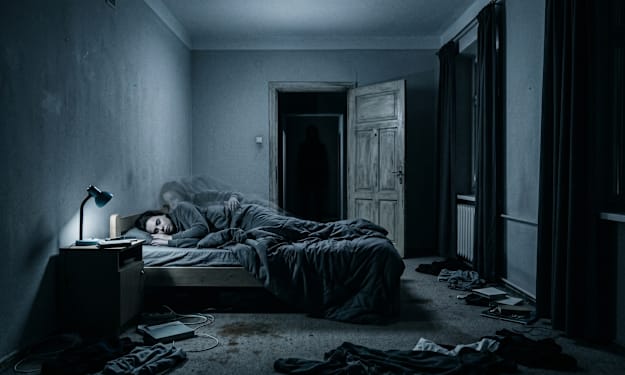
I Found a Livestream of My Own Living Room The blue light of my laptop was the only thing keeping the shadows of my apartment at bay. It was 2:14 AM. I was scrolling through an obscure forum dedicated to "unexplained internet glitches" when I saw a link titled: 02:14: LIVE.
By Talha Maroof6 months ago in Horror
The 2026 NASA Scientist Disappearances...
The Disappearance of General McCasland There are moments in any investigation where a single case shifts the tone from curiosity to concern, where the details surrounding one individual begin to outweigh the broader narrative and demand closer attention. The reported disappearance of General Neil McCasland represents one of those moments. Unlike cases that can be attributed, at least initially, to environmental hazards or personal circumstances, this incident exhibits a level of specificity and contradiction that complicates easy explanation.
By Veil of Shadows6 months ago in Horror
FEAR OF DARKNESS
Have you ever noticed how the darkness can make us feel uneasy or even scared? It's a reaction that crosses age and cultural boundaries, as if the absence of light triggers something primal within us. But what exactly causes this fear? Let's dive into the science behind our natural unease when the lights go out. The Ancient Roots of Fear:- Humans evolved over thousands of years in environments where darkness often meant danger. Before modern lighting, night was a time when predators were more active, and visibility was low. This meant early humans had to stay alert and cautious after sunset to survive. So, the fear of darkness is partly an inherited survival instinct passed down through generations. How Our Brain Reacts to Darkness :- When the lights go off, our brain's alert systems kick in. The amygdala, the part of the brain that processes fear, becomes more active. Without clear visual information, the brain tries to predict possible threats, often imagining the worst. This heightened alertness causes the feeling of fear or anxiety in the dark. Imagination Plays a Big Role :- Darkness limits what we can see, which leaves space for imagination. Our mind starts filling in gaps, sometimes creating scary images or scenarios. This "what if" thinking can increase nervousness, especially in children who have vivid imaginations. Even adults can feel uneasy if they start imagining dangers hidden in the dark. Fear and Uncertainty Are Closely Linked :- Fear often comes from uncertainty. In daylight, we can clearly identify objects and surroundings, which helps us feel safe. But in darkness, uncertainty rises because we can't see clearly. Our brain doesn't like uncertainty—it triggers stress hormones to prepare for possible dangers. Evolutionary Advantages of Darkness Fear :- Fear of darkness helped early humans avoid nighttime dangers. Those who stayed cautious and avoided risky situations at night were more likely to survive. This trait got passed down, shaping our nervous system to be more sensitive in the dark. Even though modern life is safer, this instinct remains strong in many people. How Culture and Experience Influence Fear :- While biology plays a big role, culture and personal experience matter too. Stories, movies, and media often link darkness with scary or unknown things. Children who experience frightening events in the dark may develop stronger fear. On the other hand, people who grow up in safe, well-lit environments may feel less afraid. Can Fear of Darkness Be Overcome? Yes, fear of darkness is manageable and common. Gradual exposure—spending time in dim lighting and slowly reducing brightness—can help. Learning relaxation techniques like deep breathing can calm the brain's fear response. Positive associations with darkness, like stargazing or quiet moments, can reshape how we feel. Why It Matters to Understand Our Fear :- Understanding why we fear darkness helps reduce anxiety. It reminds us that this fear is natural and rooted in our biology. For some, extreme fear can lead to problems like insomnia or anxiety disorders. Experts recommend safe, gradual coping methods rather than avoiding darkness completely. Now that you know the science behind why darkness makes us uneasy, how do you feel about the night? Have you ever tried to face this fear, or do you have your own tricks to feel calm? Share your thoughts — sometimes understanding is the best way to feel braver!
By Muhammad Talha6 months ago in Horror
Airbnb. Content Warning.
A Weekend Away: What a great idea. An Airbnb four on a high remote spot in the Pennines. Admittedly, the drive up was torturous, but they got there and eventually got the keys out of the key locker to get into the place. It was a single-story building, and the views were amazing.
By Mike Singleton 💜 Mikeydred 6 months ago in Horror
The Lion Didn’t Kill Him… It Waited. Content Warning. AI-Generated.
Night fell slowly over the jungle, swallowing everything in thick darkness. The air was heavy with damp earth, and the silence felt unnatural—so deep that even the sound of breathing seemed too loud.
By Alyan khan6 months ago in Horror