
The Oubliette: History’s Most Haunting Prison
Where being “forgotten” was a death sentence.

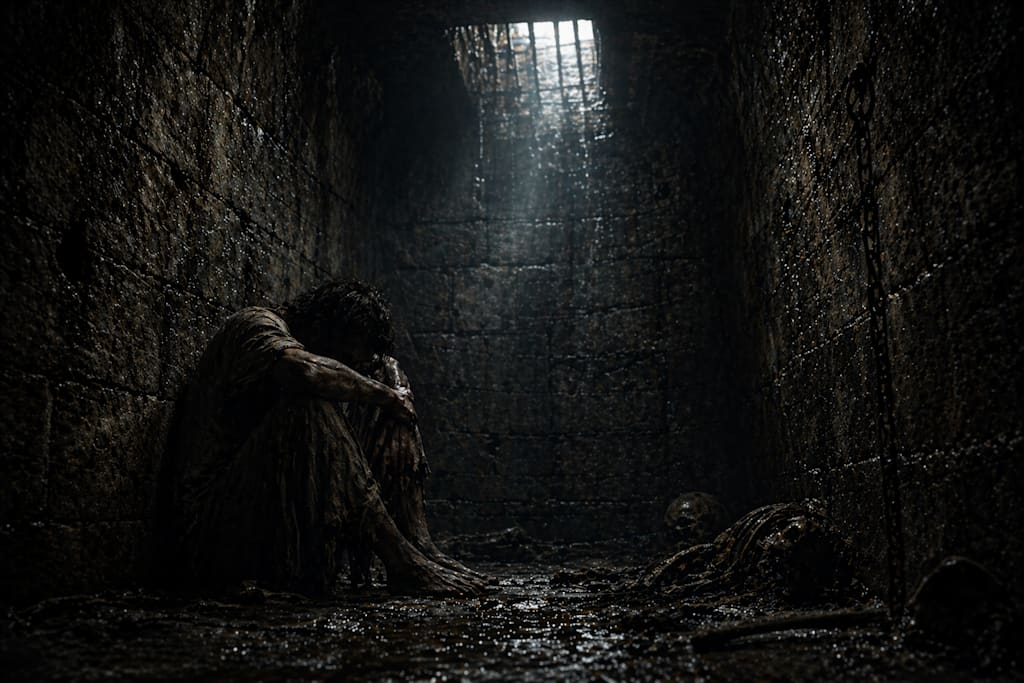
No one came looking for them.
No one called their names.
No one even knew they were gone.
By the time a person was thrown into an oubliette, they had already begun to disappear.
At first glance, it sounds almost harmless; a dungeon, an underground cell, a place where prisoners were kept out of sight.
But the oubliette was never meant to hold people.
It was meant to erase them!
The word itself comes from the French oublier - to forget.
And in these stone chambers buried beneath castles and fortresses, forgetting was not an accident.
It was the entire point.
A prisoner would be brought to a narrow opening in the floor which serves as a trapdoor, often no wider than a man’s shoulders.
Sometimes they were pushed.
Sometimes they were dropped.
Sometimes they never even saw it coming.
The fall was sudden.
Disorienting.
And final.
Above them, the trapdoor slammed shut.
The sound echoed through the chamber like a verdict.
Then silence returned.
There would be no trial.
No sentence to count down.
No footsteps returning with food or mercy.
Just the slow, suffocating realization:
No one was coming back.
The trapdoor was always placed too high to reach.
Even standing at full height, even stretching until muscles trembled, even climbing over whatever bones or debris lay beneath them.
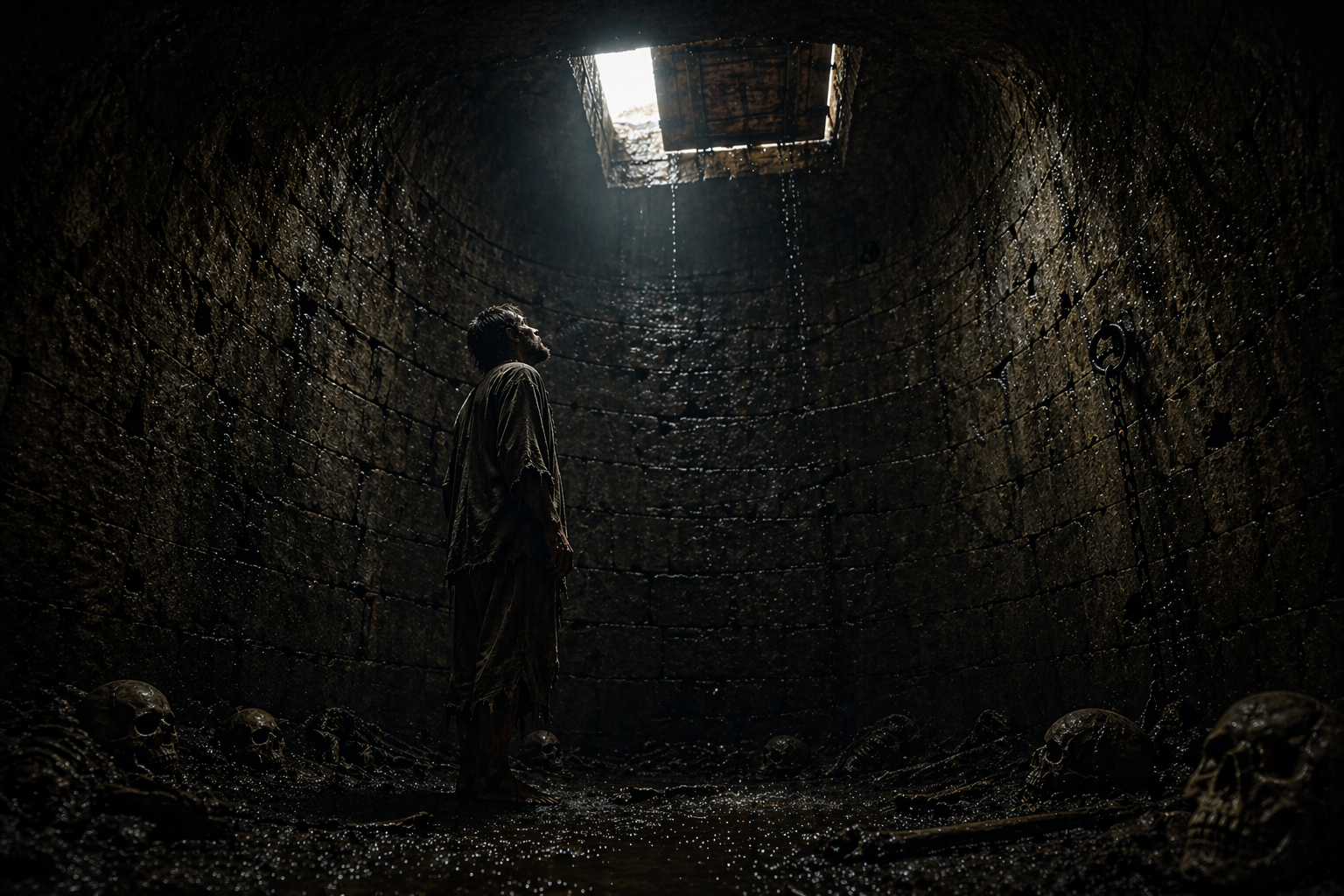
It was never enough.
Escape wasn’t denied.
It was designed to be impossible.
Inside the oubliette, time stopped meaning anything.
The walls were slick with moisture, constantly weeping as water seeped through layers of earth and stone. The air hung heavy and stale, unmoving, as if even it had been abandoned.
Some prisoners survived by licking condensation from the walls.
Others drank from shallow puddles that formed on the floor; dark, foul, and thick with whatever had gathered there over time.
And often, they were not alone.
Scattered across the ground were the remains of those who had come before.
Bones.
Skulls.
Fragments of lives that had ended in the same silence.
They were not hidden.
They were not buried.
They were left there.
The message they sought to pass was:
This is where you will stay.
This is where you will end.
Some oubliettes were so narrow that prisoners couldn’t lie down. They were forced to stand, their bodies slowly weakening, their legs trembling under the weight of exhaustion.
Hours passed.
Then days.
Then something beyond days, something shapeless and endless.
Until the body began to fail.
But it wasn’t the body that broke first.
It was the mind.
Above them, always visible, always just out of reach, was the trapdoor.
A faint square of light.
A reminder of a world that still existed.
A world that had already forgotten them.
That was the cruelty.
Not just the darkness.
Not just the hunger.
But the presence of hope placed deliberately where it could never be touched.
Many prisoners did not die from starvation.
They died from something quieter.
Something slower.
They died from losing themselves.
From the gradual unraveling of thought, memory, identity.
From the moment they stopped believing they had ever been anything more than what they had become.
No names were recorded.
No bodies were returned.
No one was left to remember they had lived at all.
Historians believe oubliettes were most common in medieval France, though variations existed across Europe. They were often used for those who needed to disappear completely such as; political enemies, dangerous figures, or simply people who had become inconvenient.
People whose existence was a problem.
The oubliette solved that problem.
Not loudly or publicly.
But completely.
Because this was never just punishment.
It was removal.
A quiet message sent without words:
You can vanish here.
And the world will go on without you.
Today, the horror of the oubliette does not lie only in the suffering it caused, but in how easily it erased a human life.
There was no spectacle.
No audience.
No history written in detail.
Just absence.
And perhaps that is what makes it so unsettling.
Not the pain.
Not even the death.
But the idea that a person could be erased so entirely that it would be as if they had never existed at all.
If this story unsettled you, it should.
Because history is not just something we study,
it is something we must remember.
(All images were created using Chatgpt)
About the Creator
Ajan Lori A.
My mind screams, I write!
(Author exploring education, identity, human behavior, life between cultures, business and entrepreneurship)
Find my writing on Medium: https://medium.com/@loriaa
My books on amazon: amazon.com/author/loriaa
Enjoyed the story? Support the Creator.
Subscribe for free to receive all their stories in your feed.
Comments
There are no comments for this story
Be the first to respond and start the conversation.