
The 2026 NASA Scientist Disappearances...
An Investigative Account of the Cases That are Raising National Concern.

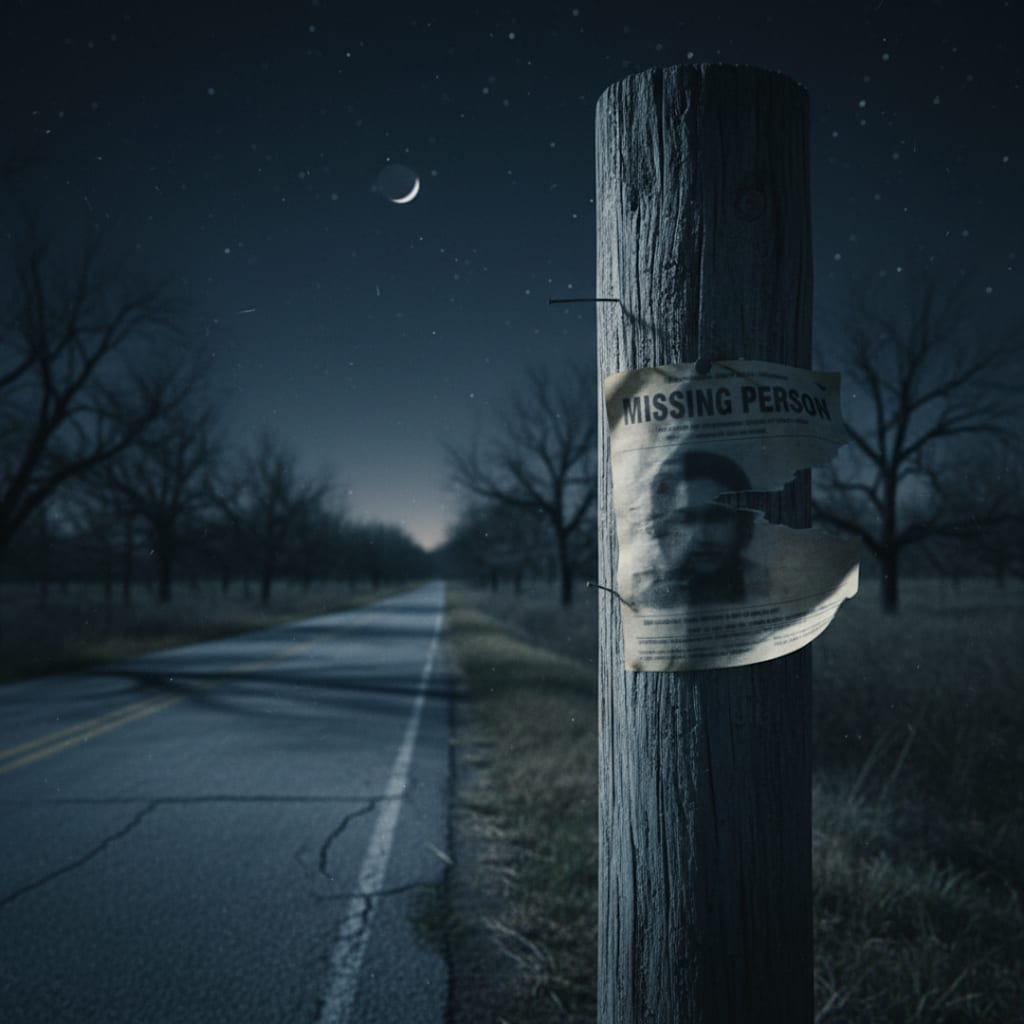
The Disappearance of General McCasland
There are moments in any investigation where a single case shifts the tone from curiosity to concern, where the details surrounding one individual begin to outweigh the broader narrative and demand closer attention. The reported disappearance of General Neil McCasland represents one of those moments. Unlike cases that can be attributed, at least initially, to environmental hazards or personal circumstances, this incident exhibits a level of specificity and contradiction that complicates easy explanation.
According to available reports, the events surrounding McCasland's disappearance began not in a remote wilderness, but at his own residence, a setting that would normally imply a degree of control and familiarity. The timeline, as reconstructed from emergency calls and subsequent investigation, suggests that something occurred within a narrow window of time that prompted immediate concern. His wife’s 911 call, placed shortly after his unexplained absence was noticed, described a situation inconsistent with a routine departure. There was no indication of planned travel, no communication suggesting he intended to leave, and no signs of forced entry or overt struggle.
What was left behind has become one of the most discussed aspects of the case. Personal effects that are typically carried without exception, his phone, wallet, and watch, remained at the residence. These are items that, in most scenarios, accompany even the briefest outing, and their absence from the individual, rather than from the location, introduces an immediate inconsistency. In contrast, one item was reportedly taken: a revolver, removed from the home under circumstances that have not been publicly clarified. The presence of that single object, combined with the absence of everything else, creates a profile that does not align cleanly with either voluntary departure or accidental disappearance.
Compounding the uncertainty are statements attributed to colleagues and associates who have publicly or privately contradicted early characterizations of McCasland's condition. Initial speculation in some outlets suggested the possibility of cognitive decline or disorientation, framing the disappearance within the context of a potential medical issue. However, individuals familiar with his recent work and behavior have reportedly pushed back against that narrative, describing him as mentally sharp, professionally engaged, and not exhibiting signs consistent with such conditions. This divergence between public speculation and insider perspective has only deepened the ambiguity surrounding the case.
What further distinguishes McCasland from others potentially linked to this broader pattern is his reported involvement in research and discussion that intersect with unidentified aerial phenomena. While the specifics of his involvement remain unclear and, in some cases, classified or unconfirmed, the association alone introduces a dimension that is difficult to ignore. It does not, in itself, provide an explanation, but it does expand the context in which the disappearance is evaluated, placing it at the intersection of advanced research, national interest, and phenomena that are not yet fully understood.
Taken together, these elements, an abrupt disappearance from a controlled environment, the selective absence and presence of personal items, conflicting accounts of mental state, and a potential connection to sensitive subject matter, form a case that resists simplification. It is not merely that General McCasland is missing. It is the manner of his absence that raises the most persistent questions.
And within the broader framework of recent incidents involving individuals connected to high-level research and development, his case does not stand alone.
The Disappearance of Monica Reza
There are disappearances that fade quietly into the background, filed away as unfortunate but explainable tragedies. Then there are those that resist categorization, cases that begin to overlap, to echo one another, and to suggest, however subtly, that something larger may be unfolding beneath the surface. In early 2026, a series of incidents involving high-level scientists began to draw attention not because of any single event, but because of the pattern they appeared to form when viewed together.
The most widely discussed case centers not only on General McCasland but also on Monica Reza, a scientist affiliated with both McCasland and the NASA Jet Propulsion Laboratory, whose work reportedly involved developing advanced materials capable of withstanding extreme thermal and structural stresses. Among her contributions was a specialized super-alloy intended for next-generation rocket systems. A material that, according to publicly available descriptions, possessed properties that could significantly improve both durability and efficiency under conditions previously considered limiting.
In June of 2025, Reza went missing while hiking with friends along the Mount Waterman Trail in California. Their witness reports were chilling, to say the least. According to the eyewitness accompanying her, as recorded in a police report, Reza was about 30 feet behind, smiling and waving. When the witness turned back around, she was gone, as though disappearing into thin air. While remote, the area is not considered inaccessible, and the trail itself is frequented by experienced hikers. Oddly, initial reports treated the disappearance as a possible accident, with search efforts focusing on terrain-related hazards such as falls, exposure, or disorientation. However, as time passed without any confirmed trace, no equipment, no remains, no clear indication of what had occurred. The case began to shift from a probable accident to something less defined.
By April of 2026, federal agencies had confirmed that they were reviewing not just Reza’s disappearance, but additional incidents involving scientists working in adjacent or strategically significant fields. The involvement of both the Federal Bureau of Investigation and the Department of Energy signaled that the concern extended beyond individual cases. It suggested the possibility that these events, while outwardly unrelated, might share a common thread tied to the nature of the work being conducted.
What complicates the narrative is the lack of an overt connection between the individuals involved. The cases do not form a neat sequence. They do not occur within a single location or under identical circumstances. Instead, they appear scattered across different states, specialties, and contexts, yet close enough in time to raise questions about whether coincidence alone is sufficient to explain them.
In several instances, the individuals in question were engaged in research areas that intersect with national infrastructure, energy systems, or advanced materials science. These fields, while not always visible to the public, play a critical role in both civilian and defense-related applications. The knowledge produced within these domains is not only valuable, but in some cases, strategically sensitive. This raises an immediate and uncomfortable possibility: that the disappearances may not be random.
At the same time, it is important to acknowledge that high-profile scientific communities are not immune to the same risks that affect the general population. Hiking accidents occur. Travel-related incidents happen. Individuals can choose to disappear for personal reasons, though such cases are statistically rare among professionals with established careers and ongoing projects. The challenge here is that the scientists seemingly intersect through advanced technologies. In several cases, there are direct ties to extra-terrestrial material research and craft.
The Reza case remains central due to its unresolved status. Search teams reportedly covered significant portions of the Mount Waterman area, utilizing both ground personnel and aerial support. Environmental conditions, while rugged, were not considered prohibitive to recovery efforts. The lack of physical evidence, no confirmed sightings, and no recovered belongings creates a void that invites speculation, particularly when viewed alongside the other unresolved cases.
The Other Disappearances
Some focus on the possibility of targeted activity, suggesting that individuals working on sensitive technologies may be at risk due to the value of their research. In this interpretation, the disappearances could represent efforts to acquire knowledge, disrupt development, or remove key contributors from ongoing projects. Such scenarios, while difficult to substantiate without direct evidence, are not without precedent in the broader context of international competition and technological advancement.
There is also a third category of interpretation, one that exists outside conventional frameworks and is often dismissed for that reason. It suggests that the common factor may not lie in the individuals themselves, but in the nature of the work they were engaged in. Advanced materials, energy systems, and propulsion technologies operate at the edges of current understanding, pushing into areas where theoretical and practical boundaries are still being defined. While there is no direct evidence to suggest that such research directly leads to anomalous outcomes, the possibility is sometimes raised that unknown variables, such as environmental, experimental, or otherwise, could play a role in events that are not yet fully understood.
This line of thought remains speculative; however, it persists because it offers a framework that accounts for both the technical nature of the work and the lack of a clear explanation for the outcomes.
The Expanding List
As the investigation widened, attention began to shift from individual cases to a broader pattern, one that, depending on the source, appeared to include anywhere from eight to over a dozen individuals connected in some way to advanced scientific or technical fields. However, the exact number remains unclear, and in many cases, the individuals cited across media and online discussions vary depending on the criteria used to include them.
Confirmed reporting from multiple outlets suggests that approximately 10 to 12 individuals tied to nuclear, aerospace, or advanced research programs have either died or gone missing between roughly 2023 and early 2026.
Among the most frequently referenced names are:
William Neil McCasland — missing since February 2026, a retired major general with ties to advanced Air Force research programs
Monica Jacinto Reza — disappeared while hiking in 2025, connected to advanced materials development.
Steven Garcia — reported missing in late 2025
Michael David Hicks — died in 2023 under circumstances that were not publicly detailed.
Nuno Loureiro — killed in late 2025
Carl Grillmair — fatally shot in 2026
Joshua LeBlanc — died following a crash after being reported missing.
Other names cited in reporting include individuals connected to Los Alamos laboratories and regional research facilities, though details in several of those cases remain limited or still under investigation.
What Could Be Happening?
When faced with cases like these, it is tempting to search for a single explanation that accounts for all variables. In reality, multiple hypotheses often exist simultaneously, each addressing different aspects of the situation while leaving others unresolved.
One possibility is that the disappearances are the result of unrelated incidents that have been grouped together due to timing and context. In this scenario, the clustering is coincidental, and the perceived pattern dissolves under detailed investigation. This remains the most conservative explanation and cannot be ruled out without further evidence.
Another hypothesis considers the role of external actors. Scientists working on advanced technologies may be targets for information gathering, recruitment, or disruption. While there is no public confirmation of such activity in these specific cases, the strategic value of the research involved makes this a plausible line of inquiry.
A third possibility involves internal factors, such as stress, personal circumstances, or undisclosed issues, that may lead individuals to withdraw or disappear. This explanation is difficult to evaluate without access to personal information, and it does not easily account for multiple cases occurring within a similar timeframe.
And finally, the possibility remains that the pattern, if it exists, has not yet been fully recognized. What appears to be a series of isolated incidents may, over time, reveal connections not currently visible. The story of the 2026 NASA scientist disappearances is defined not by what is known, but by what is missing: missing individuals, missing explanations, missing conclusions. In that absence, hypothetical interpretation becomes inevitable. At any rate, we at the Veil always follow Occam's razor, often called the "principle of parsimony," which states that among competing hypotheses that predict the same outcome, the simplest one, requiring the fewest assumptions, is usually the best.
About the Creator
Veil of Shadows
Ghost towns, lost agents, unsolved vanishings, and whispers from the dark. New anomalies every Monday and Friday. The veil is thinner than you think....
Enjoyed the story? Support the Creator.
Subscribe for free to receive all their stories in your feed.
Comments
There are no comments for this story
Be the first to respond and start the conversation.