
The Tower of London Zoo
How the Royal Menagerie became somewhat of a problem.


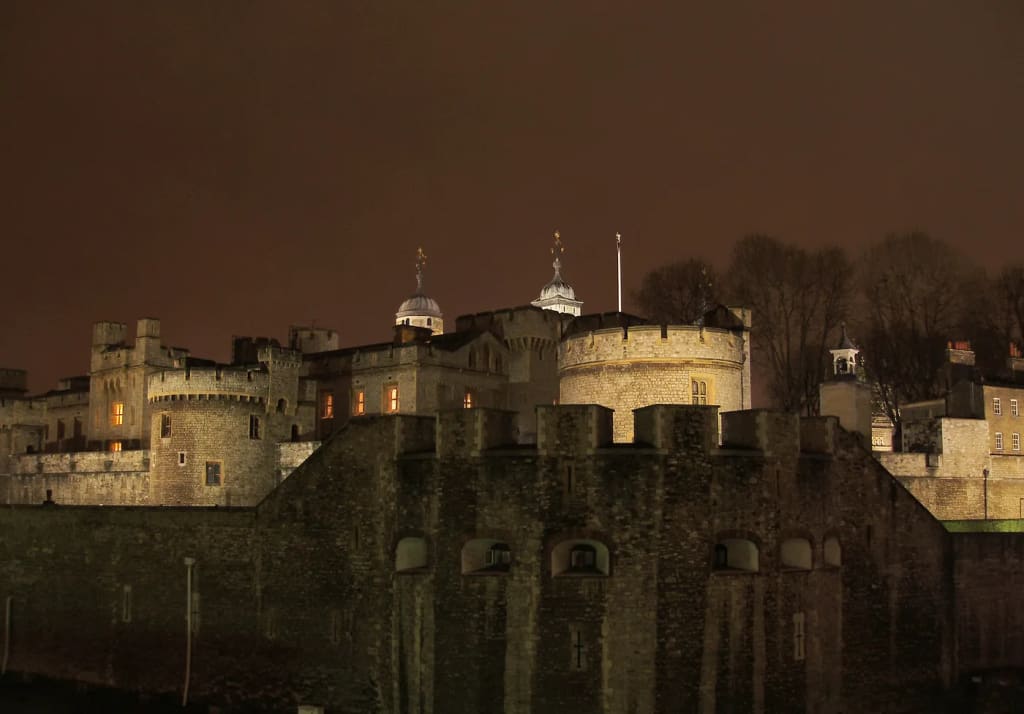
Many of you will be familiar with The Tower of London, its fame as the world's largest jewellery box is well known. Some will also know that this was the site of two famous beheadings, both of them at the request of King Henry VIII when he asked for his wife's heads to be removed.
The tower dates back to 1066 when William the Conqueror decided he needed a structure to protect London and started construction. The White Tower was completed in 1100.
However, what is less known is that the Tower of London was once the home of a very impressive zoo, the first of its kind in England.
The Tower of London Trio
The zoo started in 1235 when Holy Roman Emperor Fredrick II gifted Henry III a lion. With nowhere else to house it, he put it into the tower.
In 1252 the lion was joined by a polar bear, a gift from the King of Norway. The bear was said to have wandered the Thames and was even allowed to fish if needed; records show he was on a lead during these excursions. Still, I am not sure I would have wanted to meet him.
A collar and a 'stout cord' were attached to the bear to keep it from escaping - Source
The third trio member came a few years later when King Louis IX of France presented Henry with an elephant. What is wrong with a gift basket, I hear you say. The elephant was the first to be seen in England since the Romans invaded in 43 A.D
Family Collectors
Although Henry III may seem a little eccentric, keeping these strange pets, he was only carrying on the tradition of his ancestor Henry I.
Henry I was the son of William the Conqueror and established a collection of exotic animals on his estate in Woodstock. From the early 1100s, he collected an assortment of animals; these included camels, lions and porcupines.
These animals would soon join the Tower of London Zoo, which had since acquired another lion and built a dedicated tower for them.
Growing the Zoo
In the 1600s, under the reign of James I, great explorers set out across the lands. As these explorers arrived and explored more of Africa, they increased the zoo with more animals.
In the 18th century, the zoo was opened to the public; the entrance was three half-pence, or a cat or dog to feed the lions.
The zoo patrons were also treated to a grizzly bear named Martin. However, it is fair to say that the zoo keepers were not as well read up on exotic animals as they should have been, and many poor animals died.
By 1821, all that was left of the zoo was Martin and a handful of cats. The zoo decided they had to do something, so they hired a new keeper, Alfred Cops.
Cops went out deliberately to seek new animals to move to the zoo; he added animals such as zebras, alligators and kangaroos. By the time he retired, he had increased the collection to 280 animals and more than 60 species.
The Animals Revenge
There were several incidents within the zoo, including one where Cops had a rather tight cuddle with a boa constrictor.
Mary Jenkinson died at the zoo after being mauled by a lion, and a young sailor died in 1839 when a baboon threw a cannonball at his head. The baboon was later offered a place in the English shot put team.
Other accidents included a man being attacked by a leopard, a monkey biting a visitor's leg and a wolf that escaped, never to be seen again. However, his ancestor may be sleeping on my sofa as I write this.
It was clear to all around the zoo that the Royal Menagerie was becoming a bit of a liability. With the founding of the [RSPCA in 1824, animal welfare was found to be incredibly lacking. The decision was made that the animals needed to move on.
In 1835, the animals were moved to Regents Park, where the Zoological Society of London established what is now known as the London Zoo. The Royal Menagerie are the original 150 animals.
About the Creator
Sam H Arnold
I write on a range of subjects, from the heart of family life and supporting children with additional needs to the intrigue of crime. I mainly concentrate on history, though, digging into the past to find the real stories that shaped us.
Enjoyed the story? Support the Creator.
Subscribe for free to receive all their stories in your feed.
Comments
There are no comments for this story
Be the first to respond and start the conversation.