
The Revolution That Devoured Its Own: How the French Terror Became a Virtue
They called it the Republic of Virtue. Within eighteen months, the men who wrote the Declaration of the Rights of Man were sending each other to the guillotine.
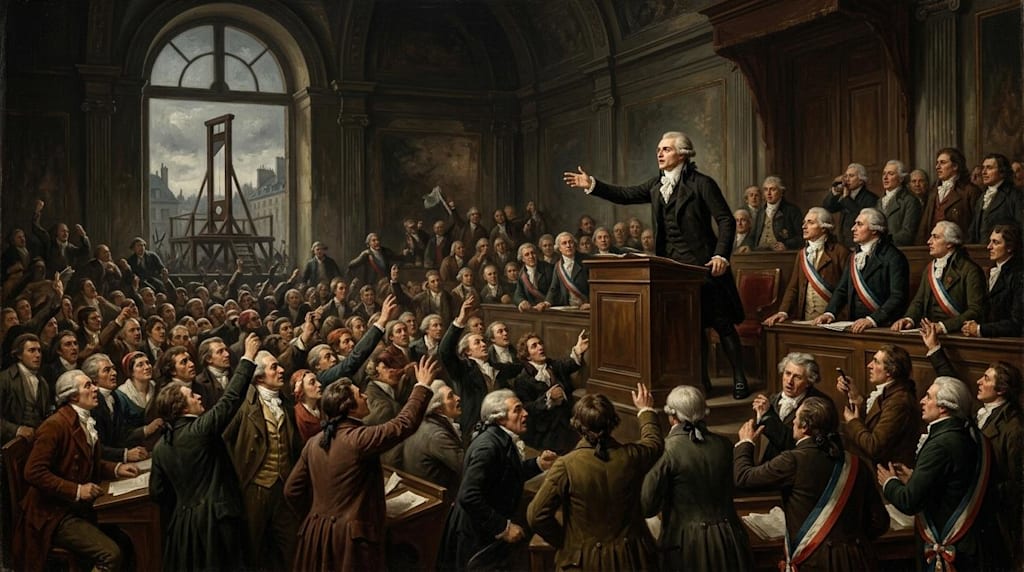
On the morning of 5 September 1793, a crowd gathered outside the National Convention in Paris and demanded blood.
Not the blood of aristocrats. Not the blood of foreign enemies massing on the borders. The crowd wanted the blood of anyone the Committee of Public Safety deemed insufficiently committed to the Revolution.
The deputies inside voted to place Terror on the agenda of the day.
Officially. By majority. In the name of liberty.
Virtue Was the Weapon
To understand how the French Revolution produced the Reign of Terror, it is important to understand the beliefs of the revolutionaries.
They did not consider themselves violent individuals. Most were lawyers, journalists, and philosophers who had spent years reading Rousseau and dreaming of a republic founded on reason and virtue. They sincerely believed that human beings were inherently good and that corrupt institutions — monarchy, aristocracy, and the Church — had made them otherwise.
Remove the corruption, they thought, and virtue would follow automatically.
This was not a political position. It was a faith.
Like most faiths, it had a problem with heresy.
If virtue was natural and the Revolution had removed every obstacle to it, then anyone who opposed the Revolution was not just a political enemy. They were worse than that. They were either proof that the theory was wrong or actively choosing evil over good.
Neither option was acceptable.
The guillotine was not a weapon of hatred. It was a logical conclusion.
One Man. No Doubts. No Brakes.
Maximilien Robespierre did not invent the Reign of Terror. But he provided it with a philosophy.
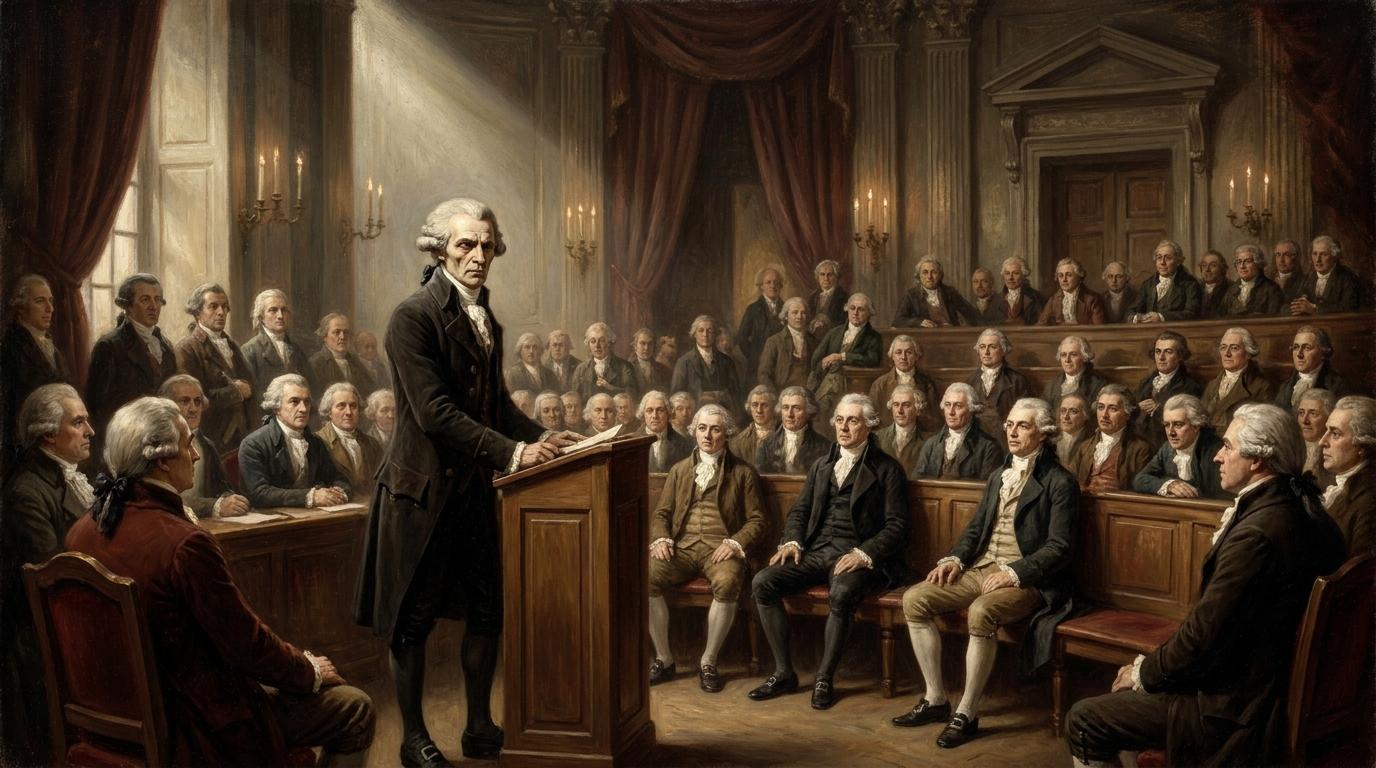
Short, meticulous, and incorruptible to a degree that his contemporaries found unsettling, Robespierre lived in a rented room, wore the same coat for years, and refused every bribe and opportunity for personal enrichment that the Revolution offered. He was called the Incorruptible, and the name was accurate.
He also believed without a shadow of a doubt that he knew what virtue required.
In a speech delivered in February 1794, he explained the logic that had been in effect for months, but had never been stated so clearly. He said that the republic must be governed by two forces in times of revolution: virtue in peacetime and terror in war. Since the republic was always at war — with foreign armies, internal traitors, and the enemies of the people who hid behind respectable faces — terror was not a departure from virtue.
It was virtue's instrument.
This was not cynicism. Robespierre meant every word. That was the problem.
They Were Killing the Wrong People
Between September 1793 and July 1794 — a period of ten months known as the Reign of Terror — approximately 17,000 people were officially executed in France.
The actual death toll, including those who died in prison while awaiting trial and those killed in mass executions in the provinces, is closer to 40,000.
Of those who were officially guillotined, about 8% were aristocrats. Fourteen percent were clergy. The remaining 78% were commoners — peasants, workers, and minor tradespeople whose names have mostly been forgotten.
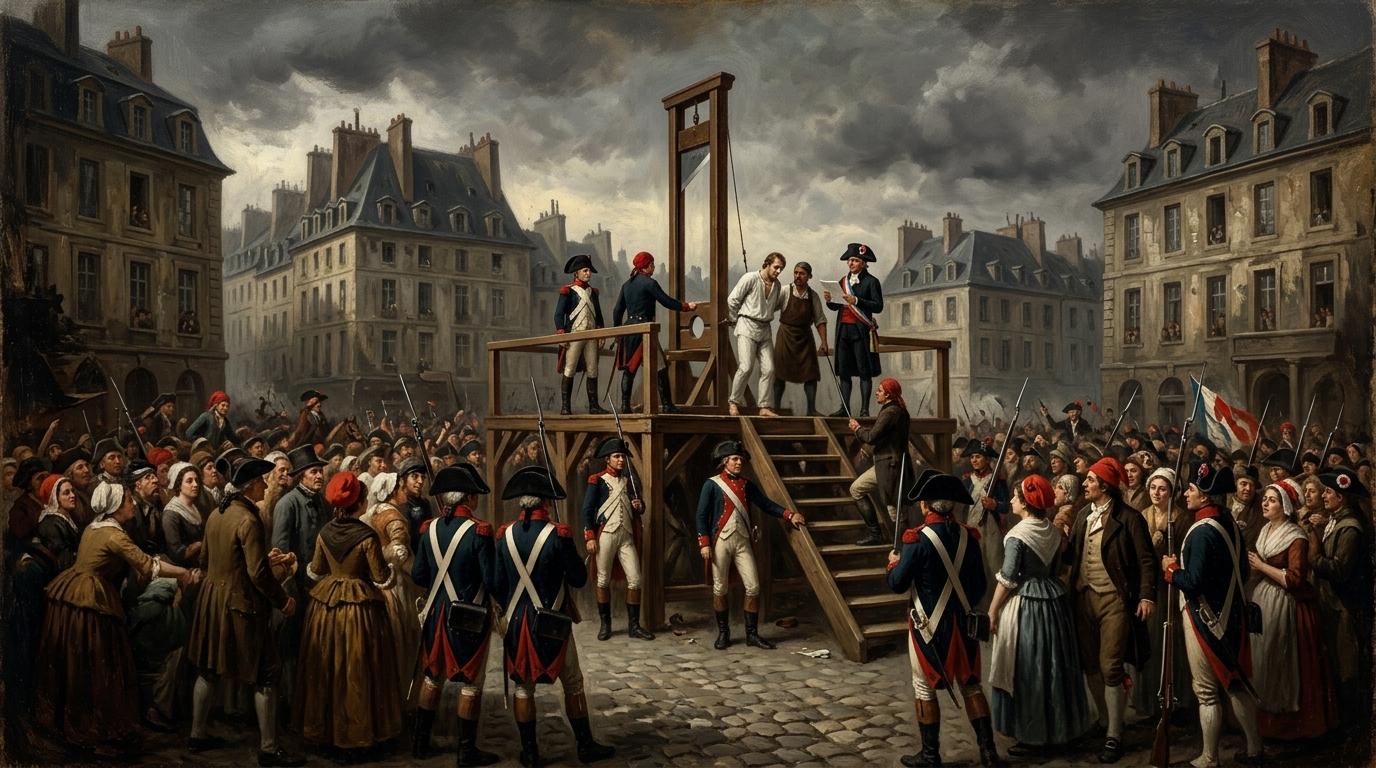
The Revolution was not eating its elite. It was eating itself.
The accusations that sent people to the guillotine became increasingly abstract: treason, insufficient enthusiasm, suspicious moderation. A man could be arrested for suggesting that the Reign of Terror had gone too far. A woman could be executed for weeping at the execution of someone declared an enemy of the people.
Weeping was evidence of sympathy. Sympathy was considered guilt.
Nobody Could Say Stop
The Terror was not self-sustaining because of cruelty. Most of the men in charge were not sadists.
Rather, it was fear and the structural impossibility of stopping it from the inside that made it self-sustaining.
Calling for moderation invited suspicion. Defending an accused person meant sharing their guilt. Expressing doubt about any execution demonstrated that one was not fully committed to the Revolution.
The only safe position was to show permanent, visible, escalating enthusiasm.
This meant that the Committee of Public Safety could never de-escalate because de-escalation required someone to stand up and say that enough people had died. That person would immediately become the next target.
The machine had no off switch.
It ended the only way it could. On July 27, 1794, Robespierre's colleagues on the Committee, terrified that their names were next on his list, arrested him before he could speak. He was guillotined the following day.
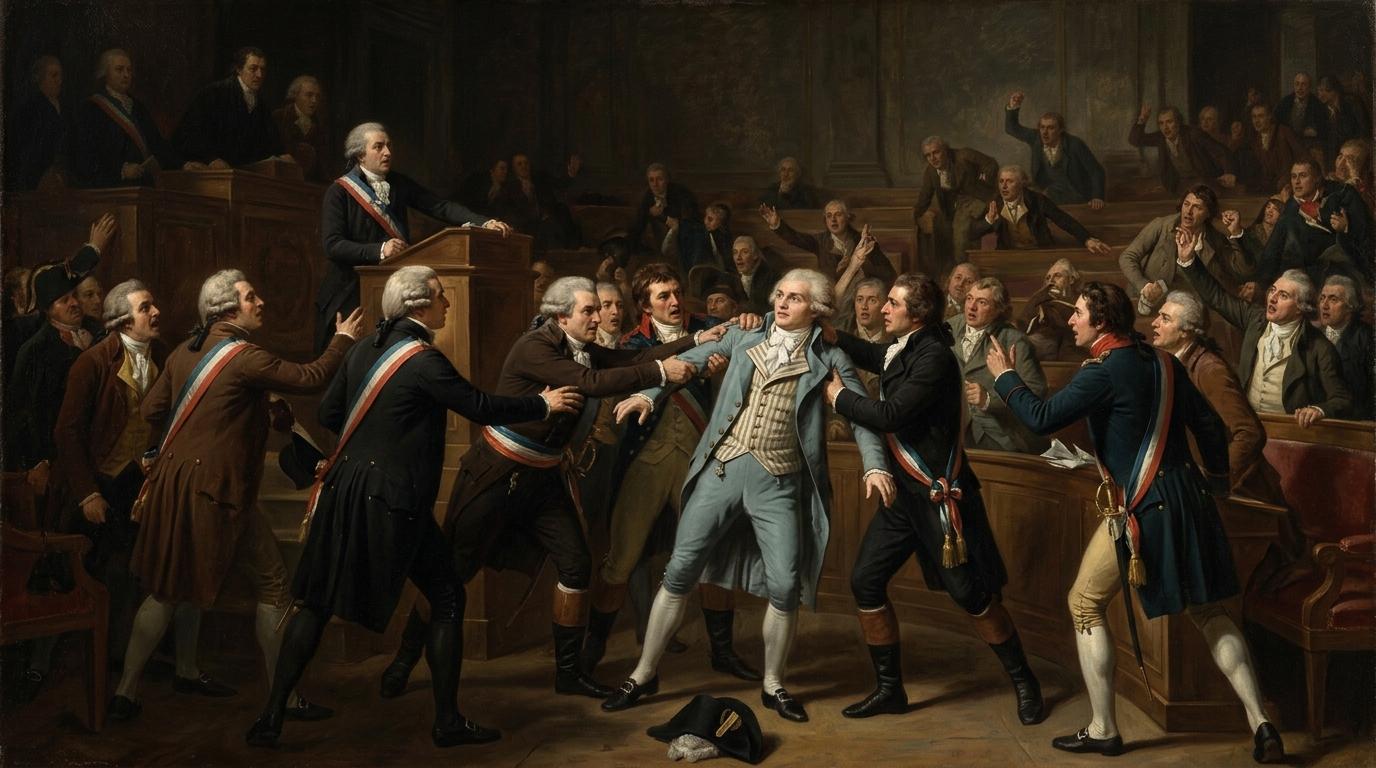
The man who had sent thousands to their deaths met the same fate.
Until the end, he maintained that he had done nothing wrong.
It Was Never an Accident
The standard interpretation of the Reign of Terror treats it as an aberration — a moment of madness that interrupted the otherwise admirable project of the French Revolution.
This misses the point entirely.
The Terror was not a betrayal of the Revolution's ideals. Rather, it was their logical extension.
A movement that began with the premise that virtue was natural and that opposition was therefore a moral failure could only end in one way: the elimination of anyone who failed to demonstrate sufficient virtue. The definition of sufficient would keep changing. The circle of the pure would keep shrinking. The machine would run until there was no one left to feed it except those running it.
Every political movement that has decided it possesses the final truth about human nature has eventually arrived at the same destination.
The names change. The machine does not.
If you found this essay worth reading, you might also enjoy:
— The Gentlemen's Agreement to Kill Each Other: A History of the Duel
— Rome Had Markets, Banks, and Trade Routes — and Still Never Built Capitalism
About the Creator
Chronicle and Void
Every collapse has a cover story. Every war has a cause that didn't make it into the history books. History is not an accurate record of what happened. It's a record of what they allowed to survive.
Enjoyed the story? Support the Creator.
Subscribe for free to receive all their stories in your feed.
Comments
There are no comments for this story
Be the first to respond and start the conversation.