
The Gentlemen's Agreement to Kill Each Other: A History of the Duel
It was illegal across Europe for centuries. Kings banned it, the Church condemned it, and courts prosecuted it. Still, tens of thousands of men did it anyway and called it honor.

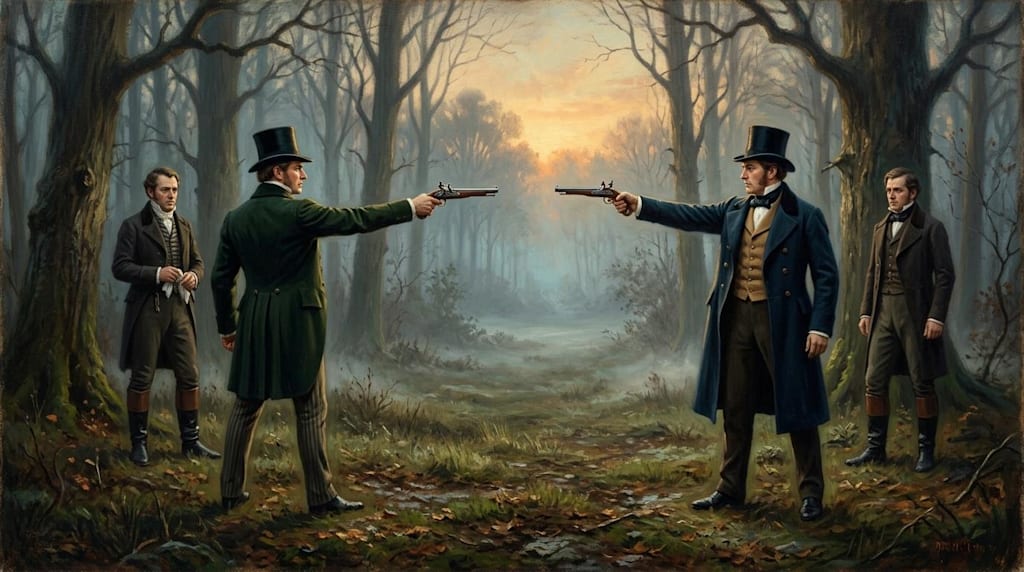
In 1808, two Frenchmen fought a duel over an opera singer.
This was not unusual. Men had dueled over opera singers before. What made this affair memorable was its duration. The two men, Monsieur Fournier and Monsieur Dupont, fought their first duel but failed to resolve the matter and agreed to continue. They fought again. And again.
Their running duel lasted nineteen years, involved multiple weapons, and spanned multiple countries. Finally, one of them disarmed the other and declared the matter settled.
This is what honor looked like for three centuries of European history.
An Affair of Honor
The duel as we know it — two men, matched weapons, agreed rules, and witnesses — emerged from Renaissance Italy in the late 15th century and spread across Europe with remarkable speed.
The premise was straightforward. If a gentleman's honor was insulted, the courts offered him no real remedy. A judge could award damages. Only a duel could restore a reputation.
In a society where reputation was paramount — where a man's word was his credit, his standing, his identity — an unanswered insult was akin to social death.
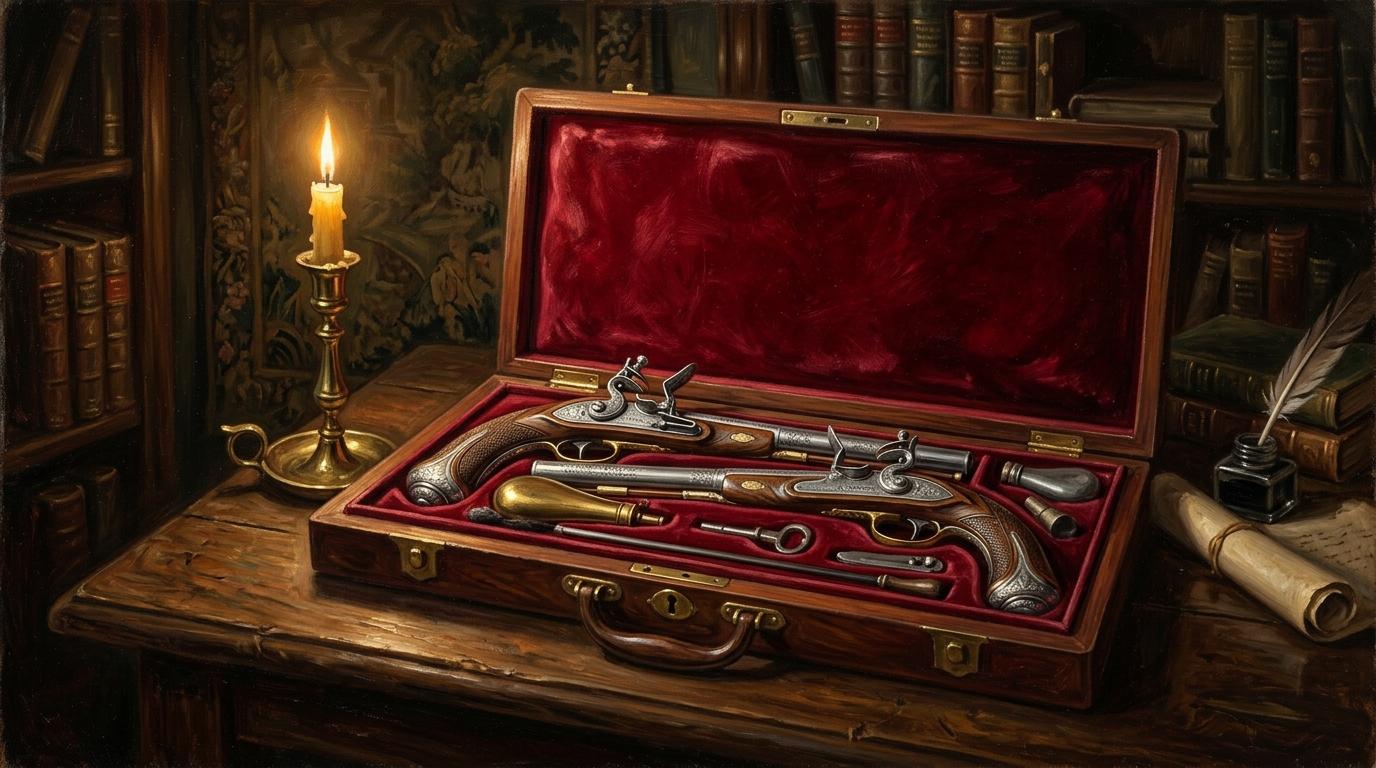
The rules were elaborate. A formal challenge had to be delivered in writing. Seconds were appointed to negotiate terms. The challenged party chose the weapons. In Britain and America, pistols became standard, while swords remained fashionable on the continent.
The entire process, from the initial insult to the meeting at dawn, could take weeks.
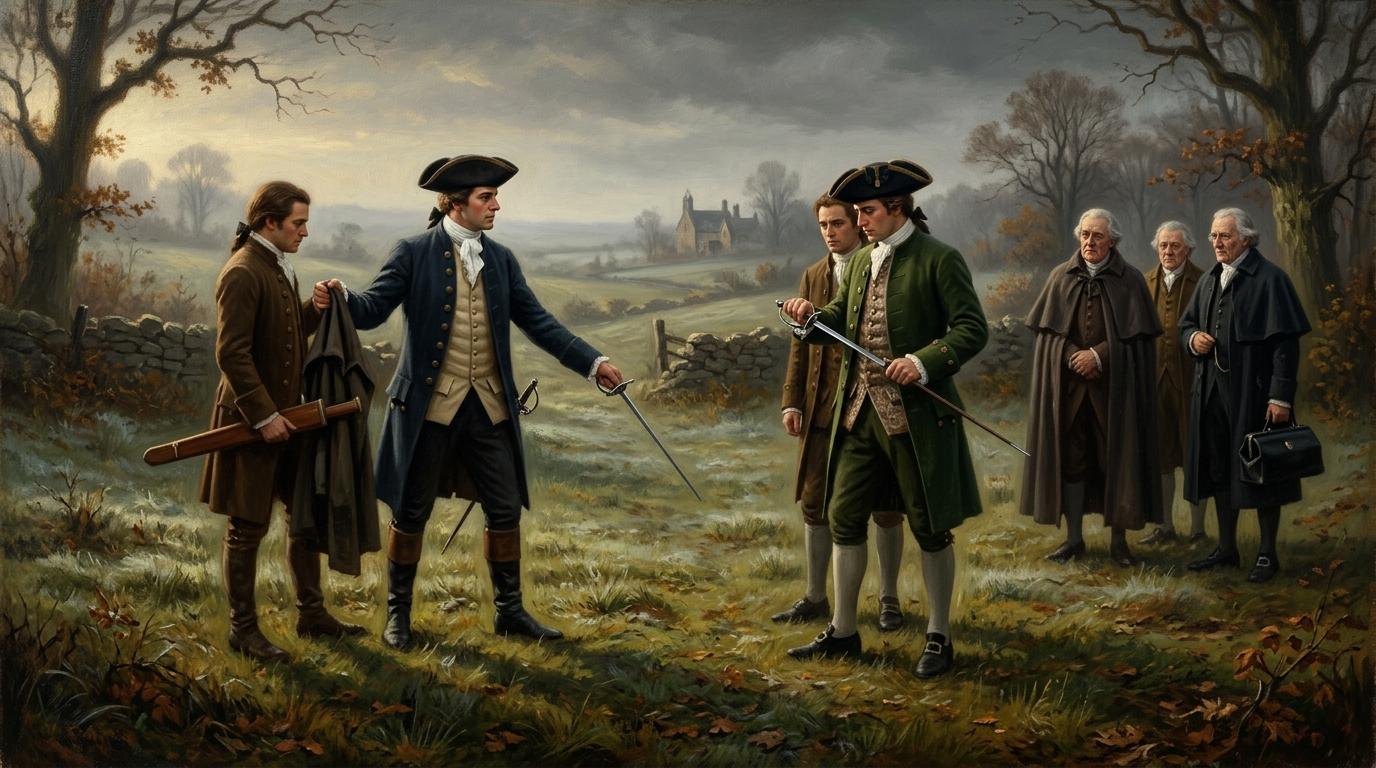
The Reasons Were Rarely Noble
According to the mythology of dueling, men risked their lives only over matters of genuine gravity — a woman's honor, a man's integrity, an accusation of cowardice. The reality was considerably less dignified.
Men fought over card games. Over borrowed money. Over remarks made at dinner that one party found insufficiently respectful.
In one documented case, a duel was fought because one man told another that he smelled bad.
The triviality of these provocations was no accident — it was the point. What mattered was not the original offense, but the response to it. A gentleman who ignored an insult, no matter how minor, showed that his honor could be attacked without consequence.
The duel was not about the opera singer. It was about the consequences of letting the matter go.
Intentionally missing your shot — a seemingly civilized solution — was forbidden under most dueling codes. If seconds observed a conspicuous miss, they were required to intervene and demand that the duel begin again.
You had to mean it.
The Numbers Were Staggering
This was not a rare occurrence confined to hotheaded exceptions.
During a single eighteen-year period under Henry IV of France, an estimated 10,000 French aristocrats were killed in duels. During the reign of Louis XIII that followed, the crown issued around eight thousand pardons for duel-related killings.
French kings banned the practice repeatedly. Offenders were threatened with death. The killings continued.
In the American South, dueling became so embedded in political culture that it functioned as an alternative legal system. Politicians settled legislative disputes at dawn rather than in chambers.
Abraham Lincoln was challenged to a duel in 1842. He accepted. He chose broadswords as the weapon. The duel was called off when his opponent reconsidered.
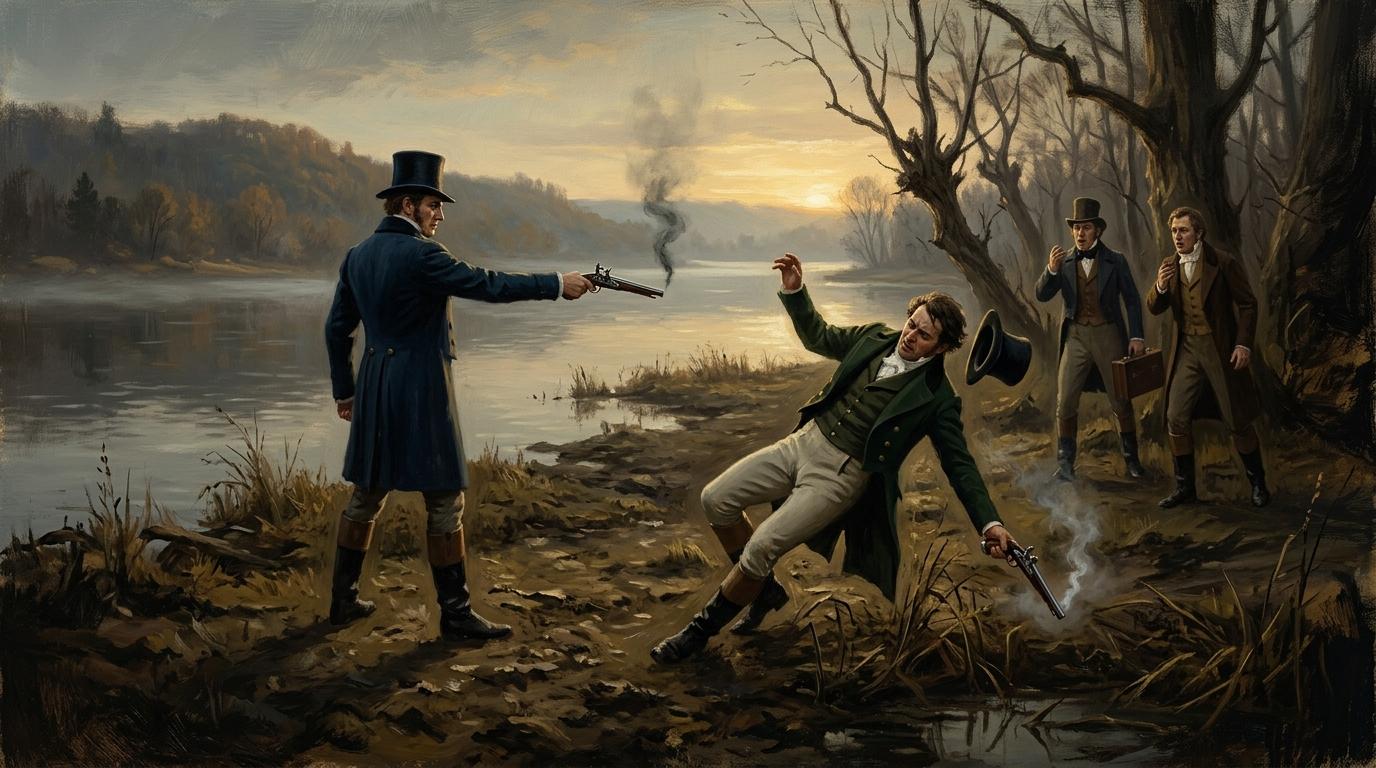
In 1804, Aaron Burr shot Alexander Hamilton over a newspaper comment. Hamilton — a man who helped write the Constitution, built the American financial system, and survived the Revolutionary War — was killed over a remark at a dinner party that Burr found disrespectful.
The System Had Its Own Logic
What makes the history of dueling strange is not that it happened, but that it persisted for so long despite consistent, organized opposition.
The Catholic Church condemned dueling from the 13th century onward. Every major European government banned it at some point. Courts prosecuted survivors.
None of it worked.
The duel was not just a custom. It was a parallel legal system operating on entirely different principles. State courts dealt in evidence, procedure, and precedent. The duel offered something courts could not: a public, visible demonstration that a man was willing to risk his life rather than accept an insult.
In a world where credit was based on personal reputation, appointments were made through patronage, and a man's word needed to carry weight — that demonstration had real, practical value.
Outlawing dueling without replacing what it provided simply moved the problem underground. Men kept dueling because the alternative was not peace.
It was humiliation.
How It Finally Ended
The duel did not die because governments banned it. It died because the world around it changed.
As the 19th century progressed, reputation became more dependent on professional standing than personal honor. A man's credit rating mattered more than his willingness to meet at dawn with pistols in hand.
The new middle class — merchants, lawyers, doctors — had neither the time nor the aristocratic framework for affairs of honor. They competed differently.
The press became the new battlefield. Newspapers allowed a man to defend his reputation publicly, to an audience far larger than any field of honor could provide, without the inconvenience of being shot.
By the time the First World War ended, dueling had largely vanished from Europe. The war demonstrated at industrial scale what happened when young men were sent to kill each other over questions of national honor.
The romantic notion of that idea did not survive the trenches.
Strip away the ceremony, the dueling pistols, and the elaborately folded letters of challenge, and what remains is something quite simple.
It was a system designed by powerful men to ensure that those who challenged their authority paid a price for doing so. A ritual that appeared equal — two men, matched weapons, agreed rules — but operated entirely within a class structure that determined who could duel, who could be challenged, and whose honor was worth defending.
The men who died in duels genuinely believed they were defending something real.
In the world they lived in, they were right.
The world changed. Their belief did not survive the change.
About the Creator
Chronicle and Void
Every collapse has a cover story. Every war has a cause that didn't make it into the history books. History is not an accurate record of what happened. It's a record of what they allowed to survive.
Enjoyed the story? Support the Creator.
Subscribe for free to receive all their stories in your feed.
Comments
There are no comments for this story
Be the first to respond and start the conversation.