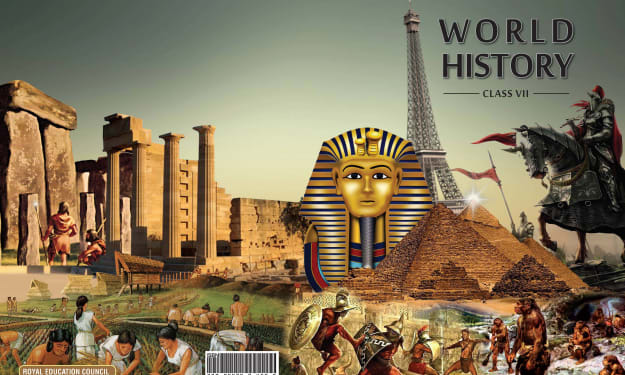
World History
The First Man to Fly Like a Bird: From Icarus to the Moon
When we discuss the origins of human flight, our minds often drift to the Wright brothers and their modestly named Wright Flyer, which first took to the skies in 1903. However, this historic flight represents just one step in a long and arduous quest that humanity embarked on more than a millennium earlier. In this article, we will explore the fascinating history of human flight, from ancient myths to modern marvels, highlighting the audacity, creativity, and resilience that have defined our struggle to conquer the skies.
By Marveline Merab2 years ago in History
Magic at the River's End
**Where the River Meets the Sea** In a quaint coastal town nestled between rolling hills and shimmering azure waters, there was a river that flowed gracefully through the heart of the community. It carried with it stories of times gone by and whispers of dreams yet to be realized. This river, known as Serenity Creek, wound its way through meadows and ancient forests before finally reaching the vast expanse of the sea.
By Saheed AbdulQodir Oladimeji2 years ago in History
Is 5G really responsible for human cancer and death?. AI-Generated.
In a small town nestled between rolling hills and dense woods, curiosity about the modern world often clashed with the deep-seated beliefs of its residents. The townsfolk were a close-knit group, sharing traditions that stretched back generations. Yet, as technology advanced and the world embraced innovation, a fierce debate began to swirl around the implementation of 5G networks. It all started when a video went viral on social media, claiming that 5G was responsible for a sudden spate of illnesses and bird deaths. The townspeople, who relied on their local community platforms for news, quickly became consumed by fear. Margaret, a retired teacher with a genuine love for nature, was especially troubled. She spent her early mornings in the woods, watching the birds flit from tree to tree, cherishing their songs. The thought that something could harm them sent her into a panic. One evening, as the sun dipped behind the hills, casting a warm golden glow over the town, Margaret called a town hall meeting. She wanted answers. “We need to understand this 5G thing better. What if it’s true? What if it’s hurting us and the birds?” she implored the crowd, her voice quivering with urgency. People murmured in agreement, their faces etched with worry. Among them sat David, a local scientist who had just returned home after years of research across the country. He often kept to himself, preferring the company of books over people, but tonight, he felt the weight of the room's anxiety pressing against him. As Margaret concluded her monologue, he raised his hand, signaling for attention. “I can provide some insights,” David began, his voice steady. “5G, at its core, is just another iteration of wireless communication—using radio waves to transfer data. Yes, the frequencies are higher, but studies show that they are still within the radio frequency range. They are low power and incapable of deeper skin penetration, which means they don’t cause DNA damage or health problems like cancer.” The room fell silent, and as he spoke, David could see the flicker of skepticism begin to fade. “There’s been research, too, on birds. Remember the deaths reported in the Netherlands a few years back? Subsequent investigation revealed that those birds died from poisoning, not from 5G. Organizations like the Dutch Wildlife Health Center studied this and found no harmful effects from 5G waves on avian behavior or health.” Margaret’s brow furrowed. “But what about the reports of headaches and sleep issues?” she pressed. “Those claims are often tied to anxiety about technology itself rather than the technology’s actual effects on our bodies. There’s a psychological component at play. The main culprits in our health issues are still the same: stress, poor diets, lack of exercise. Not to mention the ongoing destruction of bird habitats caused by deforestation and pollution. These are the issues we should concern ourselves with—protecting nature and our health, rather than vilifying technology.” As David spoke, he noticed nods of understanding spreading through the crowd. He continued, “It’s crucial for us to foster an environment of awareness. The destruction of nature is what endangers both our health and the health of birds. Instead of blaming 5G, let’s channel that concern into actions that benefit our ecosystem. Let’s plant trees. Create wildlife sanctuaries. Raise awareness about pollution and habitat destruction.” By the end of the meeting, the townsfolk were no longer discussing their fears of 5G; they were outlining plans to protect their natural surroundings. Inspired by David’s insights, they resolved to start community workshops on environmental awareness. Months passed, and the town blossomed with greenery as the residents banded together, planting trees and creating small parks to encourage bird populations to thrive. Margaret often smiled as she watched the delicate creatures return, flitting about in their newfound spaces, oblivious to the earlier fears that had clouded their human guardians’ minds. Through the collaboration of science, community resilience, and a commitment to understanding, the small town learned a valuable lesson. Misconceptions may spread like wildfire in the age of technology, but knowledge, compassion, and effort could ignite a positive fire that protected both the people and the feathered friends they dearly loved.
By Prohura Research - PRU2 years ago in History
The Strange Day When All Clocks Stopped in Paris
Introduction In a surreal twist of fate, a catastrophic flood transformed Paris into a modern Venice, leading to an extraordinary day when every clock in the city stopped at precisely 10:53 PM. This article explores the events surrounding the deluge, the history of timekeeping in Paris, and the remarkable pneumatic clock system that once governed the city's rhythm of life.
By DANIEL AKAM OKO2 years ago in History
History's Footprints
History is a vast tapestry woven with countless events, each leaving an indelible mark on the fabric of our existence. From groundbreaking discoveries to pivotal moments of triumph and tragedy, the past is replete with stories that have shaped the world we live in today. This article delves into some of these remarkable events, tracing the footprints of history and exploring their enduring impact on our society.
By Sazeeb Chowdury2 years ago in History
Prehistoric Human Cultures
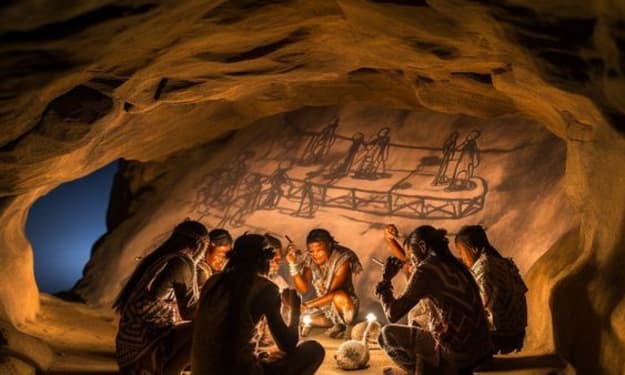
Prehistoric human cultures refer to the societies and way of life of humans before recorded history, which spans millions of years, covering the early stages of human evolution through the development of modern Homo sapiens. Here's an overview of major periods and some lesser-known cultures:
By snowycloud2 years ago in History
The Gallant Rider
In the misty valley of Eldoria, where emerald hills kissed the sky, there lived a warrior named Kaelan. His reputation as the finest horseman in the realm was whispered from village to village, tales spun around crackling fires. Tall and lean, with a mane of dark hair that flowed like the night, Kaelan had eyes the color of storm clouds—intense, fierce, and always searching.
By Doris J Palma2 years ago in History
The Rise and Fall of the Mauryan Empire
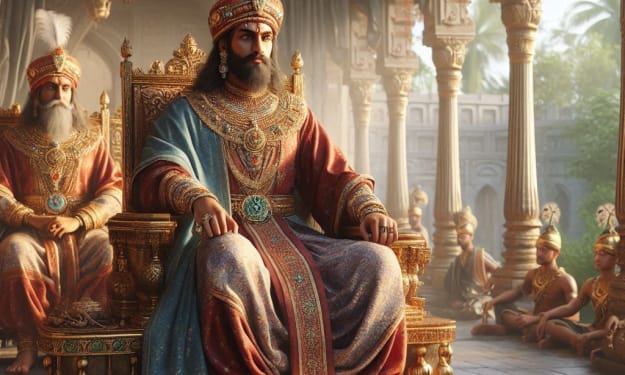
Few things have driven humanity more than the ambition for power. Across history, we've witnessed how the desire for control, glory, and land can elevate or destroy empires. Today, we explore one of the most influential civilizations in ancient India: the Mauryan Empire. This post dives deep into how this empire emerged, expanded, and left a lasting impact not only on the Indian subcontinent but on the world. Starting in the 6th century BCE, the Indian subcontinent saw the rise of various political units called the Mahajanapadas. Among them, the Kingdom of Magadha was the most powerful, but under the rule of the Nanda dynasty, it became infamous for oppressive governance. King Dhana Nanda's reign (329-321 BCE) was marked by high taxes and cruelty, making the dynasty deeply unpopular. Adding to this internal unrest, the western part of India was thrown into chaos after the invasion of Alexander the Great, further destabilizing the region. Amidst this turmoil, a Brahmin statesman named Kautilya (or Chanakya) envisioned the possibility of uniting India under a centralized empire to ward off invaders and restore peace. After being scorned by King Dhana Nanda, Kautilya found an ally in Chandragupta Maurya, a young warrior with immense potential. Together, they plotted to overthrow the Nanda dynasty and establish a new order. Taking advantage of the power vacuum left by Alexander’s forces, Chandragupta began his military campaigns in northwest India, toppling weakened Greek-Macedonian rule. With Kautilya’s brilliant strategy, Chandragupta continued to advance through India, eventually taking the heart of Magadha and claiming the throne. In 321 BCE, Chandragupta founded the Mauryan Empire, establishing Pataliputra (modern-day Patna) as its capital. Chandragupta's empire quickly expanded to encompass much of India, from its western coast to the southern regions. Plutarch even noted that his army reached an astonishing 600,000 soldiers. Chandragupta also came into conflict with Seleucus I Nicator, one of Alexander’s successors. After a war in 301 BCE, the two leaders signed a treaty that gave Chandragupta large territories in exchange for war elephants—a move that further cemented the Mauryan power. The Mauryan Empire was one of the most well-organized empires of its time. Chandragupta ruled through a sophisticated bureaucratic system. The king was the head of the state, with a council of ministers advising him on military, financial, and administrative matters. Provinces were governed by royal princes, and the administration extended down to village levels, ensuring strict control over social and economic life. The empire maintained a vast spy network and a large standing army, with specialized units for infantry, cavalry, navy, and war elephants. Soldiers were highly valued, focusing solely on warfare and not being required for other services. Chandragupta’s rule established a model of efficient governance that influenced later rulers in the region. The Mauryan economy was largely state-controlled. The empire monopolized essential industries like coinage, salt production, mining, and weapon manufacturing. Agriculture was heavily taxed, and merchants were organized into guilds that held judicial and executive power. Trade flourished under state supervision, with strict regulations on prices, weights, and measures. Roads and rivers connected the empire to foreign markets, extending even to Sri Lanka, China, and Arab ports, promoting a vibrant trade network. After ruling for 25 years, Chandragupta abdicated in favor of his son Bindusara, who expanded the empire further into southern India. However, it was Ashoka, Chandragupta’s grandson, who left the most significant mark on the empire and the world. Initially a ruthless ruler known for his cruelty, Ashoka waged a bloody war against the kingdom of Kalinga, resulting in immense loss of life. This campaign traumatized Ashoka, leading him to adopt Buddhism and embrace non-violence, promoting the concept of dhamma—a philosophy of righteous behavior and goodwill. Ashoka’s reign saw the construction of monumental stupas and the spread of Buddhism across Asia, with missionary efforts reaching Sri Lanka, Southeast Asia, and beyond. Yet, despite Ashoka’s efforts to promote peace, his successors lacked his strength. After his death, the empire began to fracture, and by 185 BCE, the last Mauryan ruler, Brihadratha, was assassinated, ending the dynasty. The Mauryan Empire, the largest to ever exist on the Indian subcontinent, was driven by a relentless pursuit of power, but like many great empires, it faced internal strife and external pressures that led to its decline. The administrative, economic, and cultural advancements during its reign left an indelible legacy that shaped the Indian subcontinent for centuries. The rise and fall of the Mauryan Empire serve as a testament to the cyclical nature of power—where ambition builds great civilizations, but also sows the seeds of their eventual collapse. Their names, however, live on, carried by the cultural and social reforms they left behind. If you enjoyed this article, give it a thumbs up, and don't forget to share it with others. Stay tuned for more stories about empires, power, and history!
By A História2 years ago in History
The Psychopath Who Invented Your Breakfast: Dr. John Harvey Kellogg
In the early 1900s, if you were an affluent American suffering from health issues, you might have considered a stay at the world-famous Battle Creek Sanitarium, often called "the San." Located in Michigan, the San sprawled across 30 acres and promised a cool and delightful summer resting place. Walking through its gates, guests were greeted by the Latin phrase mens sana in corpore sano—a healthy mind in a healthy body—etched into the entrance. They would find people sunbathing in the gardens or strolling through the picturesque woods, and inside, the lobby boasted fine furniture, crystal chandeliers, and plush Persian rugs. However, among the tranquility, guests might also hear an occasional scream from a distant treatment room—but more on that later.
By Marveline Merab2 years ago in History
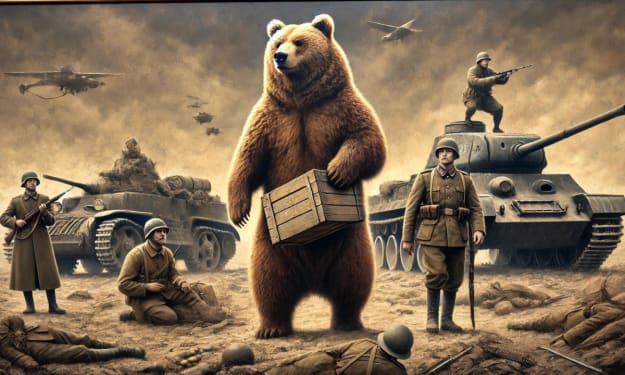
The Bear Who Fought the Nazis and Won: Wojtek the Soldier Bear
For centuries, humans have enlisted animals to fight by their side, and Wojtek, a Syrian brown bear who served in WWII, was no exception. While elephants, horses, and even pigeons have had their moments in war, a beer-drinking, cigarette-smoking bear seems like a story too wild to believe. But believe it or not, Wojtek, or "Joyful Warrior," as the Polish soldiers called him, was not just a mascot; he was a genuine soldier who carried ammunition during some of the toughest battles of the war. His legacy, celebrated by monuments in Europe, stands as one of the most unique and heartwarming tales of animal bravery in human history.
By Marveline Merab2 years ago in History