World History
The Frankford Avenue Bridge: America’s Oldest Bridge Still in Use
Tucked away in the bustling city of Philadelphia is a relic from a time long before the United States existed as a nation—the Frankford Avenue Bridge, also known as the King’s Highway Bridge. This unassuming stone structure, built in 1697, holds the distinction of being the oldest bridge in the United States still in use, predating the country itself by nearly 80 years. The bridge was erected to provide a crucial crossing over Pennypack Creek and remains an enduring symbol of American colonial engineering, quietly serving both local and modern traffic for more than three centuries. While its historical significance is profound, the Frankford Avenue Bridge is more than just a link to the past; it’s a testament to the ingenuity of early American settlers and the lasting impact of colonial infrastructure on modern-day America. As we take a closer look at the history of this bridge, we begin to understand how a simple structure can embody the ambitions, struggles, and achievements of a nation on the brink of formation. The Birth of the King's Highway Bridge Philadelphia, founded in 1682 by William Penn, quickly grew into one of the most important cities in colonial America. Situated on the Delaware River, the city became a hub for trade, commerce, and politics. By the late 1600s, the need for well-developed roads and bridges to facilitate travel and transport across the colonies was apparent. One of the most significant routes during this time was the King’s Highway, a major thoroughfare established to link the American colonies from Boston to Charleston. The King’s Highway was not only an essential route for trade but also a lifeline for the exchange of ideas, news, and culture among the scattered colonial settlements. However, many natural obstacles stood in the way of smooth travel along this road, including the Pennypack Creek, a waterway that winds through what is now northeast Philadelphia. To solve this problem, colonial settlers needed a bridge that would be sturdy enough to withstand the test of time, and so the Frankford Avenue Bridge was born. Completed in 1697, the Frankford Avenue Bridge was constructed using local materials and techniques common in 17th-century Europe, particularly England. The bridge is a three-span stone arch structure, with semi-circular arches supporting the roadway. Stone bridges were favored at the time for their durability, and the Frankford Avenue Bridge has certainly proven its resilience. Its stone arch design, combined with careful craftsmanship, has allowed it to remain in continuous use for over 300 years, weathering the storms of history and the development of a nation. A Colonial Crossroads The bridge was strategically built as part of the King’s Highway, which was vital for both colonial expansion and defense. This road connected cities, towns, and rural areas, enabling goods and services to flow between communities. As part of the larger transportation network, the Frankford Avenue Bridge played a key role in facilitating commerce by allowing traders and merchants to cross the Pennypack Creek without difficulty, thereby connecting Philadelphia with other parts of Pennsylvania and the broader colonies. During the colonial era, roads were often treacherous and difficult to navigate, especially after heavy rains or during the winter months when creeks and rivers would swell. The construction of the bridge was a significant improvement in the infrastructure of the time, providing a stable, reliable route for horse-drawn wagons and travelers on foot or horseback. This enhanced the speed and efficiency of transportation, helping to bolster the local economy. Moreover, the bridge was part of the King’s Highway, which was not only a commercial route but also one used by the colonial government for military purposes. Troops, officials, and couriers regularly traveled along this highway, especially as tensions between the American colonies and Britain escalated in the years leading up to the Revolutionary War. The bridge, thus, witnessed a significant amount of historical activity, standing as a silent witness to the changing political and social landscape of early America. An Enduring Legacy What makes the Frankford Avenue Bridge truly remarkable is not only its historical importance but its longevity. In an era when most man-made structures are replaced within decades, the Frankford Avenue Bridge has survived for more than three centuries. Its original stone arch construction has held strong despite the demands of modern transportation. While the bridge has undergone several repairs and renovations over the years to maintain its structural integrity, its core design remains largely unchanged. Today, the Frankford Avenue Bridge continues to serve as an active roadway, carrying vehicles, pedestrians, and cyclists over the Pennypack Creek. Despite its age, the bridge is still a functional part of Philadelphia’s infrastructure, seamlessly blending the old with the new. It stands as a reminder of the city’s deep colonial roots and the enduring nature of the infrastructure that early settlers put in place. Historical Recognition and Preservation Recognizing its historical and architectural significance, the Frankford Avenue Bridge was added to the National Register of Historic Places in 1988. This designation ensures that the bridge will be protected and preserved for future generations, safeguarding its legacy as one of the country’s most important historical structures. The bridge also holds a special place in the hearts of local residents, who take pride in the fact that they are connected to such a rich piece of American history. Efforts to preserve the bridge have been driven by both local and national interest, with historians and engineers working together to ensure that the structure remains safe for use while retaining its historical character. Despite its age, the bridge has been carefully maintained to accommodate modern traffic demands, a testament to the skill of its original builders and the value placed on its preservation. Conclusion: A Bridge Between Eras The Frankford Avenue Bridge stands as more than just a physical structure—it is a bridge between eras, connecting the present to the colonial past. Built in 1697, during a time when America was still under British rule, this stone arch bridge has withstood the test of time, continuing to serve the city of Philadelphia as it has for over 300 years. As the oldest bridge in the United States still in use, it is a powerful reminder of the enduring legacy of colonial infrastructure and the vital role such structures have played in shaping the nation we know today. In a city known for its historical significance—home to the Liberty Bell, Independence Hall, and countless other landmarks—the Frankford Avenue Bridge holds its own as a quiet yet monumental symbol of America’s early history and the remarkable feats of engineering that have stood the test of time.
By Deji Akomolafe2 years ago in History
The Terracotta Army: A Monumental Legacy of China’s First Emperor
In 1974, in the city of Xi'an, China, a simple farming task led to one of the greatest archaeological discoveries of the 20th century. As a farmer worked the dry earth of his field, he unearthed fragments of clay that would later reveal themselves to be part of a massive underground army—a stunning collection of more than 8,000 life-sized terracotta soldiers, crafted over 2,200 years ago to accompany and protect China’s first emperor, Qin Shi Huang, in the afterlife. This awe-inspiring army, known as the Terracotta Army, stands as both a testament to the emperor’s quest for immortality and as a demonstration of the incredible artistic and technological achievements of ancient China. Buried deep within the tomb complex of Qin Shi Huang, these clay warriors were part of a grand funerary project meant to ensure that the emperor would continue to rule in the afterlife, just as he had in life. The Discovery: An Accidental Unveiling The discovery of the Terracotta Army was nothing short of accidental. In the spring of 1974, as local farmers dug a well in a field outside Xi'an, they struck upon clay fragments that seemed out of place. Upon closer inspection by archaeologists, the fragments were identified as parts of life-sized sculptures—what would soon be revealed as one of the most elaborate burial sites in history. Over the years that followed, excavation teams uncovered an underground complex stretching over 20 square miles, containing thousands of intricately detailed terracotta soldiers, along with chariots, cavalry horses, and other figures that formed a replica of the emperor’s imperial guard. These figures had been carefully arranged in battle formations, as though standing ready to defend their ruler even in death. Qin Shi Huang: The Visionary Emperor To understand the significance of the Terracotta Army, it’s important to first understand the man for whom they were created—Qin Shi Huang, the first emperor of a unified China. Born in 259 BCE, he ascended to the throne of the Qin state at the age of 13 and, by the time he was 38, had successfully conquered and unified the warring states of China, founding the Qin Dynasty in 221 BCE. Qin Shi Huang was a visionary ruler, known for his sweeping reforms, which included standardizing weights and measures, developing a unified system of writing, and beginning construction on what would eventually become the Great Wall of China. Yet, despite his achievements, he was deeply obsessed with immortality. His reign was marked by a relentless search for elixirs and other means to extend his life—a quest that would ultimately end in failure when he died in 210 BCE. The Terracotta Army is a direct reflection of Qin Shi Huang’s beliefs about the afterlife. In ancient Chinese culture, it was believed that the afterlife mirrored the world of the living, and emperors would require the same luxuries and protection in death as they had in life. The Terracotta Army was crafted as an eternal force to protect the emperor in the next world, symbolizing his desire to maintain control over his realm even in death. The Army: An Unparalleled Work of Art What sets the Terracotta Army apart from other funerary sculptures is its sheer scale and the meticulous craftsmanship that went into each figure. The army includes more than 8,000 soldiers, along with 520 horses, 130 chariots, and 150 cavalry horses, all made from terracotta, a type of earthenware clay. Each soldier is unique, with distinct facial features, hairstyles, and expressions. Some are bearded, while others are clean-shaven. Some wear armor, while others are dressed in robes, representing different ranks and roles within the imperial army. The figures stand between 6 and 6.4 feet tall, with the tallest and most imposing figures representing generals. The level of detail is staggering—even down to the lines on their palms and the folds in their clothing. The creation of such a vast and diverse collection of figures required sophisticated techniques. While many of the soldiers share a similar basic form, their individual features were hand-carved by artisans, ensuring that no two figures are exactly alike. This personalization reflects the emphasis the emperor placed on realism and his desire to replicate his formidable army with precision. Another remarkable aspect of the Terracotta Army is that many of the figures still retain remnants of their original paint. When first created, the soldiers were not the dull gray we see today but were instead painted in vibrant colors, including reds, greens, blues, and purples. Unfortunately, exposure to air over the centuries caused much of the paint to deteriorate, but traces of this once-brilliant color scheme provide a glimpse into how spectacular the army would have looked in its prime. The Tomb Complex: A World Unto Itself The Terracotta Army is just one part of a much larger tomb complex built for Qin Shi Huang. The emperor’s mausoleum, located about a mile from the pits where the soldiers were found, has yet to be fully excavated. According to historical texts, the mausoleum itself is a miniature replica of the emperor’s empire, complete with rivers of mercury meant to represent waterways, and a ceiling inlaid with pearls to simulate the night sky. Despite the temptation to uncover the full extent of the tomb, archaeologists have been hesitant to excavate the main burial chamber due to concerns about preserving its contents. The presence of high levels of mercury in the soil around the tomb suggests that ancient records about the emperor’s grand burial plans may be accurate. Preserving a Legacy Since their discovery, the Terracotta Army has been hailed as one of the most significant archaeological finds in the world, offering unparalleled insight into the culture, beliefs, and technological advancements of ancient China. The site has been carefully preserved, and a museum complex has been built to allow visitors to witness the grandeur of the Terracotta Warriors firsthand. For Qin Shi Huang, the creation of this army was part of his desire to secure his legacy and protect his power in the afterlife. Today, the Terracotta Army stands as a monument not only to the emperor’s ambition but also to the incredible skill of the artisans who brought his vision to life. These silent warriors continue to guard their emperor, ensuring that his story endures for millennia to come.
By Deji Akomolafe2 years ago in History
The Rippled Wonder: Unearthing One of the Largest Roman Mosaic Floors in Antakya, Turkey. AI-Generated.
During the construction of a luxury hotel in Antakya, Turkey, an unexpected treasure was unearthed that left archaeologists, historians, and art enthusiasts in awe. Beneath the modern soil lay one of the largest Roman mosaic floors ever discovered—a beautifully intricate masterpiece that offers a rare window into the lives and artistic achievements of ancient Roman civilization. What makes this discovery even more extraordinary is not just its size and intricacy but the unusual rippled effect that has transformed its surface, a testament to the geological forces that have shaped the region for centuries. The massive mosaic, dating back to the Roman period, serves as a reminder of how history, nature, and art intertwine. Covering a significant expanse, this mosaic is adorned with colorful patterns and complex geometric designs that reflect the artistry and sophistication of Roman culture in the Eastern Mediterranean. Yet, despite its beauty and scale, the most striking feature of this mosaic is the wave-like appearance that now defines its surface—a rippled effect caused by centuries of seismic activity in the region. This undulating effect lends the floor an almost surreal quality, making it look as though the mosaic itself were a giant, rippling blanket frozen in time. The Roman Mosaic: A Glimpse into the Past Antakya, known in antiquity as Antioch, was one of the major cities of the Roman Empire, particularly in the eastern provinces. Antioch was renowned for its prosperity, cultural significance, and strategic location, serving as a crossroads of trade and commerce between the East and West. As a result, it became a vibrant center for artistic expression, with mosaics playing a crucial role in the decoration of homes, public spaces, and religious buildings. Mosaics in Roman times were much more than decorative floor coverings. They were symbols of wealth and status, often commissioned by affluent individuals to showcase their power, sophistication, and appreciation for art. These elaborate designs were painstakingly created using small pieces of stone, glass, and ceramics called tesserae, which were arranged to form intricate images and patterns. Themes ranged from mythological scenes and depictions of gods to representations of nature, animals, and geometric shapes. The mosaic uncovered in Antakya reflects this tradition of opulence and artistry, with its intricate details hinting at the grandeur of the space it once adorned. The Rippled Effect: A Testimony to Geological Forces While the sheer size and beauty of the mosaic are remarkable in their own right, what sets this discovery apart from other Roman mosaics is the rippled effect that now characterizes the floor. Over the centuries, Antakya has been subject to significant geological activity, including frequent earthquakes and earth shifts. These seismic forces have caused the once-flat mosaic to buckle and warp, creating a striking, wave-like surface that seems to undulate as if in motion. This rippling effect is not just a visual curiosity but also a powerful reminder of the dynamic forces that shape our planet. It highlights the intersection of human history and natural history, showing how the artistry of an ancient civilization has been altered by the slow but relentless processes of geological change. Despite the distortions caused by these forces, the mosaic has remained remarkably intact, offering a testament to the skill of the Roman artisans who crafted it. The durability of the mosaic, even in the face of seismic activity, speaks to the high quality of materials used and the advanced techniques employed by Roman builders and artists. A Cultural and Historical Treasure The discovery of this mosaic in Antakya is significant not only for its artistic value but also for what it reveals about the region's cultural history. Antioch was a melting pot of cultures, influenced by Greek, Roman, and Eastern traditions, and this mosaic is a reflection of that rich cultural heritage. The intricate designs and motifs seen in the mosaic may have been inspired by a blend of these influences, showcasing the cosmopolitan nature of the city during the Roman period. Moreover, the discovery of such a well-preserved mosaic provides valuable insight into daily life in Antioch. Mosaics were often used to decorate the homes of the elite, and the patterns and images depicted in these artworks can offer clues about the interests, values, and lifestyles of their owners. In this case, the grand scale and sophisticated design of the mosaic suggest that it likely belonged to a wealthy individual or family, perhaps part of the city's political or mercantile elite. Preserving the Past for Future Generations As with any archaeological discovery, the unearthing of the Antakya mosaic raises important questions about preservation and conservation. While the rippled effect adds a unique dimension to the mosaic’s appearance, it also poses challenges for its long-term preservation. Conservators will need to carefully assess the structural integrity of the mosaic to ensure that it remains intact for future generations to study and appreciate. Additionally, there is the question of how best to present this discovery to the public. Should the mosaic be left in situ, allowing visitors to view it in its original context, or should it be moved to a museum for safekeeping? Whatever the decision, it is clear that this mosaic is a treasure of immense historical and artistic value, and its preservation will be crucial for future research and education. Conclusion: A Ripple in Time The discovery of the massive Roman mosaic in Antakya is a reminder of the incredible artistry and engineering prowess of the ancient Romans, as well as the powerful forces of nature that have shaped our world. The rippled, wave-like surface of the mosaic is a beautiful and poignant symbol of the passage of time, illustrating how human creations, no matter how enduring, are still subject to the shifting of the earth beneath them. As archaeologists continue to study this mosaic and the site where it was found, we are sure to learn even more about the people who lived in ancient Antioch and the world they inhabited. In the meantime, this rippled wonder remains a captivating blend of art, history, and nature—a true marvel that connects us to the distant past.
By Deji Akomolafe2 years ago in History
The Road to Success
Success is rarely a straight path. It is often fraught with challenges, setbacks, and moments of doubt. Yet, it is through these trials that the seeds of greatness are sown. The stories of those who have achieved remarkable success are not just tales of triumph, but also of unwavering perseverance and resilience. This article delves into true stories of individuals who exemplified these qualities, ultimately achieving their dreams and inspiring others along the way.
By Sazeeb Chowdury2 years ago in History
The Human Statue of Liberty: A 1918 Patriotic Tribute Formed by 18,000 Soldiers
In 1918, a powerful and unusual tribute to American ideals was made—not in stone or metal, but in human form. At Camp Dodge in Des Moines, Iowa, an astonishing scene unfolded: 18,000 soldiers stood in formation to create a living, breathing replica of the Statue of Liberty. This remarkable human sculpture, captured in a famous photograph, symbolized not just the nation’s enduring values of freedom and democracy, but also the collective strength and unity of the United States during one of the most challenging times in its history: World War I. A Nation United in Wartime The year 1918 was a critical time for the United States and the world. World War I, also known as “The Great War,” had ravaged Europe for four years, and the United States had joined the conflict in 1917. The country’s military forces were undergoing rapid expansion to meet the demands of the global conflict. Across the U.S., military camps were established to train soldiers who would be sent overseas to fight in Europe. Camp Dodge, located near Des Moines, Iowa, was one of these training grounds, where thousands of young men prepared to defend the ideals their country held dear. It was during this tumultuous time that the famous human Statue of Liberty was created. This act of patriotic artistry served as a symbol of national unity, freedom, and the commitment of American soldiers to fight for liberty on foreign shores. The Vision Behind the Human Statue of Liberty The idea of creating the Statue of Liberty using human bodies was the brainchild of Arthur Mole, a British-born American photographer known for his innovative work with large groups of people. Mole specialized in what he called "living photographs," where he arranged thousands of people into elaborate shapes or symbols that were visible only from a certain height. His work was a combination of military precision, artistic vision, and a deep sense of patriotism. Mole worked alongside his collaborator John D. Thomas to bring this ambitious project to life. Their goal was to use the bodies of soldiers to create an enormous depiction of the Statue of Liberty, one of America’s most iconic symbols. The Statue of Liberty, given as a gift from France in 1886, had become a global representation of freedom, democracy, and the hope for a better life. During World War I, it also served as a reminder of what was at stake in the conflict: the preservation of liberty and the protection of democratic values. The Logistics of the Project Creating the human Statue of Liberty required careful planning and extraordinary coordination. Mole and Thomas had to arrange 18,000 soldiers into a shape that would resemble the statue when viewed from a specific vantage point. This process involved a painstaking level of detail, as the soldiers had to be positioned in such a way that they would form the lines, curves, and proportions of the statue’s features. The task required military discipline and cooperation, as each soldier played a critical role in forming the overall image. From above, the soldiers came together to create not only the outline of the Statue of Liberty, but also her torch, crown, and flowing robes. The precision required to make the image appear recognizable from an aerial perspective was nothing short of remarkable. The formation spanned over several acres of land at Camp Dodge, with the soldiers arranged in different layers to create the necessary depth and detail. Those at the top of the formation, such as those forming the flame of the torch, were positioned much closer together, while those near the base of the statue were spread out more widely. This technique of perspective manipulation allowed the entire image to come together in a way that appeared natural when photographed from above. The Symbolism of the Human Statue of Liberty The human Statue of Liberty represented more than just a clever visual spectacle—it was a powerful expression of patriotism and solidarity during a time of war. In 1918, the U.S. was deeply involved in the global conflict, and the need to boost morale, inspire unity, and promote the values for which soldiers were fighting was paramount. The image of 18,000 men coming together to form the Statue of Liberty was a potent symbol of collective effort, sacrifice, and national pride. The soldiers in the formation were preparing to leave for the battlefields of Europe, where they would join the Allied forces in the fight against the Central Powers. The war had already claimed millions of lives, and these men were ready to risk everything to defend their country’s ideals. By forming the shape of the Statue of Liberty, they symbolized the unity and strength of the American people, as well as their willingness to defend the principles of freedom and democracy. The Legacy of the Human Statue of Liberty The photograph of the human Statue of Liberty has endured as a lasting symbol of America’s wartime unity and the collective power of its citizens. The image stands as a testament to the creativity and ingenuity that can emerge even in times of great hardship. It also highlights the role of art and symbolism in rallying people around a common cause. Arthur Mole’s living photograph was part of a series of similar works he created during World War I, including formations of the Liberty Bell, the American flag, and the U.S. Army insignia. These images were widely distributed and used in propaganda to inspire patriotism and support for the war effort. Today, they serve as a reminder of the sacrifices made by those who served during the Great War and the enduring power of collective action. Conclusion The human Statue of Liberty created at Camp Dodge in 1918 remains one of the most striking and memorable images of the World War I era. Formed by 18,000 soldiers standing in perfect formation, it symbolized the unity, strength, and dedication of the American people in a time of great turmoil. The ingenuity behind the project, combined with the deep symbolic meaning of the Statue of Liberty, made it a powerful expression of patriotism and a lasting tribute to the men and women who fought for freedom during the Great War. Today, the image continues to inspire awe and serve as a reminder of the collective strength of a united people.
By Deji Akomolafe2 years ago in History
Oldest Fingerprint: A 2,400-Year-Old Bog Body and a Glimpse into Iron Age Rituals
In 1950, deep within a peat bog in Bjældskovdal, Denmark, a discovery was made that would fascinate archaeologists and historians for decades to come. The nearly perfectly preserved body of a man, later named the “Tollund Man,” was unearthed by two farmers cutting peat. What made this find extraordinary was the fact that the man’s features were so intact that he appeared to have only recently died. This remarkable preservation, caused by the unique conditions of the peat bog, revealed a man who lived during the Iron Age, some 2,400 years ago. His story, a mixture of ritual, sacrifice, and daily life in ancient Scandinavia, has captivated researchers ever since. Discovery of the Tollund Man On May 8, 1950, Viggo and Emil Højgaard were working in a peat bog near Bjældskovdal when they came across what they initially thought was the victim of a recent murder. The body they found was so well-preserved that it looked like someone who had died only days or weeks earlier. The man was wearing a leather cap and a noose was tightly wrapped around his neck, suggesting foul play. Shocked by their find, the farmers alerted the local authorities, and soon after, archaeologists arrived to examine the body. When experts began studying the remains, they quickly realized that the Tollund Man was not a recent victim, but rather a relic from the distant past. Radiocarbon dating of his remains confirmed that he had lived during the Iron Age, around 375-210 BC. This meant that the Tollund Man had lain undisturbed in the bog for more than two millennia, his body miraculously preserved by the acidic, oxygen-deprived environment of the peat, which slowed decomposition. An Iron Age Life Revealed The Tollund Man provides a rare and invaluable glimpse into the life of Iron Age people in northern Europe. His body is one of several “bog bodies” found across the peatlands of northern Europe, preserved in a similar way. The unique environment of the bogs—cold, wet, and low in oxygen—slowed the bacterial activity that normally breaks down organic material, allowing the Tollund Man’s skin, hair, and even internal organs to remain in an astonishing state of preservation. One of the most remarkable aspects of the Tollund Man is the detail preserved in his face. His serene expression, closed eyes, and slightly parted lips give him an almost lifelike appearance. Even the stubble on his chin is still visible, a testament to the incredible conditions in which he was buried. His hair, cropped short and covered by a pointed leather cap, adds to the vividness of the image of this man from 2,400 years ago. The Tollund Man was found lying in a fetal position, with a leather belt around his waist and a noose made of braided animal hide around his neck. The noose, along with the fact that his body was placed in the bog rather than cremated (a common Iron Age burial practice), suggests that he was the victim of a ritual sacrifice. Many researchers believe that the Tollund Man was offered to the gods in a religious ceremony, possibly to ensure a good harvest or to appease the gods during a time of crisis. A Ritual Sacrifice? The theory that the Tollund Man was a victim of human sacrifice is supported by the noose around his neck, which indicates he was hanged. Hanging was one of the known methods of sacrifice in Iron Age Europe, and the careful placement of his body in the bog suggests a ritualistic element. Unlike typical burials of the time, which often involved cremation or burial mounds, bog bodies like the Tollund Man were submerged in waterlogged peatlands, which may have been seen as sacred places connected to the gods or the afterlife. The Tollund Man’s calm, peaceful expression has led some researchers to speculate that he may have been willing to participate in the ritual, or that he was drugged or otherwise prepared for his death. Other bog bodies have been found with signs of violence—stab wounds, blunt force trauma, or strangulation—indicating that Iron Age people may have practiced different forms of ritual killing depending on the situation. Insights into Iron Age Diet and Health One of the most fascinating aspects of the Tollund Man’s discovery is the amount of information scientists were able to gather about his diet and health. Thanks to the preservation of his internal organs, researchers were able to analyze the contents of his stomach and determine his final meal. It was a simple porridge made from barley, flax, and seeds from wild plants. This humble meal suggests that the Tollund Man came from a farming community where grains and wild plants were staple foods. Beyond his diet, other studies have shown that the Tollund Man was around 40 years old when he died, stood about 5 feet 3 inches tall, and was in relatively good health for his time. His teeth, though worn from the rough Iron Age diet, were free of cavities, and there were no signs of long-term illness or malnutrition. In addition, forensic examination revealed that his fingerprints were still intact, an astonishing detail considering his age. This level of preservation allowed researchers to study a man who lived over two millennia ago as if he were a modern subject. The Legacy of the Tollund Man The Tollund Man continues to be one of the most famous and well-preserved examples of a bog body, providing a unique window into the past. His remarkably lifelike appearance, combined with the wealth of information gleaned from his remains, has made him an invaluable resource for understanding Iron Age culture, religion, and daily life. While much about his life and death remains a mystery, the Tollund Man serves as a poignant reminder of the complex belief systems and rituals of ancient peoples. Today, the Tollund Man is housed at the Silkeborg Museum in Denmark, where visitors can marvel at the well-preserved features of a man who lived 2,400 years ago. His story, frozen in time by the bog’s conditions, continues to captivate scientists and the public alike, offering a glimpse into the ancient world and the enigmatic practices of the Iron Age.
By Deji Akomolafe2 years ago in History
Bad Blood: What It Means and How to Overcome It
In our relationships—whether personal, familial, or professional—unresolved conflicts can lead to what we often refer to as "bad blood." This term encapsulates feelings of resentment, bitterness, and tension that can persist over time. In this article, we’ll delve into the causes of bad blood, its impact on our lives, and effective strategies for resolution.
By Zinnat ara Begum2 years ago in History
The Mokoi
In the rich tapestry of Aboriginal Australian mythology, the Mokoi is a figure of fear and mystery. A malevolent spirit associated with death, disease, and witchcraft, its name literally means "evil spirit." This dark entity is described as a tall, thin, and shadowy figure, with glowing eyes and skeletal limbs. Its haunting presence lurks in remote, dark areas of the bushland, where it waits to strike. The Mokoi is not bound by the limits of the physical world, capable of swift movement through the air, making it nearly impossible for its victims to escape. The origins of the Mokoi trace back to a tale of dark magic. According to Aboriginal legend, a powerful sorcerer, in his quest for eternal life, struck a sinister deal with a malevolent spirit. The spirit promised to grant the sorcerer his wish, but the price was steep: the sorcerer had to serve the spirit for eternity. Desperate for immortality, the sorcerer agreed, and as a result, he was transformed into the Mokoi—a creature of darkness, forever tasked with carrying out the wicked deeds of the spirit.
By A História2 years ago in History
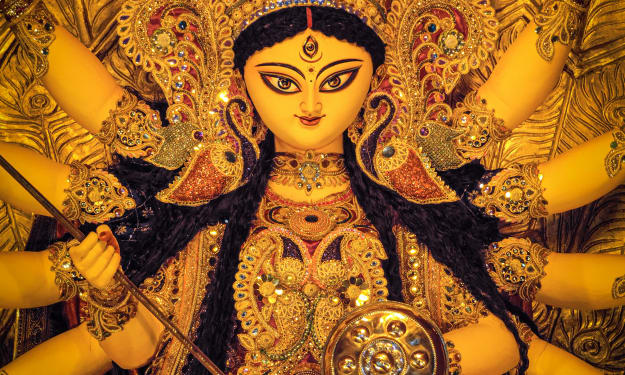
The Tradition of Durga Puja
Durga Puja is quite possibly one of the most critical and generally celebrated celebrations in India, especially in West Bengal, Assam, Odisha, Tripura, and Bangladesh. It is a lively festival of the triumph of Goddess Durga over the bison devil Mahishasura, representing the victory of good over evil. Be that as it may, Durga Puja is significantly more than a strict celebration — it is a social peculiarity, a period for creative articulation, local area holding, and cheerful festivals. Throughout the long term, this celebration has advanced, mixing conventional traditions with contemporary components, making it perhaps the most expected occasion on the Indian social schedule.
By Doris J Palma2 years ago in History