World History
Roman Horse Armor from Dura-Europos: A Glimpse into the Ancient Battlefield
In the rich tapestry of Roman military history, artifacts often tell the most vivid stories. Among these, one of the most remarkable is the discovery of a 3rd-century CE Roman horse armor made of bronze scales, found at Dura-Europos, Syria. This extraordinary find not only sheds light on Roman cavalry tactics but also offers a glimpse into the technological advancements and craftsmanship of the Roman Empire during its later years. Now housed at the National Museum of Damascus, the armor continues to captivate historians, archaeologists, and military enthusiasts alike. The Discovery at Dura-Europos Dura-Europos, often referred to as the “Pompeii of the Desert,” was a key site along the Euphrates River, where many civilizations, including the Romans, left their mark. Founded in 300 BCE by the Seleucids, Dura-Europos was a vibrant and cosmopolitan city due to its strategic position on the frontier between the Roman and Parthian Empires. By the 3rd century CE, it had become a critical Roman outpost, playing a central role in defending the empire from eastern threats. The excavation of Dura-Europos in the 1920s and 1930s yielded a treasure trove of artifacts, but perhaps none was as striking as the bronze horse armor unearthed in 1932. Found near the remains of a Roman cavalry unit, this armor consists of around 2,000 individual bronze scales, each meticulously crafted and sewn together to form a protective layer that would cover the body of a horse. This armor was revolutionary, showing the Romans’ commitment to protecting their cavalry mounts in addition to their soldiers. The Significance of Roman Cavalry While the Roman infantry is often celebrated as the backbone of the empire’s military might, the cavalry played an increasingly important role in the later stages of Roman expansion and defense. By the 3rd century CE, cavalry units had become vital in battles where speed, maneuverability, and shock value were essential. These mounted soldiers were often deployed as part of elite units, capable of harassing enemy forces, chasing down retreating troops, and delivering devastating charges. The use of armored horses, or cataphracts, became increasingly common during this period, particularly in the eastern provinces where the Romans faced heavily armored opponents like the Parthians and Sassanids. The Dura-Europos armor reflects this trend, showcasing the Roman adaptation of eastern military practices. The use of scale armor, a technique borrowed from eastern civilizations, helped protect the horse’s vulnerable areas while maintaining a degree of flexibility, essential for battlefield agility. Craftsmanship and Design What makes the Dura-Europos horse armor particularly fascinating is the incredible craftsmanship that went into its creation. Each bronze scale, carefully shaped and fitted, would have been sewn onto a fabric or leather backing, providing both protection and flexibility. The scales overlap like fish scales, ensuring that the armor could absorb the impact of arrows, spears, and swords while still allowing the horse to move freely. The choice of bronze for the scales was also significant. Bronze was durable and offered a good balance between weight and protection. The sheen of the armor, when polished, would have reflected the sun, making the horse and rider an imposing sight on the battlefield. This psychological effect, combined with the physical protection, made Roman cavalry units a formidable force. The armor itself was likely tailored to fit the specific horse it was designed for, with sections covering the head, neck, body, and possibly even the legs. This full-body protection, although heavy, would have been crucial in a battle where both man and beast were vulnerable to attack. The armor would have helped protect the horse from enemy projectiles and melee weapons, increasing the cavalry’s effectiveness and survivability. The Historical Context: Warfare on the Eastern Front By the time this armor was created, Rome was engaged in a series of protracted conflicts on its eastern frontier, particularly against the Sassanid Empire. These wars required the Romans to adapt to new forms of warfare, and the use of heavily armored cavalry was part of this adaptation. Roman cataphracts, inspired by their Persian counterparts, were deployed in response to the increasingly sophisticated armies fielded by Rome’s eastern rivals. The discovery of the armor at Dura-Europos is particularly significant because the city itself was a flashpoint in the Roman-Sassanid conflicts. In 256 CE, the city fell to the Sassanids after a brutal siege, and the Roman defenders were either killed or captured. The remains of this siege, including the well-preserved horse armor, offer invaluable insights into the military strategies and technologies used by both sides. The Legacy of the Dura-Europos Horse Armor Today, the Dura-Europos horse armor stands as a testament to the ingenuity and adaptability of the Roman military. Its preservation, despite the passage of nearly two millennia, is remarkable, and it offers modern scholars a rare opportunity to study Roman cavalry equipment in detail. The armor’s intricate design and functional purpose reveal the level of sophistication reached by Roman military engineers, as well as the importance of cavalry in the empire’s later military campaigns. Housed in the National Museum of Damascus, this piece of history serves as a reminder of the complex and often violent interactions between civilizations in the ancient world. The bronze scales, once part of a war machine, now rest in peaceful silence, offering a tangible connection to a world long past. The discovery of this Roman horse armor at Dura-Europos is not just a story of ancient warfare; it is a testament to the enduring legacy of Roman innovation and the empire’s constant struggle to maintain its dominance in an ever-changing world. Through this armor, we gain a deeper understanding of the lengths to which the Romans went to protect their soldiers—and their horses—on the battlefield.
By Deji Akomolafe2 years ago in History
King Ramses III: Between Horus and Seth – An Egyptian Masterpiece
Nestled within the prestigious halls of the Cairo Museum is one of the most remarkable sculptures from ancient Egypt – a triad statue that represents King Ramses III flanked by two of Egypt’s most significant deities: Horus, the god of kingship and the sky, and Seth, the god of chaos and the desert. This statue, carved from a rare grizzled granite stone, is more than just a piece of art. It is a magnificent testament to the skill of ancient Egyptian artisans, their deep religious beliefs, and their reverence for the divine kingship embodied in their rulers. The piece is considered one of the finest examples of ancient Egyptian sculpture, not only for its subject matter but also for the complexity of its craftsmanship. The stone itself – grizzled granite – was a challenging material to work with due to its hardness. Yet, the sculptors managed to create a highly detailed, expressive piece that stands as a monument to the height of Egyptian artistry and religious symbolism. The Historical Context of Ramses III Ramses III, often regarded as the last great pharaoh of Egypt's New Kingdom, ruled from 1186 to 1155 BC, during a time of considerable internal strife and external threats. His reign was marked by a series of invasions from foreign forces, most notably the Sea Peoples, whom he famously repelled in the Battle of the Delta. Though he succeeded in maintaining Egypt’s borders and power, his later years were overshadowed by palace intrigue, economic difficulties, and a failed assassination plot known as the "Harem Conspiracy." Despite these challenges, Ramses III worked diligently to preserve the religious and cultural traditions of Egypt. He engaged in numerous building projects, restoring temples, constructing monuments, and dedicating offerings to the gods. His devotion to the gods is clearly illustrated in this masterpiece, where he is placed between Horus and Seth, symbolizing his divine right to rule and his position as the mediator between order and chaos. Symbolism: Horus, Seth, and Divine Kingship The triad statue is a powerful expression of the duality inherent in Egyptian kingship. Horus, on one side of Ramses III, was the god associated with the throne of Egypt. Represented as a falcon or a man with a falcon's head, Horus symbolized the divine authority of the pharaoh and the continuity of the Egyptian state. Every pharaoh was seen as the earthly incarnation of Horus, responsible for upholding maat – the ancient concept of cosmic order, truth, and justice. On the other side of the king stands Seth, the god traditionally associated with chaos, storms, and the desert. While Seth is often viewed as a malevolent force, particularly due to his role in the murder of his brother Osiris, the Egyptians also believed he played an essential role in maintaining balance in the universe. Without chaos, there could be no order; without Seth, Horus’ rule could not be fully realized. In placing Ramses III between Horus and Seth, the sculpture conveys the pharaoh’s role as the one who balances these opposing forces. He is not just a mortal ruler but a divine mediator, maintaining harmony in both the heavens and on earth. The highest ranks of coronation and priesthood are symbolized here, showing that the pharaoh’s power was not only political but also deeply spiritual. The Complex Craftsmanship The artistic complexity of this statue is immediately evident in its material. Grizzled granite, a rare and challenging stone to work with, requires tremendous skill to carve. Unlike softer stones like limestone or sandstone, granite is unforgiving, making it difficult to achieve the detailed facial features, the intricate headdresses, and the fine textures seen in the clothing and hieroglyphic inscriptions of the statue. The sculptors of ancient Egypt, however, were undaunted by the difficulty of working with granite. Their ability to work this material to such precision speaks to their mastery of stone-working techniques. They used copper and bronze tools, along with abrasive materials like quartz sand, to gradually chip away at the granite and create smooth, polished surfaces. The fact that this statue features not just one figure, but three, each with distinct details and proportions, further underscores the remarkable skill involved in its creation. Carving a single statue from granite is already a complex task, but creating a triad figure, with each part harmoniously integrated into the whole, required extraordinary vision and technical ability. This complexity elevates the piece from a mere representation of figures to a true masterpiece of ancient sculpture. The Legacy of the Statue Today, the triad of Ramses III, Horus, and Seth continues to captivate historians, archaeologists, and art enthusiasts. Its placement in the Cairo Museum allows modern audiences to appreciate not only the religious and political significance of the piece but also the incredible craftsmanship behind it. As an artifact, it tells us much about the values of ancient Egyptian society, where religion, kingship, and art were inextricably linked. Ramses III’s position between Horus and Seth reflects the ancient Egyptian belief in the pharaoh as the divine intermediary. He was tasked with maintaining the balance between order and chaos, a role that was as much spiritual as it was temporal. The meticulous detail of the sculpture, carved from an unforgiving material, is a tribute to the artisans’ skill and the importance of Ramses III’s reign. As we gaze upon this ancient masterpiece, we are reminded of the extraordinary accomplishments of the Egyptian civilization. From their mastery of stone-working to their sophisticated religious symbolism, the Egyptians created works that continue to resonate with us, thousands of years later, as symbols of the complexity and beauty of human culture.
By Deji Akomolafe2 years ago in History
The Legacy of Tupac Amaru: From Incan Resistance to Modern Symbolism
The name “Tupac Amaru” echoes through history as a powerful symbol of resistance, courage, and sacrifice. It originates with the last indigenous Inca leader to challenge the Spanish colonizers, Tupac Amaru I, whose execution marked the end of the Inca resistance in South America. His legacy, however, did not end with his death. Centuries later, Tupac Amaru II emerged as another champion of indigenous rights, leading a massive rebellion against the Spanish rule in the region now known as Peru. Both men, killed and martyred for their efforts, left an indelible mark on history, shaping the identity of the Andean people and becoming enduring symbols of defiance against oppression. This legacy took on new meaning in the 20th century, when Afeni Shakur, a member of the Black Panther Party and the mother of one of hip-hop's greatest icons, Tupac Shakur, chose to name her son after the legendary Incan leaders. Afeni’s choice was a conscious effort to connect her son’s struggle and identity to a broader history of resistance, reminding him and the world that the fight against oppression spans time, cultures, and continents. Tupac Amaru I: The Last Inca Leader The story of Tupac Amaru I begins in the 16th century, during the Spanish conquest of the Inca Empire. After the defeat of the Inca Emperor Atahualpa and the fall of the capital, Cusco, to Spanish forces, the once-powerful empire was reduced to a fraction of its former glory. The remaining Inca nobles retreated to Vilcabamba, a remote region in the Andes, where they maintained a form of resistance for several decades. Tupac Amaru I, the last Sapa Inca (sovereign leader), took up the mantle of leadership in Vilcabamba. He attempted to preserve the last vestiges of Inca independence, but the Spanish were relentless in their pursuit of complete domination. In 1572, after a long standoff, the Spanish captured Tupac Amaru, and he was publicly executed in Cusco. His death symbolized the end of the Inca resistance, but his martyrdom ignited a fire in the hearts of the indigenous people, a fire that would burn for centuries. Tupac Amaru I’s legacy lived on not only as a symbol of resistance to colonization but also as a beacon of hope and resilience for the indigenous people of South America. His name would resurface nearly two centuries later, when a descendant took on his mantle in a new fight for justice. Tupac Amaru II: Rebellion and Martyrdom José Gabriel Condorcanqui, better known as Tupac Amaru II, was born in 1738 and claimed to be a direct descendant of the original Tupac Amaru. Living under the harsh colonial regime of the Spanish in Peru, Tupac Amaru II witnessed firsthand the exploitation and oppression of indigenous people. The Spanish imposed crushing taxes, forced labor, and a rigid caste system that left indigenous communities impoverished and disenfranchised. In 1780, inspired by his ancestor and motivated by the desire for justice, Tupac Amaru II launched a rebellion against the Spanish colonial government. His revolt began with the capture and execution of a corrupt Spanish official, marking the start of a widespread uprising that drew in thousands of indigenous people, mestizos, and other oppressed groups. His vision was not just one of revenge but one of creating a new, just society in which indigenous people could reclaim their dignity and freedom. Despite initial successes, the rebellion was brutally suppressed by the Spanish, who captured Tupac Amaru II in 1781. His execution was as cruel as it was symbolic—he was dismembered in front of his followers, with his body parts sent to different regions as a warning. Yet, like Tupac Amaru I, his martyrdom only strengthened his legacy. His fight for indigenous rights and autonomy continued to inspire movements for independence and justice in Latin America. Afeni Shakur and the Modern Tupac In 1971, amidst her own struggle for justice as a member of the Black Panther Party, Afeni Shakur gave birth to a son. She named him Tupac Amaru Shakur, linking his identity to the legacy of the two great Incan leaders. In an interview, Afeni explained the significance behind her choice: “Tupac was conceived during the worst part of my life, and I chose his name because I wanted my son to understand that we aren’t the only people that this has happened to.” For Afeni, the name Tupac Amaru was a way of connecting the African American struggle for civil rights with the broader history of resistance against colonization and oppression. She wanted her son to carry with him the knowledge that the fight for freedom is a universal one, shared by people across time and space. Tupac Shakur, who would go on to become one of the most influential voices in hip-hop, embodied this spirit of resistance in his music, often addressing themes of social justice, inequality, and the legacy of systemic oppression. Tupac Shakur’s lyrics were filled with the pain and hope of marginalized communities, much like the Incan leaders whose name he bore. His life, like theirs, was marked by a fierce desire to challenge the status quo and uplift those who had been silenced. His tragic death in 1996 only cemented his status as a martyr in the eyes of his followers, continuing the legacy of Tupac Amaru I and II. Conclusion: A Legacy of Resistance The name Tupac Amaru has transcended its Incan origins to become a symbol of resistance, not only in South America but across the world. From the fight against Spanish colonization to the modern struggle for racial justice, the legacy of Tupac Amaru lives on. Through the stories of Tupac Amaru I, Tupac Amaru II, and Tupac Shakur, we are reminded that the fight for justice and freedom is ongoing, and that the spirit of resistance can never be fully extinguished. It passes from one generation to the next, carrying with it the hope that one day, true justice will be realized.Start writing...
By Deji Akomolafe2 years ago in History
Ephesus: Echoes of Ancient Grandeur in Modern-Day Turkey
Nestled in the heart of modern-day Turkey, Ephesus stands as a testament to the enduring legacy of classical antiquity. Once a bustling metropolis of the ancient Greek and Roman world, Ephesus flourished as a center of culture, commerce, and spirituality. Today, its well-preserved ruins attract visitors from around the globe, offering a captivating glimpse into the rich history and architectural marvels of one of the ancient world's greatest cities. A City of Greek Origins Ephesus traces its origins back to the Ionian Greeks, who settled in the area around the 10th century BC. Located near the western coast of Asia Minor, Ephesus benefited from its strategic location along major trade routes, connecting it to the Aegean Sea and beyond. The city grew rapidly, becoming one of the largest and most important Greek cities of antiquity. During the 6th century BC, Ephesus thrived under the rule of the Lydian Empire and later came under Persian control. Despite political changes, Ephesus continued to prosper economically and culturally, attracting settlers from various parts of the Mediterranean world. The city's strategic position and fertile surroundings ensured its prominence as a hub of trade and intellectual exchange. Roman Influence and Imperial Grandeur By the 2nd century BC, Ephesus came under Roman rule and experienced a period of unprecedented growth and prosperity. The Romans recognized Ephesus' strategic importance and invested heavily in its infrastructure, transforming the city into a major urban center. Under Roman rule, Ephesus became the capital of the Roman province of Asia and thrived as a cosmopolitan city with a diverse population. One of the most iconic structures of Roman Ephesus is the Library of Celsus, built in the 2nd century AD. This impressive library, dedicated to the Roman Senator Tiberius Julius Celsus Polemaeanus, housed thousands of scrolls and served as a symbol of the city's intellectual and cultural achievements. The facade of the library, adorned with intricate statues and reliefs, remains a striking example of Roman architectural splendor. Cultural and Religious Significance Ephesus was not only a center of trade and governance but also a hub of religious diversity and spiritual significance. The city was home to the Temple of Artemis, one of the Seven Wonders of the Ancient World. Dedicated to the Greek goddess Artemis, the temple attracted pilgrims from across the Mediterranean and beyond, contributing to Ephesus' reputation as a sacred city. Christianity also flourished in Ephesus, particularly following the ministry of the Apostle Paul in the 1st century AD. The New Testament Book of Ephesians is believed to have been written to the Christian community in the city, highlighting its importance in early Christian history. The House of the Virgin Mary, located near Ephesus, is traditionally associated with Mary, the mother of Jesus, adding to the city's religious significance and drawing pilgrims to its ancient shores. Architectural Marvels and Urban Layout The layout of ancient Ephesus reflects its status as a major urban center of the ancient world. The city was meticulously planned, with broad, colonnaded streets, public squares, and impressive public buildings. The Great Theater of Ephesus, one of the largest ancient theaters with a seating capacity of over 25,000 spectators, exemplifies the city's architectural prowess and served as a venue for theatrical performances, political gatherings, and religious ceremonies. Ephesus' urban planning also included sophisticated water and sewage systems, underscoring the city's advanced engineering capabilities. The presence of public baths, temples, and marketplaces further attests to Ephesus' status as a vibrant cosmopolitan center where commerce, culture, and civic life intersected. Rediscovery and Preservation The decline of Ephesus began in the 3rd century AD, as shifting trade routes and geopolitical changes contributed to its gradual decline. The city was eventually abandoned and fell into obscurity, its ruins buried beneath layers of sediment and vegetation over the centuries. Ephesus' rediscovery began in the 19th century with archaeological excavations that unearthed its ancient treasures. Today, Ephesus is a UNESCO World Heritage Site and one of Turkey's most visited tourist destinations. Visitors to Ephesus can explore its well-preserved ruins, including the Library of Celsus, the Temple of Artemis, and the Great Theater, marveling at the remnants of an ancient city that once epitomized the grandeur and sophistication of Greco-Roman civilization. Conclusion: Ephesus, an Enduring Legacy Ephesus stands as a testament to the resilience of human achievement and the enduring legacy of ancient civilizations. From its humble beginnings as a Greek settlement to its zenith as a Roman metropolis, Ephesus embodies the cultural richness, architectural splendor, and spiritual significance of the ancient world. Its well-preserved ruins continue to inspire awe and admiration, offering a window into the past and a deeper understanding of the complexities of ancient urban life. As visitors wander through the streets of Ephesus, they are transported back in time, encountering remnants of grand temples, bustling marketplaces, and majestic theaters. The city's legacy lives on in its archaeological treasures and in the enduring influence of Greco-Roman culture on modern society. Ephesus remains not only a testament to the past but also a beacon of cultural heritage and historical exploration, inviting travelers to uncover its secrets and marvel at its enduring grandeur.
By Deji Akomolafe2 years ago in History
Baiae: The Sunken City of Roman Splendor
Off the western coast of Italy, beneath the azure waters of the Tyrrhenian Sea, lies a submerged treasure—a testament to the lavish lifestyle and opulence of ancient Rome. Baiae, once a playground for Roman elites including Julius Caesar, Nero, and Hadrian, was renowned for its luxurious villas, thermal baths, and temples. This sunken city, hidden for over 1,700 years following the eruption of Mount Vesuvius in 79 AD, offers a captivating glimpse into the grandeur and indulgence of Roman society. A Retreat for Roman Elites In its prime, Baiae was more than just a coastal resort; it was a symbol of wealth and power. Located near Naples in the Bay of Naples, Baiae boasted a mild climate, natural hot springs, and stunning views of the Mediterranean—a perfect setting for the leisure pursuits of Rome’s elite. Emperors, senators, and wealthy patricians flocked to Baiae to escape the hustle and bustle of Rome, seeking relaxation, entertainment, and social connections. The city’s allure extended beyond its natural beauty. Baiae was adorned with luxurious villas, adorned with frescoes, marble statues, and intricate gardens. Thermal baths fed by natural hot springs offered therapeutic benefits and social opportunities, where political alliances were forged and intrigues unfolded. Baiae was not only a retreat but also a place of political maneuvering and cultural exchange, where the elite displayed their wealth and influence. Cultural and Historical Significance Baiae’s significance in Roman history is underscored by its association with prominent figures of the era. Pliny the Younger, a notable Roman writer and administrator, maintained a villa in Baiae and documented its splendor in his letters. The city’s popularity peaked during the first centuries AD, reaching its zenith under Emperor Hadrian, who expanded and embellished Baiae’s infrastructure, including its renowned imperial villa. The eruption of Mount Vesuvius in 79 AD, which famously destroyed Pompeii and Herculaneum, also affected Baiae. While not as catastrophically devastated as its nearby neighbors, Baiae experienced seismic activity and gradual subsidence, causing portions of the city to sink below the sea level over time. The gradual submergence, coupled with centuries of geological changes, transformed Baiae from a bustling resort city into an underwater archaeological marvel. Rediscovery and Archaeological Exploration Baiae’s submerged ruins were rediscovered in the 20th century, sparking renewed interest in its history and architecture. Archaeological expeditions have unearthed and studied remnants of Baiae’s grandeur, revealing intricate mosaics, marble columns, and remnants of opulent villas and temples. These discoveries have provided valuable insights into Roman urban planning, architectural techniques, and the daily lives of its affluent inhabitants. One of the most significant discoveries in Baiae is the Villa Protiro, an imperial residence believed to have belonged to Emperor Claudius. The villa’s luxurious design and extensive thermal complex exemplify the wealth and sophistication of Roman aristocracy. Excavations have revealed terraces overlooking the sea, elaborate frescoes depicting mythological scenes, and intricate hydraulic systems that regulated the flow of water throughout the complex. Preservation and Tourism Today, Baiae continues to fascinate archaeologists, historians, and tourists alike. The sunken city’s preservation beneath the sea has protected its ruins from centuries of terrestrial decay, offering a remarkably well-preserved snapshot of Roman life. Protected marine parks and conservation efforts ensure that Baiae’s underwater treasures remain accessible for scientific study and cultural appreciation. Visitors to Baiae can explore its submerged ruins through snorkeling, scuba diving, or glass-bottom boat tours, marveling at the ancient streets, submerged columns, and remnants of once-grand villas. The experience of discovering Baiae’s underwater world is akin to stepping back in time, where the echoes of Roman voices and the whispers of history resonate through the sunlit waters. Conclusion: Baiae’s Enduring Legacy Baiae stands as a poignant reminder of the heights of Roman luxury and the impermanence of human achievements. Once a vibrant hub of Roman society, it now lies beneath the waves, its opulent villas and grand temples preserved in an aquatic embrace. The sunken city of Baiae invites us to contemplate the passage of time and the resilience of cultural heritage, offering a profound connection to the past and the enduring allure of ancient Rome. As the waters of the Tyrrhenian Sea gently lap against its submerged ruins, Baiae continues to captivate and inspire, beckoning adventurers and historians to explore its hidden depths. Its story, from imperial retreat to archaeological marvel, serves as a testament to the enduring legacy of one of history’s greatest civilizations—a legacy that remains eternally preserved beneath the waves of time.
By Deji Akomolafe2 years ago in History
Understanding World Mental Health Day 2024: Date, History, and Significance
World Mental Health Day, observed annually on October 10, is a crucial global initiative aimed at raising awareness and mobilizing efforts in support of mental health. As the world continues to grapple with the growing challenges posed by mental health issues, this day serves as a reminder of the importance of emotional well-being and the need to address mental health with as much seriousness as physical health. In 2024, the theme for World Mental Health Day highlights the importance of creating “Mental Health for All: Raising Voices and Taking Action,” focusing on global efforts to make mental health care accessible to everyone.
By Poonam Own2 years ago in History
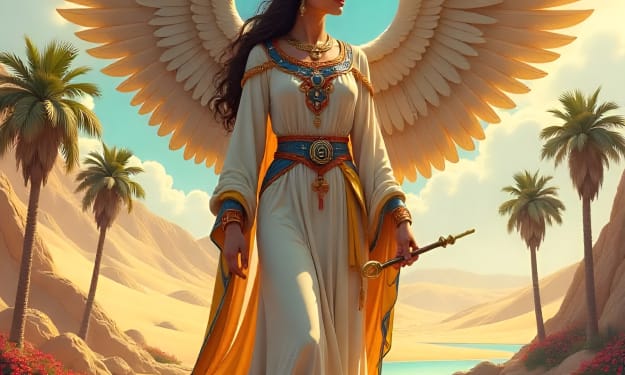
Maat
Maat, one of the most captivating figures in Egyptian mythology, transcends the mere role of a deity. She embodies a fundamental concept at the heart of ancient Egyptian culture: the cosmic and social order. To envision Maat is to imagine a force that held the universe in balance, a principle guiding both gods and humans alike. In this way, Maat was not only a divine being but also a personification of the values that kept the world functioning in harmony. Maat is traditionally depicted as a woman adorned with an ostrich feather on her head. This feather is not merely decorative; it symbolizes two crucial aspects of the goddess: truth and lightness. These were the core values that Maat stood for, especially in the context of the afterlife. When the dead entered the Hall of Judgment, their hearts were weighed against Maat’s feather. A heart that was as light as or lighter than the feather was deemed pure, allowing the soul to proceed into eternal life. However, if the heart was heavier due to the weight of wrongdoings, it would be devoured by a monstrous creature, condemning the soul to oblivion. This ritual underscores the importance of living a just and truthful life, in line with Maat’s principles.
By A História2 years ago in History
The Arch of Titus: A Monument of Triumph and Legacy in Ancient Rome
In the heart of ancient Rome, near the towering Colosseum, stands an enduring symbol of Roman power and architectural brilliance: the Arch of Titus. Constructed in 81 AD after the death of Emperor Titus, this monument commemorates one of Rome's most significant military victories—the conquest of Jerusalem in 70 AD. Built by the Roman Senate and Emperor Domitian, Titus' younger brother, the arch celebrates the achievements of the late emperor and immortalizes his legacy within the history of the Roman Empire. The Arch of Titus remains one of the most iconic structures in Rome, offering visitors a glimpse into the grandeur of Roman architecture and the rich history of the empire at its height. With its intricate reliefs, impressive design, and symbolic significance, the arch serves not only as a memorial to Titus but also as a testament to the might and prestige of ancient Rome. A Triumph of Architecture and Symbolism The Arch of Titus is a triumphal arch—a type of Roman architecture designed to celebrate military victories and honor victorious generals. The structure is notable for its single archway, a design that differs from later triumphal arches like the Arch of Constantine, which features three archways. Despite its relative simplicity, the Arch of Titus is an impressive monument, standing at a height of nearly 15 meters (50 feet) and showcasing the precision and elegance of Roman engineering. The arch is primarily constructed from marble, with a barrel-vaulted passageway that once would have been part of the triumphal route taken by victorious Roman armies upon their return to the city. Its exterior is adorned with intricate decorations, many of which remain well-preserved, particularly on the side facing the Colosseum. This side of the arch bears some of the most detailed and significant reliefs, which capture key moments from Titus’ victory over the Jewish rebellion in Jerusalem—a conflict that marked the end of the First Jewish-Roman War. The Historical Context: The Siege of Jerusalem The primary event commemorated by the Arch of Titus is the Roman sack of Jerusalem in 70 AD. During the reign of Emperor Vespasian, Titus, then a general, was tasked with quelling a Jewish revolt in the Roman province of Judea. After a brutal siege that lasted several months, Titus and his legions captured Jerusalem, bringing an end to the rebellion. The destruction of the Second Temple, one of the most sacred sites in Judaism, was a key event during this siege, and it is prominently depicted on the arch. The victory was a significant moment for the Roman Empire, as it not only secured control over Judea but also demonstrated Rome’s ability to suppress uprisings and maintain its dominance over its vast territories. The conquest of Jerusalem was a major achievement for Titus, and it elevated his status within the empire, ultimately leading to his ascension as emperor in 79 AD after the death of his father, Vespasian. The Reliefs: Telling the Story of Victory The most remarkable feature of the Arch of Titus is its detailed relief carvings, which offer a visual narrative of the events surrounding the siege of Jerusalem and the subsequent Roman triumph. The reliefs are located inside the archway and on the inner walls, making them central elements of the monument's design. One of the most famous reliefs depicts the Roman soldiers carrying spoils from the Second Temple. The soldiers are shown parading through the streets of Rome, carrying sacred treasures, including the Menorah—a seven-branched candelabrum that was one of the most important symbols of Judaism. This image is particularly striking because it captures both the triumph of the Roman Empire and the deep sense of loss for the Jewish people. The detailed craftsmanship of the relief conveys a sense of movement and realism, with the figures appearing almost lifelike as they march in procession. Another significant relief shows the moment when Titus is crowned with laurel by the goddess of Victory. This depiction highlights Titus’ status as a victorious general and a favored figure of the gods, reinforcing the idea that his success in battle was not only a military achievement but also a divine mandate. This scene would have been a powerful reminder to the Roman people of their empire’s supremacy and the divine favor enjoyed by their leaders. These reliefs are more than just decorative elements; they serve as a historical record of the Roman victory over Judea and the glory of the empire. They also reflect the importance of religion and ritual in Roman society, where military success was often intertwined with divine favor and political legitimacy. The Arch of Titus and Its Legacy While the Arch of Titus was constructed to honor a specific victory, its influence extends far beyond the immediate historical context. The arch became a model for later triumphal arches built throughout the Roman Empire and beyond, influencing the design of similar structures in both ancient and modern times. For example, the Arch of Constantine, built nearly 250 years later, and even more modern triumphal arches such as the Arc de Triomphe in Paris, draw inspiration from the design and symbolism of the Arch of Titus. In addition to its architectural influence, the Arch of Titus holds a complex place in the cultural memory of both Romans and Jews. For centuries, Jewish tradition forbade passing under the arch, as it symbolized the destruction of the Second Temple and the loss of Jewish sovereignty. However, in 1947, with the establishment of the State of Israel, a group of Jewish leaders symbolically walked through the arch in the opposite direction, reclaiming a sense of national pride and resilience. Conclusion: An Enduring Symbol of Roman Power The Arch of Titus stands today as one of the great monuments of ancient Rome, a tribute to both the architectural prowess of the Romans and the political and military achievements of Emperor Titus. Its detailed reliefs provide a vivid snapshot of Roman imperial power and the events that shaped the early empire, while its imposing presence near the Colosseum reminds visitors of the grandeur and dominance of Rome at the height of its influence. Though built nearly two millennia ago, the Arch of Titus continues to captivate and inspire, offering a timeless reminder of the enduring legacy of Rome’s triumphs, as well as the complexities of history. It remains a powerful symbol of victory, loss, and the intertwined destinies of ancient civilizations.
By Deji Akomolafe2 years ago in History