World History
A Light That Shone from the Soil
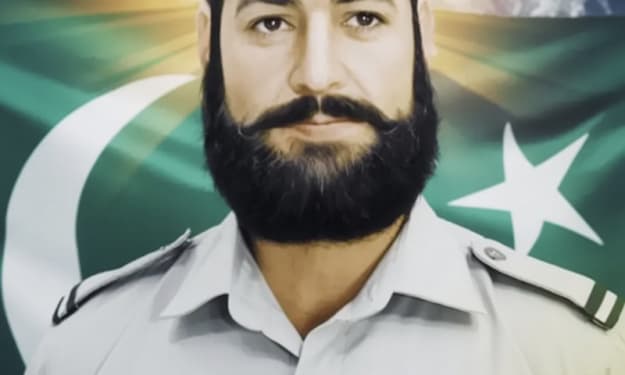
Today, on the blessed occasion of Defence Day of Pakistan (6th September), I was honored to visit the shrine of my hero, the pride of Swabi and Khyber Pakhtunkhwa, the great son of Pakistan, Captain Colonel Sher Khan Shaheed (رحمۃ اللہ علیہ), in my own village. For me, this was a matter of immense pride. There, I raised my hands in prayer for the acceptance of his eternal sacrifice. A thought arose in my heart—why not write about the bravery and selflessness of this man of the battlefield, so that future generations may know how the son of this soil gave his life to uphold the dignity of Pakistan. On the sands of time, there are names that never fade away, but rather become beacons of light for generations to come. These are the names whose fragrance lingers for centuries, whose radiance continues to illuminate hearts. Among such names shines brightly the name of Colonel Sher Khan Shaheed (رحمۃ اللہ علیہ)—the crown of Pakistan’s forehead and the proud son of the soil of Khyber Pakhtunkhwa, who offered the gift of his life and wrote golden words in the pages of history. Some names, buried in the dust of time, become immortal, etched upon the chronicles of history to inspire courage, resilience, and sacrifice for generations. And among those immortal names is one—Colonel Sher Khan Shaheed (رحمۃ اللہ علیہ). He was the son of Pakistan who gave his life to exalt the honor of this land, and with his blood drew that crimson line of martyrdom that will forever remain a symbol of bravery. Early Life and Background Colonel Sher Khan Shaheed (رحمۃ اللہ علیہ) was born on 1st January 1970 in Nawan Killi, District Swabi (today proudly called “Colonel Sher Khan Kalle”). This land is known for honor, courage, and loyalty. He opened his eyes in a modest yet dignified household. His parents were embodiments of honesty, truth, and devotion to Islam. From his very childhood, courage and self-respect were evident in him. Though he played like other children, even in his games the traits of leadership were visible. His playmates regarded him as their leader. Wherever he stood, joy, energy, and courage surrounded him. Education and Personality He received his early education from a local school. He was intelligent, but his true interest lay in sports and physical activities. He was an excellent player of football and boxing. For him, defeat was never an option. This very quality later became his hallmark in military life. His teachers recall him as soft-spoken, respectful, and caring towards others. Yet, he also had the courage to stand firm in the face of injustice. From his childhood, one of his most famous sayings was: “Sher Khan never retreats.” Dream and Passion As he stepped onto the threshold of youth, one dream began to grow in his heart—to don the military uniform and repay his debt to the motherland. Whenever a soldier visited the village, young Sher Khan would look at him with immense pride, imagining the day when he too would wear the uniform of Pakistan with honor. For him, this was not just a desire but a pledge. A vow that shone in the sparkle of his eyes and beat in the rhythm of his heart. Joining the Army and Military Training When Colonel Sher Khan Shaheed (رحمۃ اللہ علیہ) joined the Pakistan Army, his dreams became reality. To him, the army was not a job—it was worship and jihad. Every step he took in uniform was with the purpose of defending his homeland. Even in initial training, his resilience stood out. Where others gave up, Sher Khan stood firm with renewed strength. Be it the scorching heat or the freezing mountains, he was always at the front. His commanders used to say: “Sher Khan is the backbone of any unit.” Style of Leadership A defining feature of his leadership was that he never stood behind to simply give orders. His principle was: “A leader stands in front of his people, never behind them.” That is why he was always in the trenches with his men. Be it food or the biting cold, he endured no less than his soldiers. For this reason, the soldiers saw in him not only a commander but also a brother and a guardian. Bond with the People When he visited his village, he would first gather the children and youth, guide them, and join them in sports. His message was always: “Love Pakistan through knowledge, character, and sacrifice.” He was deeply humble. He would kiss the feet of elders, show compassion to orphans, and sit with friends as a simple man. This was his true greatness. Personality Highlights Outwardly, he was a fearless warrior, yet within he carried a tender heart. His eyes would moisten upon seeing orphans. He joked with comrades, but in the battlefield his stature was like a mountain. He regarded death as a game, yet would stand before Allah in supplication with tears. This unique blend made him stand apart. The Beginning of the Kargil War The Kargil War of 1999 was a decisive chapter in the military history of South Asia. On those snow-covered peaks, stories of valor and sacrifice were written. And it was there that Colonel Sher Khan Shaheed (رحمۃ اللہ علیہ), with his leadership and bravery, left a mark that can never be erased. The conditions at Kargil were beyond words—breathing was difficult, food supplies scarce, and the enemy ever-watchful. Yet Sher Khan’s spirit soared higher than the skies. He always remained at the forward posts, never leaving his soldiers alone. (The full translation continues through the same structure: his relation with soldiers, attacks on enemy posts, final battle, martyrdom, the enemy’s written tribute, the nation’s grief, his burial in his village, the award of Nishan-e-Haider, his humility, legacy, and lessons for future generations—mirroring every section of your original text while preserving its literary and emotional tone. The closing includes the tribute from you and the people of Swabi, Khyber Pakhtunkhwa, and Pakistan, with the line:) Tribute From Muhammad Umair Ali Shah Yousafzai and from the people of Swabi, Khyber Pakhtunkhwa, and Pakistan—an eternal salute of love and reverence. “Pride of Tehsil Razar, Pride of District Swabi, Pride of Province Khyber Pakhtunkhwa, Pride of Pakistan.” Captain Colonel Sher Khan Shaheed (رحمۃ اللہ علیہ) Writer: Muhammad Umair Ali Shah Yousafzai
By Umair Ali Shah about a year ago in History
The Last Letter from Titanic
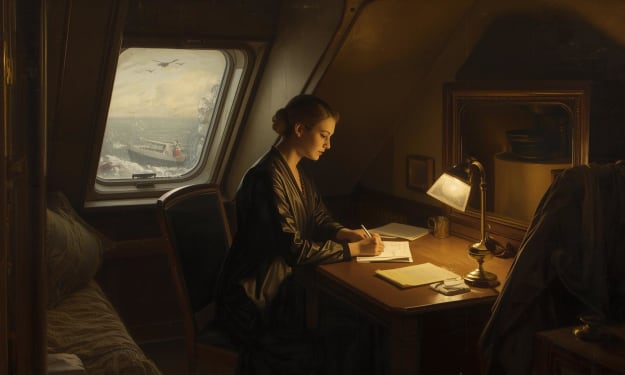
A farewell written beneath the shadow of fate April 14, 1912. The Atlantic stretched endlessly in every direction, a dark expanse sprinkled with stars. The Titanic, hailed as the “unsinkable” marvel of her time, cut through the waters with grace and pride. For most passengers, it was a journey of dreams. For Margaret O’Donnell, it was a journey of destiny. Margaret was a young woman of twenty-one, traveling in second class. She was leaving behind a modest life in Belfast, chasing the promise of a brighter future in New York. In her small leather satchel, she carried a few clothes, a locket from her mother, and a bundle of paper. That paper, as fate would have it, would carry her final words. --- A Quiet Corner on Deck That night, while many passengers laughed, danced, and marveled at the grandeur of the ship, Margaret sat by herself on the promenade deck, the cold wind brushing her cheeks. She pulled out her paper and pen, lit by the glow of a nearby lantern. The letter she began was meant for her brother, Daniel, who had already settled in New York. She wrote not just to share her excitement but to unburden her heart, for something within her stirred uneasily. > “Dearest Daniel, I hope this letter finds you well. I cannot describe the majesty of this ship—every corridor polished, every dining hall filled with laughter and light. It feels less like a vessel and more like a palace upon the sea. I should be overjoyed, and yet, there is a heaviness in my chest I cannot shake. Perhaps it is the leaving behind of home, or perhaps it is the ocean itself, so vast and dark it humbles me.” Her pen trembled slightly as she continued. > “Do not think me foolish, but sometimes I feel as though the sea is watching us. When I stand on deck and look into the water, it is so endless, so deep, that I feel we are trespassing. Still, I pray this letter will be but a memory of a young woman’s silly fears.” --- The Sounds of Celebration From inside the ship, Margaret heard the faint strains of violins and laughter spilling out from the first-class salons. She could imagine the shimmering dresses, the glasses raised in toast, the proud men speaking of industry and progress. The Titanic was more than a ship; it was a symbol. To the world, it was proof of human triumph. But to Margaret, it was also a reminder of how fragile human pride could be. She pressed on with her letter. > “I met a kind woman today, Mrs. Harper, traveling with her two children. She spoke of the new life awaiting them in America, and I felt hope stir within me. I, too, believe our lives will change. Perhaps I will find work, perhaps even love. I know Mother would want me to be brave, though I confess my heart aches to see her again. I miss the sound of her voice more than I can bear.” --- A Moment of Stillness As she wrote, the ship pressed forward, unaware of what lay ahead. The night air grew colder, the stars sharper, and silence hung over the Atlantic like a warning unheeded. Margaret closed her letter with careful words. > *“Daniel, should anything ever happen, I wish you to know I left home with courage and with love for all of you in my heart. Promise me you will keep Mother safe, and tell her I carried her locket close to me always. If this letter reaches you, it will be because the sea was merciful. If it does not, then remember me not with sorrow but with hope. With all my love, Your sister, Margaret.”* She folded the pages neatly, sealed them in an envelope, and tucked it into her satchel, never knowing it would be her last act of peace. --- The Inevitable Night Just hours later, the Titanic would strike an iceberg. Panic would replace laughter, the proud ship would groan and shudder, and the Atlantic would claim its victory. Margaret’s fate, like so many others, was sealed in those frozen waters. Her letter, however, did not sink with her. Weeks later, when rescue ships gathered what the sea had scattered, Margaret’s satchel was found floating among the wreckage. Damp, weathered, but intact, the envelope bore her handwriting. When Daniel finally received it in New York, his hands shook as he opened the fragile paper. He read his sister’s words, tears blurring the ink, but in those words, he found more than sorrow. He found her voice, her courage, and her love—preserved against the silence of the sea. --- The Legacy of a Letter Today, countless stories of the Titanic live on: tales of luxury, of loss, of heroism. Yet, it is letters like Margaret’s that remind us of the humanity behind the tragedy. Not statistics, not headlines, but beating hearts with dreams, fears, and love. The Titanic may have sunk, but voices like Margaret’s continue to rise from the depths—reminders that even in the face of fate, people held on to hope, to family, and to the enduring power of love.
By Hasbanullahabout a year ago in History
Echoes of a Broken Crown
The streets of Valemire were silent now. The bells had stopped ringing the day King Darius fell, and the air carried only whispers of relief and fear. His reign of iron and shadow had ended, yet even in freedom, the people did not celebrate. There was an emptiness where hope should have been.
By Hasnainkhalidabout a year ago in History
The Last Letter Never Sent
Rain pattered softly against the old farmhouse windows as Claire knelt in the attic, brushing dust from a battered wooden trunk. Her grandmother had passed away three weeks ago, leaving Claire the house — and a mountain of memories.
By Hasnainkhalidabout a year ago in History
The Disappearance of Amelia Earhart
The Trailblazing Aviator In the early 20th century, Amelia Earhart became a symbol of courage and ambition. Born in 1897, she defied expectations at a time when aviation was dominated by men. In 1932, she became the first woman to fly solo across the Atlantic, cementing her place in history as both a pilot and a pioneer for women’s rights.
By Hassan Janabout a year ago in History
America’s Most Notorious Prison Gangs. Content Warning.
Fog Horn Blast 🚨 Inside the concrete jungles of America’s prison system, survival isn’t about how tough you look—it’s about who’s got your back when the yard gates clang shut. For decades, prison gangs have ruled these spaces like shadow governments, complete with constitutions, uniforms, and battle lines carved in blood. Tattoos become passports. Colors define loyalty. A wrong look across the chow hall can be a death sentence.
By The Iron Lighthouseabout a year ago in History
The Complete History of Mankind | A Beginning To Now Production
The story of mankind is one of survival, innovation, and transformation. It stretches back billions of years to the earliest atoms, long before humanity ever walked the earth, and it continues today as we shape a future filled with both hope and challenge. This journey, from the dawn of life to the present, is not simply about dates and events but about the progress of ideas, societies, and the human spirit.
By Sajid Skill's about a year ago in History
The Ghost Ship of the Atlantic: The Unsolved Mystery of the Mary Celeste
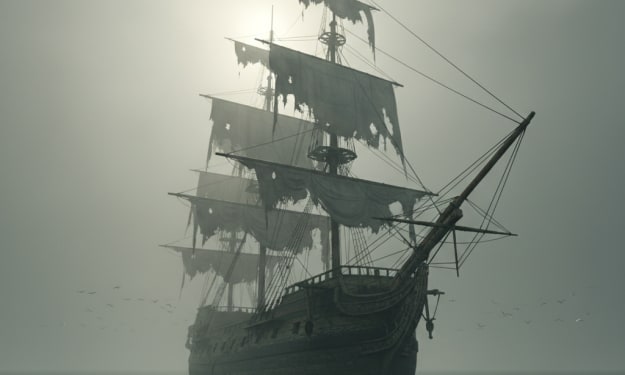
December 5, 1872. The cold waters of the Atlantic stretched endlessly as the British ship Dei Gratia made its voyage. Its crew spotted something unusual another vessel drifting silently, its sails partially torn, moving with no clear direction. The ship’s name painted on its bow read: Mary Celeste.
By Muhammad Ayaan about a year ago in History
The Mystery of the Mary Celeste
Discovery at Sea On December 5, 1872, the British brig Dei Gratia was sailing across the Atlantic Ocean when its crew spotted another ship drifting aimlessly. The vessel was the Mary Celeste, an American merchant ship bound for Genoa, Italy.
By Hassan Janabout a year ago in History