World History
The Road of Tears: A Mother and Son’s Sad Journey
Love and Loss on the Road of Life The road stretched endlessly before them, a thin ribbon of dust cutting through silent fields. A mother and her son walked side by side, carrying everything they owned in two small bags.
By Be The Bestabout a year ago in History
The Surprising Origins of Nutella: How WWII Necessity Sparked a Global Hazelnut Chocolate Sensation. AI-Generated.
The Surprising Origins of Nutella: How WWII Necessity Sparked a Global Hazelnut Chocolate Sensation Imagine soldiers munching on tiny chocolate bars while families back home scraped by with empty pantries. In 1940s Italy, cocoa vanished from shelves due to war shortages. That's when one clever baker turned crisis into a treat we all love today.
By Story silver book about a year ago in History
The Great Emu War
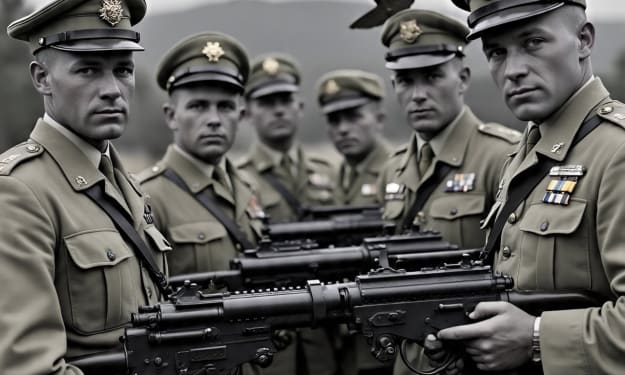
In 1932, Australia fought a war. Not against another country, not even against rebellious settlers or invading forces—but against emus. Yes, actual birds. The Great Emu War, as it is now remembered, remains one of history’s strangest and most unintentionally hilarious military campaigns. And the best part? The emus won. The story begins in Western Australia, where farmers were already struggling through the Great Depression. To make matters worse, enormous flocks of emus—giant, flightless birds standing over six feet tall—decided that newly planted wheat fields were the perfect all-you-can-eat buffet. Tens of thousands of emus marched across farmland, trampling fences, devouring crops, and leaving behind chaos in their feathery wake. The farmers were furious and desperate. Their solution? Call in the military. After all, when facing an army of overgrown birds, who better to help than men with machine guns? The government agreed, sending soldiers armed with Lewis guns and 10,000 rounds of ammunition. Their mission was simple: reduce the emu population and restore peace to the wheat fields. It was, in hindsight, a ridiculous plan. The first encounter came in November 1932 near the town of Campion. Soldiers spotted a group of about fifty emus grazing. Confident, they opened fire. The birds scattered immediately, sprinting in all directions. Emus, it turned out, were not only fast but also highly skilled at zigzagging across open fields, making them surprisingly difficult targets. The soldiers managed to hit only a few. The rest disappeared into the brush, no doubt squawking in birdlike laughter at their would-be hunters. Undeterred, the soldiers tried again, this time ambushing a group of a thousand emus. They set up their machine gun, waited for the birds to gather, and prepared to unleash chaos. But the gun jammed almost instantly, and by the time it was fixed, the emus had dispersed. Once again, the birds escaped. This became a pattern. Whenever soldiers engaged, the emus scattered into small groups, outmaneuvering their pursuers. One commander later admitted that the birds displayed “a remarkable ability to withstand bullets.” In truth, it wasn’t that emus were invincible—it was just that hitting a fast-moving target with early 20th-century machine guns was harder than expected. The soldiers joked bitterly that each bird had the stamina of a tank. Within weeks, the press was mocking the campaign. Headlines called it “The Great Emu War,” and Australians chuckled at reports of soldiers being outwitted by oversized poultry. Farmers, meanwhile, still had their crops destroyed, and the government faced embarrassment. After firing thousands of rounds and killing only a fraction of the birds, the military eventually gave up. The war was over. The emus had won. The aftermath was as strange as the war itself. Politicians debated whether to try again, but public ridicule was too strong. Instead, the government turned to more practical measures, like bounty hunting and better fencing. Farmers continued to battle emus for years, but never again with the full force of the Australian Army. Today, the Great Emu War is remembered less as a tragedy and more as a comedy of errors—a tale of human pride brought low by nature’s resilience. It is taught in classrooms, shared online as a meme, and told with a mixture of embarrassment and laughter. But beneath the humor lies something more meaningful. The Great Emu War was really a clash between human ambition and the stubborn unpredictability of nature. In the end, the lesson is simple: no matter how advanced our weapons or how clever our strategies, sometimes nature just refuses to cooperate. And perhaps the most humbling part? If you visit Australia today, you’ll still find emus striding across the landscape, unbothered and undefeated. The birds remain a living reminder that, once upon a time, humans went to war with them—and lost. The Great Emu War may have been a military failure, but as a story, it is unforgettable. After all, how many wars can you name where the enemy couldn’t even fly?.
By LUNA EDITHabout a year ago in History
A Human Statue Hidden in Göbekli Tepe’s Walls: The Oldest Temple Just Changed Again
When archaeologists first uncovered Göbekli Tepe in the 1990s, the world’s oldest known ritual site, it instantly rewrote history. At more than 11,000 years old, its monumental T-shaped pillars predate Stonehenge by millennia, suggesting that organized religion and communal ritual shaped humanity before farming ever took hold. Now, a new discovery pushes the mystery even further.
By The Secret History Of The Worldabout a year ago in History
A Lost Pharaoh’s Tomb? New Clues to Thutmose II’s Resting Place
For centuries, the Valley of the Kings has kept its secrets. Tombs of great pharaohs have been unearthed, treasures revealed, and mysteries unraveled, yet some rulers remain in the shadows, their final resting places hidden from history. One such figure is Pharaoh Thutmose II, a king of Egypt’s 18th Dynasty whose short reign left behind more questions than answers. Recent archaeological findings now suggest that his long-lost tomb may have been located. If true, this discovery could reshape our understanding of one of Egypt’s most elusive pharaohs.
By The Secret History Of The Worldabout a year ago in History
joshua jahn
writer: King Pokhtoon On September 24, 2025, a tragic and shocking event took place in Dallas, Texas. A man named Joshua Jahn opened fire near an ICE facility (Immigration and Customs Enforcement). The attack quickly became a major news story in the United States, as people tried to understand who this man was and why he did what he did. In this article, we will look at the key facts, background, and reasons why this story is now trending across America.
By king pokhtoonabout a year ago in History
Charles Bridge: Prague’s Timeless Stone Gateway
Charles Bridge: Prague’s Timeless Stone Gateway The Charles Bridge, known in Czech as Karlův most, is one of Europe’s most iconic medieval monuments and one of the proud symbols of Prague. Stretching gracefully across the Vltava River, it links the Old Town with the Lesser Town and Prague Castle. More than just a bridge, it is a living museum of art, history, and legend. For over six centuries, it has withstood wars, floods, and political upheavals, continuing to inspire and fascinate millions of visitors each year.
By Mukhtiar Ahmadabout a year ago in History
Lost Roman Legion
In the year 53 BCE, Rome suffered one of its greatest defeats. The mighty Roman army, feared across the ancient world, was crushed by the Parthians at the Battle of Carrhae in modern-day Turkey. Among the tens of thousands of Roman soldiers who marched east under Marcus Licinius Crassus, the richest man in Rome, only a fraction ever returned home. What happened to many of those captured soldiers has become one of history’s enduring mysteries. The Parthians were masters of mounted warfare, their horse archers raining arrows down on the slow-moving Roman legions. Crassus himself was killed, his army shattered. Ancient writers say that 20,000 Romans were slaughtered on the battlefield, and another 10,000 were captured alive. These men were marched far into the east, beyond the boundaries of the Roman world, and then they vanish from history. Some accounts suggest the Parthians relocated them to their empire’s farthest frontier, near what is now Turkmenistan, to guard against nomadic tribes. If true, these soldiers would have been cut off from their homeland forever, forced to adapt to a new life under foreign rulers. But after this, the records fall silent. No one knows for certain what became of them. Centuries later, strange reports began to surface. Chinese chronicles from the Han Dynasty describe a battle in 36 BCE between Han forces and a group of unusual foreign soldiers fighting for a local Central Asian ruler. These soldiers, according to the records, fought in a “fish-scale formation”—a term that some historians believe could describe the Roman testudo, the famous shield-wall tactic. Could these have been the lost Roman legionaries, still fighting decades after their capture, now thousands of miles from Rome? The idea fascinated scholars and explorers for centuries. In the 20th century, some researchers speculated that these men settled permanently in western China. In one remote Chinese village, known as Liqian, locals have long claimed descent from Roman soldiers. Some residents were noted for having lighter hair, taller stature, and deep-set eyes—features unusual in the region. Genetic studies in the early 2000s did show traces of European ancestry among the villagers, though later tests suggested a more complex mix of Central Asian roots. Still, the legend of Roman descendants in China persists. Not everyone believes this theory. Many historians argue that the timeline is too thin, the evidence too weak. They suggest that the Romans who survived Carrhae were simply absorbed into Parthian society, scattered as mercenaries or slaves, their identity lost over generations. To them, the story of a Roman legion in China is more romantic than real. But the mystery remains powerful because it speaks to the human side of empire and war. Imagine being one of those captured legionaries: taken from your homeland, marched across deserts and mountains, forced to fight for kings you did not know, in lands your family would never even hear of. For those men, Rome was a memory, and survival meant becoming something else entirely. Today, the Lost Legion has become part of popular imagination, inspiring novels, documentaries, and films. It reminds us that history is not always a closed book. Sometimes, it leaves behind trails of mystery, fragments of possibility, whispers of what might have been. Whether the lost legionnaires died nameless in foreign wars, lived out their days as settlers in distant villages, or even left behind descendants still walking the earth today, their story is a reminder of how far and wide the reach of Rome truly was—and how even the greatest empire could lose track of its own sons. The Lost Roman Legion may never be found, but their disappearance ensures that they will never be forgotten.
By LUNA EDITHabout a year ago in History
Voynich Manuscript
In 1912, an antiquarian named Wilfrid Voynich purchased a collection of old books from a Jesuit college near Rome. Among them was a manuscript unlike anything the world had ever seen. Its pages were filled with strange looping script, bizarre plants that do not exist on Earth, astronomical diagrams that made little sense, and illustrations of women bathing in mysterious green pools. The book was written in an unknown language, and to this day, more than a century later, no one has been able to read it. The manuscript is now famously called the Voynich Manuscript, after its modern discoverer. It is 240 pages long, bound in calfskin vellum, and carbon dating suggests it was created sometime in the early 1400s. What makes it so mysterious is that the language it is written in does not match any known alphabet. The words follow patterns, as if they were part of a real language, but every attempt to translate them has failed. Throughout history, some of the greatest minds have tried to solve its puzzle. In the 1920s, a team of American codebreakers who had cracked enemy codes in World War I attempted to decipher it. They left frustrated, admitting defeat. During World War II, British and American cryptographers who broke German Enigma codes also tried their hand at the manuscript. Again, they failed. Even modern computer algorithms have not been able to provide a solution. The mystery deepens with the manuscript’s illustrations. The plants drawn inside look like they belong in a botanical guide, but most do not exist anywhere in nature. Some resemble common herbs with strange, impossible features. The astronomical drawings show stars and zodiac signs, but with unusual patterns and odd shapes. The bathing women, connected by pipes and pools, have led some to believe the book describes a secret medical or alchemical system. Others believe it is simply nonsense, created to trick a wealthy buyer in the Middle Ages. Over the years, countless theories have been proposed. Some say it was written by a medieval alchemist, using a secret code to protect valuable medical knowledge. Others suggest it was the work of Roger Bacon, a 13th-century English philosopher who experimented with science centuries ahead of his time. A few have even claimed it was created by Leonardo da Vinci as a boy, though the dates do not match. More fantastic theories argue that it could be the work of aliens, recording knowledge from another world. In 2018, a researcher claimed the manuscript was a medical text written in a forgotten dialect of Old Turkish. In 2020, another team suggested it was an elaborate hoax created in the Renaissance to make money. Yet none of these claims have convinced the wider scholarly community. Every time a solution is proposed, it quickly falls apart under closer examination. The truth is that the Voynich Manuscript remains unsolved. It sits today in the Beinecke Rare Book & Manuscript Library at Yale University, where anyone can view high-resolution scans online. People from around the world continue to study it, hoping to be the one to finally crack its code. Its mystery is not just about words on a page—it is about the human desire to understand the unknown. We are drawn to it because it reminds us that, even in our age of technology and information, there are still secrets left in the world. What makes the Voynich Manuscript so haunting is not only that we cannot read it, but that someone, hundreds of years ago, went to great lengths to write it. The author, whoever they were, spent years carefully drawing each plant, each symbol, each page. Was it a genuine attempt to record knowledge? A playful invention to fool the curious? Or a personal project, never meant to be understood by anyone else? More than six hundred years later, the manuscript has outlived its creator and baffled generations of readers. Perhaps one day artificial intelligence or new linguistic techniques will unlock its secrets. Or perhaps it will forever remain a riddle, a reminder that some mysteries resist explanation. Until then, the Voynich Manuscript will continue to hold its place as the world’s most mysterious book—a story not of what it says, but of our endless fascination with trying to read it.
By LUNA EDITHabout a year ago in History
Vlad The Impaler
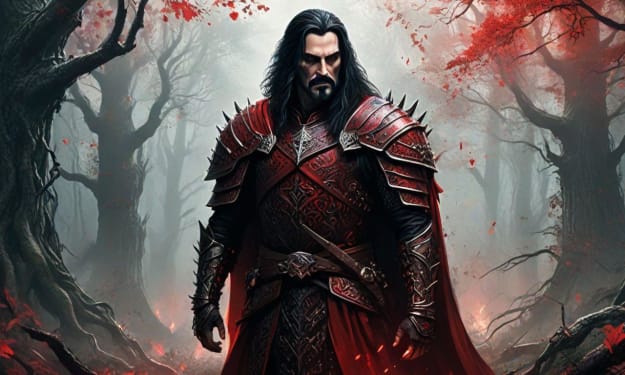
Deep in the heart of Transylvania, where mist clings to mountains and forests whisper with secrets, there once lived a prince whose name became both a legend and a nightmare. To his enemies, he was Vlad Tepes, the Impaler, a tyrant who lined roads with the blood of the dead. But to his people, he was a protector, fierce and merciless, who defended their land against invaders. And in the centuries that followed, he became Dracula- the Dragon’s Son, immortalized in history and horror.
By Carolyn Pattonabout a year ago in History
Abraham Lincoln's Integrity Lesson: Reading a Book for Truth After a Biography Lie in 1860
Abraham Lincoln's Integrity Lesson: Reading a Book for Truth After a Biography Lie in 1860 Picture this: It's 1860, and Abraham Lincoln spots a lie in his own biography. The book says he read a famous work by Benjamin Franklin. He hadn't. So, what does he do? He grabs the book and reads it right away. This simple choice shows his deep commitment to truth. It happened as Lincoln rose to fame during a tense election year. Back then, the nation split over slavery, and Lincoln's words shaped the future. Biographies like his helped voters see him as honest and smart. Today, we face fake stories online and in our own lives. Lincoln's act teaches us to chase truth actively. It builds trust in leaders and everyday folks. Let's explore this tale and pull out lessons for your own path to honesty.
By Story silver book about a year ago in History