World History
Epic India vs England Cricket Rivalry History
India National Cricket Team vs England Cricket Team Match A cricketing rivalry as old as time itself, the clash between the Indian and English national teams is more than just a game; it’s a story written over a century. From the first-ever Test match for India back in 1932 to the modern-day "Bazball" battles, this rivalry is steeped in history, drama, and unexpected twists. It's a high-stakes affair where traditions meet innovation, and every single match holds a world of significance. For us at Gamblegrounds.com, these are the contests that prove no scorecard can tell the whole story.
By Denis Wellington about a year ago in History
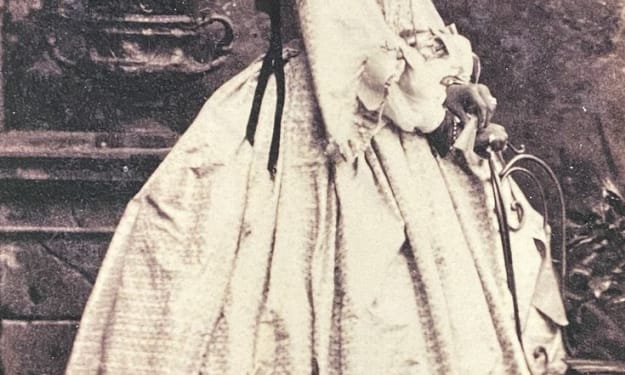
From Enslavement to Royal Court: The Remarkable Journey of Sara Forbes Bonetta
Imagine being a child, barely old enough to understand the world, torn from your home in a violent raid, your family gone, your future uncertain. Now picture that same child, years later, standing before Queen Victoria, not as a captive but as a goddaughter. This isn’t a fairy tale-it’s the real-life story of Sarah Forbes Bonetta, a woman whose life feels like it was plucked from the pages of a novel. How does someone go from a cage in a West African kingdom to the inner circle of British royalty? Let’s dive into her incredible tale.
By KWAO LEARNER WINFREDabout a year ago in History
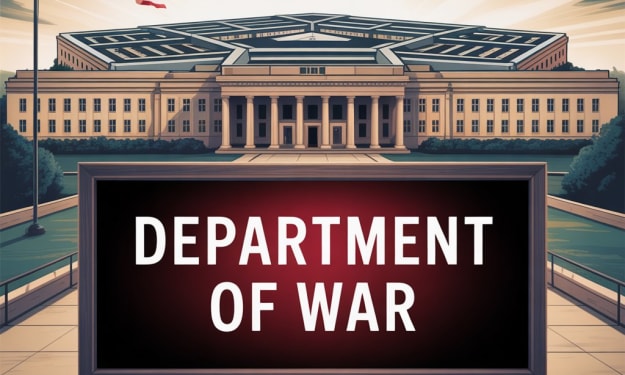
From Defense to War: The Symbolism Behind America’s Renaming Decision
.In recent days, reports surfaced that former U.S. President Donald Trump approved a symbolic decision to rename the Department of Defense as the Department of War. While this change may appear to be a simple alteration of terminology, it carries profound implications for how America views its military role in the world and how global audiences perceive U.S. policy. The renaming has sparked debate about history, symbolism, and the future direction of U.S. defense strategy. A Historical Background The U.S. military establishment has not always been called the Department of Defense. In fact, from 1789 to 1947, the agency responsible for military affairs was officially named the Department of War. This term was widely used during America’s early history, covering conflicts such as the Civil War and both World Wars. It was only after World War II and the creation of new institutions like the National Security Council and the Central Intelligence Agency that the U.S. restructured its military leadership. In 1949, the Department of War was renamed the Department of Defense, reflecting a shift in language from offensive warfare to a focus on protection and deterrence. The word “defense” suggested that the United States would use its military power primarily to safeguard itself and its allies, not to pursue aggressive war. This rebranding was part of a broader attempt to present America as a global leader for peace in the post-war era. Why Rename It Back? President Trump’s reported decision to revert to “Department of War” seems to be more than a cosmetic change. There are several possible reasons behind this move: 1. Symbolic Honesty: Critics of the Department of Defense have long argued that despite its peaceful name, the U.S. military has been heavily engaged in offensive operations around the world, from Iraq to Afghanistan. Renaming it as the Department of War could be seen as a way of being more transparent about its true role. 2. Historical Tradition: By restoring the original name, Trump may have wanted to connect with America’s past identity, emphasizing strength and military dominance rather than soft diplomacy. 3. Political Messaging: The change could also serve as a political statement to rally nationalist sentiment, projecting the image of America as a strong, unapologetic power in a competitive global order. Implications of the Name Change Although the renaming is symbolic, symbolism in international relations can have significant consequences. 1. Domestic Perceptions For the American public, the shift from “Defense” to “War” sends a very different message. The term “war” implies aggression, conflict, and readiness to fight, whereas “defense” suggests protection and security. Such a change may alarm citizens who prefer to see their military as a protective force rather than an offensive one. 2. Global Perceptions Internationally, the decision could raise concerns among U.S. allies and rivals alike. Allies may feel uneasy about the United States presenting itself as more war-oriented, while adversaries could interpret the change as a sign of increased aggression. This shift in language could complicate diplomatic relations. 3. Strategic Messaging Language often shapes strategy. By adopting the word “war,” the U.S. government may unintentionally reinforce the idea that conflict is central to its global role. This could affect how military planning is approached, prioritizing force projection over diplomacy. 4. Psychological Impact The name change may serve as a reminder of the reality of global power struggles. At the same time, it risks framing international relations through the lens of permanent conflict rather than cooperation. Advantages and Risks Like any decision, renaming the Department of Defense carries both benefits and risks. Advantages: Greater honesty about the military’s global role. Revival of historical tradition. Stronger nationalistic appeal to certain groups. Risks: Negative reaction from citizens who value peace-oriented language. Strained relations with allies who prefer cooperative approaches. Heightened global tensions if rivals perceive the U.S. as preparing for more wars. A Broader Reflection on Power This decision highlights an important reality: nations often define themselves not only by their actions but also by the words they use. The shift from “Defense” to “War” represents more than just terminology—it reflects a worldview. If nations see themselves as locked in constant conflict, then policies will follow that perspective. Conversely, framing military power as defensive can encourage diplomacy and restraint. For a globalized world where cooperation is essential—whether in trade, climate change, or technology—presenting one’s military as primarily for “war” may undermine long-term trust. Conclusion The renaming of the U.S. Department of Defense back to the Department of War carries heavy symbolic weight. While some may view it as a bold return to historical roots or a more honest description of America’s military role, others see it as a dangerous signal of aggression in an already tense world. Ultimately, the words a nation uses to describe its institutions influence both domestic and international perceptions. Whether this change leads to greater transparency or fuels greater mistrust, only time will tell. What is certain is that the debate reminds us of the power of language in shaping not just politics, but the course of global affairs.
By Javed Khan about a year ago in History
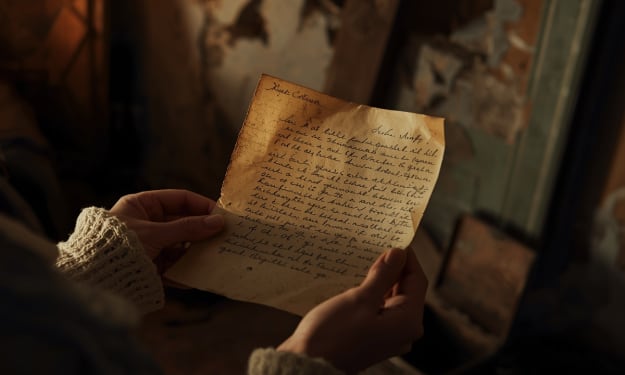
She Found a 100-Year-Old Letter in Her Wall—The Secret Inside Changed Everything”
When Sarah Thompson decided to renovate her century-old Victorian home, she expected to find dusty wires, creaky floorboards, and maybe a few forgotten coins. What she didn’t expect was a hidden letter that had been sealed away for more than 100 years—one that would change the way she looked at her home forever. The Discovery It started on an ordinary Tuesday morning. The renovation team was removing old plaster from the dining room wall when one of the workers noticed something odd: a small, rusted metal box lodged between the wooden beams. Sarah, a lover of history and antiques, rushed over with curiosity gleaming in her eyes. With gloved hands, she pried open the fragile box. Inside, wrapped in yellowed paper, was a single envelope. The paper was brittle, its edges crumbling with age, but the handwriting was still visible—elegant cursive with a date that read: “January 12, 1921.” A Message From the Past Her heart raced as she carefully unfolded the letter. The ink had faded but was still legible. It began with: > “To the one who finds this, know that this house holds more than just walls—it holds a promise.” The letter was signed by a man named Henry Whitmore, the original owner of the house. In his message, Henry described how he had built the home for his young wife, Eleanor, during a time of great hardship. He mentioned a secret he had left behind, not out of malice, but as a gift for the future. A Love Story Buried in Time As Sarah continued reading, the letter unfolded like a tragic love story. Henry revealed that Eleanor had fallen gravely ill in the winter of 1921. With limited medical care available, he spent their final days together creating something that would carry her memory forward—a hidden compartment in the house containing her favorite locket and a handwritten poem. The letter ended with a chilling final line: > “If you find this, please remember us, and know that love, even when buried, never truly dies.” Sarah felt a shiver run down her spine. She realized she was holding a century-old confession of love and loss. Uncovering the Secret Determined to honor the story, Sarah searched the house for the hidden compartment Henry mentioned. After two days of exploring, she found a loose floorboard beneath the main staircase. Beneath it was a small velvet pouch, and inside—just as the letter described—lay a delicate golden locket with a faded photograph of Eleanor and a folded piece of paper. The poem was heartbreaking: it spoke of time, memory, and the hope that their love would one day be remembered by a stranger. A Connection Beyond Time The discovery didn’t just give Sarah goosebumps—it connected her to a moment frozen in time. She decided to frame the letter and the locket, placing them in the very room where they had been hidden for so long. Word of her discovery spread quickly. Local historians visited her home, intrigued by the intimate glimpse into the lives of a couple from a century ago. Some even found distant relatives of the Whitmore family, who were moved to tears knowing a piece of their ancestry had been found and preserved. The Power of Forgotten Stories In a world obsessed with fast-paced technology and fleeting trends, the letter served as a reminder: the walls around us hold memories. Homes are more than bricks and mortar—they are silent witnesses to laughter, tears, and love stories lost to time. For Sarah, the discovery became a turning point. She turned her renovation project into a preservation effort, keeping as much of the house’s history intact as possible. Would You Open the Letter? Stories like this make us wonder: How many hidden treasures lie in the places we least expect? How many messages, long forgotten, are waiting to whisper their secrets to someone willing to listen? Sarah’s story teaches us that sometimes the most extraordinary discoveries come not from seeking wealth, but from stumbling upon a piece of humanity—sealed in an envelope, waiting for a century to be read.
By Shoaib Afridiabout a year ago in History
If World War 3 Started Tomorrow: The First 24 Hours Explained
Introduction: The Question We Fear Most For decades, experts and ordinary people alike have asked a haunting question: *what if World War 3 began tomorrow?* Most discussions focus on the weapons or alliances involved, but few stop to imagine how the first **24 hours** would feel for ordinary citizens. Those first moments would define not just the war itself, but the survival of billions.
By Wings of Time about a year ago in History
Alexander the Great: Divinity or Mere Mortal?
Introduction History remembers Alexander the Great as a conqueror, a visionary, and a cultural bridge between East and West. But was his legacy the result of deliberate genius—or the fortunate alignment of timing, myth, and momentum? Or ... was he a God-King?
By Treathyl Fox (aka cmoneyspinner)about a year ago in History
World War II: The Global Conflict that Shaped the Modern World
Introduction World War II (1939–1945) remains the largest, deadliest, and most transformative conflict in human history. Spanning across Europe, Asia, Africa, and the Pacific, the war involved more than 30 nations and resulted in the deaths of over 70 million people, both soldiers and civilians. It was a war that reshaped international politics, redrew borders, led to the rise of the United States and the Soviet Union as global superpowers, and established the foundation of the modern world order.
By Hamza Muhammadabout a year ago in History
Silent Wounds of Balochistan
Balochistan, the largest province of Pakistan, stretches across rugged mountains, deserts, and an endless horizon of untapped potential. Beneath its soil lies wealth in natural gas, coal, and minerals. Yet, despite its riches, its people live in poverty, alienation, and fear. For decades, Balochistan has remained a land of contradictions—rich in resources but poor in justice, abundant in heritage but deprived of recognition.
By Saqib Ullahabout a year ago in History