
The Mystery of the Mary Celeste
When a ship sails without a crew, the ocean keeps its secrets.

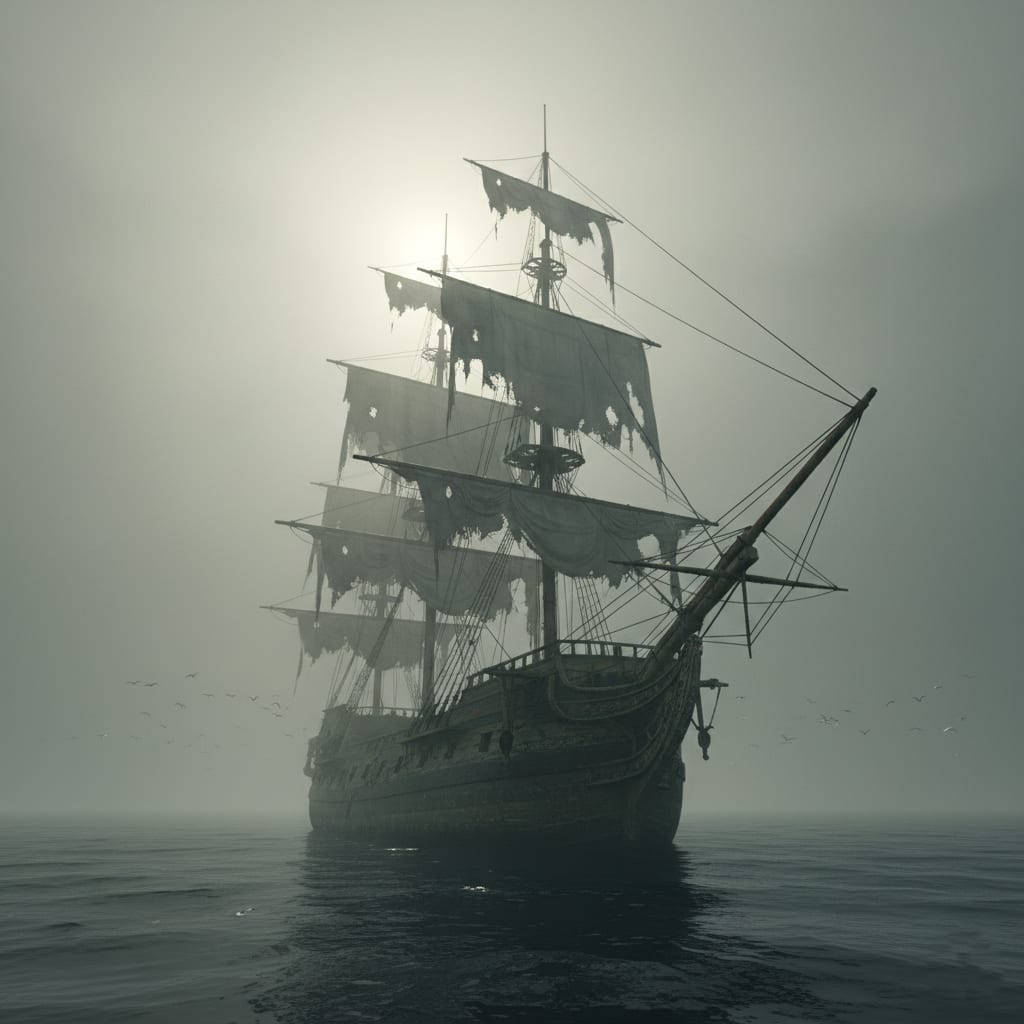
Discovery at Sea
On December 5, 1872, the British brig Dei Gratia was sailing across the Atlantic Ocean when its crew spotted another ship drifting aimlessly. The vessel was the Mary Celeste, an American merchant ship bound for Genoa, Italy.
When sailors from the Dei Gratia boarded, they found a scene that has puzzled historians ever since.
The ship was completely intact, carrying a cargo of 1,700 barrels of industrial alcohol. The crew’s belongings remained in their cabins. There was food and water sufficient for months. But the most vital detail: the crew of ten, including the captain’s wife and young daughter, were missing without a trace.
The State of the Ship
The Mary Celeste showed no signs of a struggle or foul play. The cargo was largely untouched, though some barrels were later found to be empty. The ship’s only lifeboat was gone.
There was minor damage to the sails and rigging, but nothing that suggested the vessel was sinking. The logbook’s last entry was dated November 25, nine days before the ship was found — and it made no mention of distress.
The mystery deepened when investigators realized the ship was in perfectly good sailing condition, more than capable of completing its journey. Why, then, would the crew abandon it?
Theories and Speculation
The disappearance of the Mary Celeste’s crew sparked countless theories, each trying to explain the unexplainable.
1. Piracy
Some believed the ship was attacked by pirates. But the cargo and personal valuables were untouched, making this unlikely.
2. Mutiny
Others speculated that the crew mutinied, killing the captain before escaping. Yet no evidence of violence or bloodshed was found on board.
3. Natural Disaster
One plausible theory involves a sudden waterspout or violent storm, which might have panicked the crew into abandoning ship prematurely. But the ship showed no sign of severe damage.
4. Alcohol Fumes
Perhaps the most enduring explanation involves the cargo itself. The barrels of industrial alcohol may have leaked, releasing toxic or explosive fumes. Fearing an imminent explosion, the captain could have ordered everyone into the lifeboat temporarily, only for them to be lost at sea.
5. Supernatural Explanations
Inevitably, stories of sea monsters, alien abductions, and curses entered popular imagination. While fanciful, these theories underscore how eerie the case felt to those who first encountered it.
The Captain and His Family
What makes the mystery more heartbreaking is the presence of Captain Benjamin Briggs’ family. His wife Sarah and their two-year-old daughter Sophia were on board, hoping to join him on his voyage to Europe.
For a seasoned sailor like Briggs, abandoning a seaworthy ship would have been a last resort. His reputation as a careful and moral man has led many to doubt theories of mutiny or incompetence. Instead, it seems likely he acted out of fear for his family’s safety.
But what exact danger he perceived remains a riddle the ocean has kept for over a century.
The Salvage Trial
After the Dei Gratia brought the Mary Celeste to Gibraltar, a salvage hearing was held. Suspicion fell on the rescuing crew, with rumors of conspiracy or murder. But no evidence supported these claims, and the salvors were eventually rewarded, though with less compensation than expected - a reflection of lingering doubts.
The trial only added to the intrigue, cementing the Mary Celeste as a legend rather than a closed case.
The Enduring Legacy
Over the years, the Mary Celeste has become more than a maritime mystery - it’s become a symbol of the sea’s unknowable depths. Books, films, and countless articles have retold the story, each adding new layers of speculation.
Arthur Conan Doyle, the creator of Sherlock Holmes, even wrote a fictionalized account in 1884, dramatizing the story and spreading it to an even wider audience.
Why It Still Fascinates
The mystery of the Mary Celeste endures because it combines everything we fear and wonder about the ocean: isolation, sudden disaster, and the vanishing of lives without explanation. Unlike other tragedies, there is no wreckage, no bodies, and no closure.
The ship itself survived, continuing to sail under new ownership for years before finally being wrecked in 1885. But the fate of Captain Briggs, his family, and the rest of the crew will likely never be known.
The Atlantic swallowed their story, leaving behind only an empty ship as a ghostly reminder of the perils of the sea.
The Ocean Keeps Its Secrets
More than 150 years later, the Mary Celeste remains one of the greatest unsolved mysteries in maritime history. Was it fear of explosion? A sudden squall? Or something stranger still?
Whatever the truth, the Mary Celeste reminds us that sometimes the most haunting stories are not about what we find, but about what - and who - we never see again.
About the Creator
Enjoyed the story? Support the Creator.
Subscribe for free to receive all their stories in your feed.
Comments
There are no comments for this story
Be the first to respond and start the conversation.