Trivia
American History
American History: The Making of a Nation The history of the United States of America is a story of struggle, innovation, and transformation. From its roots as a land inhabited by diverse Indigenous peoples to its emergence as a global superpower, America’s journey has been shaped by conflict and compromise, ideals and contradictions, and a constant pursuit of liberty and justice.
By Abjol Hussain Laskar2 years ago in History
Indian History
Indian History: A Journey Through Time India, one of the world’s oldest civilizations, boasts a rich and diverse history that spans thousands of years. From the ancient urban culture of the Indus Valley to the birth of major religions, powerful empires, colonial rule, and finally independence, Indian history is a complex tapestry of cultural, political, and spiritual evolution. It is a story of resilience, innovation, and transformation that has shaped not only the Indian subcontinent but also the wider world.
By Abjol Hussain Laskar2 years ago in History
Ephorus of Cyme
In the intricate landscape of ancient Greek historiography, figures such as Herodotus, Thucydides, and Xenophon frequently take center stage. However, Ephorus of Cyme (c. 400–330 BCE) emerges as a significant historian whose contributions, despite being largely lost, were instrumental in enhancing our comprehension of the ancient world. As a forerunner of universal history, Ephorus endeavored to create a thorough narrative of the known world from mythical origins to his contemporary period. His monumental work, Histories—a 30-volume collection—established him as one of antiquity's most methodical historians. This article delves into Ephorus’ life, his approach to historiography, his significant contributions, and the lasting impact of his work. Although only fragments of his writings remain, his influence is evident in the works of later historians like Polybius, Diodorus Siculus, and Strabo.
By A História2 years ago in History
The Vanished Gold of Giza: What Happened to the Pharaohs’ Lost Treasures? . AI-Generated.
The Abandoned Wealth of Giza: What Became of the Treasures of the Pyramids? The Pyramids of Gizamajestic edifices of stone, feats of engineering from the ancient eraserve as mute sentinels of Egypt's pharaonic heritage. Constructed over 4,500 years ago during the Old Kingdom, they were intended to be eternal resting sites for influential pharaohs like Khufu, Khafre, and Menkaure. These royal sepulchers were not only erected with remarkable accuracy, but they were also reputed to contain unimaginable richesgold, gemstones, sacred artifacts, and funerary items meant to accompany the pharaohs into the afterlife. Yet, when archaeologists ultimately accessed the inner chambers of these ancient marvels, they encountered something astonishing: the treasures were missing. What transpired with the wealth of the pyramids of Giza? Were they plundered? Concealed? Or never actually placed there? The Allure of Wealth Ancient Egyptian theological beliefs posited that pharaohs were divine entities. Upon their demise, they would embark on a journey to the afterlife, necessitating possessionsgold, furnishings, sustenance, weaponsto uphold their status in the subsequent realm. The erection of a pyramid symbolized not merely a show of power but also a spiritual safeguard. Inscription from tombs and temples throughout Egypt depict pharaohs interred with vessels, golden thrones, elaborate sarcophagi, canopic jars, and treasures intended to captivate both deities and mortals. It follows logically that the pyramids of Giza, particularly the Great Pyramid of Khufu, once harbored immense wealth. Vacant Chambers and Concealed Passageways When the Great Pyramid was initially accessed in antiquity, potentially as early as the First Intermediate Period (c. 2181–2055 BCE), the burial chamber was discovered devoid of contents. The grand sarcophagus was ajar, and any remnants of funerary treasures had evaporated. The same predicament applied to the second and third pyramids at Gizathose belonging to Khafre and Menkaure. Their interiors were found disturbed, looted, or in some instances completely stripped. No shimmering gold, no sacred figuresjust stony walls and empty sarcophagi. This prompts a crucial inquiry: Who absconded with the treasuresand when? Ancient Larceny: The Earliest Crime Scenes It is widely acknowledged among Egyptologists that the treasures of the Giza pyramids were pilfered in antiquity, likely within a few centuries of their construction. The tombs were not well concealedthey were colossal structures, readily discernible on the horizon. The enticement they represented was immense, particularly during times of political turmoil. The First Intermediate Period, characterized by drought, famine, and the disintegration of central governance, likely marked the initial wave of tomb plundering. Larceny was so prevalent that subsequent pharaohs constructed tombs in secluded valleys (such as the Valley of the Kings) and concealed them underground. Even in ancient Egypt, tomb robbers faced grave repercussionsincluding capital punishment. Yet the risk was deemed worthwhile by many, as the treasures were far too alluring. Contemporary Exploration and Disillusionment By the time modern archaeologists ventured into the Giza pyramids in the 19th and 20th centuries, they had long been devoid of contents. Giovanni Battista Caviglia, Howard Vyse, and others who investigated the Great Pyramid in the 1800s discovered no valuables. The shafts, corridors, and concealed chambers had either been plundered or sealed with nothing inside. In contrast, Tutankhamun’s tomb, uncovered intact in 1922 in the Valley of the Kings, provided a glimpse of what might have resided within a royal pyramid centuries priorgolden masks, jewelry, furnishings, and ceremonial chariots. Were They Ever Present? An intriguing hypothesis among certain Egyptologists is that the pyramids may not have been filled with treasures in the manner we envision. The construction of such monumental tombs might have been the ultimate demonstration of affluence, negating the necessity for material wealth within. Some posit that smaller, now-vanished satellite tombs around the pyramids may have held the king’s burial belongings. Others suggest that ritual and symbolism, rather than riches, were the focus of these early pyramid interments. This theory gains momentum when compared to subsequent Egyptian tombs, where wealth and ornamentation peaked not in pyramids, but in rock-cut tombs of later dynasties. The Hidden Chambers Enigma Recent technology, such as cosmic-ray scanning and thermal imaging, has reignited interest in the pyramids. In 2017, researchers detected a significant void above the Grand Gallery in Khufu’s pyramid, potentially indicative of a concealed chamber. Could treasures still remain undiscovered within the pyramid’s expansive stone core? Some assert that secret caches were intentionally sealed to safeguard them from looters. Others warn that these “voids” may be structural, rather than ceremonial.
By Say the truth 2 years ago in History
Emma
Emma is a delightful and witty novel written by Jane Austen, one of the most beloved authors in English literature. First published in 1815, this story is filled with humor, romance, and clever observations about society and relationships. It follows the life of a young woman named Emma Woodhouse, who thinks she knows everything about love but ends up learning some very important lessons.
By Muhammad Hayat2 years ago in History
The Life and Works of Theopompus
Theopompus of Chios stands as a significant historian from ancient Greece, yet his legacy is frequently eclipsed by renowned figures such as Herodotus and Thucydides. Born in the 4th century BCE, he was more than a mere recorder of historical events; he was a keen critic of the political landscape, ethical standards, and notable individuals of his era. Although much of his work has been lost to time, it was once acclaimed for its vivid storytelling, sharp humor, and careful attention to detail. This essay delves into Theopompus’ life, his principal writings, his historical methodologies, and his enduring influence on the field of historiography.
By A História2 years ago in History
Perfect brownies baked at high altitude are possible thanks to Colorado’s home economics pioneer Inga Allison
Many bakers working at high altitudes have carefully followed a standard recipe only to reach into the oven to find a sunken cake, flat cookies or dry muffins.
By Abjol Hussain Laskar2 years ago in History
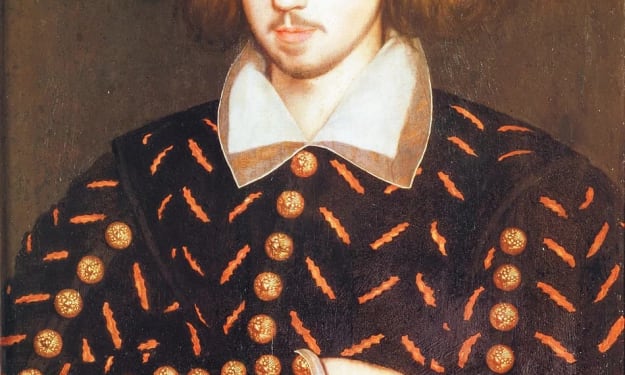
The Violent and Mysterious Death of Christopher Marlowe
Christopher Marlowe, one of Elizabethan England’s most enigmatic and brilliant playwrights, died young and under circumstances so suspicious that his death has become one of literary history’s most enduring mysteries. Known for his powerful blank verse and provocative themes, Marlowe’s meteoric rise in the late 16th century was matched only by the suddenness and violence of his demise.
By Abjol Hussain Laskar2 years ago in History
Nelson Mandela: A Legacy of Liberation, Reconciliation, and Hope
Nelson Mandela: A Legacy of Hope, Peace, and Liberation Nelson Rolihlahla Mandela, more commonly referred to as Madiba, is still regarded as an iconic figure from both the 20th and 21st centuries. His life is a source of inspiration for people all over the world who are working toward equality and human dignity. It is marked by unwavering dedication to justice, significant sacrifice, and an extraordinary capacity for forgiveness. Mandela's journey is a testament to the strength of the human spirit in the face of oppression, from anti-apartheid activist to political prisoner to first president of a democratic South Africa. Born on July 18, 1918, in the Eastern Cape of South Africa, Mandela's early life provided little indication of the monumental role he would play in shaping his nation's destiny. He learned about the systemic racial discrimination and injustice that black South Africans faced under the apartheid regime while attending the University of Fort Hare and local missionary schools. When he joined the African National Congress (ANC) in 1944, a liberation movement that was initially committed to non-violent resistance against apartheid laws, his activism took off in earnest. However, following the Sharpeville massacre in 1960, where peaceful protestors were brutally killed by police, Mandela and the ANC leadership concluded that armed struggle was a necessary last resort. He co-founded the ANC's military wing, Umkhonto we Sizwe ("Spear of the Nation"), which carried out sabotage against important government facilities. His arrest in 1962 and the infamous Rivonia Trial in 1964, in which he and other ANC leaders were charged with sabotage and conspiracy, were both as a result of this shift. His powerful speech from the dock, in which he said he was willing to die for the idea of a free and democratic society, was heard all over the world and made him into a symbol of resistance. Mandela was given a life sentence and spent the next 27 years in harsh conditions on Robben Island and other South African prisons. Mandela's influence only increased despite his imprisonment. The global anti-apartheid movement demanded his release and the end of the oppressive apartheid system, making him a global celebrity. Millions of people around the world were inspired by his unwavering resolve and refusal to compromise his values. Domestic and international pressure on the South African government increased toward the end of the 1980s. President F.W. de Klerk started reforms in the face of growing unrest and the realization that apartheid was unsustainable. These reforms led to Mandela's unconditional release on February 11, 1990. Mandela was a key player in the delicate negotiations for a peaceful transition to a multiracial democracy after his release. Together with de Klerk, he worked tirelessly to end apartheid laws, free political prisoners, and create a framework for free and fair elections. In 1993, they were awarded the Nobel Peace Prize for their collective efforts in navigating this difficult period. Nelson Mandela became the nation's first black president after its first democratic elections were held in 1994. His presidency was marked by a dedication to nation-building and reconciliation. He advocated for the Truth and Reconciliation Commission, a ground-breaking initiative that encouraged a process of healing and comprehension by allowing both perpetrators and victims of apartheid-era violence to share their experiences. His government also prioritized addressing the deep-seated inequalities created by apartheid, implementing policies aimed at improving housing, education, healthcare, and economic opportunities for the black majority. Mandela's leadership was marked by pragmatism, inclusivity, and a profound commitment to the well-being of all South Africans, despite the enormous challenges he faced. Mandela voluntarily resigned from office in 1999 after serving one term, establishing a significant precedent for democratic leadership in Africa. However, he continued to be an active global statesman, working through the Nelson Mandela Foundation to promote peace, human rights, and the fight against HIV/AIDS. On December 5, 2013, Nelson Mandela passed away at the age of 95. Global mourning surrounded his passing, but his legacy continues to inspire. In addition to his brave resistance to apartheid, he is remembered for his extraordinary capacity for forgiveness, his dedication to reconciliation, and his unwavering belief in the possibility of a just and equitable world. Mandela's legacy reaches far beyond South Africa's borders. He stands as a symbol of hope for oppressed people everywhere, a testament to the power of perseverance, and an enduring reminder that even the most entrenched systems of injustice can be overcome through courage, determination, and a commitment to human dignity. His life is a powerful example of the significance of dialogue, comprehension, and the pursuit of a shared humanity in constructing a better future for everyone. Canvas
By Tafsirul Talukdar luvdo2 years ago in History
Nineteen Eighty-Four
1984 (also written as Nineteen Eighty-Four) is a powerful and chilling novel written by George Orwell. It was published in 1949, just after World War II, but it talks about a future world that feels cold, controlling, and scary. This book is not only a story—it’s a warning about what could happen if governments gain too much power and people lose their freedom.
By Muhammad Hayat2 years ago in History
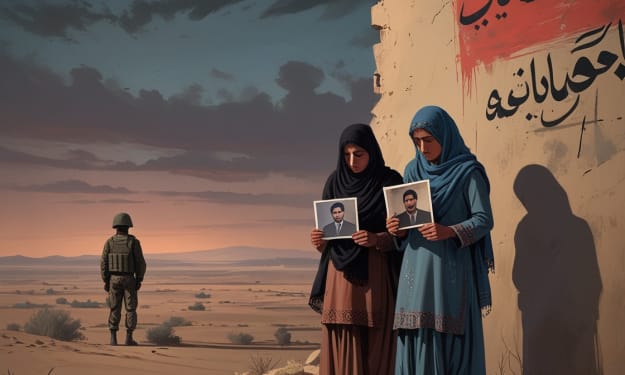
Silent Genocide: The Hidden Massacre of Balochistan. AI-Generated.
The Concealed Afflictions: The Balochistan Massacre – An Overlooked Episode of Contemporary History In spite of being one of the least addressed atrocities of the contemporary period, the persistent turmoil and purported massacres in Balochistan stand as a distressing reminder of the muted agony of a populace ensnared in the realm of politics and power. This article reveals the concealed particulars of decades of discord in the Baloch region, examining its historical origins, political conflicts, and the human toll that persistspredominantly disregarded by international media and historical narratives. The Concealed Afflictions: The Balochistan Massacre – An Overlooked Episode of Contemporary History When history is recorded by the triumphant, entire segments of anguish are frequently excluded. One such segment transpires in the rugged mountains and arid terrains of Balochistanan extensive, resource-abundant region divided among Pakistan, Iran, and Afghanistan. Although lesser-known to the global community, Balochistan has suffered a harrowing legacy of political oppression, insurrections, and brutal crackdowns, prompting numerous historians and human rights advocates to label the conflict as a contemporary silent massacre. A Land of Abundance, A People Marginalized Balochistan is the largest province of Pakistan in terms of area, yet the least inhabited. It possesses ample natural resources, including natural gas, gold, coal, and copper. In spite of this affluence, the area endures as one of the most destitute and underdeveloped in South Asia. Baloch nationalists contend that the federal government has long exploited Balochistan’s resources while providing minimal returns to its inhabitants. This sentiment is not novel. The impetus for unrest was initiated soon after the establishment of Pakistan in 1947. The princely state of Kalat (part of Balochistan) initially pursued independence but was subsequently annexed by Pakistan in 1948, igniting the first of several Baloch revolts. Each insurrectionwhether in 1958, 1962, 1973, or the more recent movementshas been met with forceful military response. Oppression and Alleged Massacres Since the early 2000s, the conflict has intensified considerably. The Pakistani military and intelligence agencies have been accused by numerous human rights organizations of executing enforced disappearances, extrajudicial killings, and acts of torture. Thousands of Baloch activists, students, intellectuals, and ordinary villagers have reportedly gone missing. Their remains are sometimes later discovered disfigured, discarded in remote siteswhat locals grimly label as “kill and dump” operations. While precise statistics are challenging to corroborate owing to restricted access to the area and fear of reprisals, estimates from various NGOs indicate that over 20,000 individuals may have vanished over the past two decades. Human Rights Watch and Amnesty International have both documented severe violations in the region; however, global political focus has been scantpartly owing to Balochistan's geopolitical sensitivity.
By Say the truth 2 years ago in History