Trivia
The Lost Treasures of Cambodia: Secrets of the Angkor Temples
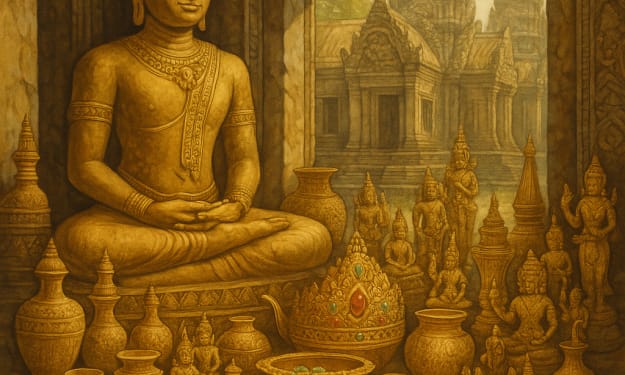
The Forgotten Riches of Cambodia’s Ancient Shrines: From Angkor's Splendor to Global Exploitation Cambodia’s ancient temple complexes, particularly Angkor Wat and its adjacent cities, are not only significant architectural feats but once housed some of the most remarkable treasures of the Khmer Empire. These valuables, lost through conflict, colonization, and plundering, have ignited international interest and initiatives for cultural restitution. This article explores the history of the Cambodian temple treasureswhat they encompassed, how they vanished, and the ongoing pursuit to retrieve them. When individuals envision Cambodia, the grand spires of Angkor Wat frequently come to minda representation of spiritual commitment and imperial magnificence. However, what many may not be aware of is that the temple complexes of the ancient Khmer Empire once encompassed vast treasures: gilded statues of Hindu and Buddhist deities, ceremonial adornments, intricately carved artifacts, and royal offerings. These were not merely tokens of affluencethey embodied the cosmic authority and divine connection of the Khmer monarchs. At its zenith between the 9th and 15th centuries, the Khmer Empire extended across present-day Cambodia, Thailand, Laos, and Vietnam. Its capital, Angkor, evolved into a spiritual and political hub, housing hundreds of temples, including Angkor Wat, Bayon, Ta Prohm, and Banteay Srei. The Function of Temples in Khmer Affluence In contrast to numerous empires where wealth was accumulated in treasuries or palaces, in Cambodia, a significant portion of the royal and religious riches resided within temples. These hallowed edifices served not only as sites of worship but also as repositories for offerings from monarchs, nobles, and pilgrims. Temple inscriptions from Angkor indicate that temples like Preah Khan once possessed thousands of gold and silver artifacts, including over 100,000 pearls and gemstones. The Lolei inscription makes reference to land grants and endowments of gold for the maintenance of temple functions and rituals. Gold statues of Vishnu, Shiva, and the Buddha were prevalent within the sanctuaries. Each temple operated its own "economy"farmlands, laborers, and artisansthat supported the priests and preserved the treasures. This close association between affluence and religious purpose made temples prime targets during incursions. Conflict, Invasion, and the Vanishing of Temple Riches The decline of Angkor in the 15th century signaled the onset of the disappearance of Cambodia’s temple treasures. The city was invaded by the Ayutthaya Kingdom of Siam (modern-day Thailand) in 1431, leading to the plundering of much of Angkor’s wealth. Some historians assert that golden statues and relics were transported to Siamese temples. The ensuing centuries were marked by unrest, resulting in the abandonment of numerous temples to the jungle. Left unprotected, they became targets for local looters and treasure seekers. By the 19th century, when French explorers re-encountered Angkor, many temples had already been deprived of numerous valuable artifacts. The French colonization of Cambodia (1863–1953) initiated another phase of cultural extraction. While some French archaeologists endeavored to preserve Khmer heritage, others dispatched temple sculptures, lintels, and statues to European museumsoften without consent. Entire temple doors, columns, and altars were removed. The Guimet Museum in Paris and other Western institutions continue to retain Khmer artifacts that were extracted during the colonial era. Numerous treasures represent not merely artistic creationsthey are sacred elements that once formed part of living temples. Modern Exploitation: The Khmer Rouge and Black Market Trafficking In the 20th century, Cambodia experienced another catastrophic erosion of its temple heritage during the regime of the Khmer Rouge (1975–1979) and the subsequent decades of civil conflict. During this epoch, extensive looting of temples became prevalent. Archaeological sites were blasted, and statues were severed from their bases and sold to international collectors. Some artifacts found their way into private collections, while others were housed in global museums. The Ta Prohm and Banteay Chhmar temples sustained considerable damage during this time. By the 1990s, a thriving black market for Southeast Asian antiquities was firmly established. Cambodia’s temple relics were among the most coveted. Statues weighing several hundred kilograms were illicitly transported out of the country, occasionally with the assistance of corrupt officials or insurgent soldiers. Repatriation and Ongoing Recovery Initiatives In recent years, Cambodia has undertaken substantial endeavors to reclaim its cultural legacy. The government, supported by UNESCO and various international entities, has initiated legal actions and negotiations aimed at returning looted artifacts. In 2023, several significant sculptures were repatriated from the United States, including from the Metropolitan Museum of Art and private collections. Some of these items had been unlawfully taken decades earlier from temples such as Koh Ker and Prasat Chen. The case of Douglas Latchford, a British art dealer accused of trafficking stolen Cambodian artifacts, garnered global attention. Following his passing, his estate began the process of returning numerous invaluable Khmer sculptures to Cambodia. Although thousands of items remain absent or held in foreign collections, the momentum is increasing. Each returned artifact represents a stride toward healing Cambodia’s cultural wounds and reestablishing the connection between the people and their ancestral heritage. Conclusion: Treasures Beyond Wealth The narrative of Cambodia’s temple treasures transcends mere riches and jewelsit embodies a saga of identity, resilience, and remembrance. While many treasures have been lost to conflict and avarice, the spiritual significance of these artifacts endures. As Cambodia endeavors to restore its past, its temples continue to evoke wonder and optimism for a future where history is preserved, and justice is achieved.
By Say the truth 2 years ago in History
"Flight 27: Lost and Found"
The sky had been calm when Flight 908 left New York, bound for Buenos Aires. It was the kind of flight that lulled passengers into false security—soft lighting, a smooth ascent, and quiet conversations among strangers who would never speak again. At 37,000 feet, serenity held like a delicate thread.
By Hamdan Khan2 years ago in History
"The Few Who Conquered: History’s Greatest Victory with the Smallest Army"
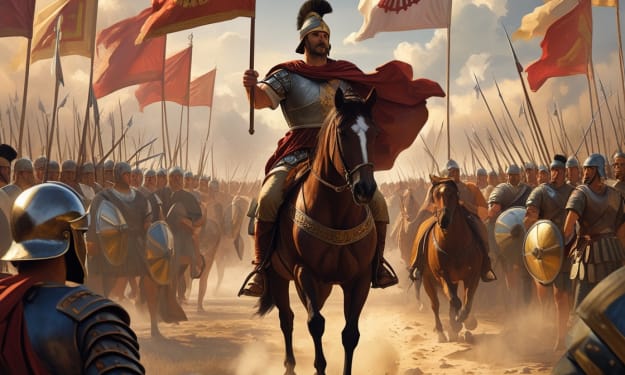
The Ascension of the Macedonian Empire: From Margins to Dominance The Macedonian Empire, one of the most formidable entities of the ancient era, emerged from the rugged, mountainous landscape of northern Greece to command a significant portion of the known world by the 4th century BCE. While it resided on the outskirts of classical Greek civilization for centuries, the aspirations of two crucial monarchsPhilip II and his progeny, Alexander the Greattransformed Macedonia from a divided kingdom into an empire extending from the Adriatic Sea to the Indus River. This article examines the intricate and impactful ascent of the Macedonian Empire, scrutinizing its political underpinnings, military advancements, and cultural influence. The Early Kingdom Macedonia was historically perceived by southern Greek city-states as a semi-barbaric territory, culturally and politically distinct from polities such as Athens and Sparta. The Macedonian aristocracy traced their heritage to the Argead dynasty, believed to descend from Heracles. Their political organization was less sophisticated than the democratic or oligarchic systems of the south, with authority concentrated in the hands of warrior-kings who governed over tribal regions. In the early 5th century BCE, Macedonia was a minor entity, often ensnared between conflicting Greek states and Persian interests. Nevertheless, its populace was resilient, adept in horseback riding, and proficient in guerrilla tactics. In spite of internal discord and external pressures from neighboring Illyrians, Thracians, and Greeks, the foundations for unity and expansion were being established.
By Say the truth 2 years ago in History
Biography of Aubert Einstein the greatest scientist ever
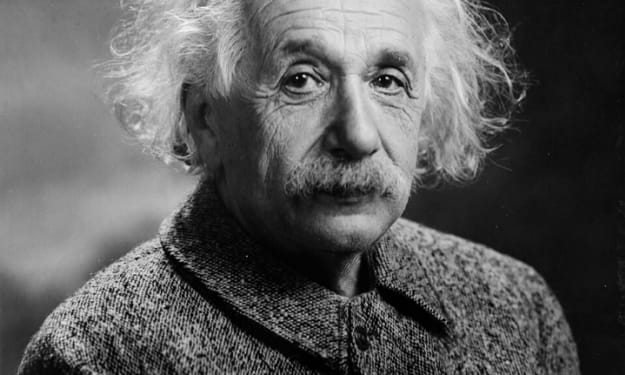
Albert Einstein (14 March 1879 – 18 April 1955) was a German-born theoretical physicist who is best known for developing the theory of relativity. Einstein also made important contributions to quantum mechanics. His mass–energy equivalence formula E = mc2, which arises from special relativity, has been called "the world's most famous equation". He received the 1921 Nobel Prize in Physics for his services to theoretical physics, and especially for his discovery of the law of the photoelectric effect.
By Favour Nyimbili2 years ago in History
India is a land of rich history, diverse cultures, and remarkable achievements. Here are some intriguing and lesser-known facts about this incredible country:
🧠 Ancient Innovations & Cultural Contributions Birthplace of Chess and Shampoo: India gave the world chess, originally called Chaturanga, and the concept of shampooing, derived from the Sanskrit word Champu, meaning to massage.
By Abjol Hussain Laskar2 years ago in History
What Happened to Queen Nefertiti? The Vanishing of Egypt’s Most Mysterious Queen
A Queen Like No Other Nefertiti. The name itself evokes images of elegance, power, and mystery. She was not just another queen of ancient Egypt, she stood at the heart of a revolution that tried to reshape the spiritual core of one of history’s greatest civilizations. She ruled during a time of dramatic change alongside her husband, Pharaoh Akhenaten, and her image remains one of the most iconic relics of the ancient world.
By The Secret History Of The World2 years ago in History
The Battle of Venni: Karikala Chola’s Triumph Over a Southern Alliance
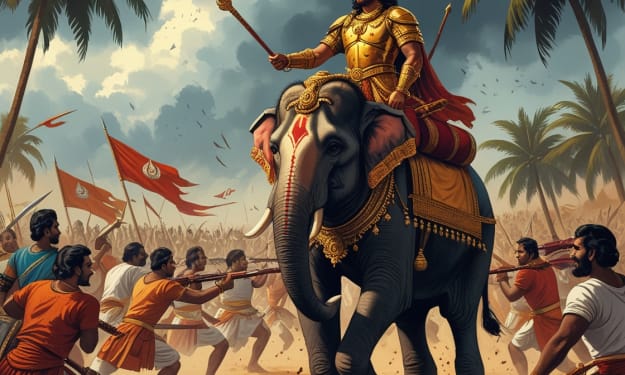
The Engagement of Venni: How Karikala Chola Triumphed over a Powerful Coalition and Established a Chola Heritage The Engagement of Venni, occurring around 190 CE, was one of the most pivotal military confrontations in ancient South Indian chronicles. Happening near Kovilvenni, a modest town in the Thanjavur district of contemporary Tamil Nadu, this encounter significantly transformed the balance of power among the Chola, Chera, and Pandya kingdoms. At the heart of this remarkable struggle was Karikala Chola, a renowned monarch of the early Chola dynasty. Confronting a coalition of formidable adversaries, Karikala emerged triumphant in a conflict that would cement his status as one of the most illustrious rulers in Tamil annals and lay the groundwork for Chola supremacy in the centuries ahead. The Political Context Prior to the Conflict By the 2nd century CE, the Tamil realmreferred to as Tamilakamwas partitioned among three principal powers: the Cholas, Pandyas, and Cheras, alongside numerous Velir chieftains. These factions frequently engaged in contests for dominance, with fluctuating alliances and internal enmities characterizing the era. The Chola dynasty, situated in the Cauvery Delta, was grappling with instability. Following the decline of earlier Chola sovereigns, the dynasty faced challenges from both internal insurrections and external threats. Amid this atmosphere of political turbulence ascended Karikala Chola, a prince who endured imprisonment, exile, and treacherybut was resolute in his quest to unify and fortify his domain. Who Was Karikala Chola? Karikala Chola is among the earliest documented sovereigns of the Chola dynasty and remains one of its most venerated rulers. His name "Karikala," signifying "the man with a charred leg," originates from a legend in which he escaped from a blaze during his captivity as a youth. According to Tamil literature and copper plate records, Karikala was an exceptional strategist and proficient administrator. His vision extended beyond mere conquesthe invested in infrastructure, including the construction of embankments along the Kaveri River, significantly enhancing the agricultural viability of the Chola heartland. However, before he could actualize his vision for a robust Chola kingdom, Karikala needed to eradicate external threats. This opportunityand challengematerialized in the form of the Engagement of Venni. The Formation of the Anti-Chola Coalition Apprehensive of Karikala’s ascending power and aspirations, the Pandya and Chera monarchs, along with a confederation of eleven minor rulers and chieftains, established a formidable alliance. Their objective was to obliterate the Chola resurgence at its inception. The Chera monarch Uthiyan Cheralathan and the Pandya king, whose name varies across different texts, joined forces with the conviction that they could overpower Karikala’s forces. The coalition was well-equipped, featuring war elephants, cavalry, and seasoned generals. On paper, Karikala was at a numerical disadvantage. The Engagement of Venni The conflict transpired on the fields of Venni, a site strategically located near the Chola capital Urayur (in proximity to modern-day Tiruchirappalli). Karikala, recognized for his boldness and tactical prowess, opted to confront the allied forces directly. According to Sangam literature, particularly the Pattinappaalai, Karikala commanded his troops from the forefront. His forces consisted of organized archers, formidable infantry, and combat-trained war elephants. Utilizing both sheer strength and strategic maneuvers, Karikala capitalized on the vulnerabilities in the coordination of the allied forces. The Chera army was repelled, and the Pandya soldiers incurred significant losses. Despite early resistance, the coalition began to wane beneath Karikala's relentless offensive. In a final assault, the Chola forces overwhelmed the adversary, resulting in numerous fatalities and the rout of the remaining troops. The confrontation concluded with a conclusive Chola triumph. Aftermath and Impact The ramifications of the Battle of Venni were significant: Uthiyan Cheralathan, the Chera monarch, is reported to have taken his own life through prolonged starvation, a ritual act to evade the dishonor of defeat. The Pandya authority was diminished, and the minor Velir leaders were either subdued or compelled to submit. Karikala emerged as the unequivocal sovereign of the Tamil region, broadening his influence throughout Tamilakam and extending into parts of Sri Lanka.
By Say the truth 2 years ago in History
Assam
Assam: The Land of Lush Landscapes and Cultural Heritage Nestled in the heart of Northeast India, Assam is a land of breathtaking beauty, rich cultural traditions, and immense historical significance. Known for its tea gardens, vibrant festivals, and the mighty Brahmaputra River, Assam serves as the gateway to the Northeast and holds a unique place in the tapestry of Indian diversity.
By Abjol Hussain Laskar2 years ago in History