Trivia
The Most Unique Easter Traditions Around the World
For many, celebrating Easter usually involves Easter egg decorating and hunting. Painting Easter eggs is such a fun activity as the eggs are painted with many vibrant colors as well as pastels to reflect the spring season. Colorful eggs are hidden in yards; some nestled in between Easter lilies and tulips as children eagerly search for them.
By Jasmine Aguilar2 years ago in History
The whispering banyan tree.
Within the heart of a calm town in West Bengal stood an enormous, old banyan tree. Its roots turned just like the fingers of overlooked mammoths, coming into the soil and sky. The villagers called it “Boroboro Gachh,” and they accepted it had a soul.For eras, individuals whispered stories almost to the tree. A few said it ensured the town. Others claimed it tuned in. But no one had ever demonstrated anything—until Arman arrived.Arman was not a villager. He was a 22-year-old college understudy from Kolkata, examining old stories. When he first heard of the banyan tree, he thought it would be just another town myth. But something about the way the ancient postmaster talked of it caught his interest.“It talks when the moon is full,” the postmaster had said, his eyes cloudy with age. “But not in words. In whispers.”Charmed, Arman pressed his sacks and traveled to the town. The individuals were inviting but cautious. They told him stories of how the tree had spared lives amid surges, how it shined faintly on certain evenings, and how feathered creatures never settled in its branches—but none would go close to it after sunset.Arman giggled it off. “Superstition,” he said to himself. But deep down, he wasn't beyond any doubt.That night, beneath a full moon, Arman set up camp close the tree. He brought a scratchpad, a voice recorder, and his camera. The villagers cautioned him once more, but he waved them off considerately.Midnight arrived. Crickets sang. The wind moved delicately. The tree stood silent—just a tree.But then… the discussion changed.It wasn't colder, but heavier. As in the event that the world was holding its breath. Arman looked up. The moonlight sparkled on the roots. And after that, exceptionally faintly, he listened to it:“Arman…”He solidified.It was a whisper. Delicate. Like wind passing through ancient leaves—but clearer.“Who's there?” he inquired, checking the obscurity.No answer.He checked his recorder. It was still running. He rewound some seconds and played it back.“Arman…”“Why have you come?”His heart dashed. The voice was there. But no one was around.Swallowing his fear, he sat back down and whispered, “I need to know your story.”Hush.Then:“Listen.” Over the following few hours, Arman listened to pieces of a tale—fragmented whispers carried by the wind. A story of a lady named Meera, who had once lived within the town centuries back. A healer, a kind soul. But amid a starvation, she was faulted for awful good fortune and blamed for witchcraft. The villagers, frantic and frightened, tied her to the banyan tree and cleared out of there.She passed on beneath the moon, shattered.The tree, fed by her blood, took in her torment. And her soul.Since at that point, Meera's soul had whispered to those who listened—not for exact retribution, but for recognition.“They overlooked me,” the tree whispered. “But I keep in mind them all.”Arman sat still, overpowered by distress he couldn't clarify. He saw flashes in his mind—of Meera's life, her thoughtfulness, and her passing. And the centuries of hush that followed.When first light drew closer, the whispers faded. The weight within the discussion lifted.The tree stood still once more.Arman didn't take off from the town. He remained for a week, tuning in each night, learning more about approximately Meera. He composed everything down. His recorder filled with ghostly, whispering voices. But the villagers refused to tune in.“They'll think you're mad,” the postmaster cautioned.“I don't care,” Arman answered. “The world ought to know.”When he returned to Kolkata, Arman distributed a paper titled “Whispers of the Forgotten.” It picked up consideration from teachers, history specialists, and otherworldly searchers. Numerous people rejected it as fiction. A few accepted. But Arman didn't care. He had listened to the truth.He returned to the town once a year, always on the night of the total moon. He sat beneath the banyan tree, not anxious, and tuned in to Meera's voice.One year, he brought blossoms.“I keep you in mind,” he whispered, putting them at the base of the tree.The branches overhung gently—though the wind was still.And from deep inside the roots, a whisper came:“Thank you.”
By Sumaiya’s Wordbox2 years ago in History
BAPS Temple & Abu Dhabi Wonders: A Tapestry of Faith and Modernity
The BAPS Abu Dhabi Temple is a holy wonder that shines as a light of spiritual unification and cultural reverence in the center of Abu Dhabi, where the golden sands of the desert meet the glittering cityscape of a contemporary metropolis. This architectural wonder, which was unveiled on February 14, 2024, combines the traditional Hinduism with the progressive spirit of the United Arab Emirates to create more than just a house of worship. An Abu Dhabi Tour with Temple provides a trip that blends faith, artistic expression, and the lively pulse of a city that embraces variety for anyone looking for a life-changing experience.
By Dubai Executive Tours2 years ago in History
Returning Without Questions
Returning Without Questions They came a little closer to me one odd evening, I recall. Despite its simplicity, the relationship had an odd depth. There was a kind of connection between them that spoke before words, the language of their eyes—even when they were silent in front of each other, they understood each other. However, despite being by each other's side, there are times in life when people move on. There came a time when the two of them moved far away from each other.
By Arshad Ali2 years ago in History
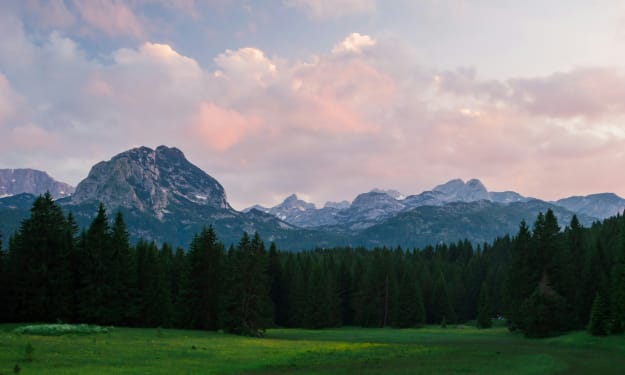
Sunset in the mountains of Durmitor
Sunset in the mountains of Durmitor The afternoon was different. The sun was slowly setting on the mountainside, spreading golden colors in the sky. The sunset could be seen from the campus dormitory, like a perfectly arranged scene—as if painted by Allah with his own hands.
By Arshad Ali2 years ago in History
Thucydides of Athens
Thucydides of Athens (circa 460 – circa 400 BCE) is celebrated as one of history's foremost historians, recognized for his meticulous method of documenting historical events. In contrast to earlier historians who frequently intertwined myth with reality, Thucydides aimed to deliver a precise and analytical narrative grounded in evidence and firsthand accounts. His seminal work, The History of the Peloponnesian War, continues to be a cornerstone in the fields of historiography, political science, and military strategy.
By A História2 years ago in History
"Jwaneng: Unearthing the Billion-Dollar Treasure Beneath Botswana"
"The Sparkling Legacy: The History and Wealth of the World's Largest Diamond Mine" Introduction Diamonds have captivated human imagination for centuries, symbolizing wealth, power, and eternal beauty. Deep beneath the surface of the Earth, nature took billions of years to create these precious stones. Among all the diamond mines in the world, the Jwaneng Diamond Mine in Botswana holds the crown as the richest diamond mine by value, and one of the largest by production. This article explores the fascinating history, geology, and global economic significance of this treasure trove—and estimates the immense net worth hidden within. 1. The Birth of Jwaneng: A Geological Miracle Located in the southern part of Botswana, the Jwaneng mine sits in the Kalahari Desert. The word "Jwaneng" means "place of small stones" in Setswana—though ironically, it became the site of some of the largest fortunes in diamond history. The mine lies atop a kimberlite pipe, a vertical volcanic structure through which magma once surged, bringing diamonds from the Earth's mantle to the surface. These pipes are the primary source of gem-quality diamonds. Geologists first identified potential in the region during a survey in the early 1970s, and by 1972, De Beers, the diamond giant, had confirmed the presence of high-quality diamond ore. 2. Official Opening and Expansion The Jwaneng mine officially began operations in 1982, as a joint venture between De Beers and the Botswana government under the partnership company Debswana. This collaboration was unique: it guaranteed the country of Botswana a large share of the profits while allowing De Beers access to one of the most lucrative mines on Earth. Jwaneng has since evolved into a state-of-the-art mining facility. It employs both open-pit and, more recently, underground mining methods to access deeper diamond reserves. 3. Global Economic Impact Jwaneng is not just a mine—it is an economic engine. The revenue generated from the mine has fueled Botswana’s development, lifting it from one of the world’s poorest nations in the 1960s to a middle-income country today. As of now, Jwaneng produces around 10 to 15 million carats of high-quality diamonds annually. But what makes it exceptional is not just the volume, but the value per carat. On average, Jwaneng diamonds are worth more than $200 per carat, significantly higher than most other mines. 4. The Net Worth of Jwaneng Diamonds Let’s break it down with an estimate: Average Annual Production: 12 million carats Average Price per Carat: $200 Annual Revenue: 12,000,000 × $200 = $2.4 billion Jwaneng has been in operation for over 40 years. Assuming similar output over time (with inflation and price shifts accounted for), the total revenue generated by the mine is: Estimated Cumulative Revenue: 40 × $2.4 billion = $96 billion Add to this the future potential of underground mining, and the total value could exceed $120 billion by the time all the reserves are exhausted. 5. Social and Environmental Legacy Unlike many other mines around the world that have been plagued by corruption or environmental neglect, Jwaneng has often been cited as a model for responsible mining. Debswana invests in education, healthcare, housing, and wildlife preservation in Botswana. The surrounding areas have benefited immensely from the infrastructure developed around the mine. However, mining always comes with challenges. Environmental degradation, energy use, and long-term sustainability are ongoing concerns that the company is actively addressing through green initiatives and reclamation efforts.
By Say the truth 2 years ago in History
Arshad and Jami The Last Night of Love
Arshad and Jami's "The Last Night of Love" Love can sometimes elevate the most banal of events. And there are times when that love becomes a gloomy, long-lasting reminder of pain. This story is one such last night, where there was love, but no future.
By Arshad Ali2 years ago in History
The Secret Science Hidden in Ancient Indian Temples – Was Our Past More Advanced
The Secret Science Hidden in Ancient Indian Temples – Was Our Past More Advanced Than We Think? By Riya Mandal When we think of ancient Indian temples, we imagine spiritual chants, divine idols, and intricate carvings. But what if we told you that these sacred structures were more than just places of worship? What if ancient temples were also centers of advanced science, energy systems, and cosmic understanding far ahead of their time? Modern researchers, architects, and even scientists are now re-examining the architecture and layout of temples across India. What they’re finding is shocking – “hidden scientific knowledge that may have been lost or ignored for centuries.” Let’s explore the fascinating and little-known science behind some of India’s most iconic temples. --- 1. Temple Architecture – A Symphony of Sound, Vibration, and Energy Unlike modern religious buildings, ancient Indian temples were not randomly constructed. Every aspect – from the direction they face to the materials used – followed strict rules laid down in ancient texts like the “Agama Shastra” and “Vastu Shastra”. a. Location and Earth’s Energy Grids Many temples were strategically built over areas with “high magnetic or geo-electric energy”, often referred to as ‘Earth’s energy grids’. These places naturally emit powerful vibrations. By placing temples there, our ancestors believed one could “enhance physical and spiritual energy”. Some scientists compare this to how “acupuncture works on human energy points”, but these temples were doing it on a massive geographical scale! b. The Garbhagriha – A Cosmic Battery? The “Garbhagriha” the sanctum sanctorum of a temple is the innermost chamber, where the idol (murti) is placed. Surprisingly, this small space is often built using “metals like copper, gold, and mercury”, embedded beneath the idol. Combined with granite stones, this creates a “natural magnetic field”. This setup functions much like a “resonance chamber” – absorbing, amplifying, and radiating energy. Some researchers even say that meditating in the garbhagriha can impact “brain wave frequencies”, helping people enter a deep state of consciousness. --- 2. Sound Science – The Power of Mantras and Bells Ever wondered why there are bells at temple entrances? Or why do people chant mantras repeatedly? a. Temple Bells and Sound Frequencies. Temple bells are not ordinary metal objects. They are made using a precise mixture of “seven metals”, each representing a celestial body – like gold for the Sun, silver for the Moon, and so on. When rung, they produce a sound frequency of “Om” – around “528 Hz”, which scientists claim is a healing frequency that can “repair DNA”. These sound waves “vibrate through the body and surroundings”, cleansing the atmosphere and even killing harmful microbes. b. Mantras and Brain Stimulation. The Sanskrit mantras recited in temples are not just religious chants – they are “vibrational formulas”. Scientific studies have shown that chanting certain mantras like "Om" can activate areas of the brain linked to “calmness, focus, and emotional balance”. In fact, MRI scans of monks chanting show “increased alpha wave activity”, linked to relaxation and heightened awareness. --- 3. Temple Towers – Ancient Radio Antennas? The towering “shikharas” or vimanas (temple spires) aren’t just ornamental. Some researchers suggest that these structures work like “resonant towers”, capturing cosmic and solar energies. For instance, the “Brihadeeswarar Temple in Tamil Nadu” has a vimana that’s 216 feet tall and was constructed without using cement or any modern tools. Its granite capstone alone weighs 80 tons and was placed without cranes – a mystery even today. These towers align with “celestial bodies”, possibly functioning like antennas, gathering cosmic energy and channeling it down into the sanctum. --- 4. Temple Tanks and Healing Water” Nearly every temple in India has a “water tank or pond”, called a ‘pushkarini’ or ‘kund’. The purpose of these tanks was not just for ritual bathing. Ancient texts reveal that temple tanks were carefully engineered to collect **charged water** – water infused with **solar energy, herbs, and magnetic minerals**. - This water was often used for *abhishekam* (bathing the deity) and then distributed as 'prasadam’. - Devotees believed that even drinking a few drops could heal physical and mental ailments. --- 5. Ancient Timekeeping and Astronomy Temples were also observatories. The alignment of temples with stars, equinoxes, and solstices reveals a deep understanding of astronomy. Take “Konark Sun Temple” in Odisha – its structure acts as a “sundial”, casting accurate shadows to tell time. The temple is aligned in such a way that the first ray of sunlight passes through the main entrance and falls directly on the deity’s feet. Similarly, “Meenakshi Temple in Madurai”,has architectural elements that indicate a deep knowledge of the "ecliptic path”, planetary movements, and even “eclipses”. --- Conclusion: Were Our Ancestors Secret Scientists? Today, we use terms like “technology,” “energy grids,” and “quantum vibrations.” But thousands of years ago, Indian sages were already using these concepts – not just in theory, but in “real-world structures”. Ancient temples were not just places for prayer – they were “spiritual laboratories” energy hubs, and centers of cosmic balance. They connected the “human body, earth, and universe”into one powerful system of harmony. So the next time you walk into a temple, don’t just fold your hands and bow. Feel the “energy”, listen to the “vibrations”, observe the “geometry” – and remember, you are standing inside a scientific marvel wrapped in devotion. ---
By Riya mandal2 years ago in History
Living with Earthquakes: How Japan Turned Disaster into Daily Discipline
Living with Earthquakes: How Japan Turned Disaster into Daily Discipline The Ground Shakes — and No One Screams In many parts of the world, an earthquake means chaos. Alarms blare, people run in fear, and confusion overtakes everything. But in Japan, something extraordinary happens when the earth begins to move — calmness.
By MystiTech Hub2 years ago in History
Apple Readies Pair of Headsets While Still Looking Ahead to Glasses
Apple Readies Pair of Headsets While Still Looking Ahead to Glasses Apple has been at the forefront of innovation for years, revolutionizing industries with groundbreaking products like the iPhone, iPad, and Apple Watch. The tech giant is preparing for augmented and virtual reality (AR/VR), its next major disruption. Reports suggest Apple is preparing to launch not one, but two high-end headsets, serving as a stepping stone toward its ultimate ambition: sleek, everyday AR glasses.
By Md. Al-Amin2 years ago in History
Battle of the Budgets: Pixel 9a vs Galaxy S24 FE vs iPhone 16e – Performance Tested
The competition for the best "budget flagship" has never been fiercer as smartphone prices continue to rise. In 2025, compelling mid-range devices from Apple, Samsung, and Google aimed to provide users with high performance at a price point below four figures. This year, it’s a three-way showdown between the Google Pixel 9a, Samsung Galaxy S24 FE, and the newly introduced iPhone 16e.
By Md. Al-Amin2 years ago in History