Places
Queen Hatshepsut
Queen HatshepsutGrandeur and Legacy in Ancient Egyptian History Queen Hatshepsut is considered one of the most influential figures in the history of ancient Egypt, having attained a prominent position among the pharaohs. Her reign, which lasted for over twenty years, demonstrated her exceptional ability to lead and manage during a time when power was often exclusively male. Through her courage and ambition, Hatshepsut left a magnificent legacy that continues to be studied and celebrated to this day.
By Mhmd Fathi 2 years ago in History
A Journey Through Time: The 13th Century Pipewell Gate in Winchelsea
In the small town of Winchelsea, East Sussex, history is woven into every corner. Amid the narrow lanes and ancient stones lies Pipewell Gate, a remarkable medieval structure dating back to the 13th century. As one of the last remnants of Winchelsea’s medieval defenses, Pipewell Gate stands today as a testament to the town’s storied past and a window into a time when the bustling port town was fortified against invaders. One of the most captivating views of this historic gate was captured by English painter Alfred Robert Quinton in 1900. Quinton’s painting depicts Pipewell Gate as it stood more than a century ago, framed by the town's tranquil landscape. Today, visitors can compare Quinton's vision with the present-day scene, revealing how much, and how little, has changed in the 700 years since the gate was built. This blog post explores the history of Pipewell Gate, its role in medieval Winchelsea, and the unique perspective that Quinton’s painting provides on the town’s evolving landscape. The Founding of Winchelsea and the Purpose of Pipewell Gate Winchelsea’s history is deeply tied to the sea. Originally located further to the east, the town was devastated by storms in the late 13th century, which prompted King Edward I to rebuild it on higher ground. Known as “New Winchelsea,” the town was strategically planned and fortified, with a grid-like layout that was innovative for its time. Positioned as one of the Cinque Ports—a coalition of coastal towns that provided ships and men for the king’s service—Winchelsea was an important center of trade and military activity. Its location on the coast, however, made it vulnerable to attacks from foreign invaders, particularly the French. To protect the town, Edward I ordered the construction of fortifications, including walls and gates. Pipewell Gate was one of three primary gates that secured Winchelsea, controlling access to the town and standing as a formidable barrier to potential invaders. Its name likely derives from a nearby well, a vital source of water for residents, which emphasizes the gate’s significance in both defense and daily life. Pipewell Gate: A Glimpse into Medieval Architecture Pipewell Gate is a classic example of medieval defensive architecture. Built from local sandstone, the gate features an imposing archway and a pair of flanking towers, which would have offered protection for guards stationed at the entrance. The design is simple yet functional, meant to deter attackers and provide an advantageous position for defenders. The gate’s narrow passage would have slowed any intruders, forcing them to approach in small numbers and allowing defenders to control who entered the town. Despite centuries of weathering, Pipewell Gate remains one of the best-preserved structures from medieval Winchelsea. Its sturdy walls have survived storms, wars, and the passage of time, standing as a silent witness to the town’s changing fortunes. In its heyday, the gate would have been a lively point of entry for merchants, travelers, and townsfolk. Today, it serves as a serene historical landmark, a reminder of the architectural ingenuity of medieval builders. Alfred Robert Quinton’s Painting: A Portal to the Past The renowned British artist Alfred Robert Quinton (1853–1934) was known for his picturesque watercolors of English villages and rural landscapes. In 1900, Quinton captured Pipewell Gate in a painting that transports us back to a simpler, quieter time in Winchelsea’s history. His work shows the gate framed by a lush landscape, with ivy creeping up its stone walls and trees arching overhead. Quinton’s attention to detail offers a unique perspective on how Pipewell Gate looked at the turn of the 20th century, preserving an image of the gate before the modernization of the surrounding area. In comparing Quinton’s painting to the modern-day view of Pipewell Gate, we see a striking contrast. While the gate itself has remained largely unchanged, the landscape around it has transformed. In Quinton’s day, the area surrounding Pipewell Gate was more rural, with fewer buildings and a greater emphasis on greenery. Today, while Winchelsea retains much of its historic charm, the landscape around the gate has evolved to accommodate modern infrastructure, with roads, signs, and occasional visitors capturing photos against the timeless backdrop. The Legacy of Pipewell Gate in Modern Winchelsea Pipewell Gate’s enduring presence speaks to the resilience of Winchelsea and its community’s dedication to preserving their heritage. Unlike many medieval towns that have been altered by urban expansion, Winchelsea has taken great care to maintain its historic character. The town’s ancient buildings and carefully preserved sites offer visitors a rare opportunity to experience the atmosphere of a medieval English port. Pipewell Gate is more than just an architectural relic; it represents a connection to the past, offering insights into the lives and challenges of those who lived in Winchelsea centuries ago. It stands as a symbol of the town’s resilience and adaptation through centuries of change—from a bustling medieval port to a quiet, rural town. Why Pipewell Gate Matters Today The significance of Pipewell Gate extends beyond its historical value. In an era of rapid urbanization and modernization, the gate reminds us of the importance of preserving heritage sites. These remnants of the past allow us to understand and appreciate the lives of those who came before us. The gate is also a reminder of the strategic importance of coastal towns in England’s history, with their dual roles in trade and defense shaping the country’s development. For history enthusiasts, Pipewell Gate offers an immersive experience of medieval England. Visitors walking through its archway can imagine the sound of clattering hooves and the bustling voices of townsfolk centuries ago. For locals, it’s a cherished landmark, a visible link to their town’s identity and legacy. Reflecting on the Passage of Time The comparison between Quinton’s painting and the present-day view of Pipewell Gate highlights the impact of time and change on our historical landmarks. The gate, weathered yet enduring, reminds us of the transient nature of human activities against the backdrop of history. While the world around it has shifted, Pipewell Gate remains a silent observer, standing as it has for over 700 years. In the end, Pipewell Gate serves as a bridge between past and present, offering a rare glimpse into medieval life while continuing to inspire awe and reverence in modern visitors. As we walk through its ancient archway, we not only enter a relic of Winchelsea’s past but also step into a shared history that connects us to the countless individuals who have passed through its stone portal over the centuries. The gate stands as a testament to the enduring power of history, architecture, and art—reminding us that while time may move on, some legacies remain steadfast.
By Deji Akomolafe2 years ago in History
The Mysterious Heritage of the Anasazi
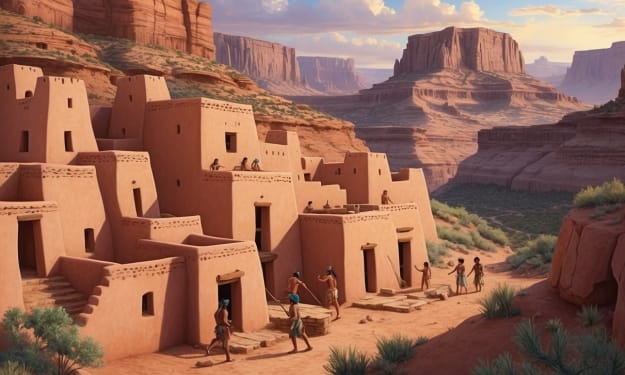
Throughout the course of human history, societies have typically flourished in regions characterized by plentiful water, food resources, and natural defenses. However, certain groups have demonstrated remarkable success in environments that would be deemed nearly uninhabitable by contemporary standards. One notable example is the Anasazi, also known as the Ancestral Puebloans, a Native American culture that thrived over a millennium ago in the arid terrains of the American Southwest. Through remarkable ingenuity, the Anasazi constructed stone and adobe settlements on cliff faces and plateaus, establishing an architectural and cultural heritage that continues to captivate historians and archaeologists to this day.
By A História2 years ago in History
Bolivia’s Dinosaur Wall: The Fascinating Fossil Record of Cal Orck’o
High above the plains of Sucre, Bolivia, stands one of the most extraordinary paleontological sites in the world: Cal Orck’o, a towering limestone wall measuring 300 feet high and nearly a mile long. This unique site is etched with over 5,000 dinosaur footprints, representing more than 10 distinct species that roamed this ancient land around 65 million years ago. Known as the “Dinosaur Wall,” Cal Orck’o offers a rare and spectacular glimpse into the past, preserving an ancient ecosystem in the form of fossilized tracks. Discovered in the 1990s, Cal Orck’o has captured the imagination of scientists, historians, and travelers from around the globe. The footprints are found in over 462 discrete trails, indicating the rich diversity of dinosaurs that once inhabited this area. Today, Cal Orck’o remains the largest concentration of dinosaur footprints in the world, and its steep, near-vertical wall offers a dramatic window into the Cretaceous period, revealing fascinating insights about the creatures that walked this land millions of years ago. Discovery of the Dinosaur Wall The discovery of Cal Orck’o’s dinosaur wall came about by accident in 1994, during limestone mining operations by FANCESA, a cement company. Workers had begun extracting material from the large cliffside when they noticed unusual imprints in the rock. The imprints, as scientists would later confirm, were dinosaur footprints—thousands of them. The presence of such well-preserved tracks immediately attracted the attention of paleontologists and other experts, who were stunned by the sheer number and diversity of the footprints. The cliffside's limestone, deposited in a lakebed millions of years ago, had hardened over time, capturing the impressions left behind by dinosaurs. As tectonic activity pushed the land upwards, the lakebed was gradually tilted to an almost vertical position, preserving the prints on what is now a steep wall. This geological process created a breathtaking display of fossilized trails that stands as a testament to the region's ancient history. A Remarkable Diversity of Species Cal Orck’o’s dinosaur tracks cover a fascinating range of species, including both herbivorous and carnivorous dinosaurs of different sizes and shapes. Scientists have identified at least 10 distinct species at the site, showcasing the ecological diversity of the Late Cretaceous period. Among the most notable tracks are those attributed to the titanosaurs, enormous long-necked herbivores that weighed up to 70 tons. Their tracks are some of the largest found on the wall, measuring over three feet in diameter. Also present are footprints from theropods, a group of bipedal carnivorous dinosaurs, which included smaller predators as well as large species like Abelisaurus. These three-toed tracks stand out for their sharp claw imprints, suggesting a predatory lifestyle. Another exciting discovery includes the tracks of Ankylosaurus, a heavily armored herbivore, and hadrosaurs, duck-billed dinosaurs that roamed in herds. Each species left its unique mark on the ancient lakebed, creating a layered and dynamic record of dinosaur movement and behavior. The footprint trails also reveal some intriguing details about the dinosaurs' interactions with their environment. For example, the direction and spacing of certain trails suggest that the area might have served as a migratory route or a gathering spot, where dinosaurs came to feed, drink, or perhaps seek shelter. The footprints tell a story not only of individual dinosaurs but of entire groups moving together, showcasing the complex social behaviors of these ancient animals. An Ancient Landscape Frozen in Time One of the most awe-inspiring aspects of Cal Orck’o is the level of preservation in these footprints. The site’s limestone wall, once part of a vast lakebed, acted like a soft, muddy surface that captured the details of each dinosaur’s footprint as they walked along the shore. As sediment continued to accumulate over the prints, they became buried and preserved, effectively “freezing” the movements of these animals in time. Over millions of years, tectonic forces transformed this horizontal lakebed into a vertical wall. The wall, nearly 70 degrees in inclination, provides a spectacular view of the footprints, revealing trails that stretch vertically across its surface. As visitors gaze up at the towering cliff, they are essentially looking back in time, witnessing the ancient paths of dinosaurs that lived during the last days of the Cretaceous period, shortly before the mass extinction event that would wipe them out. Challenges in Preserving the Dinosaur Wall Despite its historical and scientific significance, Cal Orck’o faces challenges in preservation. Natural erosion, driven by rain, wind, and seismic activity, threatens the integrity of the wall and the dinosaur tracks. Without intervention, there is a risk that some of the precious footprints could eventually fade or be lost. To address these concerns, local authorities, along with paleontologists and preservation experts, have implemented measures to protect and stabilize the wall. These efforts include the construction of a shelter that reduces water runoff and the monitoring of the wall’s structural stability. Additionally, the Dinosaur Park at Cal Orck’o was established to promote the site and raise awareness of its importance. The park provides visitors with guided tours and educational exhibits, explaining the significance of the dinosaur tracks and the paleontological research that continues to take place at the site. Through these initiatives, the park has become a center for both tourism and education, drawing attention to the need for continued conservation efforts. The Significance of Cal Orck’o in Paleontology Cal Orck’o offers scientists an unprecedented opportunity to study the behavior, movement, and environment of dinosaurs from 65 million years ago. Unlike traditional fossilized skeletons, which provide information about dinosaur anatomy, the footprints at Cal Orck’o allow paleontologists to observe how these animals interacted with their habitat. The spacing, direction, and depth of the tracks offer clues about the dinosaurs’ speed, size, and gait, helping researchers piece together aspects of their daily lives. The diversity of tracks also enables scientists to study the ecological relationships between different species, such as predator-prey dynamics and herd behavior. This information is invaluable in reconstructing the prehistoric ecosystem, giving us a glimpse into the lives of creatures that dominated the Earth long before humans. Conclusion Bolivia’s Dinosaur Wall at Cal Orck’o is far more than just a collection of footprints; it is a living record of life during the Cretaceous period, preserving the stories of species that thrived before the age of mammals. This remarkable site stands as one of the most extensive and diverse dinosaur trackways in the world, drawing visitors and researchers eager to uncover its secrets. As we marvel at the footprints left behind by massive titanosaurs, swift theropods, and lumbering ankylosaurs, we are reminded of the incredible diversity of life that once existed on Earth. Cal Orck’o remains a powerful reminder of our planet’s deep history and a testament to the resilience of natural records that have withstood the test of time.
By Deji Akomolafe2 years ago in History
The Old Tree of Eldergrove. AI-Generated.
**Title: The Old Tree of Eldergrove** In a small village nestled between misty mountains and rolling hills, there stood an ancient tree known as the Eldergrove Oak. Its gnarled branches reached toward the sky like wise arms embracing the world, and its trunk was so wide that it would take ten children holding hands to encircle it. The villagers revered this tree, believing it to be a guardian of their land, holding centuries of stories within its bark.
By MSK Writes2 years ago in History
The Legacy of George Washington. AI-Generated.
**Title: The Legacy of George Washington** In the bustling town of Mount Vernon, Virginia, lived a man whose reputation echoed across the colonies: George Washington. Born in 1732, he grew from a curious young boy into a determined leader, embodying the spirit of the American colonies yearning for independence.
By MSK Writes2 years ago in History
The Evolution of History: Understanding Our Past for a Better Future
History is not merely a collection of dates and events; it is a comprehensive narrative that weaves together the experiences, struggles, and triumphs of humanity. As we delve into the study of history, we find not only a record of our past but also a framework that shapes our identity and informs our future. This article explores the evolution of history as a discipline, its significance, and the lessons it imparts for contemporary society.
By Marius Lungu2 years ago in History