Places
The Raggiana Bird of Paradise
Papua New Guinea’s Bird of Paradise is a symbol of extraordinary beauty, cultural significance, and ecological value. Known for its vibrant colors, intricate plumage, and elaborate mating dances, the Bird of Paradise has captivated scientists, artists, and locals alike. These birds, with around 40 species mainly found in Papua New Guinea, have deeply influenced the nation’s traditions, spiritual beliefs, and conservation efforts, making them an essential element of the region’s identity. The Unique Beauty of Papua New Guinea’s Birds of Paradise Papua New Guinea is home to the majority of Bird of Paradise species, each showcasing different colors, feather structures, and courtship displays. Males often have flamboyant, iridescent feathers in hues of green, blue, and yellow, along with elongated tail feathers or decorative plumes. Their courtship dances are particularly fascinating; to attract a mate, male birds perform elaborate displays, often cleaning their chosen stage meticulously before performing their unique dance routines. This flamboyant behavior, alongside their beauty, has earned the Bird of Paradise a legendary status worldwide. Cultural Significance in Papua New Guinea The Bird of Paradise is more than a natural marvel; it has a profound place in Papua New Guinea’s culture and traditions. Known locally as “kumul,” it has long been a source of inspiration, respect, and symbolism. For many of Papua New Guinea’s indigenous groups, Birds of Paradise represent spiritual guardians or symbols of ancestral spirits. This deep-seated connection is reflected in the traditional rituals, dances, and stories that are still practiced across the nation. One of the most notable ways the Bird of Paradise influences Papua New Guinean culture is through ceremonial dress. Indigenous groups use feathers from the Bird of Paradise to create elaborate headdresses worn during traditional dances, called “sing-sings.” These dances are a showcase of the community’s heritage, where participants don these colorful headdresses and body adornments, honoring their ancestors and nature. For many tribes, these headdresses represent social status, courage, and connection to the divine. In some parts of the country, feathers of the Bird of Paradise are passed down through generations, embodying family lineage and honoring ancestors. As these adornments hold significant cultural value, they are treated with immense care and respect. By using Bird of Paradise feathers in rituals and ceremonies, the people of Papua New Guinea celebrate the symbiotic relationship they have with their environment. National Symbol and Economic Impact The Bird of Paradise is a national icon of Papua New Guinea, even gracing the country’s national flag. This symbol reflects not only national pride but also a commitment to preserving the nation’s biodiversity. The presence of Birds of Paradise has also played a role in ecotourism, attracting bird watchers, photographers, and nature enthusiasts from around the globe. This influx of tourists helps stimulate the local economy and supports conservation initiatives, giving communities an incentive to protect their natural environment. Conservation Challenges and Efforts However, the Bird of Paradise faces various threats due to habitat destruction, climate change, and hunting. Although using Bird of Paradise feathers in traditional attire is a longstanding practice, unregulated hunting has led to a decline in some species’ populations. Additionally, logging and land clearing for agriculture have drastically reduced their habitat, endangering their survival. In response, Papua New Guinea has established several conservation programs and protected areas to preserve these magnificent birds. Many tribes and local communities are actively involved in these initiatives, recognizing that the survival of the Bird of Paradise is integral to both their cultural heritage and natural ecosystem. NGOs and international organizations are also collaborating with local communities, offering training and resources to balance cultural practices with conservation needs. The Ecological Role of Birds of Paradise Beyond their cultural and economic importance, Birds of Paradise play a significant role in maintaining Papua New Guinea’s ecosystem. These birds are vital to seed dispersal, as they feed on fruits and spread seeds throughout the forest. This helps regenerate the forest and supports other wildlife by maintaining the biodiversity of the habitat. By protecting Birds of Paradise, Papua New Guinea also protects countless other species, fostering a balanced and healthy environment. Conclusion The Bird of Paradise holds a special place in Papua New Guinea’s heart, symbolizing beauty, cultural heritage, and ecological resilience. Its stunning plumage, unique behavior, and cultural significance make it one of the most revered birds in the world. Through conservation efforts and cultural practices, the people of Papua New Guinea continue to honor these birds, ensuring that future generations can witness the majesty of these "birds of heaven." By preserving the Bird of Paradise, Papua New Guinea not only upholds its national identity but also its commitment to a sustainable future, where nature and culture thrive together.
By Grace Guise2 years ago in History
Echoes of Heritage: Exploring the Timeless Charm of Old Dhaka
Old Dhaka, the historic center of Bangladesh's lively capital, is a unique place with its own character. Its narrow streets, busy markets, and old buildings provide a look into a different time when life moved at a slower pace. Once a major center for trade, culture, and politics during the Mughal Empire and British rule, Old Dhaka is rich in history, with streets full of sounds, sights, and smells that echo stories from long ago.
By Md Mostafizur Rahman2 years ago in History
The Keeper of Memories
The Keeper of Memories In the small town of Albury, nestled between rolling hills and quiet lakes, lived an elderly man named Thomas. For as long as anyone could remember, Thomas had been the town’s unofficial historian. He was not a historian in the formal sense; he held no degrees, no scholarly titles. But what he did possess was an irreplaceable gift for remembering and storing the memories of people who had once lived, loved, and left their mark on the town. Thomas ran a modest shop called “Keepsakes & Memories.” Inside, every wall, shelf, and drawer was filled with items that held pieces of Albury’s history—worn letters, faded photographs, ticket stubs from a fair long past, tiny trinkets with stories only Thomas seemed to know. The townsfolk would bring him their cherished possessions, knowing they’d be safe with him, held in his careful, gentle hands. But it wasn’t only objects Thomas stored; it was the emotions, the stories, the moments frozen in time. People would often visit the shop not to buy anything, but to listen. They would ask him, “Thomas, tell us about the night of the Great Storm,” or “What was the Winter Ball like in ‘68?” And Thomas would begin, his voice soft and low, weaving tales that pulled at the heart. However, there was one particular story Thomas hadn’t shared with anyone—the story of how he became the keeper of memories. It was a story that lived in his heart, quietly shaping the man he had become. Years ago, when Thomas was a young man, he’d been married to a woman named Eleanor. She was his light, his laughter, his everything. Together, they’d dreamed of traveling the world, of writing their own history in places far and wide. But life, as it often does, had different plans. Eleanor fell ill, a cruel, relentless sickness that no doctor could cure. As her health faded, so did their dreams of distant lands and grand adventures. During her last days, Eleanor asked Thomas to promise her one thing. “Keep our memories, Tom,” she’d whispered, her hand clasped weakly in his. “Promise me you’ll remember all the small things—our picnics by the lake, our late-night talks, that silly dance we made up.” Thomas, choking on his tears, promised her he would. And as Eleanor slipped away, he felt a hollow emptiness settle in his heart, one he feared would never be filled. After Eleanor’s passing, Thomas found himself lost. He wandered through days in a fog of grief, unsure of how to keep the promise he’d made. But then, one afternoon, he stumbled upon an old wooden box Eleanor had kept on her vanity. Inside were tiny treasures—a dried flower from their first date, a ticket stub from their favorite movie, a small, handwritten note that simply read, “Forever yours.” It was in that moment Thomas understood: memories needed a home. They needed a place to rest, to be remembered, to be safe from the winds of time. So he began collecting not just his memories but those of the town, creating a space where moments were preserved, cherished, and kept alive. One evening, as Thomas sat alone in his shop, a young boy entered. He couldn’t have been more than ten, with tousled hair and eyes that held a sadness Thomas recognized all too well. The boy placed a small, battered toy car on the counter. “Can you keep this safe for me?” he asked, his voice barely a whisper. Thomas looked at the boy, understanding without needing to ask. He nodded, gently placing the toy on a special shelf he’d reserved for things of great importance. And as the boy left, Thomas promised himself that the toy car, and the story it held, would always have a place in his collection. From then on, people brought him more than just trinkets; they brought him pieces of their souls. A young widow handed him her husband’s pocket watch, a reminder of every second they’d spent together. An elderly woman entrusted him with a silk scarf, a gift from a love long lost but never forgotten. And each time, Thomas stored not only the objects but the emotions bound to them. As years went by, the shop became known as the heart of Albury. People who had moved away would send packages with letters that read, “For Thomas. Please keep it safe.” Children who had grown up listening to his stories would visit with their own mementos, placing their memories in his care. And Thomas, true to his word, kept each one safe. But Thomas’s time was growing short. His hands, once steady and sure, now trembled as he handled the fragile memories left in his care. One cold winter’s day, as he sat by the window, he realized it was time to pass the legacy on. He looked around the shop, at the countless pieces of love, loss, and laughter he had collected, and wondered who could continue this work. That evening, he called Clara, a young woman who had grown up listening to his stories. Clara had always been drawn to the shop, spending hours there as a child, mesmerized by Thomas’s tales. When she arrived, Thomas took her hand, placing the key to the shop in her palm. “This shop isn’t just a collection of things,” he told her, his voice a soft murmur. “It’s a collection of lives, of memories that need a place to live on. I’ve done my part, but now it’s time for someone else to keep them safe.” Clara, with tears in her eyes, understood the weight of what Thomas was entrusting her with. She nodded, promising to honour his legacy, to keep the memories alive. When Thomas passed away, the entire town mourned. People filled the small shop, leaving behind letters, flowers, and mementos of their own. Clara watched as the town remembered the man who had stored their memories, who had given their lives a place to be remembered, preserved in kindness. Years later, as she sat behind the counter, a young child walked into the shop, clutching a small, worn-out teddy bear. Clara took it gently from him, her heart swelling with the familiar weight of a new story. She smiled, placing the bear on the shelf, knowing that Thomas’s legacy lived on. And so, the little shop in Albury remained—a keeper of memories, a place where stories never faded, where every trinket, photograph, and letter was held in a special space. It was more than a habit of storage; it was a testament to love, to remembrance, and to the quiet, powerful promise of keeping memories alive.
By Dipak Pawar2 years ago in History
Ragnar Lothbrok
The Legendary Tale of Ragnar Lothbrok: Viking Hero and Myth Ragnar Lothbrok (or Lodbrok) is a name surrounded by legend and mystery, believed to have been a warrior king and Viking leader whose adventurous spirit and courage inspired generations. His story is one of valor, betrayal, love, and conquest, interwoven with myth and embellishment. While historical records about him are scattered, largely mythical, and even contradictory, his story has survived through Old Norse sagas, medieval European accounts, and, more recently, television adaptations that have brought his character to a new generation. Here, we delve into the story of Ragnar Lothbrok as it’s been passed down and why he remains a symbol of Viking heroism.
By roushdy bdelwahab2 years ago in History
The World’s Most Beautiful Castles
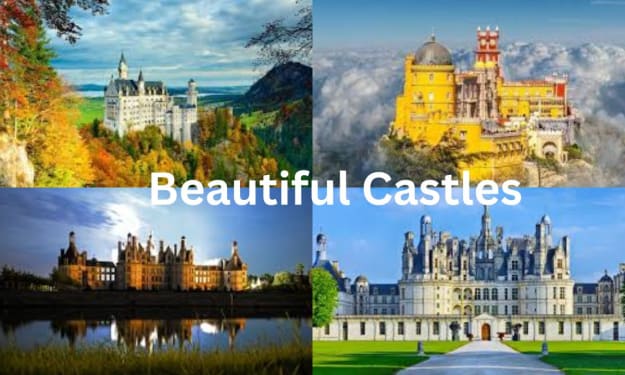
Castles have long captured our imagination with their grandeur and mystique. They stand as monuments to history, showcasing incredible architecture and stories of times gone by. But what truly makes a castle beautiful? Is it the intricate stonework, the breathtaking locations, or perhaps the rich histories they hold? In this article, we’ll explore some of the world’s most beautiful castles, each with its unique charm and allure.
By Zinnat ara Begum2 years ago in History
Kames Castle: A Glimpse into Scotland’s Enigmatic Past
Scotland is known for its captivating landscapes and ancient castles, each with a rich story woven through centuries of history. Among these historic sites is Kames Castle, a gem nestled on the Isle of Bute, which carries with it echoes of medieval grandeur, family legacy, and the inevitable touch of time. Dating back to the 14th century, Kames Castle is one of Scotland’s lesser-known but historically significant sites, originally built as a fortified tower house and later transformed into a residence that offers a charming reminder of Scotland’s past. Its story includes notable periods of expansion, ownership changes, and adaptive reuse, and it remains today a symbol of Bute’s medieval heritage. A Tower House in the 14th Century Kames Castle was initially constructed as a fortified tower house in the 1300s, a period marked by political upheaval and frequent conflicts across Scotland. Tower houses were common defensive structures during this time, designed to serve both as homes and as strongholds against attackers. Standing resilient through these turbulent times, Kames Castle was strategically located on Bute, an island that provided both a sense of isolation and an advantageous point of defense. The architecture of Kames Castle reflects the medieval focus on protection, with its thick stone walls and high vantage points. The Bannatyne Legacy The castle is deeply entwined with the Bannatyne family, who are believed to have owned it since the early days. The Bannatynes played a significant role in Bute’s history, both socially and politically. Their legacy, as guardians and landlords of the castle, left a lasting mark on the region, and their family history intertwined with that of Kames Castle as it evolved over the centuries. The Bannatynes' influence was notable across Bute, and their ownership of the castle speaks to their position as a prominent family on the island. Kames Castle, under their stewardship, was not just a place of residence but a center of influence on the Isle of Bute. Transformations in the 18th and 19th Centuries By the 18th and 19th centuries, the role of castles in Scotland was changing. The focus shifted from defensive structures to more comfortable, aesthetically pleasing residences. During this time, Kames Castle underwent significant transformations. The fortified tower was expanded, and the building gradually took on a more welcoming, homely appearance, blending the aesthetics of its medieval past with the comforts expected in a modern residence of that era. Additions likely included larger windows, elegant furnishings, and landscaped gardens, marking the influence of the Georgian and Victorian tastes of the time. As society moved away from the feudal conflicts that defined earlier centuries, Kames Castle’s purpose transformed, reflecting the priorities of the time. The modifications were emblematic of a Scotland stepping into a new chapter—one where castles were seen as symbols of heritage rather than mere strongholds. Kames Castle thus evolved from a bastion of defense to a stately residence that celebrated both comfort and prestige. A History of Changing Hands Over the years, Kames Castle changed hands multiple times, each owner contributing to its unique history. As new families took ownership, the castle’s purpose shifted to accommodate the needs of the time. This continual transfer of ownership is common in the history of many Scottish castles, and with each new generation, Kames Castle was adapted to align with contemporary trends. At various times, it served as a private residence, then later as farmland, and eventually as part of a holiday accommodation estate. Each of these roles has left a subtle yet noticeable imprint on Kames Castle’s identity. The Modern Era: From Farm to Holiday Retreat In modern times, Kames Castle’s grounds and estate have been utilized for various purposes. During the 20th century, parts of the estate were repurposed for farming, a testament to the practicality and resourcefulness of its owners. This adaptation helped sustain the estate financially and ensured the preservation of the castle grounds. Farming brought new life to the surrounding lands, with locals working on the estate and contributing to Bute’s economy. Today, Kames Castle offers a unique blend of history and modern utility. Parts of the estate have been repurposed for holiday accommodations, inviting visitors to experience a piece of Scotland’s medieval past while enjoying the comforts of modern living. Staying at Kames Castle offers a rare opportunity to connect with history firsthand—guests can wander the castle grounds, imagining life in the 14th century, or simply enjoy the tranquility that the Isle of Bute offers. Kames Castle: A Living Piece of Heritage What makes Kames Castle particularly captivating is its ability to reflect multiple eras within its walls and grounds. From the rugged medieval architecture of its original tower house to the more refined additions of the 18th and 19th centuries, Kames Castle stands as a living museum of Scottish history. Its transformation from a fortress to a comfortable residence, and finally to a modern retreat, highlights the resilience and adaptability of such historical structures. Today, the castle and its grounds are privately owned, with parts available for holiday accommodations, making it possible for travelers to immerse themselves in the allure of the past. Despite its age, Kames Castle has managed to stay relevant, offering both historical insight and modern relaxation. The allure of Kames Castle lies not just in its walls, but in its ability to transport visitors to different periods of Scottish history, each layer of its story as fascinating as the last. In an age where many historic buildings face decay or demolition, Kames Castle serves as a reminder of the importance of preserving our heritage. Its continued existence allows us to experience Scotland’s medieval history firsthand while respecting the modern roles that these spaces can play in society. The castle stands as a testament to the enduring charm of Bute’s heritage, an emblem of resilience, and an invitation to all who seek to glimpse into Scotland’s storied past.
By Deji Akomolafe2 years ago in History