Places
Old Leanach Cottage: A Surviving Relic of the Battle of Culloden
Standing on the windswept Culloden Battlefield in Scotland, Old Leanach Cottage is more than just a structure; it’s a poignant survivor of a turbulent past. Thought to be the only remaining building from the infamous Battle of Culloden in 1746, this humble cottage has borne witness to one of the bloodiest chapters in Scottish history. Today, it stands as a testament to resilience, a quiet guardian of memory that invites us to reflect on the events that unfolded around it centuries ago. The Battle of Culloden: A Defining Moment in Scottish History On April 16, 1746, the forces of the British government, led by the Duke of Cumberland, clashed with the Jacobite army under Prince Charles Edward Stuart—known to history as Bonnie Prince Charlie—on the marshy ground of Culloden Moor. The battle was swift and brutal, with the government forces decimating the Jacobite ranks in under an hour. This confrontation effectively ended the Jacobite Rising, a series of attempts by the House of Stuart to reclaim the British throne. The aftermath of Culloden was particularly harsh. The government’s response to the Jacobite defeat included punitive measures that suppressed Highland culture, from dismantling the clan system to banning the wearing of tartan. Culloden thus marks a pivotal point in Scottish history, and its battlefield remains hallowed ground. Among the sites associated with this history, Old Leanach Cottage stands out as a rare, tangible link to the people who lived through these dramatic times. The Origins of Old Leanach Cottage Although its precise age is uncertain, Old Leanach Cottage is believed to date back to the early 18th century, making it contemporary with the Battle of Culloden. Built in the traditional Scottish style, the cottage features thick stone walls, a thatched roof, and a single-story design, blending perfectly with the rugged Highland landscape. At the time of the battle, the cottage likely served as a simple dwelling for local farmers or laborers, typical of rural life in the Scottish Highlands. Historians and preservationists believe that Old Leanach Cottage may have been used as a field hospital after the battle, treating wounded soldiers from both sides. If true, this adds another layer to its historical significance, transforming it from a mere building to a silent witness of the human cost of war. As soldiers fought and died on the battlefield outside, the cottage might have sheltered those lucky—or unlucky—enough to survive the initial clash. Preservation Efforts and Restoration Over the centuries, Old Leanach Cottage fell into disrepair, weathered by the harsh Highland climate and the passage of time. However, its historical importance did not go unnoticed. In the 20th century, efforts began to preserve the cottage and the surrounding battlefield. The National Trust for Scotland (NTS) has since taken responsibility for its maintenance, ensuring that this rare piece of history remains intact. The restoration of the cottage was no small task. Efforts to retain its authenticity meant adhering to traditional building techniques and materials. The thatched roof, for example, was restored using locally sourced materials and skilled craftsmanship to replicate its original look. Inside, the cottage has been carefully preserved to give visitors a sense of what life might have been like in 18th-century Scotland. Old Leanach Cottage Today Today, Old Leanach Cottage is part of the Culloden Battlefield visitor experience, drawing tourists, historians, and those with a passion for Scottish heritage. The cottage’s weathered walls and rustic charm evoke a feeling of stepping back in time, allowing visitors to imagine the lives of those who once inhabited it. The landscape around the cottage, with its sweeping views of Culloden Moor, adds to the haunting sense of history. Culloden Battlefield, now preserved as a memorial site, includes markers and mass graves for the fallen. Old Leanach Cottage provides a unique dimension to this memorial. Unlike the battlefield, which commemorates the violence and loss, the cottage offers a glimpse into everyday life that continued amidst the turmoil. In its modest structure and timeless simplicity, it reminds us of the resilience of ordinary people, who lived through and survived extraordinary events. A Symbol of Resilience and Memory For many, Old Leanach Cottage symbolizes resilience in the face of adversity. It survived not only the chaos of the battle but also the societal upheavals that followed. Standing the test of time, the cottage reminds us of the enduring spirit of the Highland people and the deep scars left by the battle. It is a rare, tangible piece of the past that allows visitors to feel the connection between history and the present day. The cottage also serves as a powerful tool for education, helping visitors to understand the battle's impact on Highland culture and Scotland’s history. With the rise of Scottish tourism and renewed interest in Highland heritage, Old Leanach Cottage plays an important role in preserving and sharing Scotland’s past with the world. A Visit to Culloden and the Legacy of Old Leanach Cottage Visiting Culloden Battlefield and Old Leanach Cottage is a sobering experience, inviting contemplation of Scotland’s history, culture, and identity. The battlefield itself, marked with stones for each clan that fought and perished, is a somber reminder of the cost of war and the price of loyalty. And yet, Old Leanach Cottage offers a different perspective—one of survival, resilience, and the enduring spirit of those who call the Highlands home. In its humble walls, Old Leanach Cottage holds stories of the past. It stands as a quiet yet powerful reminder of the lives that were intertwined with one of Scotland’s most defining historical moments. For those who walk its grounds, it is an invitation to remember, to reflect, and to honor the heritage of a people shaped by Culloden’s legacy.
By Deji Akomolafe2 years ago in History
Why Should You Donate Food To Animal Shelter Homes?
Animal shelters offer sanctuary to homeless and hungry animals and play a critical role in rehabilitating and rescuing thousands of dogs in India. With more and more animals seeking shelters and welfare homes, there is an urgent need to donate and help the local animal shelters in Noida.
By Earthlings Trust2 years ago in History
No Time for Sorrow
Mara was a medical caretaker — a title she'd worn proudly once. Be that as it may, presently, she felt more like a scrounger. Supplies were waning, and she expected to return food and medication once again to the facility. She lacked the opportunity and energy to contemplate the companions she'd lost, or the patients she wasn't ready to save. There was no time for anguish. Consistently spent grieving was a second squandered, and in circumstances such as these, seconds could mean endurance. She rushed through the vacant roads, her heart beating as she dodged into the back streets, staying away from watches. Each corner brought another risk, each shadow could conceal somebody standing by to snare her. Mara's brain was well-honed, working out each move. She didn't permit herself to choose not to move on, to ponder the countenances she'd once known or the recollections she'd appreciated. They were covered now, locked away in some piece of her brain that she was unable to bear to get to. Not at present. As she approached the center, Mara saw a young man, no more seasoned than twelve, sitting by a heap of rubble. His face was smeared with soil, and his eyes were empty, empty such that somebody who had seen a lot of it could be. Mara felt an ache in her chest, a glimmer of sympathy she hadn't permitted herself to feel in weeks. She realized she ought to continue to move — her provisions were required back at the facility — however, something made her interruption. The kid didn't gaze upward as she drew nearer; he was gazing at his hands, which gripped a little, messy toy — a reminder of a day-to-day existence before the conflict. She hunched next to him, delicately putting a hand on his shoulder. "Are you alone?" she asked delicately. The kid gazed upward, and briefly, Mara saw the profundity of his anguish. His lips shuddered, however, he gestured. She didn't have to inquire as to whether he had family. She knew the response as of now; she had seen that look too often. The inclination to help him was overpowering. In any case, Mara's brain was at battle with her heart. She didn't have the assets to take on someone else, particularly not a youngster who might require security. The center was at that point packed, and every patient was barely surviving. She was unable to allow herself to be answerable for another life. Not when so many others were relying upon her. "I… I don't have any place to go," the kid said, his voice scarcely over a murmur. Mara gulped, the contention seething inside her. The consistent piece of her brain shouted that she was unable to take him with her. Yet, something more profound, something more human, overwhelmed that rationale. "Accompany me," she said at last, realizing that this choice could cost her and others. "I'll take you someplace safe." The kid didn't grin or say thanks to her; he essentially gestured, like he'd lost the capacity to expect much else. Together, they advanced back to the center. Mara kept a tight hang on his hand, her faculties increased. She examined the roads, alert for any indication of risk. The facility was concealed in the cellar of an old emergency clinic building. It was dull, cold, and squeezed, yet it was a shelter. Inside, volunteers moved discreetly, keeping an eye on the injured and the debilitated. The space was loaded up with the aroma of germ-killers and the low mumbles of patients. Mara directed the kid to a corner where an improvised bed lay. She gave him a little slice of bread and a taste of water, the main arrangements she could save. As she went to leave, the kid got her hand. "Will… will you return?" Mara faltered, feeling a peculiar feeling of obligation for him. "I'll be here," she guaranteed, however, she couldn't say whether it was a commitment she could keep. In this world, conviction was an extravagance she was unable to bear. The hours obscured into one another. Mara treated injuries, watched out for fevers, and held the hands of those whose time was getting ceaselessly. She lacked the opportunity and energy to think, process, or lament. The essence of the withering tormented her, however she constrained herself to keep on track. Every life was a sign of why she was unable to permit herself to feel. Sorrow would just dial her back, and she was unable to bear the cost of that. Days passed, and the kid remained close by, helping in little ways — getting water, consoling more youthful youngsters, and figuring out how to change basic dressings. Mara could see the versatility working in him, and in some little way, it gave her expectations. Perhaps, she thought, they could endure this together. In any case, she held her feelings under tight restraints, reluctant to allow herself to become connected. Each bond was a potential injury, another misfortune in the works. One night, as Mara was keeping an eye on a patient, she heard a stunning blast close by. The walls shook, dust tumbling from the roof. The patients and volunteers crouched together, dread obvious in their eyes. Mara's heartbeat, and without precedent for months, she felt genuine fear. She looked around, looking for the kid, yet he was no place to be seen. Alarm flooded inside her. Disregarding her security, she darted into the passage, calling out to him. She went through the hallways, her psyche dashing. She had sworn not to mind, not to give anybody access, but rather she understood, at that time, that she had fizzled. She minded profoundly, and the prospect of losing him tore at her heart. At last, she found him close to the entry, assisting a harmed man with limping to somewhere safe and secure. Alleviation washed over her, and she maneuvered him into her arms, holding him firmly. "Never run off that way," she murmured, her voice stifled with feeling. The kid saw her, shock in his eyes. "I thought… I figured you couldn't have cared less." Mara dealt with a powerless grin. "I lack opportunity and willpower to mind," she expressed, attempting to conceal reality, however, the untruth felt empty. The conflict had stripped her of numerous things, however, it hadn't taken her mankind. Not totally. She understood, with a combination of trouble and acknowledgment, that regardless of how enthusiastically she attempted, she was unable to protect herself from pain or love. It was essential for what her identity was, a section she couldn't just stop. The days became hazier, and the difficulties just increased. Yet, Mara and the kid confronted them together, tracking down comfort in one another's presence. They figured out how to track down little snapshots of satisfaction amid the bedlam, and in those minutes, Mara permitted herself to trust. She realized the street ahead would be hard, yet she additionally knew that, as long as they had one another, they would continue to push ahead. There was no time for melancholy, yet maybe, quite possibly, there was the ideal opportunity for trust.
By Hridoy Hasan2 years ago in History
Tales by moonlight
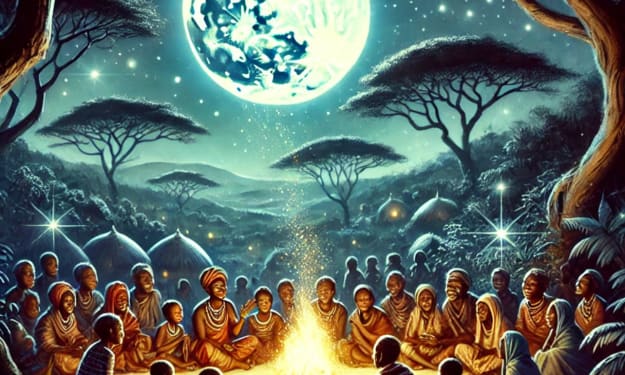
In the heart of ancient Benin, surrounded by dense forests and shimmering rivers, stood a kingdom known for its wealth, artistry, and strength. It was here, within the walls of the palace, that Queen Idia’s story began. Her birth was foretold by the kingdom’s diviners as the coming of a powerful and wise leader, destined to shape the future of the Benin Kingdom. Even as a child, Idia displayed an exceptional intelligence and calm determination, qualities that hinted at the remarkable path she would take.
By BlessingHailey2 years ago in History
Papua New Guinea . AI-Generated.
Papua New Guinea's Western Province is a region rich in cultural diversity and traditions, largely shaped by its environment and centuries-old tribal practices. Home to various ethnic groups, each with distinct customs, Western Province has preserved many of its traditional ways despite modern influences. Here’s a closer look at the culture, values, and traditions that define this fascinating part of Papua New Guinea. Cultural Diversity and Languages Western Province, one of Papua New Guinea’s largest provinces, is inhabited by more than 200,000 people, most of whom belong to distinct tribes and clans. With over 800 languages spoken across Papua New Guinea, Western Province reflects this diversity through its own unique dialects and languages. The languages spoken here are generally related to the cultures of the Torres Strait Islanders and neighboring regions. Language is not merely a tool for communication but also a means to pass down cultural values, myths, and legends that define the identity of each group. Traditional Beliefs and Spirituality The spiritual life of the people in Western Province is deeply rooted in animism, a belief system where natural elements like trees, rivers, and animals are believed to have spirits. Many communities practice rituals to honor these spirits, seeking blessings for health, successful hunting, and protection. This connection with the natural world influences many aspects of their daily life, creating a sense of respect for the environment and encouraging sustainable practices. Christian influences have also made their way into the region, blending with traditional beliefs to form unique cultural expressions. Social Structure and Clan Systems The social structure in Western Province revolves around clan and family ties. Villages are typically organized into extended family groups, where elders hold significant influence. Elders play a key role in maintaining social order, passing down traditions, and resolving disputes. Clans have intricate structures, each with specific responsibilities and roles, such as organizing ceremonies, initiating younger members into adulthood, and preserving historical knowledge. The clan structure fosters a sense of unity, where collective identity takes precedence over individualism. Rituals and Ceremonies Rituals and ceremonies hold a central place in the cultural life of Western Province. Ceremonies often mark life milestones such as birth, puberty, marriage, and death. Initiation ceremonies for young men and women are especially significant, as they represent a rite of passage into adulthood. During these ceremonies, the youth undergo trials or seclusion periods to learn about the responsibilities of adult life, as well as the clan’s secrets and myths. Initiates are given new status within the community and are seen as future leaders. Marriage customs also play a pivotal role in maintaining community bonds and social stability. Marriages are often arranged with consideration for alliances between clans. Bride price, a traditional exchange of goods or money, is commonly practiced as a way of formalizing marriages and creating connections between families. The bride price is seen as a gesture of respect and a means of ensuring harmony between families. Art and Body Decoration The people of Western Province express their cultural identity through art and body decoration. Traditional arts include weaving, carving, and painting, often using materials sourced from the natural environment like clay, leaves, and wood. Body decoration, particularly during ceremonies, involves face and body painting with vibrant colors and intricate designs. Men and women wear traditional attire, like grass skirts and headdresses adorned with feathers, shells, and other natural elements. The colors and patterns used in body art often carry specific meanings, signifying social status, clan affiliation, or spiritual beliefs. Dance and Music Dance and music are essential cultural expressions in Western Province, serving as a means to tell stories, honor ancestors, and celebrate communal life. Traditional songs often recount ancestral tales or the exploits of warriors. Instruments such as drums, flutes, and bamboo pipes are commonly used, with rhythms that vary by region and occasion. Dance performances are typically high-energy, involving elaborate costumes, singing, and coordinated movements. During festivals or gatherings, these performances bring communities together, strengthening cultural pride and cohesion. Hunting, Fishing, and Subsistence Farming The lifestyle of the Western Province is closely tied to subsistence practices like hunting, fishing, and farming. People rely on the environment for food, using traditional methods that are passed down through generations. Sago, a staple food made from the sago palm, is widely consumed, along with fish, wild game, and cultivated vegetables like sweet potatoes and yams. Traditional fishing techniques, such as using nets woven from natural fibers, showcase the community's ingenuity and deep knowledge of the land and waterways. Conclusion The culture and traditions of Western Province in Papua New Guinea are a testament to the resilience and creativity of its people. Though the region has been influenced by modern developments, the people maintain a strong connection to their heritage, blending old and new to preserve their way of life. Their traditions, social structures, and relationship with the environment reflect a rich cultural heritage that continues to thrive, despite the challenges of globalization. For the people of Western Province, cultural identity is not only a source of pride but a way of ensuring their traditions endure for future generations.
By Grace Guise2 years ago in History
Ahsan Manzil: The Pink Palace of Dhaka's Glorious Past
Ahsan Manzil, known as the "Pink Palace," is a famous and historic site in Dhaka, Bangladesh. It is situated by the Buriganga River in the city’s older area. This grand building not only showcases impressive architecture but also has a rich history, representing the wealth of the Nawab family who lived there in the 19th and early 20th centuries. Built in 1872 by Nawab Abdul Ghani, a key figure in Bengal’s elite society, Ahsan Manzil was the official home of the Nawabs, who were important leaders during British rule. Its design combines Indo-Saracenic and European styles, highlighting the Nawabs' affluence and the cultural exchanges happening in Bengal at that time.
By Md Mostafizur Rahman2 years ago in History
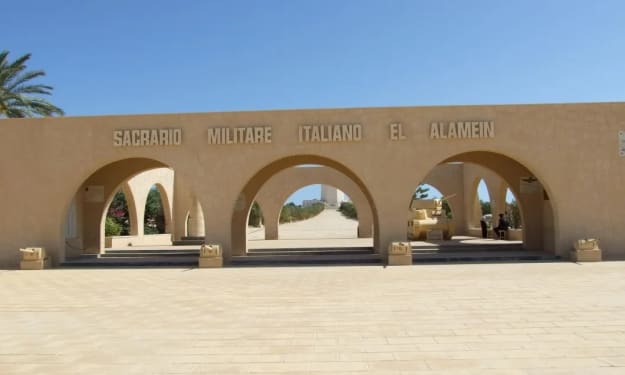
Exploring the El Alamein War Museum: A Historic Journey
Located on the northern coast of Egypt, the El Alamein War Museum stands as a solemn tribute to the history of World War II and the intense battle fought in this region. As one of the most significant military sites in Egypt, the museum offers a unique opportunity to explore the profound history of the North African Campaign. Through its exhibitions and the nearby El Alamein War Cemetery, the museum provides a deeply reflective and informative experience for visitors interested in understanding the pivotal role this region played in shaping the outcome of the war.
By Visit Egypt2 years ago in History
The Epic of the Trojan War
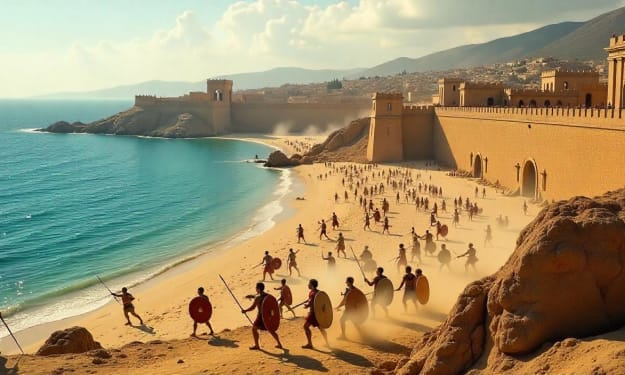
Over centuries, nations have risen and fallen, leaving their mark on history through stories and legends. Among these tales, the Trojan War stands out as a timeless narrative blending heroism, divine intervention, and human tragedy. The story, immortalized in Homer’s Iliad, captures the essence of ancient Greek beliefs and values, exploring the motives, battles, and heroes involved in a war that may be as much myth as reality. The primary source of knowledge about the Trojan War is Homer’s Iliad, written in the 8th century BCE, which recounts the final 52 days of a conflict lasting ten years. The term Iliad derives from Ilion, the ancient name for Troy. Although Homer’s account is our most detailed source, the tale of Troy was preserved through a rich oral tradition and other epic poems that preceded his work.
By A História2 years ago in History
Hirta Island: A Journey Through the Abandoned Heart of the St Kilda Archipelago
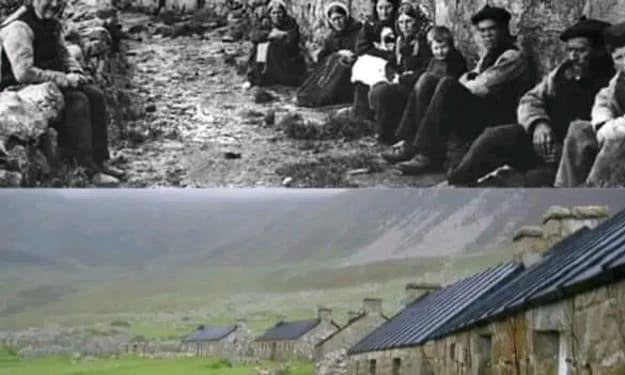
Hirta Island: A Journey Through the Abandoned Heart of the St Kilda Archipelago Hirta Island, the largest of the St Kilda archipelago in Scotland, is a place steeped in history and intrigue. Isolated and often shrouded in mist, it is a stark but beautiful landscape that tells the story of a unique community that managed to survive there for over 2,000 years. From its early settlements to the final departure of its last inhabitants, Hirta has endured the full sweep of human experience: hope, resilience, decline, and abandonment. Today, this hauntingly beautiful island stands as a UNESCO World Heritage Site, preserving both natural wonders and the legacy of the people who once called it home. Early Life and Survival on Hirta The story of Hirta’s inhabitants is one of sheer determination. Archaeological evidence suggests that people had been living on the island continuously for over two millennia. These early settlers relied on an ecosystem that provided little more than harsh winds, craggy cliffs, and cold ocean waters. To adapt, they developed an innovative way of life centered around crofting—a traditional Scottish practice of small-scale farming, which involved the cultivation of modest crops and the rearing of livestock. Given Hirta’s remoteness, the islanders had limited access to resources. The waters around the St Kilda archipelago are notoriously treacherous, making fishing a hazardous endeavor. Instead, the people of Hirta turned to the seabirds that nested in abundance on the island’s cliffs. Birds like puffins and fulmars, as well as their eggs, became essential components of the local diet. The islanders developed extraordinary climbing skills to collect eggs from steep cliff faces, a practice that not only sustained them but became an integral part of their culture. A New Era: The Cottages of Main Street By 1861, a significant shift occurred in Hirta's landscape. The residents built sixteen single-story cottages on what they referred to as “main street,” a row of homes designed to withstand the island’s unforgiving weather. These cottages, with chimneys and slate roofs, replaced the island’s older blackhouses, which had been severely damaged by a hurricane. For the first time, the residents had more robust shelter from the fierce Atlantic storms, marking a period of relative stability and comfort in their lives. These stone cottages were built with a new focus on durability and practicality. The main street cottages were designed to provide better ventilation and insulation than the older, smoke-filled blackhouses. Each home had a chimney, something unheard of in the traditional blackhouses, where the smoke simply gathered under the roof and filtered out slowly. The new homes, aligned in a neat row, symbolized a modernization of sorts for the islanders, providing a glimpse into what a more comfortable future might look like. The Decline of Hirta’s Population Though the cottages brought some comfort, the forces of change were already at work, pulling the islanders away from the life they had always known. By the late 19th and early 20th centuries, Hirta’s isolation was being eroded by increased contact with the outside world. Tourism, which began as a trickle, soon introduced diseases to the island. Illnesses that were virtually unknown on Hirta, brought by well-meaning tourists, began to take a toll on the population. World War I further contributed to the island’s struggles. The British Navy established a base on the island during the war, and while this brought a brief period of activity, it left the residents more vulnerable than ever to outside influences. As the world changed, the younger generation of Hirta began to feel the lure of life beyond the island. By the 1920s, people were leaving for opportunities on the Scottish mainland, spurred by the promise of education, employment, and healthcare, which the island could never provide. In 1851, Hirta’s population was around 112. By 1930, only 36 residents remained. With dwindling numbers, the isolated community could no longer sustain itself. The islanders petitioned to be evacuated, and on August 29, 1930, the final inhabitants left Hirta behind, closing a chapter on one of the oldest known settlements in the British Isles. Hirta Today: A World Heritage Site and Sanctuary for Wildlife Today, Hirta stands uninhabited yet far from forgotten. Its ruins, including the main street cottages and remains of the old blackhouses, offer a glimpse into a way of life that few can imagine. In 1986, Hirta and the rest of the St Kilda archipelago were designated as a UNESCO World Heritage Site, honored for both cultural and natural significance. It is a place that uniquely encapsulates both human history and untouched natural beauty. Although humans no longer live on Hirta, life continues in other forms. The island is now home to unique wildlife, particularly the Soay sheep, a primitive breed believed to have been brought to the island by early settlers thousands of years ago. These hardy sheep roam freely, having adapted to the rugged landscape over centuries. The cliffs of Hirta also provide vital nesting grounds for thousands of seabirds, including puffins, gannets, and fulmars, making it one of the most important bird colonies in the North Atlantic. Preserving the Memory of Hirta’s Inhabitants The story of Hirta is a reminder of the resilience of human beings in the face of adversity, as well as the fragility of small, isolated communities in a changing world. The people of Hirta lived, loved, and thrived on this rugged land for centuries, yet even their indomitable spirit was eventually overcome by the relentless march of time. Today, Hirta continues to inspire. Its empty cottages and abandoned blackhouses speak to a vanished way of life, echoing with the stories of those who once called it home. While the island may no longer be populated by humans, it remains alive with the memory of its people, offering visitors a hauntingly beautiful reminder of a world that once was. For those who journey to Hirta, it’s not just a trip to an island but a pilgrimage to a place where nature and history intertwine, forever preserving the legacy of the people of St Kilda.Start writing...
By Deji Akomolafe2 years ago in History
Papua New Guinea, Milne Bay province
Milne Bay Province, located on the eastern tip of Papua New Guinea, is a place of vibrant culture and rich traditions. This province comprises over 160 islands, and its people are known for their deep connection to the sea, a legacy of ancient seafarers and navigators who inhabited the region thousands of years ago. The culture of Milne Bay Province is as diverse as its many islands, with each group contributing unique traditions, dances, and artistic expressions that remain central to their identity. Cultural Diversity and Language Milne Bay is one of the most culturally diverse areas of Papua New Guinea, with its people speaking over 40 different languages. These languages are not only a form of communication but also hold deep cultural significance, with stories, chants, and histories preserved in their native tongues. The province’s linguistic diversity reflects its history as a melting pot of different tribes and clans, each with distinct customs and beliefs. Villages are often isolated, leading to unique variations in cultural practices even within the same island group. Traditional Values and Social Structure The society in Milne Bay is traditionally matrilineal, meaning descent and inheritance are passed down through the mother’s line. This system plays a significant role in shaping relationships, family roles, and social obligations. Clan loyalty and kinship are central to community life, with extended families and clans working together to support each other in times of need. Traditional values of respect, community, and cooperation continue to thrive, blending harmoniously with the challenges and changes brought by modern life. Traditional Art and Canoe Crafting One of the most celebrated aspects of Milne Bay culture is its intricate canoe craftsmanship, a skill passed down through generations. These canoes, known as “sailaus” or “lagatois,” are not only means of transport but are also symbols of cultural heritage and skill. Traditional canoes are often elaborately decorated with designs that reflect clan lineage, spiritual beliefs, and personal identity. The canoes play a vital role in the annual Kenu and Kundu Festival, a popular event that showcases these traditional watercraft in vibrant races and parades, celebrating the seafaring culture of Milne Bay. Beyond canoe building, traditional art forms are prevalent, including wood carvings, shell jewelry, and tapa cloth creations. Tapa cloth, made from tree bark, is decorated with natural dyes and often used in ceremonial attire. The designs on tapa cloths and carvings are deeply symbolic, depicting aspects of the natural world, ancestors, and spirits. Traditional Dances of Milne Bay Dance is a significant part of the cultural identity in Milne Bay. These dances, known locally as “singsings,” are performed on special occasions, including weddings, community gatherings, and festivals. The dances are accompanied by chants, drums, and other traditional instruments, creating a rhythmic and hypnotic atmosphere. Each island group has its unique style of singsing, reflecting their own customs and values. For example, in the Trobriand Islands, known as the “Islands of Love,” dances often revolve around themes of courtship and community bonding. These dances are performed with elaborate costumes made from natural materials like feathers, shells, and grasses. The movements are fluid and symbolic, telling stories of love, life, and the relationship with nature. In contrast, the Mailu people from the mainland and nearby islands have dances that incorporate stronger, warrior-like movements. These performances symbolize strength, bravery, and connection to ancestral spirits, often to honor ancestors or celebrate significant achievements. The dancers wear masks and body paint, adding a sense of mystique and reverence to the performance. The Kenu and Kundu Festival One of the most celebrated cultural events in Milne Bay is the Kenu and Kundu Festival. Held annually in Alotau, the province’s capital, this festival brings together communities from across the islands to showcase their heritage through canoe races, traditional dances, and cultural displays. The kundu drum, a traditional instrument carved from wood and decorated with intricate patterns, is a central part of the festival. Its deep, resonant sound accompanies the dances, connecting the performers and spectators to their cultural roots. The festival is not just a celebration but also a reminder of the resilience of Milne Bay’s people and their dedication to preserving their cultural identity. It has become a popular attraction for tourists, providing them with a unique insight into the diverse and dynamic traditions of the province. Conclusion The culture of Milne Bay Province is a vibrant tapestry woven from ancient traditions, diverse languages, and a profound connection to the sea. From the intricate art of canoe building to the hypnotic rhythms of traditional dances, each aspect of Milne Bay’s culture is a testament to the people’s rich heritage and enduring values. The province’s festivals and ceremonies continue to play an essential role in preserving these customs, passing them down to future generations and sharing them with the world. In Milne Bay, tradition is not just history; it is a living, breathing part of daily life, celebrated and cherished in every community.
By Grace Guise2 years ago in History
Shiprock: New Mexico’s Sacred Monolith
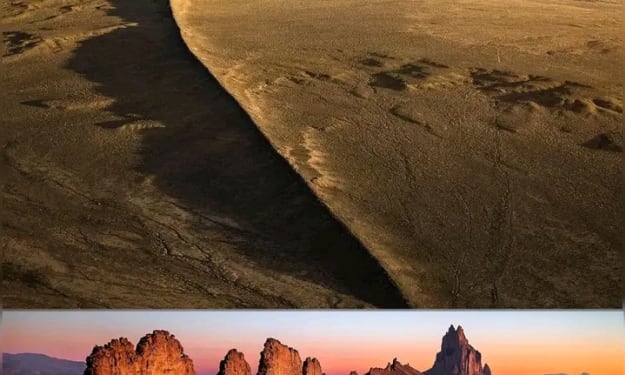
Rising sharply from the desert floor of northwestern New Mexico, Shiprock is an extraordinary natural formation with a rich blend of geological and cultural significance. Known as “Tsé Bitʼaʼí,” or “rock with wings,” by the Navajo Nation, this towering volcanic monolith stands as a revered landmark, deeply woven into the traditions and stories of the Navajo people. With its jagged silhouette and impressive height of 1,583 feet, Shiprock’s mystique and majesty captivate not only those who live near it but also visitors, geologists, and photographers from across the world. A Geological Marvel Millions of Years in the Making To truly appreciate Shiprock, one must delve into its volcanic origins. Formed approximately 27 million years ago during a period of volcanic activity, Shiprock is the hardened remains of a volcano’s core. What remains visible today was once the throat of a volcano. Over time, the surrounding rock and sediment eroded, leaving behind the tougher volcanic neck and the radiating dikes, which now stretch like ancient veins across the arid landscape. These dikes, which extend for miles, are striking walls of rock that reach out from the base of the central formation in straight lines, adding to Shiprock’s surreal and almost otherworldly appearance. For geologists, Shiprock is an invaluable record of Earth’s geological processes. As a “volcanic plug,” it’s an example of how resilient volcanic material can be compared to its softer surroundings. Through millions of years of exposure to wind and weather, Shiprock has remained, standing defiant against erosion. This natural endurance and stark isolation from other formations make it a unique subject for geological study. Shiprock not only represents the forces of fire and molten rock that shaped it, but it also stands as a testament to the power of erosion, which has sculpted the landscape around it to highlight its impressive stature. A Sacred Symbol for the Navajo Nation To the Navajo people, Shiprock is far more than a geological wonder; it is a sacred site, central to their cultural identity and heritage. According to Navajo tradition, Shiprock was once a great bird, carrying the Navajo people from the north to their present homeland. Known as the “rock with wings,” it is said that this bird settled down to rest and eventually turned to stone, creating the formation that exists today. This story is more than myth; it is a crucial part of the Navajo origin narrative, which holds a place of reverence in Navajo culture. For the Navajo, Shiprock is also associated with spiritual rituals and teachings. It’s not merely a location, but a living part of their tradition, embodying elements of their ancestral history and representing a tangible connection to the past. This spiritual significance means that Shiprock is treated with great respect, and traditional Navajo teachings discourage any attempts to climb it. Out of respect for its sacredness, climbing Shiprock is restricted, ensuring that it remains a protected symbol of Navajo heritage and allowing the space to retain its quiet dignity, undisturbed by modern intrusions. Inspiring Awe Across Cultures While climbing Shiprock is prohibited to honor its cultural significance, this restriction hasn’t diminished its allure. The formation attracts artists, photographers, and travelers drawn by its beauty and mystery. Its dramatic rise from the desert floor, coupled with its isolated location, creates an almost cinematic quality. At sunrise and sunset, Shiprock glows with a spectrum of colors that transform its already imposing silhouette into a beacon against the wide-open sky. This interplay of light, shadow, and open space has made Shiprock an iconic landmark, inspiring not only photographs but countless pieces of art, literature, and even cinematic scenes. For many, simply viewing Shiprock is enough to provoke a sense of wonder, a reminder of nature’s ability to create and shape awe-inspiring landscapes. For others, Shiprock’s combination of natural beauty and cultural reverence adds a depth of meaning, providing a moment for reflection and respect for the land and its long history. Balancing Preservation and Exploration The popularity of Shiprock among visitors and its cultural importance to the Navajo people highlight the challenge of balancing accessibility with preservation. While the natural landscape invites exploration, Shiprock’s status as a protected and sacred site demands respect and responsibility. The Navajo Nation, which oversees the area, has worked to ensure that Shiprock remains accessible to those who wish to appreciate it from afar while maintaining restrictions that prevent climbing and physical disruption. This approach reflects a broader movement towards sustainable tourism and cultural respect. By keeping Shiprock off-limits to climbers and those who might inadvertently harm the formation, the Navajo Nation preserves both the physical integrity of the formation and the sanctity of its spiritual heritage. Visitors are encouraged to view Shiprock from designated areas and to approach with respect for its dual identity as both a natural marvel and a cultural emblem. A Living Legacy in the Heart of the Desert For those who witness Shiprock firsthand, it’s clear that it represents more than just the forces of volcanic activity or centuries of erosion. It embodies the fusion of nature’s power and human reverence, a place where the landscape and culture meet. Shiprock’s enduring presence in Navajo stories and beliefs underscores its role as a touchstone for their identity, grounding them in their history and their relationship with the land. Ultimately, Shiprock stands as a bridge between worlds: the physical and the spiritual, the past and the present. It reminds us of the landscapes that shape our lives and the stories we create to understand them. For the Navajo people, it is a revered guardian and symbol of their heritage. For the rest of the world, it is a breathtaking monument to nature’s power and an invitation to appreciate the ways in which humanity and the land are intertwined. In both respects, Shiprock is a legacy that will endure, standing tall against time, erosion, and the changing currents of history, inviting us to listen, learn, and respect its towering silence.
By Deji Akomolafe2 years ago in History