Places
The Most Fascinating Unsolved Mysteries of History
Throughout history, countless events and phenomena have puzzled historians, scientists, and the general public. While many questions have been answered with time and research, some mysteries remain unsolved, offering glimpses into the unknown. These enigmas not only challenge our understanding of the past but also inspire endless theories and speculation. Here, we explore some of the most fascinating unsolved mysteries in history.
By Marius Lungu2 years ago in History
Forgotten Trades of Rural Spain
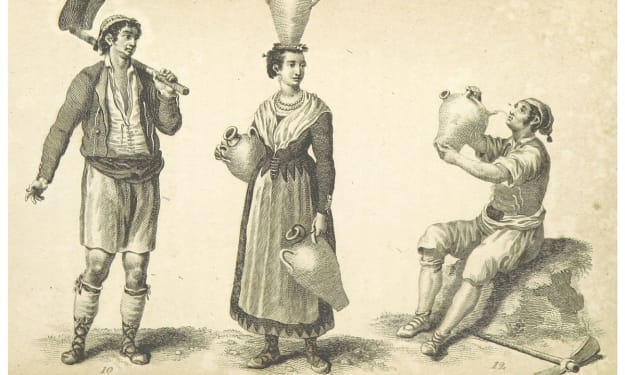
Driving through much of rural Spain today, it’s hard to picture what it looked like before the mid-20th century. The silent streets, main squares, local fountains and fields have little left to show for their industrious past beyond the lined worn faces of the old men assembled on stone benches watching the cars pass through their village. Tourists on their way to a hiking route may stop, take a photo or two, maybe pop into the local museum, but the scythes, threshing sledges and washing boards hanging on the wall are only a superficial reminder of its rich historic traditions.
By Kimberley Silverthorne2 years ago in History
The Most Beautiful Architecture in the World
Architecture is more than just the structure and design of buildings; it reflects culture, history, and artistry. The world is home to some of the most beautiful and awe-inspiring architectural wonders that blend creativity, engineering, and aesthetics. From ancient temples to modern skyscrapers, these architectural marvels continue to captivate visitors from around the globe. In this article, we’ll explore some of the most beautiful architecture in the world, each one a testament to human ingenuity and vision.
By Zinnat ara Begum2 years ago in History
23,000-Year-Old Footsteps Discovered in the US Are Rewriting Human History
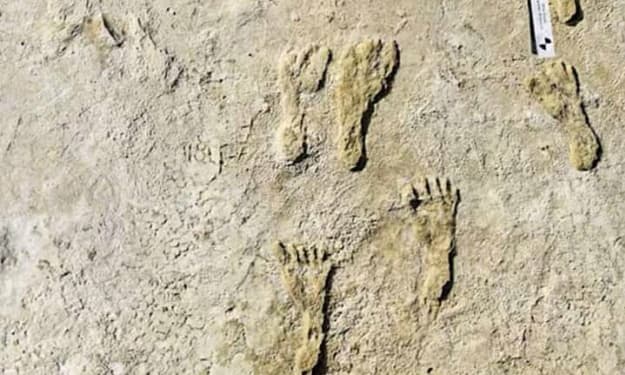
In an astonishing discovery that challenges long-standing narratives, archaeologists at White Sands National Park in New Mexico have unearthed the oldest known human footprints in the United States. These prints, estimated to be about 23,000 years old, provide compelling evidence that humans were present in North America approximately 10,000 years earlier than previously believed. This finding has ignited fresh debates among historians, archaeologists, and anthropologists, reshaping our understanding of human migration patterns and prehistoric life. White Sands: An Archaeological Treasure Trove White Sands National Park is already renowned for its breathtaking gypsum dunes and its status as a hub of archaeological significance. The park’s unique environment has preserved fossils and footprints from various species, providing a window into life during the Ice Age. The footprints, first spotted in a dry lakebed, belong to what is now referred to as Lake Otero. During the last Ice Age, this area was a lush oasis teeming with life, including mammoths, giant ground sloths, and now, as we know, early humans. Dating the Discovery Researchers used radiocarbon dating on seeds embedded in the sediment layers of the footprints to estimate their age. The results were groundbreaking: the footprints date back approximately 23,000 years, placing them in the Late Pleistocene era. Previously, it was widely believed that humans arrived in North America around 13,000 years ago, following the retreat of massive glaciers that covered much of the continent. This theory, known as the Clovis-first model, posited that the first Americans were part of the Clovis culture, named after distinctive stone tools found in Clovis, New Mexico. The discovery at White Sands, however, challenges this timeline and suggests humans were present during the height of the Ice Age. A Day in the Life of Ice Age Humans The footprints reveal much more than just a timeline; they provide a vivid glimpse into the lives of these ancient people. Analysis of the tracks suggests that they were made by adolescents and children, with some tracks showing evidence of playful activity. These insights humanize the prehistoric figures and hint at the daily lives of early Americans. Moreover, the tracks are interspersed with footprints of Ice Age megafauna such as mammoths and sloths, indicating that humans coexisted with these now-extinct creatures. This cohabitation would have posed both opportunities and challenges, as these large animals were both a source of food and potential threats. Implications for Human Migration The discovery has profound implications for our understanding of human migration into the Americas. It supports the idea that humans may have arrived via the Bering Land Bridge—a now-submerged landmass that once connected Asia and North America—much earlier than previously thought. However, it also raises new questions: Did these early settlers come via coastal routes, traveling along the Pacific coastline in boats or along icy shorelines? Or did they move inland, navigating through glacial corridors? The evidence from White Sands adds weight to the theory that humans were exploring and adapting to diverse environments much earlier than assumed. Rewriting History The discovery at White Sands is part of a growing body of evidence challenging the Clovis-first model. Other sites in North and South America have yielded artifacts and remains suggesting human presence prior to 13,000 years ago. However, these findings often faced skepticism due to concerns about dating accuracy or interpretation. The footprints at White Sands stand out because they are direct, tangible evidence of human activity, leaving little room for doubt about their significance. The meticulous research and advanced dating methods used to verify their age further strengthen their credibility. What’s Next for Archaeology? As with any groundbreaking discovery, the White Sands footprints have opened up as many questions as they have answered. Researchers are now focused on exploring other areas in and around White Sands to uncover additional evidence of early human activity. Furthermore, the discovery emphasizes the importance of preserving archaeological sites. Environmental factors such as erosion, climate change, and human activity threaten many potential discoveries, underscoring the urgency of safeguarding these precious windows into the past. A New Chapter in Human History The 23,000-year-old footprints at White Sands are more than just ancient impressions in the ground—they are a testament to human resilience and adaptability. They remind us that history is not a fixed narrative but a puzzle that we are continuously piecing together. For decades, the Clovis-first model shaped our understanding of early human migration, but discoveries like this are rewriting the script. Each new finding brings us closer to understanding where we come from, how we adapted to challenging environments, and how our ancestors carved out lives in the wilderness. As researchers delve deeper into the mystery of White Sands, the story of humanity continues to unfold, revealing not only our ancient past but also our enduring curiosity to uncover the truth about who we are and where we’ve been. The footprints may have been left behind thousands of years ago, but their discovery is a step forward in understanding the incredible journey of humanity.
By Deji Akomolafe2 years ago in History
The Most Beautiful Zoo in the World
Zoos have long been places of fascination, education, and conservation, but some go above and beyond to captivate visitors with breathtaking beauty. The most beautiful zoos in the world do more than house animals—they create immersive environments that reflect natural habitats, promote animal welfare, and offer unforgettable experiences. You're in the right place if you're looking for a zoo that blends stunning landscapes with diverse wildlife!
By Zinnat ara Begum2 years ago in History
The Most Beautiful River in the World
When it comes to natural wonders, rivers have a special place in the hearts of travellers and nature enthusiasts alike. Their mesmerizing beauty, the way they carve through landscapes, and the ecosystems they support make them an essential part of Earth's splendour. But which river holds the title of "The Most Beautiful River in the World"? While beauty is subjective, several rivers around the globe are often hailed for their stunning landscapes, rich biodiversity, and awe-inspiring surroundings.
By Zinnat ara Begum2 years ago in History
The Remarkable Legacy of the Phoenicians
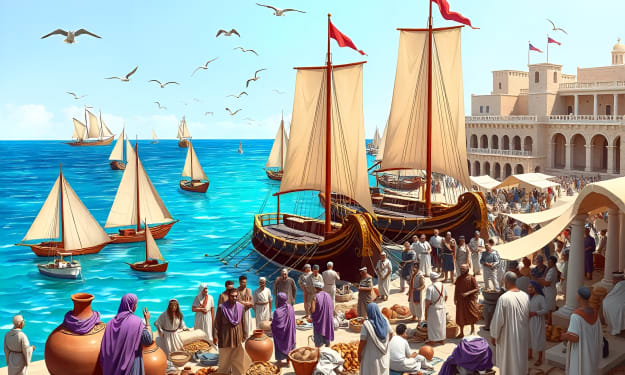
The Phoenicians are frequently hailed as one of the most accomplished maritime civilizations of antiquity. Renowned for their exceptional seafaring abilities, they not only excelled in navigation but also pioneered the principles of international commerce, founding colonies throughout the Mediterranean. This vast web of trade routes and settlements empowered the Phoenicians to exert influence over far-flung territories, creating a legacy that resonates to this day. In this article, we shall delve into the origins, culture, and notable contributions of this extraordinary civilization.
By A História2 years ago in History
The Pons Fabricius: Rome's Oldest Standing Bridge and a Testament to Ancient Engineering
In the heart of Rome, where centuries of history are woven into every corner, stands the Pons Fabricius, a bridge that has miraculously survived the ages in its original state. Built in 62 BC, this ancient structure holds the title of Rome’s oldest surviving bridge and serves as a remarkable testament to the ingenuity and durability of Roman engineering. With its two symmetrical arches spanning the Tiber River, the Pons Fabricius continues to connect the bustling city to Tiber Island, captivating visitors and locals alike with its understated elegance and rich history. The Origins of Pons Fabricius The Pons Fabricius was commissioned by Lucius Fabricius, a curator of Rome’s roads, in 62 BC. Originally designed to replace an earlier wooden bridge, this stone bridge was meant to provide a reliable and sturdy crossing over the Tiber River, connecting the left bank of the city to Tiber Island. As indicated by its Latin inscription, which still survives on the bridge’s parapet, Lucius Fabricius intended for his name to be associated with this enduring structure. The bridge’s purpose was both practical and symbolic. In ancient Rome, bridges were essential for the movement of people, goods, and ideas. Connecting the mainland with Tiber Island—a sacred place in Roman culture with its Temple of Asclepius, the god of healing—the Pons Fabricius served as a vital link, symbolizing Rome’s commitment to facilitating connections within the city and beyond. Engineering Marvels of Ancient Rome Roman engineers were renowned for their expertise in creating lasting structures, and the Pons Fabricius is an outstanding example of their mastery. The bridge is built from blocks of tuff and travertine, materials chosen for their strength and durability. To ensure stability against the river’s currents and seasonal floods, Roman architects crafted two large arches, each spanning approximately 24.5 meters, as well as a smaller central arch to allow the water to flow smoothly, reducing pressure on the main structure. The Romans understood the importance of flexibility in construction, which is why the arches of the Pons Fabricius are semi-circular, a design that disperses the weight evenly across the bridge, making it capable of withstanding heavy loads and shifts in the river's flow. The strategic use of volcanic stone and the arch design collectively give the bridge its remarkable resilience, allowing it to withstand nearly two thousand years of traffic, floods, and weathering. Inscriptions and Legends One of the unique aspects of the Pons Fabricius is its series of inscriptions, which give insight into the history and people who built it. Near the top of the bridge, an inscription in Latin reads, “L . FABRICIUS . C . F . CVR . VIAR . FACIVNDVM . COERAVIT,” translating to “Lucius Fabricius, son of Gaius, superintendent of roads, oversaw the making of this.” Another part of the inscription states that the bridge was inspected and confirmed to be safe by Fabricius. These inscriptions are not merely decorative; they serve as a reminder of the ancient practice of accountability in Roman infrastructure projects, as officials often placed their names on public works to affirm quality and durability. Legend also surrounds the Pons Fabricius. The bridge’s parapets feature four-faced herms, marble pillars depicting the head of the god Janus on four sides. Janus, the Roman god of beginnings and transitions, was also the deity of bridges and passageways, symbolizing the movement between realms. These herms add an air of mystery to the bridge and contribute to its nickname, the "Bridge of the Four Heads." According to legend, the heads represent two architects who were executed for tampering with the bridge, although this story lacks historical evidence. Regardless, the imagery of Janus gazing in four directions has added to the Pons Fabricius’s mystique and symbolic significance over time. The Pons Fabricius Through the Ages While many of Rome’s ancient structures have fallen or been rebuilt over the centuries, the Pons Fabricius stands proudly in its original form. This endurance is particularly remarkable given Rome’s turbulent history of floods, fires, and conflicts. The bridge has witnessed the rise and fall of the Roman Empire, the transformations of the Middle Ages, and the cultural renaissance of modern Rome, all while remaining a functioning piece of infrastructure. During the Middle Ages, the bridge was known as the “Ponte dei Quattro Capi” and was occasionally altered to adapt to changing needs, but it largely retained its original design. Unlike many other Roman bridges that required extensive repairs or complete reconstruction, the Pons Fabricius needed only minor maintenance throughout the centuries, proving the foresight of its builders. A Living Monument of Rome Today, the Pons Fabricius is more than just a bridge; it’s a symbol of Rome’s historical endurance. It remains a busy pedestrian bridge, allowing locals and tourists to cross between the mainland and Tiber Island while offering scenic views of the river and city. For anyone visiting Rome, the bridge provides a direct link to the ancient past—a chance to walk where Romans once did and experience a structure that has quietly persisted for millennia. Stepping onto the Pons Fabricius is an invitation to marvel at the strength of Roman engineering and reflect on the thousands of lives that have crossed its arches. It is a humbling reminder of the capabilities of ancient builders who, with limited technology, constructed something so enduring that it has outlasted empires and civilizations. Preserving the Pons Fabricius As with all ancient monuments, preserving the Pons Fabricius remains a priority. Conservation efforts are periodically undertaken to ensure the bridge can withstand modern wear without compromising its historical integrity. Given its long-standing resilience, the bridge symbolizes a harmonious balance between human innovation and respect for natural forces. Conclusion: A Timeless Connection Across the Ages The Pons Fabricius is not just Rome’s oldest surviving bridge; it is a lasting symbol of the ingenuity, craftsmanship, and vision of ancient Roman engineers. In a city known for its rich history and grand monuments, the Pons Fabricius may appear modest. Yet, its legacy is monumental. From its humble beginnings as a practical means of crossing the Tiber River, the bridge has become an enduring connection between the ancient and modern worlds.
By Deji Akomolafe2 years ago in History
Carn Brea Castle: A Glimpse into Cornwall’s Rich History and Heritage
Perched atop Carn Brea Hill, overlooking the sweeping landscapes of Cornwall, stands Carn Brea Castle, a remarkable 15th-century relic with a history as dramatic as the landscape it surveys. Originally constructed as a hunting lodge, this granite structure offers more than its sturdy walls; it presents visitors with a tangible link to Cornwall's past, evoking tales of ancient hunters, local legends, and neolithic settlers. Over the centuries, while a few modifications were made, Carn Brea Castle has retained much of its original charm, nestled next to what is believed to be Cornwall’s oldest neolithic settlement, making it a must-visit site for history enthusiasts and adventurers alike. The Origins of Carn Brea Castle Carn Brea Castle was initially built as a hunting lodge for the Bassett family, a prominent Cornish family whose wealth and influence were deeply rooted in the region’s tin mining and landholding activities. The castle's construction in the 15th century reflected the Bassett family's desire for a place from which they could enjoy the thrill of hunting in the expansive wilderness surrounding the hill. Despite its name, Carn Brea Castle was never intended as a fortress or defensive structure but as a retreat, offering a strategic vantage point for spotting game. Although the Bassett family moved on from the lodge, Carn Brea Castle remained intact, blending into its rugged surroundings. Its relatively remote location, coupled with its historical ties, allowed it to maintain a sense of timelessness, even as other structures in Cornwall evolved over the centuries. Today, its basic form remains unchanged, apart from a few additions made during the 19th century when Victorian architecture influenced the look of many historic sites in the UK. A Unique Architectural Wonder One of the most striking features of Carn Brea Castle is its unusual, almost whimsical architectural style. Constructed from the same gray granite as the hillside on which it stands, the castle appears to emerge naturally from the rocks, as if it is part of the landscape itself. Its irregular, asymmetric design adds to this impression, with towers and turrets that rise at unexpected angles. The design, though rough around the edges, is perfectly suited to withstand the hill’s harsh, windy conditions, which are a common feature of Cornwall’s moorland areas. The castle’s additions in the 19th century included larger windows and adjustments that gave the interior a more comfortable, hospitable feel. However, the ruggedness of its original design, with small, narrow windows and thick stone walls, still evokes the aesthetic of its medieval origins. In its current state, Carn Brea Castle serves as a reminder of medieval hunting lodges and offers an inviting glimpse into life during a period when Cornwall was a wilder, more untamed place. The Neolithic Connections of Carn Brea Carn Brea Hill is not only home to the 15th-century castle; it is also the site of an ancient neolithic settlement, thought to be the oldest discovered in Cornwall. Dating back to approximately 3700 BC, this settlement adds a prehistoric dimension to the area’s historical significance. Archaeological digs in the 1970s unearthed artifacts and remnants of dwellings, suggesting that Carn Brea was once a bustling neolithic community. Items such as stone tools, pottery, and evidence of farming practices revealed that the people who inhabited Carn Brea thousands of years ago led a settled, organized lifestyle. This settlement serves as a reminder that Carn Brea Hill has been a place of significance for millennia. The proximity of the castle to these ancient remains creates a powerful juxtaposition, connecting different epochs of human history in one location. For modern visitors, it’s possible to stand at Carn Brea Castle and imagine not only medieval hunters seeking game but also early human settlers, working and thriving on the same hill thousands of years prior. Legends and Lore of Carn Brea As with many ancient sites in Cornwall, Carn Brea Castle has its share of myths and local legends. One enduring story tells of the mythical figure of Bolster, a giant who is said to have terrorized the inhabitants of Carn Brea and the surrounding areas. According to legend, Bolster was ultimately defeated through the cunning of St. Agnes, who tricked him into spilling his blood until he weakened and perished. The tale adds a mythical dimension to Carn Brea Hill, linking the site to Cornwall’s rich tradition of folklore and legend. Local lore also suggests that the castle may have been a lookout point for smugglers during the 18th and 19th centuries, a time when Cornwall’s rugged coastline and isolated moorlands provided ample opportunity for illicit activities. The castle’s high vantage point would have allowed smugglers to see approaching authorities from miles away, providing them with a strategic advantage. Carn Brea Castle Today Today, Carn Brea Castle is a popular destination for both locals and tourists who want to experience Cornwall’s rich history firsthand. The castle has been converted into a restaurant, offering a unique dining experience within its ancient stone walls. Diners can enjoy Middle Eastern-inspired cuisine while surrounded by the castle’s authentic medieval interior, complete with thick walls, stone fireplaces, and candle-lit rooms that transport guests back in time. Beyond its role as a restaurant, Carn Brea Castle remains a popular spot for hiking and exploring the surrounding landscape. From the castle, visitors can take in breathtaking views of the surrounding countryside, including the town of Redruth and the rugged Cornish coast. On clear days, the views extend as far as St. Ives and St. Michael's Mount, offering a panoramic perspective of Cornwall’s natural beauty. Conclusion: A Journey Through Time Carn Brea Castle stands as more than just a historical building; it is a testament to the layers of history that have shaped Cornwall. From its origins as a hunting lodge to its proximity to a neolithic settlement, the castle provides a unique perspective on the people who have inhabited this region over thousands of years. Its architecture, myths, and modern role as a restaurant all contribute to its enduring charm, making it a must-see for anyone interested in the fascinating history and culture of Cornwall. As visitors stand on Carn Brea Hill, gazing at the timeless structure of Carn Brea Castle, they’re reminded of Cornwall’s incredible journey through history—a journey that spans from the neolithic era to the medieval period and continues to captivate people today.
By Deji Akomolafe2 years ago in History
A mysterious day
It was a day like no other—strange yet captivating. As I woke up, I noticed an unusual stillness outside my window. The sky, usually filled with vibrant hues, was covered with thick clouds that seemed to hang low, as if burdened with secrets. There was no sign of the usual morning hustle; the streets were eerily quiet, and the birds seemed to have abandoned their usual songs. As I stepped outside, a cool breeze brushed against my face, but it was not refreshing—it felt heavy, as if the air itself was holding something back. The trees, once lively with the rustle of leaves, now stood motionless. The world seemed to be holding its breath, waiting for something to unfold. I decided to take a walk, hoping to make sense of the strange atmosphere that had enveloped the town. As I walked along the deserted streets, I noticed something even more peculiar. The usual sounds of distant cars and footsteps were absent. It was as if time itself had slowed down, or perhaps had come to a halt. The town seemed suspended in a moment, caught between reality and something far beyond. Turning a corner, I came across an old, forgotten alley I had never noticed before. It was narrow and lined with crumbling brick walls that seemed to whisper with every gust of wind. As I ventured further into the alley, I felt a strange pull, an invisible force drawing me deeper into its shadowed embrace. Every step I took, the silence grew thicker, and the atmosphere more intense. At the end of the alley, I found an ancient door, half-hidden by ivy and moss. It looked like it hadn’t been opened in years. Yet, for some reason, it seemed oddly inviting. Without thinking, I reached for the door handle and turned it. The door creaked open, revealing a dimly lit room inside. The room was empty, save for a single object in the center—a small, intricately carved box. The air inside was thick with mystery, and I couldn’t help but feel a sense of both awe and unease. What was this box? Why was it here, in this forgotten corner of the world? The box seemed to radiate an energy that I couldn’t explain, as though it had been waiting for someone like me to find it. As I approached the box, I felt my heart race. Something told me that opening it would change everything. I hesitated for a moment, unsure whether I was ready for whatever lay inside. But the pull of curiosity was too strong, and I could not resist. I opened the box, and what I found inside took my breath away. There, nestled in velvet, was a small, glowing crystal. It pulsed with an eerie light, as if it were alive. The moment my fingers touched the crystal, a wave of energy surged through me. My surroundings blurred, and I felt as if I were being transported to another realm—a place where time and space no longer had meaning. The crystal’s light grew brighter, and in an instant, I was caught in a whirlwind of sensations. Colors and shapes swirled around me in a kaleidoscope of motion. I could hear distant voices, soft whispers, like fragments of forgotten dreams. The sensation lasted only a few seconds, but it was enough to leave me shaken. When I opened my eyes, I was back in the alley, the box gone, and the door now sealed shut. The strange day, which had begun with a sense of mystery, now seemed even more enigmatic. What had just happened? Had it all been a dream, or had I truly been transported to another world? The air felt different now, charged with a strange energy. I couldn’t explain it, but I knew that something had changed within me. As I walked back home, I couldn’t shake the feeling that the world around me, though the same, was now subtly different. The streets, the buildings, the people—everything seemed familiar yet distant. It was as if the veil between the ordinary and the extraordinary had been lifted, and I could see beyond the surface of things. But what did it all mean? I tried to tell myself that I had imagined it all, that the crystal was just a figment of my imagination, a product of the strange atmosphere that had enveloped the day. But deep down, I knew the truth. The mystery of that day, the pull of the box, the power of the crystal—it had all been real. And I couldn’t help but wonder: what other secrets were out there, waiting to be discovered? The mysterious day, which had begun with a simple sense of curiosity, now felt like the beginning of something much greater. The world felt vast, filled with untold mysteries, and I had just scratched the surface. I could never go back to the way things were before. The strange energy of that day would stay with me, forever altering the way I saw the world.
By Hridoy Hasan2 years ago in History