Places
The Mysterious and Advanced Indus Valley Civilization
The Indus Valley Civilization, often referred to as the Harappan Civilization, stands as one of the most captivating and contentious societies of the Bronze Age. Flourishing in what is now Pakistan approximately 5,000 years ago, this enigmatic culture has bequeathed a wealth of mysteries for contemporary archaeologists to explore. In this article, we shall embark on a journey through the latest findings that illuminate the splendor of this extraordinary civilization.
By A História2 years ago in History
Real Estate Development in Karachi: A Useful Guide
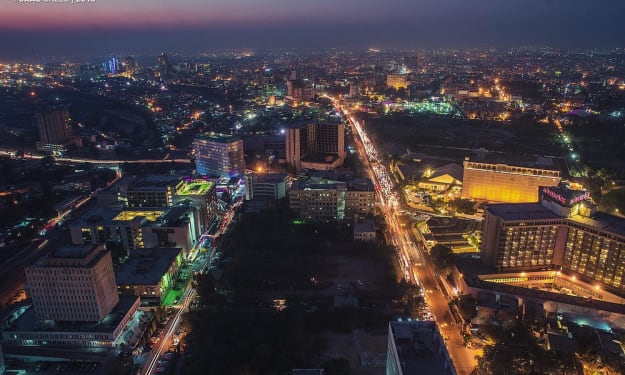
Did you know that Habib Bank Plaza was the tallest building in Pakistan for over four decades until it was surpassed by MCB Tower in 2005? For many years, the Ruet-e-Hilal committee used this iconic building for moon sightings.
By ALI BUILDERS AND DEVELOPERS2 years ago in History
Beneath Manchester: The Hidden History of the 17th-Century Cattle Bridge
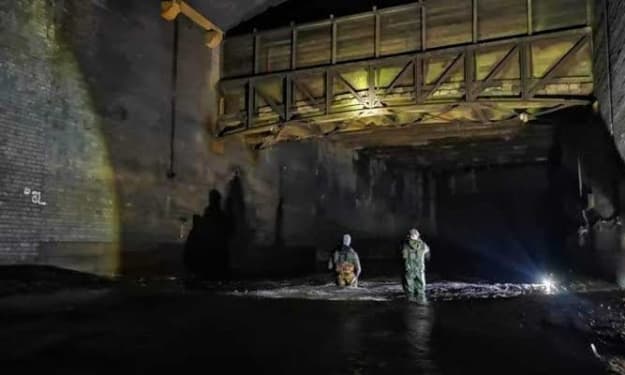
Manchester, a city renowned for its industrial heritage and vibrant culture, holds a lesser-known secret beneath its bustling streets: a perfectly preserved cattle bridge dating back to the 1650s. Tucked away from public view, this relic offers a fascinating glimpse into the city’s pre-industrial past. For those fortunate enough to have explored it, the bridge evokes a sense of wonder and reverence. Hidden beneath the modern metropolis, it stands as a tangible connection to a time when Manchester was a burgeoning market town, long before it became the industrial powerhouse of the 19th century. The Cattle Bridge: A Portal to the Past The 17th century was a transformative period in English history, marked by political upheaval, agricultural innovation, and the beginnings of urbanization. Manchester, still a small town at the time, played a modest yet vital role in the local economy, serving as a hub for trade and livestock markets. The cattle bridge, constructed around the 1650s, was a practical structure designed to facilitate the movement of livestock across the region. Its location under present-day Manchester places it near what would have been key trading routes and market spaces. Built with durable local stone, the bridge showcases the craftsmanship of the era. Its arch, though simple, is a testament to the engineering techniques of the time. Despite centuries of urban development above it, the bridge has remained remarkably intact, preserved by the layers of history that now surround it. Exploring the Bridge: A Hidden Treasure For those who have ventured beneath Manchester to see the cattle bridge, the experience is unforgettable. The structure is eerily silent, shielded from the noise and chaos of the modern city above. The air is cool and damp, and the dim lighting casts long shadows, emphasizing the bridge’s timelessness. The stones of the bridge bear the marks of time, their surfaces worn smooth by centuries of use and weathering. Some explorers report feeling a profound connection to the past, imagining the sounds of hooves clattering against the stone and the shouts of herders driving cattle to market. Over the years, the bridge has been revisited by urban explorers and historians, each uncovering new details about its construction and use. Their accounts paint a vivid picture of life in 17th-century Manchester, where livestock markets were the lifeblood of the local economy. Manchester in the 1650s: A City in Transition During the mid-17th century, Manchester was a far cry from the sprawling industrial city it would later become. Its population was modest, and its economy revolved around agriculture, weaving, and small-scale trade. Cattle played a crucial role in the region’s economy, providing meat, milk, leather, and other resources. Markets and fairs were central to community life, serving as places where goods, livestock, and news were exchanged. The cattle bridge would have been a vital part of this network, enabling the efficient movement of livestock and supporting the town’s growth. The bridge also reflects the broader historical context of the time. The English Civil War (1642–1651) had recently concluded, leaving its mark on communities across the country. Manchester, which had sided with the Parliamentarians, was beginning to rebuild and reshape its identity. Preservation and Rediscovery The cattle bridge remained largely forgotten as Manchester expanded and modernized. Over time, layers of construction and urban development obscured it from view, leaving it hidden beneath the city’s streets. Its rediscovery was a moment of triumph for historians and archaeologists, offering a rare glimpse into the city’s pre-industrial past. The bridge’s preservation is largely due to its underground location, which shielded it from the wear and tear of the modern world. Efforts to study and document the bridge have highlighted its historical significance. It serves as a reminder of Manchester’s agricultural roots, a heritage that is often overshadowed by its industrial achievements. The Bridge Today: A Symbol of Endurance While the cattle bridge remains inaccessible to most, its existence is a source of fascination and pride for those who know about it. It stands as a symbol of endurance, surviving centuries of change and development. The bridge’s story also underscores the importance of preserving historical sites, even those hidden beneath our feet. Urban landscapes are layered with history, and every brick and stone has a story to tell. For Manchester, the cattle bridge is a reminder of the city’s journey from a rural market town to a global industrial center. It connects the past to the present, offering a tangible link to the people and communities who shaped the city’s early history. Conclusion: A Hidden Gem Worth Celebrating The 17th-century cattle bridge beneath Manchester is more than just an archaeological curiosity—it is a testament to the city’s resilience and adaptability. From its humble origins as a rural crossing to its preservation as a hidden treasure, the bridge embodies the layers of history that make Manchester unique. For those who have explored its silent arches, the bridge is a source of inspiration and wonder. For the rest of us, it serves as a reminder that history is all around us, often hidden in plain sight. As Manchester continues to grow and evolve, the cattle bridge remains a steadfast witness to the city’s remarkable journey through time.
By Deji Akomolafe2 years ago in History
Footprints Through Time: The Story of Humanity’s Oldest Evidence in the Americas
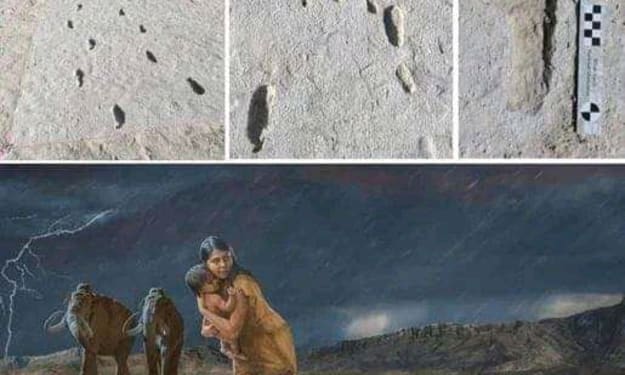
Around 22,000 to 23,000 years ago, during the peak of the Ice Age, a young woman embarked on a perilous journey across the shores of Lake Otero, an expansive ancient lake in what is now White Sands National Park in New Mexico. Accompanied at times by a toddler, she made two journeys separated by several hours, leaving behind a trail of footprints that would endure through millennia. These footprints, spanning 1.5 kilometers and comprising over 400 individual impressions, stand as the oldest known evidence of human presence in the Americas. This extraordinary discovery reshapes our understanding of when and how humans first arrived in the Americas, pushing back the timeline by several thousand years and offering an unprecedented glimpse into the lives of our Ice Age ancestors. --- Lake Otero: A Prehistoric Haven During the Ice Age, Lake Otero was a hub of life, its shores bustling with now-extinct megafauna. Mammoths, ground sloths, camels, dire wolves, and American lions roamed the area, creating a vibrant yet dangerous ecosystem. For the humans who ventured into this landscape, survival required not only physical endurance but also the ability to navigate a world dominated by formidable predators and harsh environmental conditions. The region’s semi-arid climate preserved the footprints remarkably well, embedding them in layers of sediment that hardened over time. These ancient impressions were first uncovered in 2021, revealing a story that had remained hidden for tens of thousands of years. --- The Journey: A Snapshot of Ice Age Life The footprints tell a vivid story. The larger prints, likely belonging to a young woman, reveal a steady gait, suggesting a determined journey. Interspersed among these are the smaller prints of a toddler, indicating that the child was carried at times and walked alongside at others. The journey was no casual stroll; it was a testament to endurance and resilience. The woman appears to have traveled quickly, possibly to evade predators or to reach a destination before nightfall. After some time, she retraced her steps, leaving behind another set of prints on the same path. What makes this journey even more remarkable is the context. This was a world where survival was a daily challenge. The presence of megafauna footprints near the human tracks suggests that the travelers shared the landscape with creatures that could pose both a threat and an opportunity, perhaps as sources of food or materials. --- Rewriting the History of Human Migration For decades, the prevailing theory about the peopling of the Americas suggested that humans first arrived around 13,000 years ago via the Bering Land Bridge, which connected Siberia to Alaska. These early inhabitants, known as the Clovis culture, were thought to represent the earliest wave of migration. However, the discovery at White Sands National Park challenges this narrative. The footprints, dated to over 22,000 years ago, indicate that humans were present in the Americas thousands of years earlier than previously believed. This finding aligns with other archaeological evidence, such as ancient tools and bones, that point to a much earlier human presence on the continent. The implications are profound. If humans were already in New Mexico 22,000 years ago, they must have arrived much earlier, potentially following a coastal migration route along the Pacific. This raises questions about their origins, migration patterns, and how they adapted to Ice Age environments. --- Humanity’s Connection to the Land Beyond its historical significance, the discovery at White Sands offers a poignant glimpse into the lives of Ice Age humans. It’s a reminder that these were not faceless ancestors but real individuals with emotions, challenges, and connections. The woman’s journey suggests a sense of urgency and purpose. Was she seeking food or shelter? Was she fleeing danger or trying to reunite with others? The presence of a toddler adds another layer of complexity, highlighting the universal human experience of caregiving and protecting the next generation. Such discoveries remind us of the continuity of human life. The struggles and triumphs of this ancient traveler resonate across time, connecting us to a shared past that extends far beyond the written record. --- Preserving and Interpreting the Footprints The footprints at White Sands are a fragile link to the past. Researchers are using cutting-edge techniques, such as 3D imaging and sediment analysis, to study and preserve these ancient impressions. These efforts ensure that future generations can learn from and appreciate this remarkable discovery. The site also underscores the importance of protecting archaeological resources. Climate change and human activity pose threats to such treasures, making it crucial to balance preservation with public education and access. --- A Window Into the Distant Past The footprints at White Sands National Park are more than just a scientific marvel—they are a testament to the resilience and adaptability of early humans. They remind us that even in the harshest conditions, humans have always found ways to survive and thrive. This discovery has transformed our understanding of the peopling of the Americas, offering tantalizing hints about migration, adaptation, and the lives of those who walked these lands long before recorded history. As researchers continue to study these footprints, they may uncover even more about the people who left them behind and the world they inhabited. In their silent permanence, these ancient tracks speak volumes, urging us to walk in the footsteps of our ancestors and imagine the challenges, hopes, and dreams that shaped their journey through time.
By Deji Akomolafe2 years ago in History
Ayatollah Ali Khamenei: Iran's Supreme Leader and His Resilient Legacy
Ayatollah Ali Khamenei has been Iran's Supreme Leader since 1989. He sits atop this country with huge influence in this country's government, military, and institutions of faith. Most of this nation's foreign and domestic policy undertaken is through the leadership adopted by Ayatollah Ali Khamenei. His longevity and influence have placed him at the heart of the country's politics.
By Abhay kumar chauhan2 years ago in History
Where Is Thorong La Pass?
Thorong La Pass is situated in the Annapurna region of Nepal and is amongst the world's highest and most difficult trekking passes. It has an impressive height of 5,416m (17,769 above sea level) is an integral part of the Annapurna Circuit and is among the most frequented trekking routes in Nepal. The pass itself provides breathtaking views of surrounding mountain ranges including the peaks of Annapurna, Dhaulagiri and Machapuchare.
By Chandra Bahadur Gurung2 years ago in History
The Most DISTURBING Experiment in History: The Stanford Prison Experiment
Imagine a group of college students volunteers for a two-week study that promises cash, camaraderie, and a chance to explore the depths of human psychology. Sounds like a breeze, right? Now fast forward six days, and the same “study” has devolved into something straight out of a dystopian nightmare—complete with yelling, psychological breakdowns, and power-hungry guards acting like they just inherited their own kingdom.
By Marveline Merab2 years ago in History
The Mystery of the Pingyan Giant Footprint: Fact or Fiction?
For centuries, people have been fascinated by stories of giants. Different cultures have shared legends about huge human-like beings, like the Titans in Greek myths or the Nephilim in the Bible. These stories have sparked our imagination and curiosity. But finding real evidence of giants has always been challenging and controversial. This changed for some people when a massive footprint was discovered in the remote village of Pingyan, China, sparking debates about whether it could be proof of giants.
By Muhammad Waseem 2 years ago in History