Places
Sentinel Island: A Mysterious Island in India
The Andaman and Nicobar Islands in the Indian Ocean are home to many natural wonders, but none are as mysterious and enigmatic as North Sentinel Island. Located in the Bay of Bengal, this remote island has fascinated explorers, anthropologists, and adventurers for decades. The island’s unspoiled beauty is matched only by its mystery, as it is home to the Sentinelese, one of the world’s last uncontacted tribes. This article dives deep into the history, culture, and controversies surrounding Sentinel Island, an unparalleled gem of India’s geography.
By mariam elghazaly2 years ago in History
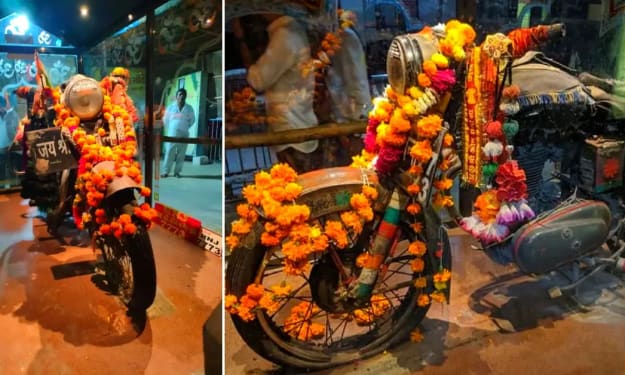
The Magical Bike of Om Banna
The Story of Om Banna: A Miracle of the Royal Enfield Thakur Om Singh, born on March 5, 1965, in Chotila village of Pali, was the son of Jog Singh Rathore. In Rajasthan, Rajputs are often called "Banna Sa," and that's why Om Singh was also affectionately known as Om Banna.
By raunak maharotha2 years ago in History
The Most Beautiful Natural Wonders of the World
Our planet is a treasure trove of breathtaking natural wonders, each with unique charm and allure. These sites, created by the forces of nature over millions of years, inspire awe and wonder with their beauty, size, and significance. Whether you are an avid traveller, a nature enthusiast, or someone simply looking to connect with Earth’s wonders, these are some of the most beautiful natural wonders of the globe the world has to offer.
By Zinnat ara Begum2 years ago in History
Choto Katra: A Glimpse into Mughal History in Bangladesh
Choto Katra (meaning "Small Caravanserai") is a significant architectural landmark in Dhaka, Bangladesh, offering a window into the Mughal era's rich history and urban planning. Constructed in the 17th century, this structure stands as a testament to the grandeur of Mughal architecture and its influence on the region's cultural and historical fabric.
By Md Mostafizur Rahman2 years ago in History
The Impact of Social Media on Mental Health
Social media has transformed the way we communicate, share experiences, and perceive the world around us. With billions of people worldwide using platforms like Instagram, Facebook, Twitter, and TikTok, social media has become a central part of daily life. It offers countless benefits, including staying connected with friends and family, finding support communities, and gaining access to information and entertainment. However, as social media continues to permeate every aspect of our lives, concerns about its impact on mental health have grown significantly. Is social media a tool that enriches our lives, or is it a double-edged sword that can harm our mental well-being?
By dokis sris2 years ago in History
The Grand Theater of Ephesus: A Journey Through Time
In the heart of ancient Ephesus, Turkey, stands a breathtaking monument that bridges centuries of history and human ingenuity—the Grand Theater of Ephesus. This architectural marvel, originally constructed during the Hellenistic period in the 3rd century BC, underwent monumental expansion under Roman rule, evolving into a structure capable of hosting up to 25,000 spectators. Today, it stands as one of the most iconic archaeological sites in the world, a testament to the cultural and architectural brilliance of ancient civilizations. A Glimpse Into the Past The origins of the Grand Theater date back to the Hellenistic era when Ephesus was a thriving city in the ancient world. Constructed during the reign of Lysimachus, one of Alexander the Great's generals, the theater was a modest yet functional structure used primarily for dramatic performances and civic events. Built into the slopes of Mount Pion, the natural landscape offered excellent acoustics, even in its earliest form. As the Roman Empire expanded its influence, Ephesus became a prominent provincial capital, leading to extensive urban development. Recognizing the significance of the theater as both a cultural and political venue, the Romans embarked on a grand renovation project in the 1st century AD. Under the emperors Domitian and Trajan, the theater was transformed into a colossal amphitheater, showcasing the architectural and engineering brilliance of Roman civilization. --- The Roman Expansion The Roman expansion of the Grand Theater was nothing short of extraordinary. It involved the construction of a three-tiered cavea (seating area) to accommodate tens of thousands of spectators. The rows of seats were meticulously arranged in a semicircular fashion, ensuring that even the spectators in the highest tiers could enjoy clear views of the stage and excellent acoustics. The stage building, or scaenae frons, was another masterpiece of Roman design. Adorned with ornate columns, statues, and reliefs, it served as both a visual and functional element, creating an imposing backdrop for performances. The Romans also introduced underground passages and trapdoors to enhance the theatrical experience with elaborate stage effects. The theater was not limited to dramatic performances; it was also a venue for gladiatorial contests, public assemblies, and festivals. Its ability to host diverse events made it a cornerstone of civic life in Ephesus, reflecting the cultural vibrancy of the Roman Empire. --- Decline and Rediscovery Like many ancient cities, Ephesus faced decline after the fall of the Roman Empire. The silting of the harbor, once a lifeline for trade and prosperity, led to the city’s gradual abandonment. Over the centuries, the Grand Theater was buried under layers of soil and debris, succumbing to the ravages of time and nature. It wasn’t until the late 19th century that the theater’s story began to unfold again. Archaeological excavations spearheaded by European explorers unveiled the theater’s hidden grandeur. These efforts continued throughout the 20th century, with meticulous restorations bringing the ancient structure back to life. The 'before' image of the Grand Theater captures the site prior to its excavation—a dilapidated mound of earth that gave little hint of its former magnificence. The 'after' image, however, reveals an awe-inspiring monument that continues to captivate millions of visitors annually. --- Modern-Day Significance Today, the Grand Theater of Ephesus stands as a prominent landmark and a key attraction for tourists from around the globe. Its impressive scale and intricate design provide a window into the past, allowing visitors to imagine the bustling crowds, the dramatic performances, and the vibrant cultural exchanges that once took place within its walls. The theater also plays host to modern events, such as concerts and cultural festivals, blending the ancient with the contemporary. The opportunity to experience a live performance in the same space that resonated with the voices of actors and orators over two millennia ago is truly magical. --- Architectural Marvels and Engineering Feats One of the most remarkable aspects of the Grand Theater is its acoustics. Even without modern amplification, the design allows sound to travel clearly from the stage to the farthest seats, demonstrating the advanced understanding of acoustics possessed by ancient architects. The theater’s sheer scale is equally impressive. Its 25,000-seat capacity is a testament to the ambition and ingenuity of its builders, surpassing many modern venues in size. The tiered seating not only maximized capacity but also provided structural stability, distributing the weight of the massive stone construction evenly across the hillside. --- Preservation Efforts Preserving a site as iconic and ancient as the Grand Theater is no small task. Ongoing conservation efforts aim to protect the structure from natural erosion and the impact of tourism. These efforts involve meticulous cleaning, stabilization of deteriorating sections, and careful restoration to maintain the theater’s authenticity. The challenge lies in striking a balance between allowing public access and ensuring the site’s longevity. Guided tours, regulated visitor numbers, and educational programs are part of this effort, ensuring that the Grand Theater remains a source of inspiration for generations to come. --- A Legacy That Endures The Grand Theater of Ephesus is more than just an architectural wonder; it is a symbol of human creativity, resilience, and the enduring power of culture. Its transformation from a modest Hellenistic venue to a grand Roman amphitheater reflects the evolution of society and technology over centuries. Standing before the theater today, one cannot help but marvel at the achievements of ancient civilizations and the stories etched into every stone. Whether you are a history enthusiast, a lover of architecture, or simply a curious traveler, the Grand Theater of Ephesus offers an unforgettable journey through time. As you explore this magnificent site, take a moment to imagine the roar of the crowd, the drama of the performances, and the vibrant life that once filled this extraordinary space. The Grand Theater of Ephesus is not just a relic of the past; it is a living connection to the spirit of humanity.
By Deji Akomolafe2 years ago in History
The Most Overlooked Countries in the World
Regarding travel and tourism, certain countries often receive the spotlight, while others remain hidden gems, overlooked by mainstream travel guides. Sometimes, places that are less frequently visited or publicised get labelled unfairly, despite having unique landscapes, cultures, and experiences. In this article, we explore some of the most underrated countries in the world—places that may not be on the typical tourist route but possess beauty and charm worth discovering.
By Zinnat ara Begum2 years ago in History
Unlock the World on a Budget: Your Guide to Affordable Travel Adventures
Budget Travel Hacks: How to travel the world without breaking the bank Hello friends, Find out how to save money on flights, accommodations, food, and activities, using all the budget-friendly travel secrets, tips, and tricks to make your dream vacation a reality. The call of the unknown whispers in your ear. Sun-kissed beaches, ancient ruins, and bustling cityscapes all dance before your eyes. But a nagging voice asks, "Can I afford this travel dream?" Ah, let me assure you that the answer is a resounding yes! With a dash of resourcefulness and the following treasure trove of budget hacks, you can transform the world into your playground without breaking the bank. That's it. This guide provides you with the knowledge and tools to become a budget travel ninja. We'll move forward with strategies on cheap flights, affordable accommodations, and yummy yet affordable food, and find free and entertaining things to do. We'll also review budget-friendly destinations and answer commonly asked questions to make you more confident as you navigate the world and also make you save money in your wallet. Beating the Airlines:
By Kalpesh Vasava2 years ago in History
The Historical story about Holy Makkah (mecca)
The Historical story about Holy Makkah (mecca) The historical backdrop of Makkah (Mecca) is rich and profoundly interlaced with strict and social importance. It is quite possibly of the holiest city in Islam and holds a phenomenal spot in the hearts of Muslims around the world. The following is an itemized verifiable record of Makkah, spreading over from its old starting points to its importance in Islamic history.
By Md. Didarul Alam2 years ago in History