Places
Little Moreton Hall: The Charmingly Wonky Wonder of England
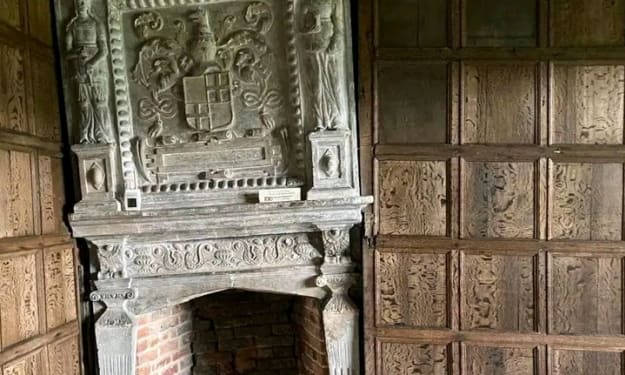
Little Moreton Hall, nestled in the picturesque Cheshire countryside, is a masterpiece of Tudor architecture and one of England's most eccentric historic homes. Built between 1504 and 1610, it is famous not only for its remarkable craftsmanship but also for its delightful imperfections. While its quirky, crooked appearance has charmed visitors for centuries, one particular feature continues to intrigue: its seemingly wonky fireplace. Despite appearances, the fireplace is perfectly straight—it's the rest of the room that’s out of alignment. This architectural oddity, coupled with the hall’s whimsical charm, makes Little Moreton Hall a fascinating subject for history enthusiasts and travelers alike. --- A Snapshot of Tudor Splendor Little Moreton Hall is a timber-framed building that seems to defy the laws of physics. Its walls bulge, its floors slope, and its windows lean at precarious angles. This is largely due to the construction techniques of the time, as well as centuries of natural settling and movement. Despite its apparent fragility, the hall has endured for more than 500 years, standing as a testament to the ingenuity and artistry of the Tudor period. The building’s exterior is a striking checkerboard of black timber beams and white wattle-and-daub infill, a style typical of the Tudor era. Its gabled roofs, overhanging upper stories, and intricate carvings speak of a bygone age of craftsmanship, when even functional structures were designed to impress. --- The Fireplace That Defies Perception One of the most famous quirks of Little Moreton Hall is the “wonky” fireplace in the Great Hall. Visitors often remark on how crooked it looks, but this is an optical illusion. The fireplace itself is perfectly straight—it's the rest of the room that’s tilted and warped. The distortion is a result of centuries of subsidence and the uneven settling of the building’s foundations. Over time, the timber frame shifted under its own weight, causing walls to bow and floors to sag. Yet, despite these movements, the fireplace remains a steadfast anchor in the room, a rare constant in an otherwise topsy-turvy world. This feature highlights the incredible durability of Tudor craftsmanship. The fireplace was built to withstand heat, time, and heavy use, and it has done so admirably. Its “wonkiness” is less a flaw and more a badge of honor, a reminder of the hall’s long history and the stories it has witnessed. --- A Hall Full of Quirks The fireplace is just one of many peculiar features in Little Moreton Hall. The building’s entire structure appears to teeter on the edge of collapse, yet it continues to stand firm. Walking through its rooms feels like stepping into a fairy tale—floors creak and tilt underfoot, doorways lean at odd angles, and walls seem to ripple like waves. One particularly famous oddity is the Long Gallery, located on the top floor. Spanning the entire length of the building, this gallery was used for exercise and entertainment during inclement weather. Its floor dips noticeably in the middle, creating a “bouncy” effect as you walk. This unusual feature, caused by the timber beams sagging under the weight of the structure, only adds to the hall’s charm. --- Life in Little Moreton Hall The hall was originally built as a statement of wealth and status by the Moreton family, a prosperous local dynasty. Its luxurious design and elaborate decorations reflect the family’s ambition and desire to impress their peers. The Great Hall, with its high ceilings and impressive fireplace, served as the heart of the home, hosting feasts, celebrations, and daily activities. Over time, the family’s fortunes waned, and Little Moreton Hall became a relic of a bygone era. It was eventually preserved by the National Trust, which has lovingly maintained it as a historical site. Today, visitors can explore the hall and experience the unique charm of its crooked rooms and timeless beauty. --- The Magic of Imperfection Little Moreton Hall’s wonky fireplace and distorted architecture are more than just curiosities—they are a celebration of imperfection. In an age where symmetry and precision are often prized above all else, the hall stands as a reminder that beauty can be found in the unconventional. Its quirky, uneven lines and weathered beams tell a story of resilience, adaptation, and the passage of time. The hall’s imperfections also make it more relatable. Despite its grandeur, it feels approachable and human, as though it has a personality all its own. Visitors often find themselves enchanted not just by its history, but by its character—a rare quality in a world increasingly dominated by uniformity. --- Preserving the Past for the Future Thanks to the National Trust, Little Moreton Hall has been carefully preserved for future generations to enjoy. Its wonky fireplace, sloping floors, and charmingly crooked walls continue to captivate visitors, offering a glimpse into the lives of the Tudors and the architectural challenges of their time. As you wander through its halls, it’s easy to imagine the laughter of children, the clinking of goblets during feasts, and the crackling of fires in the Great Hall. Little Moreton Hall is more than just a building—it’s a living piece of history, a place where the past feels remarkably present. --- Conclusion Little Moreton Hall is a true gem of English heritage, a building that embraces its quirks and imperfections with pride. Its “wonky” fireplace is a symbol of its resilience, a testament to the craftsmanship and ingenuity of the Tudor era. For anyone who appreciates history, architecture, or simply the charm of the unconventional, Little Moreton Hall is a must-visit destination. It reminds us that beauty isn’t always about perfection—it’s about character, and this remarkable building has character in abundance.
By Deji Akomolafe2 years ago in History
The Secret of Umm Al-Huwaitat: Egypt’s Abandoned Village Cloaked in Mystery
Nestled in the heart of Egypt’s Eastern Desert lies the enigmatic village of Umm Al-Huwaitat, an abandoned settlement that continues to captivate historians, explorers, and conspiracy theorists alike. With its crumbling houses, decaying infrastructure, and eerie silence, this ghost village holds a narrative that has remained untold for decades. Why did its inhabitants flee? What secrets does the barren land conceal? As we delve into the layers of history, legend, and intrigue, the secrets of Umm Al-Huwaitat begin to emerge.
By mariam elghazaly2 years ago in History
The Most Beautiful Place in Nepal
Nepal is a country blessed with some of the most stunning landscapes in the world, ranging from the towering peaks of the Himalayas to lush valleys, serene lakes, and rich cultural heritage. Here are some of the most beautiful places in Nepal that are often considered the highlights of the country:
By Zinnat ara Begum2 years ago in History
The 19 Statues of Honor: A Deeper Look at the Korean War Memorial
The Korean War Veterans Commemoration in Washington, D.C., which was devoted in 1995, commemorates the penances and endeavors of a differing bunch of American, Korean and other Joined together Countries powers who battled for three a long time in what numerous in the U.S. allude to as the "Overlooked War.”
By Shams Says2 years ago in History
A Tower Built in Time: The Record-Breaking Speed of the Empire State
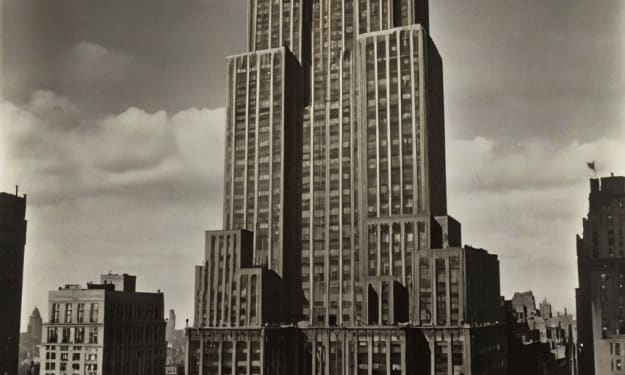
On a brief list of the world’s most celebrated structures, the Realm State Building draws a few 2.5 million guests a year and remains a magnum opus of the Craftsmanship Deco-type design that thrived in Unused York City in the 1920s.
By Shams Says2 years ago in History
Life in the Trenches: The Invention of Blood Banks During World War I
Blood from blood banks is routinely utilized for life-saving transfusions and strategies. And, like numerous therapeutic propels, the innovation for blood transfusions and managing an account was created amid wartime—when each diminutive checks and lives are on the line.
By Shams Says2 years ago in History
Ellis Island’s Trailblazers: The First and Final Immigrants
For much of its early history, a three-acre spit of sand arranged in Unused York Harbor fair south of Manhattan was known for small more than its copious clam beds. Named Small Shellfish Island, it would in the long run be extended to nine times its unique estimate, take on a modern title after its 18th century proprietor Samuel Ellis—and gotten to be the nation’s to begin with and biggest government movement preparing station.
By Shams Says2 years ago in History
Broken Waters: The Untold Story of the St. Francis Dam Tragedy
Without further ado some time recently midnight on Walk 12, 1928, the ground north of Los Angeles begun to roll. Houses trembled. Windows shaken. Mixed wakeful by a yapping puppy, Chester Smith listened trees and utility posts snapping in the separate. In spite of the fact that a minor tremor had shaken California’s San Francisquito Canyon two days prior, the farmer knew this was no earthquake—but a man-made catastrophe. Having survived a surge in the past, Smith hustled unshod to higher ground whereas yelling to his family, “The dam is broke!”
By Shams Says2 years ago in History
Wampum: The Beads That Built History
For thousands of a long time, Innate individuals of America’s northeast locale have made little, round and hollow globules called wampum from purple and white whelk and clam shells. Frequently woven into delightfully designed belts, strings, neckbands or other embellishments, utilizing plant fiber or creature ligament, wampum served a huge number of purposes. It might serve as a visual memory help, carrying stories that passed on community history and values. It seem codify customs, seal arrangements or pass on status. It may encourage the handle of grieving, be given as blessings by marriage suitors, or as prizes to champs in recreations or wear. It was some of the time utilized between tribal countries for exchange, tribute or indeed deliver.
By Shams Says2 years ago in History
The Enigma of D.B. Cooper: Unraveling America's Most Infamous Skyjacker
It's the as it were unsolved seizing case in the history of commercial flying. On the evening of November 24, 1971—Thanksgiving Eve—a man on board a flight from Portland to Seattle debilitated to explode a bomb if he didn't get a strong deliver. Once he got the cash, the ruffian discharged all travelers and requested the group to fly to Mexico. En course, with cash in hand, the man parachuted from the aircraft.
By Shams Says2 years ago in History