Places
Unusual Traditions from Around the World
The world is full of fascinating cultures and unique customs that reflect the diversity of human traditions. Some of these practices might seem unusual or surprising to outsiders, but they hold deep meaning for the communities that celebrate them. Here are some of the most intriguing traditions from around the globe that showcase humanity’s creativity and cultural richness.
By Plamena Peneva2 years ago in History
Exploring Delhi: A Comprehensive Guide to the Top Travel and Tour Destinations
Delhi Tour Delhi, India's bustling capital, is a city where ancient history meets modern vibrancy. As a melting pot of culture, tradition, and progress, it offers an array of attractions for every kind of traveler. From grand Mughal monuments to lively markets and serene gardens, Delhi’s landmarks provide a rich tapestry of experiences. This guide delves into the top travel and tour destinations in Delhi, each offering a unique glimpse into the city's multifaceted identity.
By Namaste India2 years ago in History
The most heroic way. AI-Generated.
I used to be really curious, always wondering about everything. Usually, after searching for a while, I would find answers to my questions. But there was one thing I could never figure out: what’s the worst way to die? I figured the easiest way to die is probably in your sleep, but what’s the worst? What’s the most horrifying death a person could imagine? I once read about a man who died from sleep deprivation in Italy. It must have been terrifying, but is that the worst way? I asked everyone, from my friends to my parents, and every single person gave me a different answer.
By ADIR SEGAL2 years ago in History
Augustus and the Transformation of Rome: From Bricks to Marble
of bricks and left it a city of marble,” he was not merely indulging in poetic flourish. As Rome’s first emperor, Augustus (born Gaius Octavius) ushered in an era of unprecedented architectural and cultural transformation that solidified his legacy as one of history’s most visionary leaders. While his rise to power was marked by violence and political intrigue, his reign brought stability, prosperity, and a stunning physical transformation of the Eternal City. Among his many accomplishments, Augustus’s contributions to Roman architecture stand as one of his most enduring legacies. His building projects did more than beautify Rome—they symbolized the empire's power and stability while crafting a new identity for the burgeoning Roman Empire. The Visionary Emperor Augustus rose to power in the aftermath of Julius Caesar’s assassination in 44 BCE. After years of civil war, he emerged victorious, and in 27 BCE, the Roman Senate granted him the title "Augustus," meaning "the revered one." This marked the beginning of the Roman Empire and Augustus’s reign as its first emperor. Unlike many rulers who sought to expand their territories through constant warfare, Augustus focused on consolidating power and securing peace. The period of his reign, known as the Pax Romana (Roman Peace), was characterized by economic growth, cultural flourishing, and, crucially, an ambitious program of urban development. Rome’s Transformation: A City of Marble Augustus understood the power of architecture to communicate ideas. To him, the transformation of Rome into a city of marble was not just about aesthetics—it was a way to project the grandeur of the empire and the stability of his rule. He initiated a series of public works that reshaped the city’s skyline and set the standard for Roman architecture for centuries. Among his most notable projects was the construction of the Forum of Augustus, an ambitious complex that still stands as a testament to his architectural vision. The Forum of Augustus Built to commemorate Augustus’s victory at the Battle of Philippi in 42 BCE, the Forum of Augustus was designed as a grand public space that celebrated Rome’s military and cultural achievements. The forum featured a large open plaza surrounded by colonnades, with the imposing Temple of Mars Ultor (Mars the Avenger) as its centerpiece. This temple, dedicated to the god of war, symbolized Augustus’s role as the restorer of peace and avenger of Caesar’s assassination. The forum was constructed using Carrara marble, a dazzling white stone imported from northern Italy. The material became a hallmark of Augustus’s building projects, replacing the more utilitarian bricks that had previously dominated Roman architecture. The use of marble gave the forum a sense of grandeur and permanence, aligning with Augustus’s vision of a Rome that would endure for eternity. Today, the ruins of the Forum of Augustus remain one of the most impressive sights in Rome. Visitors can admire the towering marble columns and remnants of the temple, which continue to evoke the majesty of Augustus’s reign. Other Architectural Achievements The Forum of Augustus was just one of many projects that transformed Rome under Augustus’s leadership. Among his other notable contributions were: 1. The Ara Pacis (Altar of Peace): This monumental altar was dedicated to Pax, the Roman goddess of peace, and celebrated the stability brought by Augustus’s rule. Its intricate carvings depict scenes of Roman mythology and the emperor’s achievements. 2. The Mausoleum of Augustus: Augustus built this grand tomb for himself and his family, reflecting his desire to leave a lasting legacy. The mausoleum was one of the largest tombs of its time and a prominent feature of the Roman landscape. 3. The Aqua Virgo: Augustus oversaw the construction of this aqueduct, which supplied fresh water to the city. Its completion was a vital step in improving the quality of life for Rome’s residents. 4. Restoration of Existing Structures: In addition to his new projects, Augustus invested in restoring and improving many older buildings, including the Capitoline Temple and the Basilica Julia in the Roman Forum. The Symbolism of Marble The decision to use marble in many of his projects was symbolic. Marble was not only durable and visually striking but also rare and expensive. By commissioning buildings with marble, Augustus reinforced his image as a leader who brought wealth and stability to Rome. The gleaming white stone became a symbol of the empire’s strength and Augustus’s commitment to its future. This transformation also served a political purpose. By reshaping Rome’s urban landscape, Augustus reinforced his authority and aligned his reign with the city’s destiny as the capital of a vast empire. The new marble structures were more than architectural achievements—they were monuments to his power and vision. A Legacy Set in Stone Augustus’s architectural legacy can still be seen throughout Rome today. His building projects laid the groundwork for the city’s development during the imperial era and inspired subsequent emperors to embark on their own ambitious constructions. The ruins of the Forum of Augustus, the Ara Pacis, and other structures serve as reminders of his transformative reign. As visitors walk among the marble columns and remnants of ancient temples, they can glimpse the vision of an emperor who sought to reshape the city—and the empire—into something timeless. Augustus’s words, “I found Rome a city of bricks and left it a city of marble,” remain a fitting epitaph for a ruler whose vision and ambition left an indelible mark on history. His architectural achievements continue to inspire awe, offering a window into a golden age of Roman civilization.
By Deji Akomolafe2 years ago in History
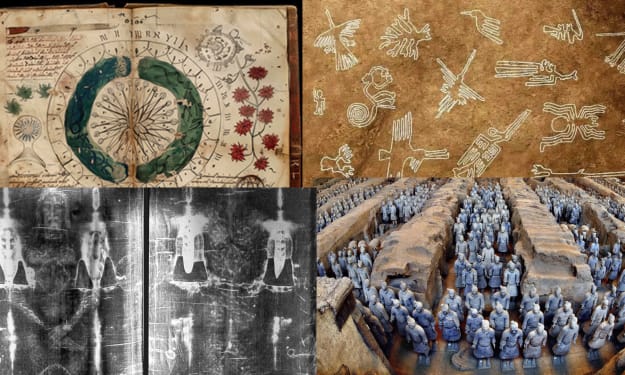
Top 10 Most Mysterious Historical Discoveries: That Leave Experts Aghast
History is replete with mysteries of discovery. From the outset, archaeologists and historians have unearthed things that would not be explained even by the simplest logic: artifacts, monuments, and sites prompting endless debate, theory, and curiosity right up to this day. Here are the top 10 most baffling historical discoveries that still confound experts and fuel imaginations.
By soman Goswami2 years ago in History
Indian Astronomers Make Major Discovery in Triple-Star System
Indian astronomers from Odisha's National Institute of Science Education and Research (NISER) have bagged a proud moment with the discovery of finer details in the GG Tau A system, a rare kind of triple-star configuration located close to 489 light-years of Earth from the Taurus constellation. Their findings carry crucial importance in the field of understanding the complexities of multi-star planetary formation, rather than single-star planetary evolution like that of our Solar System.
By soman Goswami2 years ago in History
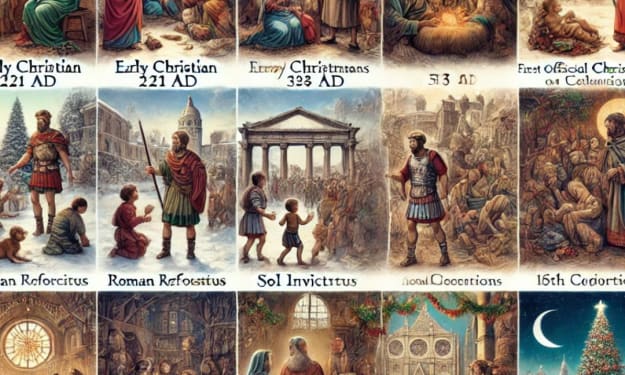
Christmas Through the Ages
1. Early Christian Identity (221 AD) The celebration of Christmas on December 25 was first recorded by Julius Africanus VI in 221 AD. He linked the date to the Day of the Annunciation (March 25) which was believed to coincide with the vernal equinox. According to this logic, on December 25, nine months were completed, ending with the birth of Christ.
By Muhammad Rashid2 years ago in History
Stunning Natural Landscapes in Thailand
Thailand is a country blessed with a breathtaking variety of natural wonders. From emerald-green mountains and cascading waterfalls to tropical islands and lush national parks, Thailand’s stunning natural landscapes are a feast for the eyes and soul. Whether you’re an adventurer, nature lover, or photographer, Thailand offers countless scenic spots to explore.
By Zinnat ara Begum2 years ago in History
Syrian dissident pioneer says objective is to 'oust' Assad system
The objective of Syria's revolutionary alliance, as it wrests one more significant city from government control this week, is eventually to oust tyrant President Bashar al-Assad, as per Abu Mohammad al-Jolani, the assailant head of the principal bunch driving the nation's furnished opposition.In a selective meeting with CNN, Jolani left most likely that the desires of Hayat Tahrir Al-Hoax (HTS) - a gathering that was framed out of a previous al Qaeda partner - aren't anything not as much as stopping the Assad system. In his first plunk down media interview in quite a while, at an undisclosed area in Syria, he talked about plans to make an administration in view of foundations and a "board picked by individuals." "At the point when we discuss targets, the objective of the transformation stays the defeat of this system. It is our entitlement to utilize all suitable means to accomplish that objective," said Jolani. "The seeds of the system's loss have forever been inside it… the Iranians endeavored to restore the system, getting now is the right time, and later the Russians likewise attempted to set it up. Yet, reality stays: this system is dead."Since blasting out of their pocket of an area in the northwest of the country over seven days prior, the renegades' advancement has been incredibly quick, assuming command over the nation's second-biggest city Aleppo prior to catching the essential city of Hama. The shock hostile conveyed a colossal catastrophe for Assad and his supporters in Iran and Russia, while reigniting a nationwide conflict that had been to a great extent lethargic for years.Syria's resistance powers are decentralized and comprised of various philosophies, but joined by a shared objective of overturning the Assad system. Yet, HTS and Jolani's foundations in fanatic Islamist developments cast a shadow over his ambitions.For somebody who once worked in the shadows, Jolani oozed certainty and attempted to extend advancement in his gathering with CNN, which occurred out so everyone can see and with little security. As CNN plunked down to meet with Jolani, news broke that powers under his order had caught the city of Hama.Inside rebel-a controlled area in Syria, it's reasonable he works less like a needed man and more like a lawmaker. After powers faithful to him assumed command over Aleppo, he showed up in the city's notable stronghold. Jolani says he has gone through episodes of change as the years progressed. "An individual in their twenties will have an unexpected character in comparison to somebody in their thirties or forties, and unquestionably somebody in their fifties. This is human instinct." Jolani cut his teeth as a youthful warrior for al Qaeda against the US in Iraq. Getting back to his country during the Syrian nationwide conflict, he drove the dread gathering's member in Syria when it was under the name Jabhat Al Nusra. He would proceed to break attaches with al Qaeda and his association developed into Hayat Tahrir Al-Farce, otherwise called the Association for the Freedom of the Levant, in mid 2017. The US, Turkey, the Unified Countries and a few other Western countries keep on assigning HTS as an Unfamiliar Psychological militant Association, notwithstanding the gathering's endeavors to reduce most, if not all, connection with its roots.Jolani's meeting with CNN on Thursday was a turn around from the hardline way of talking that he utilized during his very first broadcast interview in 2013, when he was evaluated by Al Jazeera with his face in shadow. At that point, his comments were centered around promoting al Qaeda's branch in Syria. On Thursday, Jolani extended an alternate vision for the conflict torn country. In an indication of his endeavored rebranding, he likewise openly involved his genuine name interestingly - Ahmed al-Sharaa - rather than the nom de guerre by which he is generally known.As the revolutionary alliance's tactical advances grow the domain and populace under their influence, Jolani demanded that regular citizens had essentially nothing to fear in the administration of dissident held areas of Syria. "Individuals who dread Islamic administration either have seen wrong executions of it or don't comprehend it appropriately," he claimed.If resistance powers prevail with regards to overturning Assad's system, it will change into "a condition of administration, establishments, etc," he imagined. The gathering said attempting to console regular citizens and gatherings endured oppression on account of fanatic and jihadist bunches in Syria's very long term nationwide conflict. It additionally said it has made a special effort to openly tell Christians and other strict and ethnic minorities that they will live securely subject to its authority. "There were a few infringement against them [minorities] by specific people during times of disorder, however we resolved these issues," Jolani said when gotten some information about worries for their security. "Nobody has the privilege to eradicate another gathering. These orders have coincided around here for many years, and nobody has the option to kill them," he saidHuman freedoms gatherings and nearby screens have in any case raised caution about HTS' later treatment of political dissenters in Idlib, claiming that the gathering led unforgiving crackdowns on fights and tormented and mishandled protesters. Jolani let CNN know that episodes of maltreatment in penitentiaries "were not finished compelled or bearings" and HTS had proactively considered those included responsible. Jolani likewise stood up against the getting through dread assignment of HTS, referring to the mark as "fundamentally political and, simultaneously, wrong," contending that some outrageous Islamist rehearses had "made a separation" among HTS and jihadist gatherings. He asserted that he was against a portion of the more merciless strategies utilized by other jihadi gatherings which prompted his disavowing them. He additionally asserted that he was never by and by engaged with assaults on regular citizens.
By Parmesh Patil2 years ago in History