Lessons
The Talking Walls of Angel Island
Throughout the U.S. Reconstruction Era, violence and bigotry towards Chinese Americans was business as usual. Prior to Reconstruction, California Governor John Bigler delivered a speech to his state assembly in 1952. In his deliverance, he requested a ban on Chinese immigration. Bigler believed these migrants were ignorant to political participation and the court of law. He claimed they could never assimilate or become good citizens, much less become good jurors or voters.
By DJ Nuclear Winterabout a year ago in History
The Beginning at the Edge of the World
She had walked for what felt like hours through the thinning fog, the lantern in her hand flickering like a heartbeat, threatening to die with every gust of damp wind. Her boots sank into the mossy ground, and more than once she stumbled, scraping her palms against jagged roots. Every step felt heavier than the last, but something beyond exhaustion kept her moving forward. This is what comes of chasing whispers, she muttered under her breath, yet her feet refused to stop. The fog broke suddenly, like curtains pulled back on a stage, revealing a narrow cliffside clearing. Below, the sea churned black and silver under the rising moon, waves exploding against the rocks in bursts of white foam. The air smelled of salt and secrets. For a moment she felt both impossibly small and impossibly powerful, as if the ocean itself was breathing with her. Then—she heard it. A metallic clink beneath her heel. She froze, then crouched. It wasn’t a stone. It was a coin—ancient, weatherworn, stamped with markings no modern mint could have made. She brushed away more leaves, and there were others—dozens—spilled as if from a broken chest, their edges glimmering faintly in the moonlight. Her throat tightened. The legend was true. The treasure wasn’t just a story told to children; it was here, waiting. Her lantern swung toward the mouth of a cave yawning at the edge of the cliff, its teeth of stone sharp and wet with spray. Fear stirred in her stomach, but so did something else. Hope. Reward: Freedom. Redemption. A life no one could take from her. She stepped toward the cave as the sea roared like an ancient guardian, and the night sky stretched above her like a canvas brushed with silver fire. If this moment were a painting, she would name it The Beginning. --- Part II: The Cave’s Breath The mouth of the cave loomed before her like the jaw of some ancient beast, dark and unwelcoming. Cold air seeped out, brushing against her face as though the cave itself were alive and breathing. Her lantern’s flame flickered, quivering in the draft. Ingrid swallowed hard. She wasn’t supposed to be here, not really. She had followed a rumor, a voice overheard in a tavern, the kind of story most people laughed off after too much ale. But the desperation that had led her to this lonely place was no laughing matter. She stepped closer, her boots crunching against the scattered coins. Each one glimmered like an eye watching her, daring her to go further. She crouched, picked one up, and rubbed her thumb over its worn surface. It was heavy, too heavy for its size, as if it carried more than just metal within it. The markings on its face were strange—spirals and symbols that made her think of waves and stars colliding. Her heart beat faster. She slipped the coin into her pocket, half afraid it might burn her skin, half afraid it might vanish like smoke. A sound came from inside the cave. At first, she thought it was the wind, but no—it was rhythmic, steady. Like footsteps. She froze. Her lantern trembled in her grasp. She wanted to turn back, to leave the coins where they lay and run for the safety of the trees. But something stronger than fear rooted her to the spot. That voice in her head whispered: If the treasure is real, then so is the chance to change everything. The footsteps grew louder. --- Part III: The Stranger A figure appeared in the mouth of the cave. Tall, wrapped in a cloak darker than the shadows around him, he moved with the calmness of someone who had been waiting. His face was obscured by the hood, but when he lifted it slightly, she saw the gleam of eyes that seemed too deep, too knowing. “You came,” he said softly. Ingrid’s mouth was dry. “Who are you?” “Someone who knows what you seek.” His voice was smooth, but there was weight behind it, as though each word was pulled from stone. “You want freedom. You want a future not chained by what has already been done.” Her grip tightened on the lantern. “And what if I do?” He stepped forward, coins crunching beneath his boots. “Then you must walk further. Into the dark. The path is dangerous, but at the end…” He reached into his cloak and let a string of pearls fall from his hand, scattering across the ground just as the coins had. “At the end is what you’ve dreamed.” The pearls rolled toward her, their snowy gleam like fragments of bone. She shivered, remembering her hunger, the debts, the endless nights of despair. Ten million dollars. A life she could not even picture. And yet—her gut twisted. “Why me?” she asked. “Because you were willing to listen to whispers.” He turned back toward the cave, his voice echoing. “Most are too afraid to even come this far.” --- Part IV: The Descent The cave swallowed her as she followed him. The sound of waves outside dulled, replaced by the steady drip of water echoing through tunnels. The lantern’s light cast long, trembling shadows along jagged walls. They walked in silence until the path widened into a chamber. Piles of treasure glimmered faintly—coins, chalices, jeweled daggers, fragments of crowns. But all of it was tarnished, dulled by dust and age. “This is it?” Ingrid whispered. The man’s eyes gleamed. “No. This is what others thought was enough. They took, and they were never seen again.” A chill ran through her. “What happened to them?” “They chose greed over purpose.” His voice dropped lower. “The true treasure is deeper still.” He guided her down another passage, narrower, wetter. The air grew colder, as though she were sinking into the lungs of the earth itself. Finally, they came to a door of stone carved with the same spiral markings as the coin she had taken. The stranger pressed his palm against it, and the spirals lit faintly, glowing like embers waking from sleep. The stone groaned, and the door slid open. --- Part V: The Trial Inside was not treasure but a vast chamber, its walls painted with murals of battles, storms, and fire. In the center was a pedestal, and upon it sat a single object: a book bound in leather black as night. Ingrid frowned. “That’s it? A book?” The stranger’s gaze did not leave it. “Knowledge. Every empire fell because they sought gold instead of wisdom. But wisdom is dangerous. It demands a price.” She stepped closer, her heart pounding. The book pulsed faintly, like it was alive. Her fingers itched to touch it. “What kind of price?” she asked. He smiled, and for the first time she saw his teeth—sharp, too sharp. “The price of truth.” She hesitated. She thought of the pearls, the coins, the promise of wealth. And yet, in her chest, something shifted. Maybe she had never truly wanted riches. Maybe what she wanted was the power to choose her own life. She reached out and touched the book. --- Part VI: Revelation The chamber dissolved around her. She stood not in the cave but in a vast sky of stars, endless and shimmering. Voices whispered through her mind—memories, futures, possibilities all at once. She saw herself in a thousand paths: rich, poor, queen, beggar, alive, dead. And then the voices quieted, and one truth remained: The future was not written. She could shape it. The book vanished, leaving only the weight of that knowledge in her heart. When she opened her eyes, she was back in the chamber. The stranger was gone. The pedestal was empty. Only her lantern flickered weakly beside her. She stumbled out of the cave hours later, the dawn rising over the sea. The coins and pearls were gone too, as if they had never been. But something inside her had changed. She no longer feared the whispers of the world. She carried her own voice now. --- Moral of the Story: True treasure is never gold or pearls. It is the courage to face fear, to step into the unknown, and to claim your own future with wisdom and strength.
By Noman Khanabout a year ago in History
The First Research on the Moon from Pakistan
The First Research on the Moon from Pakistan On a clear night, when the silver glow of the Moon hangs above the mountains and plains of Pakistan, generations of dreamers have looked up and wondered what secrets lie on that distant world. For decades, space exploration seemed like the domain of global superpowers, but in the mid-21st century, Pakistan took a bold step that changed history: its first research mission on the Moon.
By Wings of Time about a year ago in History
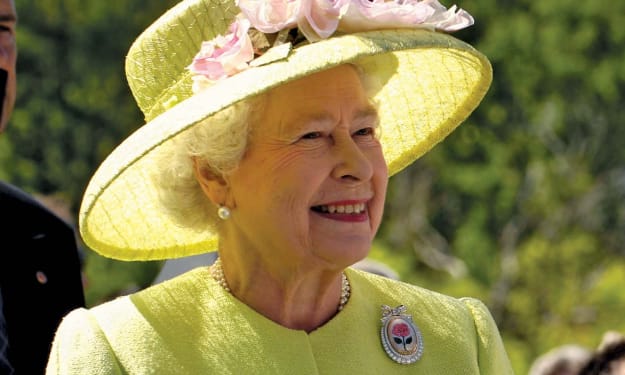
The History Of Queen Elizabeth II
Title: The History of Queen Elizabeth II Behind the Crown When we think of Queen Elizabeth II, we picture the iconic images: the bright, colourful outfits, the impeccable hats, the royal corgis, and the stoic smile during countless public events. For most people in the world, she was the crown—a constant, unmoving symbol of tradition and duty. But the phrase "Behind the Crown" asks us to look deeper. It invites us to see the woman behind the title, the individual behind the institution, and the personal journey that was hidden in plain sight for seventy years.
By LegacyWordsabout a year ago in History
The Woman Who Lived 10 Years Alone in the Amazon
The Woman Who Lived 10 Years Alone in the Amazon A Tale of Survival, Silence, and Self-Discovery When most people imagine the Amazon rainforest, they think of endless greenery, exotic birds, venomous snakes, and rivers that wind like serpents through a living world of mystery. Few, however, would imagine making it their permanent home without a village, without modern tools, and without another human voice for a decade. Yet, that is exactly what happened to Elena Marquez, a woman who chose solitude deep in the Amazon and lived alone there for ten years.
By Farooq Hashmiabout a year ago in History
John D. Rockefeller: From Oil Baron to Philanthropic Giant
John D. Rockefeller: The Man Who Built an Empire John Davison Rockefeller was not born with gold in his hands, nor was he raised in a family that lived in comfort. He was born on July 8, 1839, in Richford, New York, to William Avery Rockefeller, a traveling salesman, and Eliza Davison, a deeply religious woman. His father was often absent, and his reputation was far from respectable. Yet from his mother, John learned discipline, faith, and the importance of saving every penny. These early lessons became the foundation of a life that would make him the wealthiest man of his era. From a young age, Rockefeller displayed a fascination with numbers and money. At sixteen, he found his first job as a bookkeeper in Cleveland, Ohio. He was meticulous, hardworking, and absolutely determined to succeed. While others his age spent money freely, John saved every dollar he could. He once said, “I would rather earn 100 dollars honestly than inherit a million dishonestly.” This mindset set him apart. In 1859, the same year Edwin Drake drilled the first successful oil well in Pennsylvania, Rockefeller saw opportunity. He believed oil would change the future of America, powering lamps, factories, and transportation. Together with business partners, he formed a company that refined crude oil into kerosene, a product every household needed for lighting. Unlike other businessmen who chased quick profits, Rockefeller focused on efficiency, quality, and cost control. He reinvested profits, negotiated shrewdly with railroads for cheaper shipping, and demanded that every waste product from oil refining be turned into something useful. Even gasoline, at first considered a useless byproduct, eventually became valuable with the invention of the automobile. By 1870, Rockefeller co-founded the Standard Oil Company, which became the cornerstone of his empire. He was relentless in his pursuit of dominance. Through smart deals, buyouts, and sometimes ruthless tactics, Standard Oil gained control over nearly 90% of America’s oil refining. For this, Rockefeller was admired by some and despised by others. To his supporters, he was a visionary who brought order to a chaotic industry, lowered prices for consumers, and built an empire of efficiency. To his critics, he was a monopolist who crushed competition and amassed too much power. The U.S. government eventually intervened. In 1911, the Supreme Court ruled that Standard Oil violated antitrust laws and ordered the company to be broken into 34 smaller companies. Ironically, this decision made Rockefeller even wealthier. The fragments of Standard Oil later became giants such as Exxon, Chevron, and Mobil. Each time one of these companies thrived, Rockefeller’s fortune grew. At the peak of his wealth, Rockefeller’s fortune was estimated at over $400 billion in today’s money, making him the richest man in modern history. Yet wealth was not the end of his story—it was only part of it. What truly defined Rockefeller was his transformation from ruthless businessman to generous philanthropist. Guided by his mother’s teachings and his own Baptist faith, Rockefeller believed his riches were a gift from God and that he had a duty to give back. He once said, “The man who dies rich dies disgraced.” Over his lifetime, Rockefeller donated more than $500 million—a staggering amount at the time. He established the University of Chicago, which grew into one of the world’s leading institutions. He funded medical research, helping to eradicate diseases such as hookworm and yellow fever. He created the Rockefeller Foundation, which supported public health, education, and scientific discovery around the globe. His legacy as a philanthropist arguably changed the world even more than his oil empire. Despite his unimaginable wealth, Rockefeller lived a surprisingly modest personal life. He avoided extravagance, preferred simple meals, and spent much of his later years in quiet reflection at his estate in Pocantico Hills, New York. He loved playing golf, giving dimes to children he met, and writing letters. He passed away in 1937, at the age of 97, leaving behind a story that continues to inspire and provoke debate. John D. Rockefeller’s life is a mirror of ambition, controversy, and transformation. He rose from humble beginnings to build an empire that reshaped modern industry. His name became synonymous with both monopoly power and charitable giving. He showed that wealth can be a tool for both domination and generosity. In the end, Rockefeller’s story is not just about money—it is about vision, discipline, and legacy. He taught the world that success is not measured only by how much we accumulate, but by how much we give back. His journey remains a reminder that from the humblest beginnings, a single individual can rise to shape the destiny of an entire nation.
By Hasbanullahabout a year ago in History
The Titanic: A Ship That Dreamed of Immortality but Drowned in the Sea
The Story of the World’s Most Famous Maritime Tragedy When we think of the sea, we imagine beauty, vastness, and mystery. But the sea also holds stories of loss—stories that echo through history like waves crashing on a silent shore. Among them, no tale is as unforgettable as the sinking of the RMS Titanic.
By Zakir Ullahabout a year ago in History
From Dreams to Billions: How Elon Musk Became the Richest Man Alive
Throughout history, humanity has always looked toward figures who achieved extraordinary success. Kings once measured their power in gold, land, and armies. But in today’s modern world, wealth is measured in ideas, innovation, and the ability to transform societies. And when we ask, “Who is the richest person in the world today, and how did he get there?” the answer often points to one man: Elon Musk.
By ✦•············• Freelancer •············✦about a year ago in History
The Ghost of Coco Chanel: How One Woman Reinvented Fashion Forever
The Ghost of Coco Chanel: How One Woman Reinvented Fashion Forever The dark, glamorous, and complicated legacy of Chanel. The name Coco Chanel lingers in the world of fashion like a ghost — ever-present, elusive, and immortal. To this day, her designs define elegance, her fragrance whispers of timeless femininity, and her persona embodies both brilliance and controversy. More than a designer, Chanel was a revolution, a woman who dared to dismantle the corseted cages of her era and replace them with freedom, power, and allure.
By waseem khanabout a year ago in History
72 Days in the Ice: The Andes Plane Crash Survival Story
On October 13, 1972, a Uruguayan Air Force plane carrying a rugby team, their friends, and family crashed in the snowy peaks of the Andes Mountains. Known today as the Andes plane crash 1972 or Flight 571 crash, this event turned into one of the most famous survival stories in history. For 72 days in the Andes, the survivors endured freezing temperatures, starvation, avalanches, and unimaginable choices. What emerged was not just a tragedy but an inspirational survival story of courage, endurance, and hope.
By Rana Ahmadabout a year ago in History