Lessons
The Trail of Tears: America’s Dark March Westward
A Promise of Expansion, A Reality of Sorrow In the early 19th century, the United States stood at a crossroads. The young nation was eager to expand westward, driven by the belief in Manifest Destiny—the idea that Americans were destined to settle across the continent. But this expansion came at a devastating cost.
By Echoes of Lifeabout a year ago in History
The best movies in history
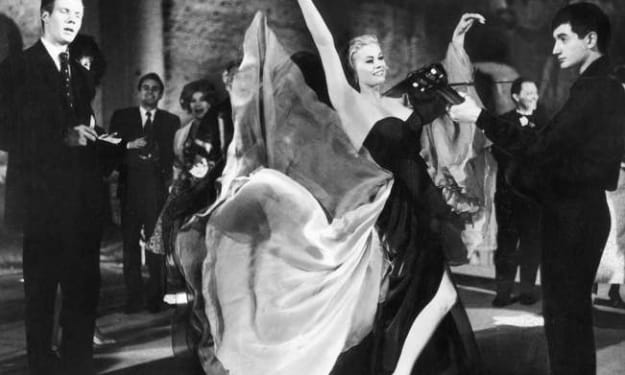
That's right. Personal taste, cultural impact, technological innovation, and critical consensus all play a role in determining the "best" films of all time. We can, however, compile a list of films that have fundamentally influenced cinema and are almost universally acclaimed by combining these elements. This list, which is organized by era and genre to highlight their distinct contributions, serves as a starting point. The Complete List of "Must-See" Events (A Selection of the Best) Sight & Sound's and the AFI's 100 Years...100 Movies critic and director polls consistently place these films at the top. The Classics of the Golden Age (pre-1960) Orson Welles' Citizen Kane (1941) Why it's so important: It has been called the best movie ever. It changed sound design, deep-focus photography, and narrative structure. The story of the rise and fall of a newspaper tycoon remains a masterclass in filmmaking. Michael Curtiz's 1942 film Casablanca Why it's so important: It has romance, drama, suspense, and humor all in one. It may be the most perfect Hollywood studio film ever made due to its timeless themes of sacrifice and honor, memorable characters, and iconic dialogue. Jean Renoir's The Rules of the Game (1939) Why it's important:
By parves mosharafabout a year ago in History
Judge Frank Caprio’s Legacy of Kindness
Most judges retire with little fanfare outside their communities. But when Judge Frank Caprio announced his retirement, the news reverberated around the world. Millions of people who had never set foot in Rhode Island felt the weight of his departure. That’s because Judge Caprio wasn’t just a judge — he was a teacher, a mentor, and a symbol of kindness in a world that often feels unforgiving.
By Echoes of Lifeabout a year ago in History
Shane Windmeyer and The Chick-fil-A Conversation: A Decade Later and Still Defining the Debate
More than ten years have passed since the Chick-fil-A controversy erupted, yet the conversation it sparked remains as relevant as ever. What began as a corporate leader’s comments about marriage equality grew into a national flashpoint about free speech, inclusivity, and the role businesses play in shaping cultural identity.
By Shane Windmeyerabout a year ago in History
Putin: The Man Who Eradicated the Pandemic
Introduction – Russia’s Shadow Across the 21st Century In the timeline of modern history, Vladimir Vladimirovich Putin has come to embody more than a political career. He represents an entire epoch. His presence on the world stage divides analysts, agitates commentators, and fuels polarized narratives from Moscow to Washington, Brussels to Beijing.
By Stefano D'angelloabout a year ago in History
The Birth of a Nation: How 13 Colonies Became the United States
The story of America’s founding is not just a tale of battles and documents—it is a story of courage, vision, and the desire for self-determination. Long before the United States became a global power, thirteen colonies along the eastern seaboard of North America struggled under British rule, yearning for freedom, representation, and the ability to govern themselves.
By Echoes of Lifeabout a year ago in History
The Mother’s Heart
In a small village nestled between green fields and a silver river, there lived a poor woman named Amina and her young son, Rahim. Amina had lived a life full of hardship—widowed when Rahim was just a child, she worked tirelessly in the fields, stitched clothes for neighbors, and often went hungry just to make sure her son never did. Despite her struggles, she carried within her a heart filled with love and sacrifice. Rahim, though young, often noticed how much his mother worked. He saw her hands, rough and cracked from years of labor, and her tired eyes that never seemed to close before his did. He loved her dearly, but being young, he sometimes failed to understand the depth of her sacrifices. As the years passed, Rahim grew into a strong young man. Ambitious and eager, he dreamed of leaving the village to make his fortune in the city. “Mother,” he said one evening, “life here is too small. I want to study, to work, to become successful. I want to give you a better life.” Amina smiled gently, though her heart tightened. The thought of Rahim leaving filled her with both pride and sorrow. Still, she knew she could not hold him back. “Go, my son,” she whispered, “but never forget the values you learned here. And never forget your mother’s heart beats with you wherever you are.” Rahim left for the city with little more than a bag of clothes and his mother’s blessings. In the city, life was harsh at first. He struggled to find work, often sleeping hungry. But his mother’s words echoed in his ears, giving him strength. Slowly, Rahim worked his way up, studying at night, working by day. Years passed, and he became a respected businessman. Wealth surrounded him now—cars, fine clothes, and friends who praised him. Yet in his pursuit of success, the memory of his mother’s sacrifices began to fade. He visited her less and less, writing only brief letters. Amina, however, treasured even the shortest notes. Every night, she prayed for her son, whispering his name with trembling lips. One day, Rahim’s wealthy friends mocked his village roots. “Why do you still keep ties with that poor old woman?” they jeered. “You are a man of the city now. Cut yourself free.” Their cruel laughter planted a poisonous seed in Rahim’s heart. Confused and ashamed, he went to his mother’s home. The small clay house looked even poorer now compared to his grand life. His mother’s frail figure sat by the doorway, her eyes lighting up when she saw him. She rushed forward, embracing him with trembling arms. “My son!” she cried. But Rahim pulled away. “Mother,” he said coldly, “I cannot carry this burden of the past anymore. If I am to succeed, I must cut away everything that ties me to this village, even you.” Amina’s face paled, but she said nothing. He continued harshly, “If only I could take your heart and leave it behind, I would be free.” For a moment, there was silence. Then, with tears streaming down her face, Amina whispered, “If my heart is what holds you back, take it, my son. For a mother lives only for her child.” The words struck Rahim like lightning. His own cruelty echoed in his ears. He looked at his mother—weak, wrinkled, yet filled with boundless love. His shame overwhelmed him, and he fell to his knees, clutching her hands. “Forgive me, Mother!” he wept. “I was blinded by pride. I forgot the heart that gave me life.” Amina lifted his face gently. “A mother’s heart,” she said softly, “never holds anger. It only knows love.” From that day on, Rahim never let pride cloud his vision again. He brought his mother to live with him in the city, caring for her with all the devotion she deserved. Whenever people asked him the secret of his success, Rahim would smile and answer, “It is my mother’s heart. That is my greatest wealth.” And so, the story of a poor widow and her ambitious son became a reminder that no success, no riches, and no pride could ever equal the sacrifice and love contained within a mother’s heart.
By Itz stories about a year ago in History
AI Code Assistant: Revolutionizing Software Development One Line at a Time
In the fast-paced world of software development, time is money, and efficiency is king. Over the past few years, developers have seen a significant shift in the way they write, debug, and optimize code—all thanks to the rise of AI-powered code assistants. These intelligent tools are revolutionizing programming by automating repetitive tasks, offering smart suggestions, and catching errors before they happen. The result? Increased productivity, fewer bugs, and faster delivery of software products.
By Echoes of Lifeabout a year ago in History
Charlie Chaplin: The Tramp Who Taught the World to Laugh
Start writing... Charlie Chaplin was more than a man in a bowler hat and crooked mustache; he was a symbol of resilience, hope, and the enduring power of laughter. In an age before sound transformed cinema, Chaplin had the rare gift of making audiences laugh, cry, and connect deeply without uttering a single word. His genius lay not just in comedy, but in his ability to touch hearts across the globe.
By Muhammad Riazabout a year ago in History