Biographies
The Song of a Bird at Dawn
Day 1: The Window Is Empty Long ago, the house had become quiet, although not in an abrupt or shocking fashion. Slowly, like ivy growing over stone, silence fell. Unnoticed at first, it clung to corners. Then, heavy as unsaid sadness, it spread over her heart, then over the mantle where the photos had been, then over the walls.
By MD SHAMIM RANAabout a year ago in History
The story of "Bill Gates".. AI-Generated.
Bill Gates's Success Story: From a Tech Visionary to a Global Changemaker The name Bill Gates is associated with inventiveness, perseverance, and enormous success. Gates' journey is a compelling illustration of how vision, hard work, and timing can shape the world, from co-founding Microsoft and revolutionizing the computer industry to becoming a global philanthropist. Early zeal for business and passion Bill Gates, who was born in Seattle, Washington, in 1955, showed an early interest in computing. He started programming on a school computer when he was 13 years old. By the time he was in college at Harvard, his passion had transformed into a drive to innovate, and he was already collaborating with his friend Paul Allen on real-world projects. In 1975, Gates and Allen saw an opportunity when the first personal computer, the Altair 8800, was introduced. Microsoft was born as a result of the software they developed for it. Gates' meteoric rise began at this point. Building Microsoft Into a Tech Giant
By Najmus Salehin Sakibabout a year ago in History
Eid ul-Fitr: The Festival of Breaking the Fast
One of the most significant Islamic holidays observed by Muslims worldwide is Eid ul-Fitr, or simply "Eid." It marks the conclusion of Ramadan, tul he holy month of fasting, prayer, and spiritual contemplatioy, and gratitn. This joyfoccasion is a time for family get-togethers, prayers for the community, charitude.The Significance of Eid ul-Fitr
By sheikh Tanemabout a year ago in History
“Crown of the Holy Empire: The Legacy and Grandeur of the Austrian Imperial Crown”
The Origins: A Crown for a Divine Emperor The Austrian Imperial Crown was crafted in 1602 in Prague for Rudolf II, the Habsburg Emperor of the Holy Roman Empire. Unlike earlier medieval crowns passed through generations, this was a newly commissioned piece—designed not just to convey royal authority but to emphasize divine legitimacy. Rudolf II was a deeply religious and ambitious ruler who saw himself as a protector of Catholicism. The crown was not just an ornament—it was a symbol of his divine right to rule over the Holy Roman Empire and its many fragmented principalities. Design and Symbolism Unlike most crowns that adopt a circular or arched structure, the Austrian Imperial Crown features a distinct three-part design: The circlet, which represents the earthly power of kingship. The mitre, a unique addition shaped like a bishop’s hat, symbolizing spiritual authority and divine blessing. This unusual element shows the dual role of the Emperor as both a secular and spiritual leader. The high arch, topped with a globe and cross, stands for Christ’s dominion over the world and the Emperor's role as a Christian sovereign under divine will. The crown is richly decorated with: 36 large gemstones, including rubies, sapphires, emeralds, and spinels. Over 200 pearls of exceptional size and color. Intricately worked enamel images of Christian saints, reinforcing the sacred nature of the monarchy. The crown was made using 22-karat gold, masterfully hammered and set without casting—a rare feat of Renaissance goldsmithing. Symbol of the Habsburg Monarchy After Rudolf II’s death, the crown was adopted by his successors, eventually becoming the official imperial crown of the Austrian Empire when it was established in 1804 by Emperor Francis II. He dissolved the Holy Roman Empire in 1806 under pressure from Napoleon’s rising power and instead became Francis I, Emperor of Austria. From this moment forward, the crown came to represent not just Holy Roman legacy but also Habsburg dominance over Austria, Hungary, Bohemia, and other regions in central Europe. Though it was never used in a traditional coronation ceremony, the crown was placed next to the Emperor during important state functions, symbolizing his divine right and secular power. Where Is It Today? The Austrian Imperial Crown is currently on display in the Imperial Treasury (Kaiserliche Schatzkammer) at the Hofburg Palace in Vienna, Austria. It is protected as one of the most important artifacts of the Austrian state and the former monarchy. Alongside the crown, the Holy Lance, the Imperial Orb, and the Imperial Sword form part of the sacred regalia that once legitimized emperors who saw themselves as protectors of Christendom. Modern Net Worth Estimation Although priceless due to its historical importance, experts estimate the market value of the Austrian Imperial Crown based on its materials and rarity. Component Estimated Value Gold (22k, handcrafted) $5 million Gemstones (36 rare gems) $600–700 million Pearls and Enamel $30 million Artistic and Historical Value $800 million+ Estimated Total Value $1.5 billion USD (conservative) The real value, of course, lies in its cultural and symbolic worth, making it irreplaceable in historical terms. Religious and Political Symbolism The crown's design is rich in Christian iconography, symbolizing the Emperor’s role as God’s representative on Earth. Its mitre section emphasizes the emperor’s spiritual authority, not just political power. This design was unique in European regalia, where most crowns strictly signified monarchy and military conquest. The Austrian crown combined these aspects with theological legitimacy, elevating its bearer above mere kings. End of Empire, Survival of Symbol The Austro-Hungarian Empire collapsed in 1918, following World War I. The Habsburg monarchy was dissolved, and Austria became a republic. Despite this, the Austrian Imperial Crown survived the political upheaval, preserved as a national treasure. It stands today as a reminder of a time when emperors ruled by divine right, cloaked in gold, and crowned with jewels that captured both the majesty of heaven and the ambitions of Earth. Conclusion: A Crown Beyond Kings More than just a symbol of monarchy, the Austrian Imperial Crown represents a fusion of religion, politics, and art unmatched in Europe’s royal history. Its unusual design, immense value, and symbolic depth make it not just one of the most expensive crowns in history—but arguably the most meaningful. Whether viewed as a piece of exquisite craftsmanship or a relic of sacred empire, the crown endures as one of the most powerful emblems of imperial Europe. Would you like a historically styled image of this magnificent crown?
By Say the truth about a year ago in History
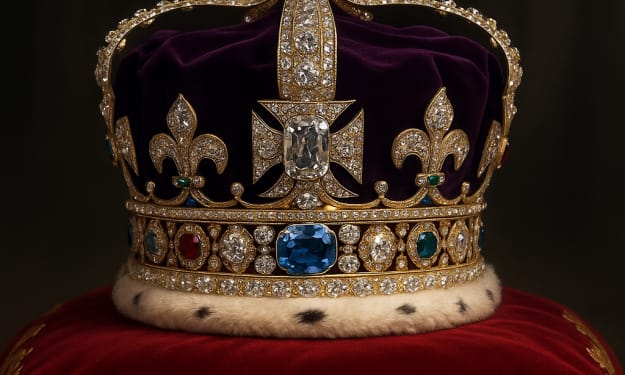
“Crown of Empires: The Legendary Wealth of the World’s Most Expensive Crown” . AI-Generated.
“The Diadem of Sovereigns: The Chronicle and Valuation of the World’s Most Costly Diadem” The narrative of royal diadems is a captivating saga of authority, triumph, and unimaginable affluence. Among all, one diadem distinguishes itselfthe British Imperial State Diadem, an emblem of sovereignty and the most financially substantial in history. Adorned with over 3,000 gemstones, including the famed Cullinan II diamond and the Black Prince’s Ruby, its worth transcends mere gold and gemstones. This article explores the inception, transformation, and heritage of this diadem, presenting a contemporary appraisal that surpasses $6 billion, establishing it as the most cherished diadem ever crafted. Introduction: An Emblem Beyond Epochs and Authority From pharaohs and emperors to medieval monarchs and contemporary rulers, the diadem has perpetually epitomized ultimate power. Yet beyond representation, diadems also signify extravagance. Among the multitude throughout historyfrom the Mughal Empire to the French Bourbonsthe British Imperial State Diadem is deemed the most priceless, both historically and economically. Housing some of the largest and rarest gemstones on the planet, it is more than merely a ceremonial adornmentit constitutes a vessel of empire, warfare, diplomacy, and heritage. Origins of the Imperial State Diadem The earliest iteration of the British Imperial Diadem traces back to the 15th century. However, the present design was reconstructed in 1937 for the coronation of King George VI and adapted for Queen Elizabeth II’s coronation in 1953. Its design draws from prior diadems but integrates treasures amassed over centuries of colonial expansion, wartime plunder, and royal legacy. Unlike other diadems designed exclusively for display or burial, this diadem has been actively utilized in coronations and state ceremonies, including the State Opening of Parliament. Diadem Features and Gemstone Inventory The Imperial State Diadem is constructed from solid gold, silver, and platinum and weighs over 1. 06 kilograms (2. 3 pounds). It comprises: 2,868 diamonds 273 pearls 17 sapphires 11 emeralds 5 rubies Among these, several legendary stones elevate the diadem to unmatched prominence: The Cullinan II Diamond: Referred to as the Second Star of Africa, it is a 317-carat flawless diamond carved from the largest gem-quality diamond ever discovered. This diamond alone is valued at over $400 million USD. The Black Prince’s Ruby: A significant semi-precious red spinel, this “ruby” is steeped in legend. It was donned by Henry V at the Battle of Agincourt in 1415 and occupies a central position in the diadem. The Stuart Sapphire: A deep blue 104-carat sapphire that has been passed through various generations of English and Scottish royalty. The St. Edward’s Sapphire: Presumed to have belonged to Edward the Confessor, this 11th-century gemstone rests atop the diadem’s cross. Historical and Political Heritage The diadem’s gemstone collection reflects the expansion and wealth of the British Empire. Numerous stones, particularly the Cullinan diamond, were gifts or acquisitions from colonized regions, notably South Africa, India, and Burma. Certain aspects of the crown have ignited global discourseparticularly the Koh-i-Noor diamond, which is not present in this crown but resides within another crown of the British collection. These disputes underscore that crowns are not merely decorativethey are political artifacts symbolizing both glory and colonization. Modern Appraisal: What Is Its Value? Assessing the worth of a crown of this nature is intricate, as many of the gems are distinctive, invaluable, or historically irreplaceable. Nevertheless, contemporary gemologists and historians approximate: Component Estimated Value Cullinan II Diamond (317 carats) $400–450 million Black Prince’s Ruby $100–150 million Stuart Sapphire $40–50 million Gold, Silver, Pearls $10–15 million Other Diamonds, Emeralds, Rubies $200–300 million Historical Value, Provenance $5 billion+ (symbolic, irreplaceable) Total Estimated Worth $5. 8 to $6. 5 billion USD Comparison to Other Renowned Crowns Although various empires possessed remarkably elaborate crownssuch as: The Mughal Peacock Throne, adorned with diamonds, emeralds, and pearls. The Russian Imperial Crown, featuring a 398-carat red spinel and 4,936 diamonds. The Crown of the Austrian Empire, signifying Holy Roman authority. none equates to the cumulative wealth, application, historical preservation, and symbolic significance of the Imperial State Crown of Britain. Custody and Exhibition Presently, the Imperial State Crown is situated in the Tower of London, secured as part of the Crown Jewels of the United Kingdom. It is removed solely for exceptional events, such as coronations or royal funerals. Its protection is exceptional, and although it is accessible for public viewing, no oneexcept the reigning monarchis permitted to don it. Conclusion: Wealth in Gold, Power in Heritage The Imperial State Crown transcends its status as the most expensive crown everit symbolizes five centuries of history. Each gemstone conveys narratives of conquest, diplomacy, divine right, and human aspiration. With an estimated net worth exceeding $6 billion USD, it occupies the zenith of royal regalia and historical treasure. In a world captivated by wealth and authority, this crown persists as a unique amalgamation of boththe ultimate representation of monarchy and empire.
By Say the truth about a year ago in History
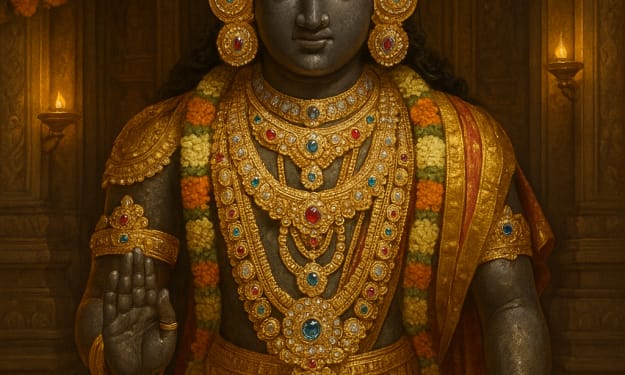
“Lord of Fortune: The Costliest Idol in History – The Wealth of Tirupati Balaji”. AI-Generated.
The World’s Most Expensive Idol: The Unrevealed Narrative of Tirupati Balaji’s Golden Wealth Among the globe’s most revered deities, the statue of Lord Venkateswara at Tirumala, Andhra Pradesh, serves not only as a spiritual lighthouse but also as an emblem of extraordinary affluence. Sculpted from sacred black stone and embellished with immense quantities of gold, diamonds, and other precious gems, this idolvenerated by millionsis appraised as the priciest in documented history. This article examines its origins, religious importance, priceless embellishments, and the contemporary valuation of both the idol and the temple's assets. Introduction: The Living Divinity of the Peaks Perched atop the Tirumala hills in southern India, the temple of Lord Venkateswara, commonly referred to as Balaji, ranks among the wealthiest religious locations globally. Millions of devotees ascend to Tirupati each year to catch a glimpse of the revered idol, believed to be over 2,000 years old. Beyond its spiritual significance, the idol itselfstanding approximately 8 feet in heightis a repository of unparalleled historical and monetary value. In this article, we delve into the background, composition, and financial appraisal of the world’s most costly religious idol. The Idol: Artistry and Myth The principal deity, Lord Venkateswara, is crafted from a unique variety of black granite or Shaligrama stone, traditionally believed to possess magnetic and healing attributes. In accordance with ancient Vaishnavite customs and temple lore, this idol is said to be self-manifested (Swayambhu)not created by human artisans. It is embellished with: A colossal diamond-encrusted crown (appraised alone to be valued at over $50 million USD) Numerous gold adornments, including necklaces, girdles, and anklets An ancient gem known as Navaratna Kirita, set with nine precious stones A thick gold plating covering various sections of the idol itself Emeralds, sapphires, rubies, and pearls, some of which trace back to the Vijayanagara Empire (14th–16th century CE) Historical Support and Contributions Rulers from diverse Indian dynastiesincluding the Cholas, Pandyas, Vijayanagara monarchs, and Marathashave offered priceless ornaments to the deity throughout the centuries. Noteworthy contributions encompass: Krishnadevaraya’s Crown (early 1500s): Composed of solid gold and adorned with diamonds and emeralds. British Raj-era Contributions: Despite colonial governance, affluent merchants and aristocrats persistently donated substantial gold reserves and gemstones to the deity. Even contemporary celebrities and industrialists contribute considerable quantities of gold and funds to the idol and temple annually. The deity is adorned differently each day and during various seasons, with specific sets of jewelry designated for special festivals. Temple Vaults and Concealed Riches In addition to the ornaments adorning the idol, the Tirumala Tirupati Devasthanams (TTD) trust oversees concealed vaults filled with gold and gemstones gifted over the centuries. The temple receives: Approximately 30–35 million USD in cash donations each year Hundreds of kilograms of gold, with nearly 60,000 kg accumulated as per recent reports Daily offerings of diamonds, rubies, and exotic jewels The vaults, many of which remain inaccessible to the public, are estimated to harbor treasures worth over $20 billion USD, much of which was originally presented to the idol itself. Valuation Estimate: Analyzing the Idol’s Worth To evaluate the contemporary worth of the Tirupati Balaji idol and its immediate embellishments: Component Estimated Contemporary Worth Diamond Crown $50 million USD Gold Ornaments (Necklaces, Waistbands, Anklets, Armlets) $150–200 million USD Gemstones (Emeralds, Rubies, Sapphires, Pearls) $100–150 million USD Historical Items (Navaratna Crown, Ancient Jewelry) $75–100 million USD Total Idol Wealth Estimate $375–500 million USD Note: This does not encompass the temple’s additional assets such as real estate, reserves, or vaults. Cultural and Spiritual Worth: Beyond Monetary Value For worshippers, however, the riches of the idol cannot be quantified in gold or currency. Lord Venkateswara is revered as “the deity who alleviates debt,” believed to bestow blessings, health, and prosperity upon anyone who approaches with genuine intent. Each ornament or coin presented is regarded as an expression of faith, rather than mere economics. Furthermore, the idol’s distinctive essence, time-honored rituals, and emotional ties with millions render it culturally invaluable. Comparisons with Other Idols While numerous religious figures globally possess significant worth, the Tirupati idol surpasses many in terms of collective wealth, importance, and enduring reverence. Other notable examples include: The Golden Buddha of Thailand (5. 5 tons of gold; $250 million+) Jagannath idols of Puri (inestimable due to relics within) Padmanabhaswamy temple vault idols in Kerala (unopened treasures potentially exceeding $22 billion USD) Nonetheless, due to its exceptional visibility, documentation, and historical complexity, the Balaji idol retains the status of the most ornately adorned deity in the contemporary world. Conclusion: Divine Wealth and Eternal Devotion The idol of Lord Venkateswara transcends being a mere divine artifact; it serves as the spiritual nucleus of South India and a repository of historical richness. With an estimated net worth approaching half a billion dollars, it stands as a monument to steadfast faith, continuous royal sponsorship, and the profound legacy of temple wealth in India. In a society fixated on material wealth, the narrative of Tirupati Balaji serves as a reminder that genuine value resides where affluence intertwines with reverence, and where gold transforms into the sacred in the hands of devotees.
By Say the truth about a year ago in History
Archaeologists Discover Hundreds of Metal Objects up to 3,400 Years Old on Mysterious Volcanic Hilltop in Hungary. AI-Generated.
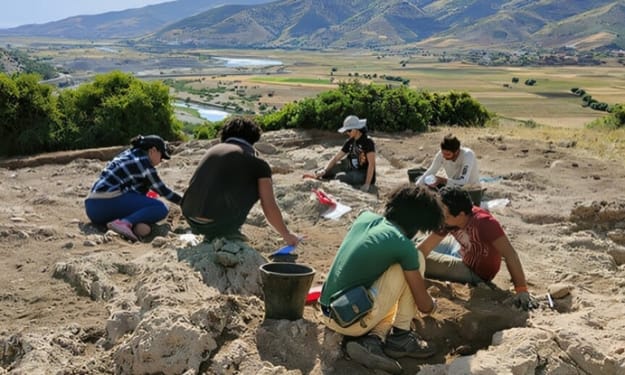
Archaeologists Discover Hundreds of Metal Objects up to 3,400 Years Old on Mysterious Volcanic Hilltop in Hungary In an extraordinary archaeological breakthrough, researchers in Hungary have unearthed hundreds of metal artifacts—some dating back as far as 3,400 years—on a mysterious volcanic hilltop in the Bükk Mountains. This discovery, located near the village of Dédestapolcsány, is offering new insights into the ancient cultures that once inhabited this remote region of Central Europe.
By Adnan Rasheedabout a year ago in History
Africa's history could be rewritten by a huge discovery in Morocco.
The long-held belief that the Maghreb (northwest Africa) was an empty land prior to the Phoenicians' arrival in the area around 800 BCE is thrown into doubt by a new archaeological find at Kach Kouch in Morocco. It reveals a history that is significantly more complex and rich than previously thought. Everything found at the site suggests that stable agricultural settlements on the African coast of the Mediterranean existed more than 3,000 years ago, during the Bronze Age. At the same time, societies in the eastern Mediterranean like the Mycenaean thrived. We now have a better understanding of the recent prehistory of north Africa thanks to our discovery, which was led by a group of young researchers from Morocco's National Institute of Archaeology. Additionally, it reframes our understanding of the ancient connections that existed between the Maghreb and the rest of the Mediterranean. What led to the discovery? In 1992, Kach Kouch was first discovered and excavated for the first time. At the time, researchers thought that the area had been occupied from the 8th to the 6th century BCE. This was based on the found Phoenician pottery. Our team carried out two additional seasons of excavation in 2021 and 2022, nearly 30 years later. Drones, differential GPS (global positioning systems), and 3D models were used in our investigations. For the purpose of collecting samples, a stringent procedure was followed. Because of this, we were able to find charcoal and seeds that had been fossilized. After that, a series of analyses enabled us to re-create the prehistoric economy and natural environment of the settlement. What was found in the remains The settlement was occupied three times between 2200 and 600 BCE, according to the excavations and radiocarbon dating. The earliest known remains date from 2200 to 2000 BCE. They include a cow bone, three unadorned pottery sherds, and a flint flake. Either erosion or a brief occupation of the hill during this time period could account for the lack of materials and contexts. The Koch Koch hill was permanently occupied beginning in 1300 BCE during its second phase, following a period of abandonment. Farming and animal husbandry were the primary occupations of its fewer than one hundred inhabitants. They lived in wattle and daub, a method that combines mud, reeds, and wooden poles, in circular dwellings. To store their agricultural goods, they dug silos into the rock. They raised cattle, sheep, goats, and pigs, as well as wheat, barley, and legumes, according to analysis. Additionally, they used flint tools, decorated pottery, and grinding stones for cereal processing. In addition, it has been documented that north Africa, excluding Egypt, has the oldest known bronze object. It's probably a piece of scrap metal taken out of a mold after it was molded. encounters with the Phoenicians The inhabitants of Kach Kouch maintained the same material culture, architecture, and economy as in the preceding phase throughout the so-called Mauretanian period, which occurred between the 8th and 7th centuries BCE. New cultural practices, on the other hand, were brought about by interactions with Phoenician communities that were just beginning to settle in nearby locations like Lixus. Combining Phoenician and local building methods, for instance, circular and square stone and wattle and daub structures coexisted. Additionally, the cultivation of new crops like olives and grapes began. The use of iron objects and wheel-made Phoenician ceramics like plates and amphorae (storage jugs) stand out among the new materials. Kach Kouch was peacefully abandoned around 600 BCE, possibly as a result of changes in social and economic conditions. The people who lived there probably moved to other towns nearby. Who then lived in the Bronze Age? It is not clear if the Maghreb people in the Bronze Age lived in tribes, as the Mauretanian people did later. It's likely that they were organized as families. According to the burials, there were no obvious signs of hierarchy. They may have spoken a language that was similar to the Amazigh, a native language of North Africa that was not written until the Phoenician alphabet was introduced. These populations may be the direct ancestors of the Mauretanian peoples of north-west Africa, as evidenced by the cultural continuity that has been documented at Kach Kouch. Why this is important Not only is Kach Kouch the first and earliest known Maghreb Bronze Age settlement, but it also reshapes how we understand prehistory in this region. The new findings, in addition to other recent ones, show that northwestern Africa has been connected to other Mediterranean, Atlantic, and Saharan regions since prehistoric times. Our findings cast doubt on conventional narratives, many of which were shaped by colonial perspectives that portrayed the Maghreb as an uninhabited, isolated region until it was "civilized" by other peoples. As a result, discussions about the Mediterranean's later prehistory have largely ignored the Maghreb. Not only do these new findings signal a breakthrough for archaeology, but they also make it necessary to reevaluate the dominant historical narratives. The opportunity to rewrite north Africa's history and give it the visibility it has always deserved is provided by Kach Kouch. We believe that this is a pivotal time for research that has the potential to forever alter our understanding of not only the history of north Africa but also its relationship to other Mediterranean regions.
By MD IMRAN KHANabout a year ago in History