Biographies
"Final Descent"
The sky was a calm ocean of stars when Flight 327 left Vancouver International Airport, bound for Tokyo. Aboard were 212 souls — tourists, business travelers, families, and one man who hadn’t boarded a commercial flight in over a decade: Captain Elijah Roarke.
By Hamdan Khanabout a year ago in History
How to Master Advertising on Travel Sites for Maximum Reach
Many people all over the world love to travel. They enjoy going to new places, tasting yummy foods, and having fun adventures with friends or family. Because of this, travel websites are very popular. Every single day, millions of people visit these sites to look for ideas, book trips, or just dream about their next vacation.
By Bela Arnoldabout a year ago in History
Pakistan vs India: A History of Conflict, Power, and Religion
Introduction: Introduce the topic by highlighting the longstanding tension between India and Pakistan, which has its roots in the partition of British India in 1947. Set the tone by discussing how history, religion, and territorial disputes have played a significant role in shaping their current relationship.
By Umar Khattakabout a year ago in History
"History of Dark Psychology: Manipulation, Control, and the Human Mind" . AI-Generated.
The History of Dark Psychology Dark psychology is the study of the human mind’s darker side. It looks at how people use deception, control, and manipulation. Gaslighting, mind control, and emotional abuse are all examples of this. Dark psychology has its origins in antiquity. Manipulation was the topic of writing by philosophers like Plato and Machiavelli. Plato warned of persuasive rhetoric used to deceive.
By articelmunafabout a year ago in History
Imran khan
Imran Khan, the 22nd Prime Minister of Pakistan, is a multifaceted personality - a renowned cricketer turned politician, philanthropist, and leader. Born on October 5, 1952, in Lahore, Khan's life has been a testament to his passion, conviction, and perseverance. This article aims to provide an in-depth analysis of Khan's life, politics, and legacy.
By David smithabout a year ago in History
Letters from the Underground Railroad
Letter 1 – May 5, 1852 To my dearest Mama, The day has come, and I am leaving. It is hard to write this without tears staining the paper, but I must be strong. Tonight, I will leave behind the plantation, the only life I have ever known, to seek the promise of freedom. The conductor, a kind man I’ve never met before, told me the route would be long and dangerous, but the risk is worth it. I overheard Mr. Turner, the overseer, say that there is talk of selling me to the South. They want to send me to a place where no one ever comes back. I won’t let that happen.
By Haseeb Mujaddidiabout a year ago in History
“Vanished Galleons: The Lost Shipwrecks of the Dutch East India Company”
“Disappeared in the Abyss: The Catastrophic Shipwrecks of the VOC Fleet” The Dutch East India Company (VOC), once the most prosperous trading entity in history, presided over global maritime commerce for nearly two centuries. Yet beneath the splendor and fortune exists a lesser-known narrative the numerous VOC vessels that encountered disastrous fates in perilous waters. Stretching from the Indian Ocean to the rugged shorelines of Australia and the Cape of Good Hope, hundreds of VOC ships were lost to tempests, reefs, sabotage, and navigational mistakes. These wrecks not only transported commodities and riches but also embodied tales of aspiration, colonization, and sacrifice. This article examines the history, significant calamities, treasure recoveries, and the enduring enigma surrounding VOC shipwrecks. Article: The Dutch East India Company (VOC): A Nautical Titan Established in 1602, the Vereenigde Oostindische Compagnie (VOC), or Dutch East India Company, represented the world’s inaugural multinational corporation and the first to distribute shares. Charged with monopolizing the Dutch spice trade with Asia, the VOC developed extensive trade networks from Indonesia to Japan and South Africa. It commanded its military, minted currency, and deployed one of the most formidable naval fleets of its era. At the zenith of its influence in the 17th and 18th centuries, the VOC dispatched thousands of vessels on hazardous expeditions between Europe and Asia, transporting spices, silk, porcelain, gold, and silver. However, the perils were immense and the ocean, relentless. The Magnitude of VOC Shipwrecks Documentation reveals that over 1,600 vessels sailed under the VOC banner during its two-century lifespan. Of these, more than 250 ships were lost at sea due to tempests, shipwrecks, piracy, and navigational blunders. Many did not survive past the Cape of Good Hope, while others disappeared in the waters near Indonesia, Sri Lanka, India, and Australia. While some vessels were lost with all hands aboard, others left behind survivors who recounted stories of calamity, endurance, and treasure. The VOC’s meticulous record-keeping and archival resources preserved numerous tales, rendering VOC shipwrecks among the most extensively researched in maritime archaeology. Notable VOC Shipwrecks Batavia (1629) Possibly the most notorious VOC wreck, the Batavia served as a flagship en route to contemporary Jakarta (formerly Batavia). It ran aground on the Houtman Abrolhos islands off the western coast of Australia. What ensued was a harrowing saga of rebellion and homicide, wherein numerous survivors were murdered by fellow crew members. The wreck was uncovered in 1963, and artifacts retrieved unveiled invaluable cargo coins, silver, and ceramics. Vergulde Draeck (1656) Referred to as the Gilt Dragon, this VOC vessel struck a reef near present-day Western Australia. Of the 193 individuals aboard, merely 75 reached the shore. A rescue operation was initiated but was unsuccessful, and the fate of the survivors remains undetermined. The wreck was located in 1963, and divers recovered coins, cannons, and porcelain. Zuytdorp (1712) Transporting a fortune in silver coins, the Zuytdorp collided with cliffs north of Kalbarri, Western Australia. No survivors made it to civilization, and the wreck was largely overlooked until the 1920s. Theories persist that survivors may have intermarried with Indigenous communities. Amsterdam (1749) Wrecked on her inaugural voyage off the coast of England, the Amsterdam was a substantial VOC cargo vessel loaded with silver, spices, and textiles. Remarkably well preserved in the sand, the wreck is discernible at low tide near Hastings and remains a prominent archaeological site. Wealth Lost to the Ocean The VOC’s sunken vessels did not solely transport spices and provisions they frequently bore significant amounts of gold, silver, and valuable artifacts. Conservative estimates appraise the overall value of lost VOC cargo in contemporary currency at over $1 billion USD, although some estimates are considerably higher. With each maritime disaster, fortunes disappeared beneath the waves some yet to be recovered. For example, the Rooswijk, which sank in 1740 near England, was discovered to contain silver ingots and coins valued in the millions. Its recovery in 2004 constituted one of the largest VOC treasure discoveries of the modern era. Contemporary Archaeology and Recovery Initiatives Shipwrecks of the VOC are esteemed by archaeologists for their historical significance and by treasure seekers for their wealth. Numerous sites are safeguarded under national and international heritage regulations, particularly in Australian and Indonesian waters. Sophisticated technologies such as magnetometers, sonar, and underwater drones are employed to identify and excavate these submerged vessels. Teams must strike a balance between preservation and exploration, ensuring that artifacts are not plundered or damaged. Recovered items ranging from cannonballs to coins, porcelain, navigational instruments, and even preserved food are exhibited in museums throughout the Netherlands, Australia, and South Africa, providing insights into a golden era of trade and empire. Legacy of the VOC Shipwrecks Beyond the treasure and misfortune, the VOC shipwrecks narrate a broader tale one of global commerce, colonial aspiration, and maritime peril. They unveil the immense cost, both human and material, associated with the VOC’s supremacy in world trade.
By Say the truth about a year ago in History
“Lasseter’s Reef: Australia’s Lost Treasure of Gold and Legend”. AI-Generated.
"The Hidden Wealth of Australia: Discovering the Continent’s Most Significant Concealed Treasure" Australia encompasses more than merely arid deserts and ancient terrainsit conceals narratives of substantial, undiscovered fortune. From the legendary Lasseter’s Reef, purported to be an unparalleled gold deposit buried deep within the outback, to the sunken Dutch vessels carrying silver and gold, as well as the loot of outlaw bushrangers hidden in the wilderness, this article delves into the most persistent and valuable treasure legends of the land down under. Join us as we investigate the history, enigma, and contemporary endeavors to reveal Australia’s greatest treasure. Image Prompt: A lifelike digital illustration of the Australian Outback featuring red sandstone cliffs, a group of adventurers examining maps and tools, alongside glimmering gold partially concealed in the desert ground. A spectral image of Harold Lasseter gesturing toward the horizon lingers in the background. Include camels, indigenous flora, and a radiant sunset sky. Title: The Myth of Lasseter’s Reef: Australia’s Most Significant Lost Treasure Introduction Nestled within the blistering core of the Australian Outback resides one of the most enduring and enigmatic legends in the nation's history: the narrative of Lasseter’s Reef. Alleged to be a considerable gold deposit concealed in the desert, this "reef" (a term utilized in mining to indicate a vein of gold-bearing rock) has fascinated prospectors, explorers, and treasure seekers for more than a century. Despite countless expeditions and relentless quests, the elusive treasure remains unlocateda spectral promise of immense wealth buried beneath limitless red sands. The Genesis of the Legend The tale commences with Harold Bell Lasseter, a man of intricate character and profound conviction. In 1929, Lasseter asserted he had discovered a colossal gold reef in Central Australia as a youth in 1897, at the age of 17. He recounted that his camel had fled during a solo expedition, and while searching for water and security, he encountered a lustrous, golden ridge extending for miles. Lacking the tools to extract it and driven by survival instinct, he memorized the site and subsequently returned to civilization. For many years, Lasseter clung to his secret, disheartened that nobody believed his account. However, as Australia grappled with the aftermath of the Great Depression in the 1930s, his narrative gained momentumproviding optimism to a desperate nation yearning for wealth and stability. The 1930 Expedition With governmental support and private investment, the Central Australian Gold Exploration Company (CAGE) was established, and an expedition was assembled to seek out the reef. Lasseter was designated as the guide and led a team of explorers, camels, provisions, and radio apparatus deep into the desert from Alice Springs. Nevertheless, conflicts rapidly intensified. Lasseter’s ambiguous instructions, secretive demeanor, and insistence on proceeding independently estranged his team. Ultimately, the group dissolved in exasperation, leaving Lasseter solitary in the desert. For several weeks, he endeavored to survive, reportedly assisted by Aboriginal individuals. His final journal entries, later discovered by rescuers, recount his ongoing pursuit of the reef, his solitude, and his gradual demise in a secluded cave near the Petermann Ranges in early 1931. His remains were located in a deteriorated state, yet his narrative endured. Reality or Fabrication? Since Lasseter’s demise, contention has erupted regarding the existence of his reef. Some theorize it was a figment of imaginationpossibly heat-induced hallucinationsor an elaborate deception. Conversely, others assert its authenticity, citing: Lasseter’s meticulous journal, in which he documented distances, sites, and details. Independent testimonies from other adventurers and Aboriginal oral histories that suggest gold in the same vicinity. The likelihood that Lasseter employed an alternative coordinate system or had forgotten the precise location after thirty years. While no conclusive physical proof has ever been discovered, numerous treasure seekers and explorers persist in exploring the myth. Contemporary Searches and Technology The evolution of satellite imaging, geological surveying, and GPS technology has rekindled interest in the quest for Lasseter’s Reef. Numerous expeditions in the 20th and 21st centuries have traversed the central Australian deserts, particularly around the Petermann and Rawlinson Ranges, yet the reef remains undiscovered. In 2005, a private exploration team asserted they had found “evidence” of a gold-rich area consistent with Lasseter’s account, but no commercial achievement ensued. Others continue to finance investigations, convinced that a concealed fortune lies beneath the crimson soil. Cultural Significance
By Say the truth about a year ago in History
Siraj-ud-doula
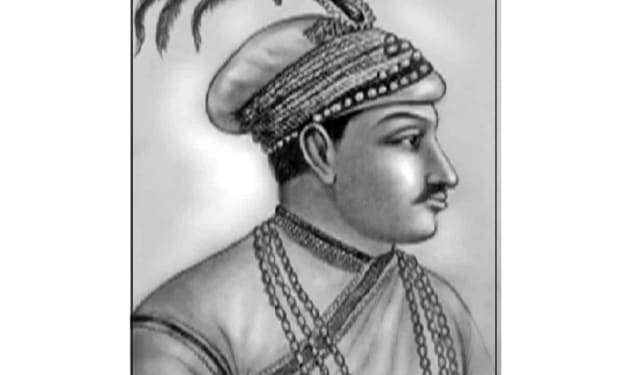
Siraj-ud-Daula was the last independent Nawab of Bengal, Bihar and Orissa. He was born in 1733 and became Nawab in 1756 after the death of his grandfather Nawab Alivardi Khan. He was a young, brave and determined ruler. His reign was only one year, but it was significant.
By robiul hasanabout a year ago in History
Halfway to War - All the Way Home
In the autumn of 1918, a chilly breeze drifted across the fields of Randolph County, Arkansas. Nineteen-year-old Abe Rayford was feeding the chickens when his stepmother, Ollie, came running up the dirt path from the post office, waving an envelope in her hand.
By Vickie Radovichabout a year ago in History
"The Golden Empire: Inside the Wealth of the Mali Empire under Mansa Musa" . AI-Generated.
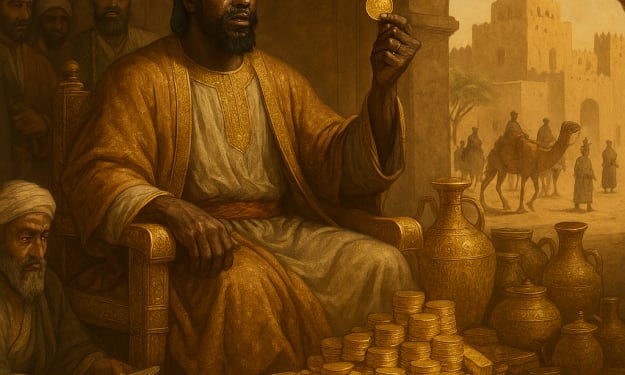
“The Gold Mines of Kings: The U"The Golden Empire: Inside the Wealth of the Mali Empire under Mansa Musa" nrevealed Treasures of the Mali Empire” The Mali Empire, during the governance of Mansa Musa, represented the most affluent empire in African heritage and potentially the globe. Founded upon substantial gold assets and trans-Saharan commerce, Mali's principal cities such as Timbuktu and Niani thrived with splendid palaces, mosques, and riches beyond comprehension. This article delves into the ascendance of the Mali Empire, its astounding net worth, and the legendary pilgrimage of Mansa Musa that amazed the world with its golden magnificence. Introduction: A Golden Era in West Africa While Europe was still recovering from the Dark Ages, a remarkable civilization emerged in the heart of West Africa the Mali Empire. Established in the 13th century, Mali evolved into one of the most prosperous empires in history, attaining its peak under the leadership of Mansa Musa, the 10th monarch. Mali’s wealth was so extensive that Mansa Musa’s name became emblematic of unimaginable affluence, and his 1324 pilgrimage to Mecca was so lavish that it induced inflation in Egypt for more than a decade. But what contributed to the Mali Empire’s opulence? From where did the riches originate, and what heritage does it leave for posterity? Gold: The Cornerstone of Empire The foundation of Mali’s economic strength resided beneath the ground: gold. West Africa housed some of the largest and most fruitful gold mines in the ancient world, particularly in Bambuk, Bure, and Galam. These mines supplied the empire’s coffers and established Mali as the foremost gold provider for the Mediterranean and Islamic civilizations for over 500 years. During a time when gold represented currency, Mali was perched atop a fortune. Scholars estimate that Mali may have controlled half of the global gold supply during its pinnacle. Trade and Commerce In addition to its mines, Mali prospered due to its strategic location along trans-Saharan trade routes. Caravans of camels occasionally numbering in the thousands transported: Gold, salt, and ivory northward Silks, spices, books, and textiles southward Cities such as Timbuktu, Gao, and Djenné evolved into hubs of wealth and culture. Timbuktu’s renowned market and libraries attracted scholars and merchants from as far as the Middle East and Europe. Taxes were imposed on traders, further enhancing the empire’s wealth. A merchant navigating through Mali was reportedly greeted by gates embellished with gold, silk-adorned pavilions, and marketplaces brimming with luxurious goods. The Pilgrimage of Mansa Musa: The Wealthiest Individual in History In 1324, Mansa Musa embarked on the Hajj pilgrimage to Mecca, traversing more than 4,000 miles accompanied by a retinue that astonished the world: 60,000 men, including 12,000 slaves 100 camels, each bearing up to 135 kg (300 lbs) of gold Countless horses, dancers, scholars, and attendants Musa distributed gold so generously in Cairo that he incited hyperinflation, diminishing the value of the metal for over a decade. Historians estimate that his personal net worth might surpass $400 billion in contemporary terms, establishing him as arguably the wealthiest individual in human history. Cultural Wealth and Legacy Mansa Musa didn’t merely utilize wealth he allocated resources towards education, architecture, and religion: Established Sankore University in Timbuktu, which rivaled Oxford and Al-Azhar. Constructed numerous mosques, palaces, and libraries. Financed educational institutions, scholars, and scribes to replicate thousands of manuscripts. These endeavors transformed Mali into a beacon of knowledge within the Islamic realm. At its zenith, Timbuktu boasted 25,000 students and housed over 700,000 manuscripts, many of which endure today in private collections. The Decline and Dispersal of Wealth Following Mansa Musa's demise in 1337, the empire's prominence gradually diminished. Political turmoil, internal conflicts, and pressure from emerging powers such as the Songhai Empire contributed to fragmentation. Many of Mali's riches were: Plundered during invasions. Concealed or hidden to evade confiscation. Exchanged by lesser rulers in times of desperation. Despite its decline, remnants of Mali’s wealth persist in oral traditions, Arabic manuscripts, and the dusty repositories of European collectors who once obtained African artifacts during colonial periods. Estimating the Wealth Contemporary economic historians assess: Annual gold exports at peak: 1–2 tons per annum. Mansa Musa's net worth: $400 billion+. Empire-wide wealth: Easily in the trillions by contemporary metrics, when accounting for trade income, land, and cultural capital. This positions Mali among the most affluent civilizations in world history, eclipsing many European kingdoms of the same era. Conclusion The narrative of the Mali Empire extends beyond mere gold. It encapsulates a civilization that intertwined commerce, culture, and faith into one of the greatest golden ages ever witnessed. While much of its wealth has been dispersed, Mali's legacy as a symbol of African magnificence remains formidable. And beneath the sands of West Africa, perhaps additional treasure still lies hiddenawaiting recognition from history.
By Say the truth about a year ago in History