Biographies
"The Empire Beneath the Sands: The Untold Wealth of the Persian Empire". AI-Generated.
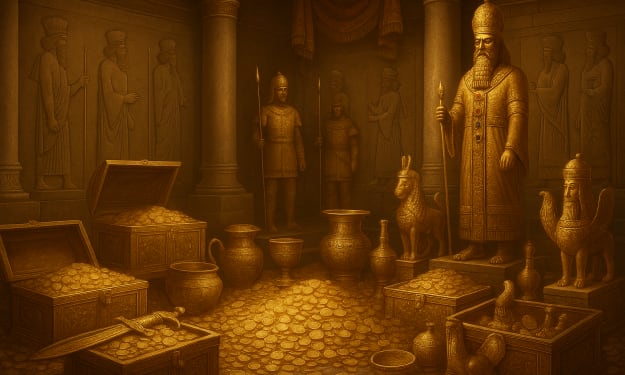
“The Empire Beneath the Sands: The Unrevealed Wealth of the Persian Empire” The Achaemenid Persian Empire, established by Cyrus the Great in the 6th century BCE, is frequently eclipsed by subsequent empires in conversations regarding ancient affluence. Nevertheless, this extensive empire, which extended from the Indus Valley to Greece and Egypt, amassed and administered one of the most significant concentrations of wealth ever witnessed. This article delves into the immense treasure reserves of the Persian monarchs, the sophisticated economic framework they devised, and an estimation of their net worth in contemporary terms. The Ascendancy of a Superpower The Achaemenid Persian Empire (circa 550–330 BCE) emerged as one of the earliest and largest global empires in human history. Under the leadership of figures such as Cyrus the Great, Darius I, and Xerxes I, it governed over 44% of the world’s population, a milestone unparalleled in historical records. Their affluence was derived from tributes, commerce, taxation, and the dominion over crucial regions abundant in gold, silver, and other valuable resources. At the zenith of the empire, the Persians had access to: Gold deposits in Armenia and Asia Minor Silver deposits in Central Asia Commerce from the Silk Road and maritime pathways Tributes from subdued territories, including Egypt, Babylon, Lydia, and India The Royal Treasuries of Persepolis and Susa One of the most intriguing aspects of the Persian Empire was its imperial treasuries, especially in Persepolis, Ecbatana, and Susa. These complexes were not merely ceremonial cities they were fortified repositories brimming with unimaginable wealth. Greek historians such as Herodotus and Ctesias documented that the Persian kings secured tens of thousands of talents (a unit of weight for gold or silver) within their palatial structures. Estimates: One talent ≈ 30 kg (66 pounds) A report during Alexander the Great's conquest indicated that the Persians had accumulated 180,000 talents of silver and gold in Persepolis alone This equates to over 5,400 metric tons of precious metals, appraised today at more than $300 billion. The Satrapy System: An Economic Engine Darius I transformed the empire's administration by instituting the satrapy system partitioning the empire into provinces, each overseen by a satrap (governor). Each satrapy was taxed according to its economic productivity. Annual tributes comprised: India: Paid in gold dust, valued at approximately 4680 talents of gold yearly Babylon: Contributed substantial quantities of grain and silver wealth Egypt: Provided gold, linen, and grain Lydia: Renowned for its gold mines and currency The empire’s yearly revenue from these tributes, converted to modern values, is estimated at $1–2 billion USD annually an extraordinary figure for the ancient world. Persian Coinage and Financial Innovation The Persians were also pioneers in finance. Darius introduced the Daric, a gold coin that became the benchmark of international commerce within the empire akin to the operational role of the U. S. dollar today. One Daric contained approximately 8. 4 grams of pure gold Minted alongside silver Sigloi for local circulation This stable currency system facilitated trade across extensive regions, from India to Macedonia. Wealth in Architecture and Art The Persians allocated their resources not solely towards grand treasuries but also towards monumental edifices. The establishment of Persepolis alone featuring its tiered platforms, ceremonial chambers, and elaborate reliefs is estimated to have incurred expenses amounting to hundreds of millions of dollars in labor and materials. The empire similarly expended considerable amounts on: Preserving imperial roadways such as the Royal Road (2,700 km in length) Sustaining extensive standing armies, including the prestigious Immortals Sponsoring artisans, stonemasons, and jewelers The Pillaging of Persia: Alexander’s Windfall When Alexander the Great invaded Persia in 330 BCE, one of his most significant rewards was not military but financial. Upon capturing Persepolis, it is reported that he seized: 180,000 talents of gold and silver Thrones and statues adorned with jewels Exotic tribute animals and scarce textiles This singular act of plunder provided Alexander with sufficient funds to: Finance his campaigns for over a decade Compensate his soldiers with bonuses Stabilize Greek economies for numerous years It was, arguably, the most substantial single appropriation of wealth in ancient history. Assessing the Net Worth Today While we cannot determine an exact figure for the wealth of the Persian Empire, cautious estimates derived from historical records and contemporary valuations indicate: Treasury Reserves: $300–500 billion (gold/silver alone) Annual Tribute Revenues: $1–2 billion in present-day terms Cultural and Artistic Wealth: Incalculable, but potentially tens of billions The total net worth of the Persian Empire at its zenith could range from $500 billion to over $1 trillion USD, considering inflation and current market conditions. Legacy of Wealth and Power The treasure of the Persian Empire encompassed more than just gold it embodied: The authority of structured governance The vigor of a diverse, multi-ethnic empire The impact of cultural patronage and acceptance Although looted and dispersed, the legacy of Persian wealth persists in archaeological discoveries, museum exhibits, and the historical framework it provided for subsequent empires.
By Say the truth about a year ago in History
The Honor of the Mulberry Tree. Content Warning.
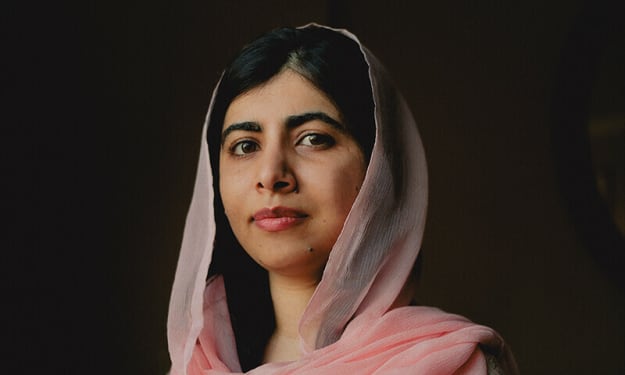
In the quiet village of Darra-e-Shahbaz, nestled beneath the shadow of the Spin Ghar mountains, life followed the rhythm of old traditions. Morning prayers echoed through the valley, the smell of fresh naan rose with the sun, and the stories of elders carried more weight than gold.
By Manatwal Khanabout a year ago in History
Ancient High Tech Machinery Used to Build Egypt’s Pyramids Study Claims
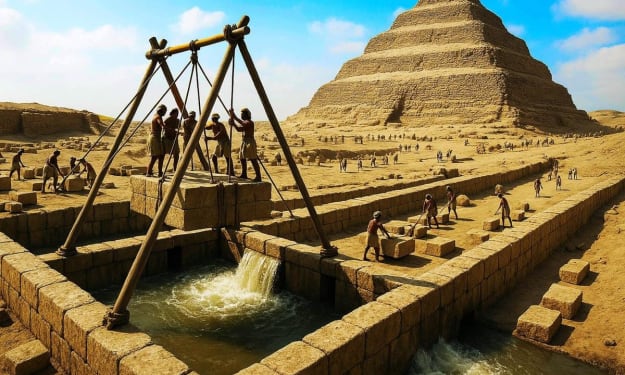
Ancient High Tech Machinery Used to Build Egypt’s Pyramids Study Claims For centuries the Great Pyramids of Egypt have fascinated historians engineers and tourists alike. Built over 4,500 years ago these towering monuments have sparked countless theories about how ancient civilizations managed to construct them with such precision and scale. While the mainstream archaeological consensus holds that the pyramids were built using simple tools manual labor and ingenious techniques a new controversial study claims that ancient high tech machinery may have played a crucial role in their construction.
By Adnan Rasheedabout a year ago in History
Cratippus of Athens
Within the intricate landscape of ancient Greek philosophy, prominent figures such as Plato, Aristotle, and Socrates often take center stage. Yet, numerous lesser-known philosophers have made substantial contributions to the evolution of Western thought. One notable individual is Cratippus of Athens, a Peripatetic philosopher from the 4th century BCE. Although his writings have not survived, remnants of his thoughts and accounts from subsequent scholars indicate a philosopher deeply involved in metaphysics, ethics, and natural philosophy. This essay delves into Cratippus' life, his philosophical impact, and his significance for later thinkers. By analyzing ancient texts, we can reconstruct the legacy of a philosopher who connected the ideas of Aristotle with those of subsequent Hellenistic philosophy.
By A Históriaabout a year ago in History
Gog & Magog: Secrets Behind the Wall
1. Dhul-Qarnayn (AS): Who Was He? In the Qur'an, Dhul-Qarnayn (AS) is mentioned as a powerful and righteous ruler (Surah Al-Kahf, 18:83–98). His exact historical identity is still up for debate—some claim he was Alexander the Great, while others suggest Cyrus the Great—but he is portrayed as a just king who helped oppressed people wherever he went. During one of his journeys, he reached a place between two mountains where he encountered a community that complained about the corruption caused by Gog and Magog (Ya’juj and Ma’juj). They requested that he construct a barrier to safeguard them. ⸻
By Shahriar Kabir Emonabout a year ago in History
Dedan Kimathi vs. Stanley Mathenge
A rivalry between Kimathi and Mathenge fermented during the heydays of the Maumau insurgence. Kimathi was originally subordinate to Mathenge. Although he was literate, he did not have any military experience. Prior to eloping into the forest, he was working at KCC in Thompson’s falls (Nyahururu) by day and the head overseer of oathing in the Rift Valley by night. Mathenge on the other hand was an ex-soldier. Kimathi’s voice was high-pitched while Mathenge’s was deep and commanded attention. The latter standing over 6 feet, towered over Kimathi’s somewhat short stature. Whereas Kimathi was rigid in his decisions, Mathenge was reasonable and could negotiate which came in handy during a crisis.
By HINGES OF TIMEabout a year ago in History
“The Golden Hamlet: The Untold Wealth of Kodiyankulam – Tamil Nadu’s Richest Village”
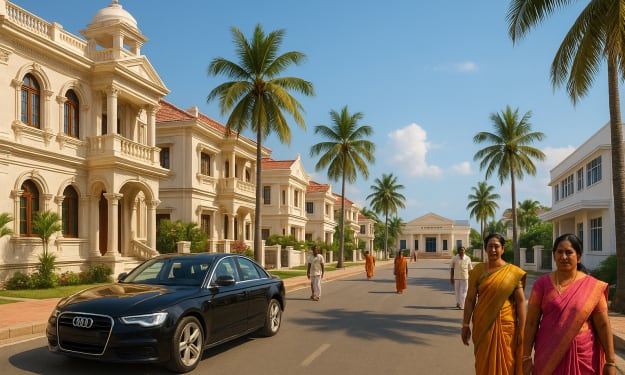
The Rise of a Rural Powerhouse Located about 30 kilometers from the southern port town of Thoothukudi, Kodiyankulam is a village like no other. Though it has fewer than 5,000 residents, the average household income and asset ownership are drastically higher than in most urban centers. Much of the wealth originates from decades of foreign employment, particularly in Persian Gulf nations, where many villagers migrated during the oil boom of the 1970s and 80s. Others have made fortunes in the US, UK, and Southeast Asia. Remittances over the decades transformed Kodiyankulam from a modest farming village to a land of marble bungalows, designer clothing, and luxury vehicles. Life in Kodiyankulam: Luxury Amid Simplicity Take a walk through the streets of Kodiyankulam and you’ll find: Hundreds of palatial homes, often worth ₹1 to ₹3 crore each, with Italian marble, gold-trimmed interiors, and imported furniture. Luxury cars like BMWs, Audis, and Mercedes-Benz, some even with Dubai or UK number plates. Residents dressed in branded attire and wearing gold jewelry even for day-to-day errands. Wedding ceremonies costing upwards of ₹1 crore, with international cuisine and imported décor. Private schools with English-medium instruction and digital classrooms funded by NRIs. Despite its wealth, the village maintains strong cultural roots—celebrating local festivals, temples, and traditions with pride. The Global Network An estimated 60% of households in Kodiyankulam have at least one family member living abroad. Gulf countries—especially UAE, Qatar, and Saudi Arabia—form the backbone of this global diaspora. Younger generations are also exploring opportunities in Canada, the UK, Australia, and Singapore. Many villagers have established construction businesses, restaurants, and trading companies overseas, funneling wealth back into their hometown. These NRIs have built community centers, schools, and even financed roads and water projects in the village. The Real Estate Boom Land prices in Kodiyankulam have skyrocketed. In some parts, real estate sells for over ₹1 crore per acre, especially on the highway stretches. That figure rivals even some suburban areas near Chennai and Coimbatore. Many villagers now engage in land dealings as a secondary source of income. Net Worth Estimation Let’s break down an approximate net worth of the village: Asset Category Estimated Value 1,000+ luxury homes (avg ₹1.5 crore) ₹1,500 crore 500+ luxury vehicles ₹200 crore Land holdings (agricultural + realty) ₹1,000 crore Business assets (in India & abroad) ₹1,500 crore Jewelry & luxury goods ₹300 crore Foreign investments & remittances ₹700 crore Estimated Total ₹5,200 crore+ (approx. $625 million USD) This makes Kodiyankulam potentially the richest village in Tamil Nadu, and among the wealthiest in India. Social Change and Education Wealth has also brought positive change. Education levels are high, especially among girls. Many residents are now doctors, engineers, and lawyers, both in India and abroad. Kodiyankulam boasts multiple schools, libraries, and even private coaching centers. Community welfare projects are often funded collectively by residents and their overseas kin.
By Say the truth about a year ago in History
A Candle Called Hope
The Beginning of Darkness In a small, forgotten village surrounded by endless hills and thick forests, there was a girl named Lina, just twelve years old, with eyes full of dreams. Her village, once full of joy, was now covered in shadows. The sun rarely peeked through the clouds, the trees stopped blooming, and people had started to lose their smiles. Something strange had happened a deep sadness had spread, and no one knew why.
By Muhammad Hayatabout a year ago in History
A Normal Monday
5 may 2025 "An Ordinary Monday" The alarm blared at 6:30 AM, sharp and relentless. Mark moaned as he slammed the snooze button with expert precision. Five additional minutes He only needed that. But five minutes turned into ten, and before he knew it, he was scrambling out of bed at 6:55, cursing under his breath. He stumbled into the shower, the water lukewarm at best, and scrubbed himself half-awake. As he brushed his teeth, the reflection of him was a blur of tired eyes and bedhead. A granola bar and a cup of black coffee were consumed while he scrolled through his phone during the hurried breakfast. Emails already. That's right. A meeting reminder for 9 AM, a passive-aggressive note from his boss about last week’s unfinished report, and a spam email promising him "financial freedom in just three easy steps!" He laughed as he deleted that one. The usual chaos surrounded the journey. Traffic crawled, brake lights glowing red in the early morning gloom. The radio played the same pop song for what felt like the hundredth time that month. In an effort to get the cars in front to move, Mark rubbed his fingers on the steering wheel. By the time he reached the office, it was 8:47. He swung his badge at the door and nodded to Janet from HR, who smiled at him normally with a tight lip. The elevator was packed, bodies pressed together in uncomfortable silence. The perfume of someone was too strong. Someone else had a bacon odor. His desk was exactly as he’d left it on Friday—messy. a half-empty water bottle, stacks of paperwork, and a sticky note that just said "Call Dave??" * with no further context. He frowned at it before tossing it into the trash.
By mister royabout a year ago in History
Google CEO Sundar Pichai's Education, Salary, and Net Worth
Sundar Pichai: The Influential CEO of Google's Education, Salary, and Net Worth In the world of technology, Sundar Pichai, CEO of Google and Alphabet Inc., is a name associated with leadership and innovation. Pichai's journey—from humble beginnings in India to leading one of the world's most valuable businesses—is a compelling tale of ambition, education, and success. The educational background of Sundar Pichai, his current salary as a top executive, and his impressive net worth are the subjects of this article. Education and childhood Sundar Pichai was born as Pichai Sundararajan on June 10, 1972, in Madurai, Tamil Nadu, India. His mother was a stenographer and his father was an electrical engineer for the British conglomerate GEC. He was raised in a Chennai middle-class household. Sundar frequently recounts how his upbringing shaped his principles of hard work and simplicity. The family lived in a modest two-room apartment. From a young age, Pichai excelled academically. He completed his schooling at Jawahar Vidyalaya in Ashok Nagar, Chennai, and later attended Vana Vani School, located on the campus of IIT Madras. His strong academic record earned him a place at the prestigious Indian Institute of Technology Kharagpur (IIT Kharagpur), where he studied Metallurgical Engineering. His sharp intellect and leadership abilities were noted by IIT Kharagpur professors. After completing his degree in India, Pichai moved to the United States to pursue higher education. Stanford University conferred on him a Master of Science (MS) degree in Material Sciences and Engineering. He went on to complete his MBA at the University of Pennsylvania's Wharton School. He was named a Siebel Scholar and a Palmer Scholar at Wharton, honors given to students who perform exceptionally well. Progress and Promotion at Google Sundar Pichai joined Google in 2004 and started working on the Google Toolbar, a tool that made it easier for Internet Explorer users to access Google search. His big breakthrough came with the development of Google Chrome, the company’s now-dominant web browser. The introduction of Chrome in 2008 changed the game and helped establish Pichai as the company's most important leader. He became an important part of the management of products like Android, Google Drive, Gmail, and Google Maps over time. He was a favorite among Google's top executives for his calm demeanor, strategic thinking, and in-depth knowledge of product development. Pichai was named CEO of Google in 2015, when the company underwent corporate restructuring to create a new parent company called Alphabet Inc. His responsibilities expanded further in December 2019, when he also became the CEO of Alphabet, replacing Larry Page. Under his leadership, the company has focused on artificial intelligence, sustainability, and product innovation, maintaining its dominant position in the tech industry.
By GLOBAL NEWSabout a year ago in History