Ancient
The Most Fascinating Unsolved Mysteries of History
Throughout history, countless events and phenomena have puzzled historians, scientists, and the general public. While many questions have been answered with time and research, some mysteries remain unsolved, offering glimpses into the unknown. These enigmas not only challenge our understanding of the past but also inspire endless theories and speculation. Here, we explore some of the most fascinating unsolved mysteries in history.
By Marius Lungu2 years ago in History
When Rome Brought the Seas to the Colosseum: The Spectacle of Naval Battles in the Arena
The Colosseum in Rome, one of history's most iconic structures, was built to awe, entertain, and display the might of the Roman Empire. While most people associate the Colosseum with gladiatorial combat and wild animal hunts, there’s another, lesser-known chapter in its history that truly underscores the Romans' flair for spectacle: naumachiae, or staged naval battles. These elaborate performances transformed the Colosseum into a vast, water-filled arena where mock naval battles were reenacted with real ships and soldiers. One of the earliest and most spectacular of these events occurred in 80 AD, under Emperor Titus, during the grand opening celebrations of the Colosseum. A Sea Within a Stadium When Emperor Titus inaugurated the Colosseum, he aimed to make a statement that would resonate throughout the Empire. The structure itself was a marvel of engineering, capable of seating over 50,000 spectators. But Titus wanted more than just gladiators and exotic beasts; he wanted to bring the drama of the seas into the heart of Rome. To achieve this, the Romans used their advanced engineering skills to flood the arena. The Colosseum’s floor was removed, revealing a deep basin capable of holding water. Using aqueducts, they transported massive amounts of water into the arena, transforming it into a miniature sea. The centerpiece of the event was a reenactment of the famous naval battle between Athens and Syracuse, a pivotal conflict from the Peloponnesian War. To make the performance as realistic as possible, flat-bottomed ships—designed for shallow water—were built to resemble ancient war vessels. The arena even featured an artificial island in the middle, giving combatants a strategic landing point and adding an extra layer of realism to the spectacle. The Battle Comes to Life With over 3,000 participants, including sailors, soldiers, and prisoners condemned to fight, the naumachia was nothing short of an epic production. These weren’t mere actors playing at war; the battles were fierce and often fatal, as participants fought for their lives in front of a bloodthirsty audience. The mock naval battle followed a narrative structure, with one side representing Athens and the other Syracuse. The ships were armed with sailors who rowed and maneuvered them into combat, while soldiers on board engaged in close-quarters fighting. Archers fired flaming arrows, and catapults launched projectiles, creating a chaotic and thrilling scene that left spectators on the edge of their seats. The artificial island added an extra dimension to the fight, serving as a battleground for hand-to-hand combat once ships were boarded or destroyed. The event was designed to be as immersive and dramatic as possible, capturing the grandeur and brutality of ancient naval warfare. The Engineering Feat Behind the Spectacle Flooding the Colosseum was no small feat, and it demonstrated the Romans’ mastery of engineering and hydraulics. The arena’s basin was lined with waterproof materials, and an elaborate system of aqueducts and channels ensured a steady flow of water. However, the naumachiae were not a permanent feature of the Colosseum. After the water battles, the arena could be drained and converted back into a solid floor for gladiatorial games and other events. This flexibility showcased the ingenuity of Roman architects, who designed the Colosseum to accommodate a variety of spectacles. The Legacy of the Naumachiae The success of the inaugural naumachia under Titus set the stage for similar events in the future. Subsequent emperors, including Domitian and Trajan, hosted their own naval battles, each trying to outdo their predecessors in scale and spectacle. The last recorded naumachia in the Colosseum occurred in 107 AD under Emperor Trajan, who reportedly used it to celebrate his victory over the Dacians. While the naumachiae were undeniably impressive, they were also resource-intensive. The logistics of flooding the arena, constructing ships, and organizing the battles were staggering, even by Roman standards. Over time, as the Roman Empire faced economic and political challenges, such extravagant displays became less frequent. Beyond the Colosseum Although the Colosseum is the most famous venue for naumachiae, it wasn’t the only location in Rome where these battles were staged. Earlier emperors, like Julius Caesar and Augustus, organized large-scale naval spectacles in specially constructed basins or natural bodies of water. For example, Augustus famously flooded an area near the Tiber River to reenact a battle between Egyptian and Roman forces. However, the Colosseum’s naumachiae stood out for their sheer audacity and the intimate setting they provided for the audience. The ability to witness naval warfare up close, in the heart of Rome, made these events a unique blend of entertainment, propaganda, and spectacle. A Wildly Ambitious Legacy The naumachiae of the Colosseum remain a testament to the Romans’ ambition and ingenuity. They weren’t just about entertainment; they were also a demonstration of the Empire’s power and technological prowess. By recreating naval battles in an arena, the Romans reinforced the idea that their civilization could conquer and control even the forces of nature. Today, as visitors wander the ruins of the Colosseum, it’s hard to imagine the arena filled with water and ships, alive with the sounds of battle. Yet this forgotten chapter of its history is a reminder of the grandeur and extravagance of ancient Rome, where the line between reality and performance often blurred, and the impossible became possible. So, next time you think of the Colosseum, remember: it wasn’t just a place for gladiators—it was once a stage for epic naval warfare, where Rome brought the seas to the arena and history to life.
By Deji Akomolafe2 years ago in History
Go Along-Hair Ties
"Go Along Hair Ties" – A Unique Punishment to Mend Relationships In the old days, a fascinating tradition was practised in some Spanish families to resolve fights between siblings, especially sisters. This simple yet creative method helped them learn to get along better. Let us dive into the details of this unique tradition, its purpose, and how it worked.
By Muhammad Waseem 2 years ago in History
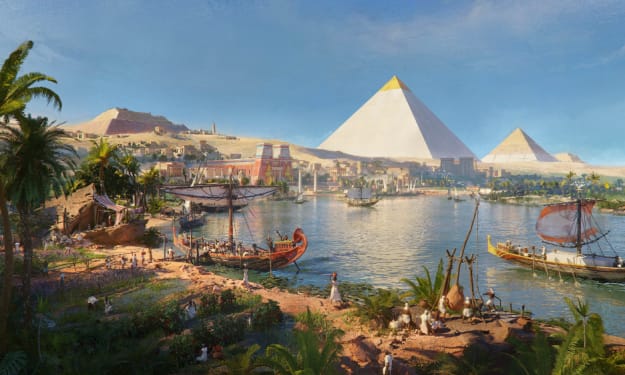
The Great Pyramid of Giza: An Constant Attribute of Age-old Ingenuity
The Great Pyramid of Giza stands as a attestation to the absurd adeptness and appetite of age-old Egyptian civilization. Located on the Giza Plateau abreast Cairo, Egypt, it is the oldest and best acclaimed of the Seven Wonders of the Age-old World. Not alone is it the alone one of these wonders still in existence, but it additionally continues to attraction researchers, historians, and tourists akin with its mysteries and the arduous consequence of its construction. Historical Acceptation and Context
By Say the truth 2 years ago in History
The Capelobo
Brazilian folklore is abundant with intriguing creatures and tales that reflect a blend of indigenous, African, and European heritage. One such mythical entity is the Capelobo, a lesser-known yet equally enthralling figure. Frequently eclipsed by more renowned characters such as the Saci or Curupira, the Capelobo embodies an aura of mystery, fear, and fascination. Let us explore the legend of this enigmatic creature and its importance within Brazilian folklore.
By A História2 years ago in History
The Most Beautiful Architecture in the World
Architecture is more than just the structure and design of buildings; it reflects culture, history, and artistry. The world is home to some of the most beautiful and awe-inspiring architectural wonders that blend creativity, engineering, and aesthetics. From ancient temples to modern skyscrapers, these architectural marvels continue to captivate visitors from around the globe. In this article, we’ll explore some of the most beautiful architecture in the world, each one a testament to human ingenuity and vision.
By Zinnat ara Begum2 years ago in History
A 700-Year-Old Templar Sword Unearthed: A Glimpse into a Dark Chapter of History
Deep in a small, private forest in England, an extraordinary discovery has shed light on one of history’s most enigmatic and tumultuous periods. Beneath a tree, within the confines of an ancient cave, archaeologists uncovered a 700-year-old sword believed to have belonged to the Knights Templar. This stunning find provides not only a tangible connection to the medieval order but also a glimpse into their desperate struggle for survival during the persecutions of 1312. The sword, remarkably well-preserved for its age, and its context suggest that the cave may have served as a shelter for Templar knights fleeing the wrath of the church and crown. This blog delves into the historical background of the Templars, the persecutions they faced, and the significance of this find. --- The Rise and Fall of the Knights Templar The Knights Templar were founded in 1119 as a monastic military order tasked with protecting Christian pilgrims traveling to the Holy Land. Over the next two centuries, they grew into a powerful organization with vast wealth, influence, and lands spanning Europe and the Middle East. Their role as both warriors and bankers made them indispensable to the church and the nobility. However, their power also made them targets. By the early 14th century, the Crusades had waned, and the Templars’ purpose was increasingly questioned. King Philip IV of France, deeply in debt to the order, conspired with Pope Clement V to bring about their downfall. In 1307, Philip ordered the mass arrest of Templar knights in France. Under torture, many confessed to heresy, blasphemy, and other fabricated charges. This led to the infamous persecutions of 1312, culminating in the dissolution of the order by papal decree. Many Templars were executed, and others fled to seek refuge in distant lands. --- A Cave of Refuge in England The discovery of the Templar sword in a cave raises intriguing questions about how the order’s remnants survived during these dark times. England, though less hostile to the Templars than France, was still a dangerous place for the knights after 1312. Many sought shelter in remote locations, hidden from the prying eyes of church authorities and royal agents. The cave in which the sword was found may have been one such sanctuary. Located in a secluded forest, it would have provided a natural hideout, difficult to locate and defensible if necessary. The sword’s presence suggests that Templars might have used the cave as a base or temporary refuge while on the run. --- The Sword and Its Significance The sword itself is a masterwork of medieval craftsmanship, typical of the weaponry used by Templar knights. Its blade, though tarnished by centuries underground, bears faint traces of inscriptions and symbols associated with the order, including the iconic cross pattée. 1. Symbolism of the Sword: For the Templars, the sword was not merely a weapon; it was a symbol of their sacred mission to defend Christendom. The discovery of this particular sword emphasizes the spiritual and martial duality of their lives. 2. A Templar’s Last Stand?: The sword’s location under a tree, combined with the context of the cave, raises the possibility that its owner may have perished there, leaving behind a poignant reminder of the ordeals faced by the persecuted knights. --- Templars and the Holy Mothers The discovery also hints at the broader methods employed by Templars to protect themselves during this perilous period. Accounts from the time suggest that the order relied heavily on covert networks and loyal allies, including women referred to as "Holy Mothers." These women, often linked to noble families sympathetic to the Templar cause, played a crucial role in offering sanctuary, disguising fugitives, and safeguarding their treasures. The presence of the sword within a silk-lined pouch, as reported by archaeologists, suggests it may have been hidden deliberately, perhaps by such protectors. This artifact serves as a testament to the resourcefulness and resilience of the Templars and their supporters. --- Illuminating a Dark Chapter of History This discovery is more than just an archaeological find; it is a tangible link to a turbulent period when the Templars were hunted, tortured, and eradicated as a formal organization. It highlights the human cost of political and religious persecution, as well as the enduring legacy of the Knights Templar in popular imagination. The cave, sword, and surrounding artifacts paint a vivid picture of survival against the odds. They also remind us of the lengths to which people will go to preserve what they hold sacred. --- The Enduring Legacy of the Templars The Knights Templar continue to captivate the modern world, inspiring legends, conspiracy theories, and historical inquiry. From their meteoric rise to their dramatic fall, the story of the Templars resonates as a tale of devotion, betrayal, and resilience. Finds like the sword discovered in the English forest serve as a sobering reminder that beneath the myths lies a history of real people caught in the tides of power and politics. Their artifacts, like this sword, provide a rare glimpse into their lives and struggles, keeping their story alive for future generations. --- Conclusion The 700-year-old sword unearthed in a cave in England is more than just an artifact; it is a window into the past. It tells a story of courage, faith, and survival during one of history’s darkest episodes. As archaeologists continue to study the site, they may uncover more details about the Templars’ activities and the cave’s role as a sanctuary. For now, this discovery stands as a powerful reminder of the resilience of the human spirit—and the enduring allure of the Knights Templar.
By Deji Akomolafe2 years ago in History
The Roman Rock Crystal Jar: A Jewel of the Galloway Hoard
Unearthed in 2014 in a field in Galloway, Scotland, the Roman rock crystal jar from the Viking age is a remarkable artifact that bridges the gap between antiquity and the early medieval world. This extraordinary find, now part of the Galloway Hoard, measures a mere 5 centimeters (2 inches) in height but carries immense historical and cultural significance. Wrapped in intricate gold thread and preserved in a silk-lined leather pouch, the jar exemplifies the sophistication of early medieval craftsmanship and the cross-cultural interactions of the time. Now housed at the National Museum of Scotland, the jar provides invaluable insight into the luxurious items that were prized during the Viking Age and offers a glimpse into the complex relationships between the Roman, early medieval, and Viking worlds. --- Discovery of the Galloway Hoard The Galloway Hoard was discovered by a metal detectorist in a field in Dumfries and Galloway, Scotland, in 2014. This treasure trove consists of more than 100 items, including silver arm rings, gold ornaments, brooches, textiles, and objects of diverse origins. While the hoard primarily dates to the Viking Age (approximately the late eighth to early ninth centuries), many of its artifacts, like the rock crystal jar, are far older. The jar itself stands out as one of the most exquisite pieces in the collection, demonstrating the high value placed on objects from antiquity during the early medieval period. --- The Roman Rock Crystal Jar The jar, crafted from rock crystal, is a Roman artifact, likely dating back to the first few centuries AD. Rock crystal, a clear and naturally occurring form of quartz, was highly valued in the ancient world for its purity and brilliance. This small jar would have originally been used by the Romans to hold precious substances such as perfumes, oils, or ceremonial liquids. By the time it came into Viking hands centuries later, the jar had been transformed. Skilled artisans from the late eighth or early ninth century encased it in gold thread, creating a dazzling contrast between the crystalline clarity of the jar and the intricate metallic framework. This level of craftsmanship speaks to the importance of the object, as only highly skilled goldsmiths could have created such fine work. --- Purpose and Symbolism The precise purpose of the jar during the Viking Age remains a matter of speculation, but its elaborate presentation suggests it was no ordinary possession. Experts believe it may have been used in royal or religious ceremonies, possibly holding anointing oils, perfumes, or other sacred substances. In Viking society, prestige and power were often displayed through the ownership and exchange of luxury goods. Objects like the rock crystal jar, with its Roman origins and medieval embellishments, would have been highly prized for their rarity, exoticism, and connection to antiquity. The jar's preservation in a silk-lined leather pouch further underscores its significance. Silk, a luxury material imported from the Byzantine Empire or the Islamic Caliphate, was a symbol of wealth and status in early medieval Europe. The combination of silk and leather suggests that the jar was not only a treasured item but also carefully protected to maintain its condition over generations. --- A Testament to Cross-Cultural Exchange The journey of the rock crystal jar—from the Roman Empire to a Viking hoard in Scotland—illustrates the extensive networks of trade, conquest, and cultural exchange that characterized the early medieval world. 1. Roman Craftsmanship: The jar’s Roman origins highlight the advanced artistry and technology of the ancient world. Rock crystal objects required precise carving, a skill that flourished in Roman workshops. 2. Viking Appreciation of Antiquity: The Vikings were not merely raiders; they were also traders and collectors who valued artifacts from other cultures. The presence of this Roman artifact in the Galloway Hoard reflects their appreciation for ancient luxury items and their integration into Viking prestige systems. 3. Goldsmithing of the Early Medieval Period: The goldwork encasing the jar demonstrates the technical and artistic capabilities of early medieval craftsmen. The repurposing of an older object with contemporary embellishments exemplifies how ancient artifacts were reimagined and reintegrated into new cultural contexts. 4. Silk’s Long Journey: The silk-lined pouch housing the jar points to the vast trade networks that brought exotic materials from the East to northern Europe. Such trade routes connected the Vikings to the Byzantine Empire, the Islamic Caliphate, and beyond. --- Restoration and Display Since its discovery, the rock crystal jar has undergone meticulous restoration to uncover the full extent of its beauty. Conservators carefully cleaned the crystal and gold thread, revealing the intricate details of its construction. Today, the jar is displayed at the National Museum of Scotland as part of the Galloway Hoard collection. Its presentation highlights the intersection of Roman, Viking, and early medieval cultures, inviting visitors to reflect on the complex layers of history embodied in a single object. --- What the Jar Teaches Us The Roman rock crystal jar is more than just an artifact—it is a window into the past. It tells a story of human ingenuity, the value of material culture, and the interconnectedness of civilizations across time and space. For the Romans, it was likely a luxurious vessel for precious liquids. For the Vikings, it was a symbol of power, prestige, and a tangible link to the past. For modern audiences, it serves as a reminder of the shared heritage that connects ancient and medieval worlds. --- Conclusion The Roman rock crystal jar from the Galloway Hoard stands as a testament to the craftsmanship, trade, and cultural exchange that defined the Viking Age. Encased in gold and protected in silk, it encapsulates the values and aspirations of the people who owned it, transcending the centuries to become a bridge between civilizations. As we marvel at this tiny yet exquisite object, we are reminded of the enduring human desire to create, preserve, and cherish beauty—and the stories such artifacts can tell about the worlds they once inhabited. The jar, now carefully preserved in the National Museum of Scotland, is a jewel of history, connecting us to the Roman Empire, the Viking Age, and the artisans who left their mark on this remarkable piece.
By Deji Akomolafe2 years ago in History
The Mysterious Disappearance of the 9th Legion and the Rise of Hadrian’s Wall
One of ancient Rome’s most perplexing mysteries is the disappearance of the 9th Legion, Legio IX Hispana, an elite Roman military unit that vanished from history between AD 108 and AD 122. The legion's fate has been the subject of speculation for centuries, with theories ranging from annihilation in battle to reassignment elsewhere in the empire. Their absence, however, played a pivotal role in shaping Roman Britain’s future. In AD 122, Emperor Hadrian arrived in Britain, determined to secure Rome's northern frontier and assert control over the often-rebellious tribes of Caledonia (modern-day Scotland). To accomplish this, Hadrian brought with him the 6th Legion, Legio VI Victrix, and tasked them with constructing one of the Roman Empire’s most iconic structures: Hadrian’s Wall. This blog explores the mystery of the 9th Legion’s disappearance, the arrival of the 6th Legion, and the monumental engineering feat of building Hadrian’s Wall. --- The 9th Legion: A Fateful Disappearance The 9th Legion was a highly decorated unit with a long and storied history. Founded in the first century BC, it served in several key campaigns across the Roman Empire, from Caesar’s conquest of Gaul to Claudius’s invasion of Britain in AD 43. The legion was stationed in Britain for decades, where it became a cornerstone of Roman rule in the province. By the early second century, the 9th Legion was headquartered in Eboracum (modern-day York), tasked with defending Rome’s northernmost borders. The lands beyond these frontiers were inhabited by fierce and independent tribes who frequently resisted Roman incursions. Sometime between AD 108 and AD 122, the 9th Legion vanished without a trace. While historical records provide no definitive answer, several theories attempt to explain their disappearance: 1. Massacre by Northern Tribes: The most popular theory suggests the legion was wiped out in a catastrophic battle against the Caledonian tribes. With limited Roman reinforcements in Britain at the time, such an event could have easily occurred. 2. Reassignment and Obscurity: Another possibility is that the legion was reassigned to another part of the empire, such as the Parthian frontier, and was later disbanded or absorbed into other units without further record. 3. Political Cover-Up: Some historians speculate that the loss of an entire legion may have been deliberately omitted from Roman records to avoid embarrassment or political repercussions. Regardless of the cause, the disappearance of the 9th Legion created a vacuum in Britain’s defense, necessitating a significant response from the Roman Empire. --- Hadrian’s Arrival in Britain In AD 122, Emperor Hadrian traveled to Britain as part of his extensive tour of the empire’s provinces. By this time, Rome was struggling to maintain control of its vast territories. In Britain, the northern frontier faced constant pressure from tribes who refused to submit to Roman rule. The rebellion that possibly claimed the 9th Legion’s lives underscored the need for a more secure border. Hadrian’s solution was bold: a permanent defensive structure spanning the width of the island, from the River Tyne in the east to the Solway Firth in the west. This wall, known as the Vallum Aelium (Hadrian’s Wall), would not only serve as a military fortification but also as a powerful symbol of Roman authority. To carry out this monumental task, Hadrian brought with him the 6th Legion, Legio VI Victrix (the Victorious). --- The Rise of the 6th Legion The 6th Legion had earned its reputation in earlier campaigns in Hispania and Germania. By the time they arrived in Britain, they were a seasoned and disciplined force, well-equipped for the challenges ahead. Upon reaching Eboracum, the 6th Legion set to work replacing the 9th Legion as the primary military presence in the region. They immediately began construction on Hadrian’s Wall, a feat of engineering that would stand as a testament to Roman ambition and ingenuity. --- Building Hadrian’s Wall The construction of Hadrian’s Wall was no small undertaking. Stretching approximately 80 Roman miles (73 modern miles), the wall required vast resources, skilled labor, and meticulous planning. 1. Design and Purpose: The wall was built of stone and turf, with a height of up to 15 feet and a width of about 10 feet. It was fortified with a series of milecastles, watchtowers, and forts that housed soldiers and supplies. The wall was designed not just as a barrier but also as a means of controlling movement and trade. 2. Labor Force: The bulk of the work was carried out by Roman soldiers, including the 6th Legion. Skilled engineers and laborers ensured the wall’s construction adhered to Roman standards. 3. Logistics and Supply: Constructing such a massive structure required transporting materials across difficult terrain. Local quarries supplied stone, while Roman roads facilitated the movement of equipment and personnel. 4. Cultural Impact: Hadrian’s Wall was more than a defensive measure—it marked a clear boundary between the Roman-controlled south and the untamed north. It became a powerful symbol of Rome’s reach and its ability to shape the landscape. --- Legacy of the 6th Legion and Hadrian’s Wall The 6th Legion remained stationed in Britain for centuries, becoming one of the province’s most enduring military units. Their work on Hadrian’s Wall left a lasting legacy, as the structure became one of the most iconic remnants of Roman Britain. Hadrian’s Wall served its purpose well, providing a secure border and facilitating communication and control. While it could not completely prevent incursions, it significantly reduced large-scale attacks and demonstrated Rome’s commitment to maintaining its empire. --- Conclusion The disappearance of the 9th Legion remains one of Rome’s greatest mysteries, but its absence set the stage for significant changes in Britain’s history. The arrival of the 6th Legion and the construction of Hadrian’s Wall transformed the northern frontier, providing security and stability in a turbulent region. Hadrian’s Wall, a product of Roman engineering and military might, stands as a lasting monument to an empire that once spanned the known world. It also serves as a reminder of the resilience and determination of the Roman legions, whose efforts shaped the course of history in Britain and beyond.
By Deji Akomolafe2 years ago in History
Kumbh Mela Tour: A Journey into India's Spiritual and Cultural Grandeur
The Kumbh Mela is one of the most extraordinary spiritual gatherings in the world, bringing together millions of devotees, ascetics, saints, and travelers seeking enlightenment, purification, and divine blessings. Recognized by UNESCO as an Intangible Cultural Heritage of Humanity, the Kumbh Mela is held in rotation at four sacred locations in India: Prayagraj (Allahabad), Haridwar, Nashik, and Ujjain. Each venue has its unique significance, tied to Hindu mythology and the holy rivers.
By Harsh Vardhan2 years ago in History
The Most Beautiful Zoo in the World
Zoos have long been places of fascination, education, and conservation, but some go above and beyond to captivate visitors with breathtaking beauty. The most beautiful zoos in the world do more than house animals—they create immersive environments that reflect natural habitats, promote animal welfare, and offer unforgettable experiences. You're in the right place if you're looking for a zoo that blends stunning landscapes with diverse wildlife!
By Zinnat ara Begum2 years ago in History
The Most Beautiful River in the World
When it comes to natural wonders, rivers have a special place in the hearts of travellers and nature enthusiasts alike. Their mesmerizing beauty, the way they carve through landscapes, and the ecosystems they support make them an essential part of Earth's splendour. But which river holds the title of "The Most Beautiful River in the World"? While beauty is subjective, several rivers around the globe are often hailed for their stunning landscapes, rich biodiversity, and awe-inspiring surroundings.
By Zinnat ara Begum2 years ago in History