Ancient
Uncovering a Grim Chapter at Jamestown: Evidence of Cannibalism Among the First English Settlers
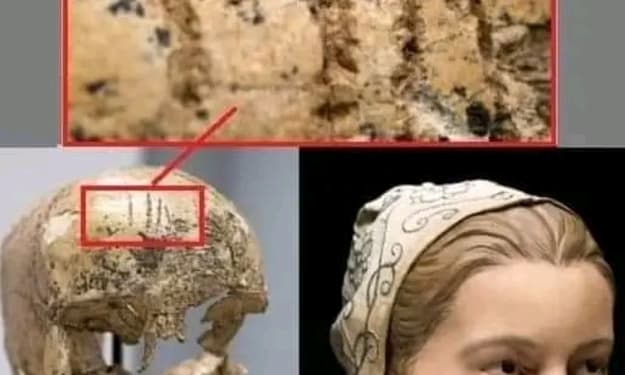
In the heart of what would become the United States, the story of Jamestown, the first permanent English settlement, has long been etched into history. Founded in 1607, this colony in Virginia faced brutal hardships that nearly wiped out the settlement entirely. One of the darkest and most revealing discoveries came to light in 2012, when archaeologists unearthed the skull and leg bones of a 14-year-old girl among butchered animal bones and discarded food scraps. These bones carried a haunting story of survival, a desperate chapter that brings a new perspective to the winter of 1609-1610, known as the "Starving Time." The Discovery at Jamestown The 2012 discovery in Jamestown, Virginia, was chilling. Archaeologists, led by forensic anthropologist Douglas Owsley from the Smithsonian Institution, uncovered the skull and other bones in a trash deposit. The remains were found alongside remnants of butchered horses, dogs, and other food scraps discarded by Jamestown settlers. The skull and leg bones, meticulously examined by Owsley, belonged to a young girl who was likely around 14 years old at her death. Although details about her origins remain uncertain, she was given the name “Jane” by researchers to honor her as a part of Jamestown’s story. Jane’s remains were not immediately distinguishable from the butchered animal bones around them, yet they contained evidence of a disturbing chapter. Owsley's team found clear indications that the girl’s body had been subjected to cuts and blows from multiple sharp instruments, providing evidence of cannibalism—a desperate act that only the harshest of circumstances could drive people to commit. The "Starving Time" and the Desperation in James Fort The winter of 1609-1610 in Jamestown was brutal and merciless. Known to history as the “Starving Time,” it became a season of near-total isolation for the colony’s 300 settlers, confined to James Fort by both harsh weather and hostilities with surrounding Indigenous tribes. In addition to food shortages and disease, the settlers faced a siege that left them cut off from vital resources and supply lines. As winter settled in, Jamestown’s settlers were faced with grim choices, forced to ration every last scrap of food. The situation rapidly declined into starvation, with settlers consuming their horses, dogs, cats, and even shoe leather to survive. By the end of that winter, only 60 of the 300 settlers remained alive. When relief ships arrived in the spring of 1610, they were met by emaciated survivors who had endured unspeakable hardships. For years, written records hinted at the extreme measures taken during this time, but it wasn’t until Jane’s remains were found that there was tangible, forensic evidence of cannibalism. It was a reality that the colony’s chroniclers had whispered about but one that had gone unproven until now. Forensic Evidence of Cannibalism The analysis of Jane's skull reveals the desperation that must have gripped the settlers during that winter. Douglas Owsley’s forensic study found clear evidence of multiple blows and cuts from at least three different sharp instruments. These markings indicated a methodical attempt to remove soft tissue from the bone, suggesting a deliberate, if reluctant, act of cannibalism. The cuts along the forehead and jaw showed a controlled, careful removal of flesh, while more forceful marks on the skull's base suggested attempts to reach the brain. The tools used were identified as metal instruments, likely knives and cleavers. The various cut marks, depth, and locations suggest that at least one individual, if not more, participated in this process. Owsley’s findings marked the first forensic proof of cannibalism in an early European colony in North America, confirming what had long been suspected. Jane's remains, along with those of the other animals, paint a vivid picture of the daily struggles within James Fort. Her bones, placed alongside butchered horse and dog bones, serve as haunting evidence of the lengths to which people were driven when facing starvation. The Human Cost of Colonization This discovery adds complexity to our understanding of early European colonization. Jamestown's story is often presented as one of resilience and fortitude, but Jane’s remains show the steep price paid by individuals. While her story offers insight into the human experience within the colony, it also sheds light on the difficult reality settlers faced in a foreign and hostile environment. Far from a romanticized tale of adventure, the story of Jamestown reflects the grim reality of survival and the extreme lengths people will go to when deprived of basic necessities. A Legacy Remembered Jane's story, though heartbreaking, underscores the survival of Jamestown and its role in establishing the future United States. The tale of cannibalism is only one part of a larger history of endurance, fortitude, and tragedy that marked the colony’s early years. While the remains of “Jane” reveal a tragic moment, they are also a testament to the resilience of the human spirit, even in the bleakest of circumstances. In revealing this dark chapter, Jane’s story challenges us to rethink our perceptions of early settlers and the immense hardships they endured. As visitors walk through Jamestown today, they do so on land that holds echoes of these early struggles, where individuals like Jane were part of a larger, complex story of survival. The discovery of her remains provides a visceral connection to this past, reminding us that history is often more complex—and more human—than we might imagine.
By Deji Akomolafe2 years ago in History
The Pons Fabricius: Rome's Oldest Standing Bridge and a Testament to Ancient Engineering
In the heart of Rome, where centuries of history are woven into every corner, stands the Pons Fabricius, a bridge that has miraculously survived the ages in its original state. Built in 62 BC, this ancient structure holds the title of Rome’s oldest surviving bridge and serves as a remarkable testament to the ingenuity and durability of Roman engineering. With its two symmetrical arches spanning the Tiber River, the Pons Fabricius continues to connect the bustling city to Tiber Island, captivating visitors and locals alike with its understated elegance and rich history. The Origins of Pons Fabricius The Pons Fabricius was commissioned by Lucius Fabricius, a curator of Rome’s roads, in 62 BC. Originally designed to replace an earlier wooden bridge, this stone bridge was meant to provide a reliable and sturdy crossing over the Tiber River, connecting the left bank of the city to Tiber Island. As indicated by its Latin inscription, which still survives on the bridge’s parapet, Lucius Fabricius intended for his name to be associated with this enduring structure. The bridge’s purpose was both practical and symbolic. In ancient Rome, bridges were essential for the movement of people, goods, and ideas. Connecting the mainland with Tiber Island—a sacred place in Roman culture with its Temple of Asclepius, the god of healing—the Pons Fabricius served as a vital link, symbolizing Rome’s commitment to facilitating connections within the city and beyond. Engineering Marvels of Ancient Rome Roman engineers were renowned for their expertise in creating lasting structures, and the Pons Fabricius is an outstanding example of their mastery. The bridge is built from blocks of tuff and travertine, materials chosen for their strength and durability. To ensure stability against the river’s currents and seasonal floods, Roman architects crafted two large arches, each spanning approximately 24.5 meters, as well as a smaller central arch to allow the water to flow smoothly, reducing pressure on the main structure. The Romans understood the importance of flexibility in construction, which is why the arches of the Pons Fabricius are semi-circular, a design that disperses the weight evenly across the bridge, making it capable of withstanding heavy loads and shifts in the river's flow. The strategic use of volcanic stone and the arch design collectively give the bridge its remarkable resilience, allowing it to withstand nearly two thousand years of traffic, floods, and weathering. Inscriptions and Legends One of the unique aspects of the Pons Fabricius is its series of inscriptions, which give insight into the history and people who built it. Near the top of the bridge, an inscription in Latin reads, “L . FABRICIUS . C . F . CVR . VIAR . FACIVNDVM . COERAVIT,” translating to “Lucius Fabricius, son of Gaius, superintendent of roads, oversaw the making of this.” Another part of the inscription states that the bridge was inspected and confirmed to be safe by Fabricius. These inscriptions are not merely decorative; they serve as a reminder of the ancient practice of accountability in Roman infrastructure projects, as officials often placed their names on public works to affirm quality and durability. Legend also surrounds the Pons Fabricius. The bridge’s parapets feature four-faced herms, marble pillars depicting the head of the god Janus on four sides. Janus, the Roman god of beginnings and transitions, was also the deity of bridges and passageways, symbolizing the movement between realms. These herms add an air of mystery to the bridge and contribute to its nickname, the "Bridge of the Four Heads." According to legend, the heads represent two architects who were executed for tampering with the bridge, although this story lacks historical evidence. Regardless, the imagery of Janus gazing in four directions has added to the Pons Fabricius’s mystique and symbolic significance over time. The Pons Fabricius Through the Ages While many of Rome’s ancient structures have fallen or been rebuilt over the centuries, the Pons Fabricius stands proudly in its original form. This endurance is particularly remarkable given Rome’s turbulent history of floods, fires, and conflicts. The bridge has witnessed the rise and fall of the Roman Empire, the transformations of the Middle Ages, and the cultural renaissance of modern Rome, all while remaining a functioning piece of infrastructure. During the Middle Ages, the bridge was known as the “Ponte dei Quattro Capi” and was occasionally altered to adapt to changing needs, but it largely retained its original design. Unlike many other Roman bridges that required extensive repairs or complete reconstruction, the Pons Fabricius needed only minor maintenance throughout the centuries, proving the foresight of its builders. A Living Monument of Rome Today, the Pons Fabricius is more than just a bridge; it’s a symbol of Rome’s historical endurance. It remains a busy pedestrian bridge, allowing locals and tourists to cross between the mainland and Tiber Island while offering scenic views of the river and city. For anyone visiting Rome, the bridge provides a direct link to the ancient past—a chance to walk where Romans once did and experience a structure that has quietly persisted for millennia. Stepping onto the Pons Fabricius is an invitation to marvel at the strength of Roman engineering and reflect on the thousands of lives that have crossed its arches. It is a humbling reminder of the capabilities of ancient builders who, with limited technology, constructed something so enduring that it has outlasted empires and civilizations. Preserving the Pons Fabricius As with all ancient monuments, preserving the Pons Fabricius remains a priority. Conservation efforts are periodically undertaken to ensure the bridge can withstand modern wear without compromising its historical integrity. Given its long-standing resilience, the bridge symbolizes a harmonious balance between human innovation and respect for natural forces. Conclusion: A Timeless Connection Across the Ages The Pons Fabricius is not just Rome’s oldest surviving bridge; it is a lasting symbol of the ingenuity, craftsmanship, and vision of ancient Roman engineers. In a city known for its rich history and grand monuments, the Pons Fabricius may appear modest. Yet, its legacy is monumental. From its humble beginnings as a practical means of crossing the Tiber River, the bridge has become an enduring connection between the ancient and modern worlds.
By Deji Akomolafe2 years ago in History
Carn Brea Castle: A Glimpse into Cornwall’s Rich History and Heritage
Perched atop Carn Brea Hill, overlooking the sweeping landscapes of Cornwall, stands Carn Brea Castle, a remarkable 15th-century relic with a history as dramatic as the landscape it surveys. Originally constructed as a hunting lodge, this granite structure offers more than its sturdy walls; it presents visitors with a tangible link to Cornwall's past, evoking tales of ancient hunters, local legends, and neolithic settlers. Over the centuries, while a few modifications were made, Carn Brea Castle has retained much of its original charm, nestled next to what is believed to be Cornwall’s oldest neolithic settlement, making it a must-visit site for history enthusiasts and adventurers alike. The Origins of Carn Brea Castle Carn Brea Castle was initially built as a hunting lodge for the Bassett family, a prominent Cornish family whose wealth and influence were deeply rooted in the region’s tin mining and landholding activities. The castle's construction in the 15th century reflected the Bassett family's desire for a place from which they could enjoy the thrill of hunting in the expansive wilderness surrounding the hill. Despite its name, Carn Brea Castle was never intended as a fortress or defensive structure but as a retreat, offering a strategic vantage point for spotting game. Although the Bassett family moved on from the lodge, Carn Brea Castle remained intact, blending into its rugged surroundings. Its relatively remote location, coupled with its historical ties, allowed it to maintain a sense of timelessness, even as other structures in Cornwall evolved over the centuries. Today, its basic form remains unchanged, apart from a few additions made during the 19th century when Victorian architecture influenced the look of many historic sites in the UK. A Unique Architectural Wonder One of the most striking features of Carn Brea Castle is its unusual, almost whimsical architectural style. Constructed from the same gray granite as the hillside on which it stands, the castle appears to emerge naturally from the rocks, as if it is part of the landscape itself. Its irregular, asymmetric design adds to this impression, with towers and turrets that rise at unexpected angles. The design, though rough around the edges, is perfectly suited to withstand the hill’s harsh, windy conditions, which are a common feature of Cornwall’s moorland areas. The castle’s additions in the 19th century included larger windows and adjustments that gave the interior a more comfortable, hospitable feel. However, the ruggedness of its original design, with small, narrow windows and thick stone walls, still evokes the aesthetic of its medieval origins. In its current state, Carn Brea Castle serves as a reminder of medieval hunting lodges and offers an inviting glimpse into life during a period when Cornwall was a wilder, more untamed place. The Neolithic Connections of Carn Brea Carn Brea Hill is not only home to the 15th-century castle; it is also the site of an ancient neolithic settlement, thought to be the oldest discovered in Cornwall. Dating back to approximately 3700 BC, this settlement adds a prehistoric dimension to the area’s historical significance. Archaeological digs in the 1970s unearthed artifacts and remnants of dwellings, suggesting that Carn Brea was once a bustling neolithic community. Items such as stone tools, pottery, and evidence of farming practices revealed that the people who inhabited Carn Brea thousands of years ago led a settled, organized lifestyle. This settlement serves as a reminder that Carn Brea Hill has been a place of significance for millennia. The proximity of the castle to these ancient remains creates a powerful juxtaposition, connecting different epochs of human history in one location. For modern visitors, it’s possible to stand at Carn Brea Castle and imagine not only medieval hunters seeking game but also early human settlers, working and thriving on the same hill thousands of years prior. Legends and Lore of Carn Brea As with many ancient sites in Cornwall, Carn Brea Castle has its share of myths and local legends. One enduring story tells of the mythical figure of Bolster, a giant who is said to have terrorized the inhabitants of Carn Brea and the surrounding areas. According to legend, Bolster was ultimately defeated through the cunning of St. Agnes, who tricked him into spilling his blood until he weakened and perished. The tale adds a mythical dimension to Carn Brea Hill, linking the site to Cornwall’s rich tradition of folklore and legend. Local lore also suggests that the castle may have been a lookout point for smugglers during the 18th and 19th centuries, a time when Cornwall’s rugged coastline and isolated moorlands provided ample opportunity for illicit activities. The castle’s high vantage point would have allowed smugglers to see approaching authorities from miles away, providing them with a strategic advantage. Carn Brea Castle Today Today, Carn Brea Castle is a popular destination for both locals and tourists who want to experience Cornwall’s rich history firsthand. The castle has been converted into a restaurant, offering a unique dining experience within its ancient stone walls. Diners can enjoy Middle Eastern-inspired cuisine while surrounded by the castle’s authentic medieval interior, complete with thick walls, stone fireplaces, and candle-lit rooms that transport guests back in time. Beyond its role as a restaurant, Carn Brea Castle remains a popular spot for hiking and exploring the surrounding landscape. From the castle, visitors can take in breathtaking views of the surrounding countryside, including the town of Redruth and the rugged Cornish coast. On clear days, the views extend as far as St. Ives and St. Michael's Mount, offering a panoramic perspective of Cornwall’s natural beauty. Conclusion: A Journey Through Time Carn Brea Castle stands as more than just a historical building; it is a testament to the layers of history that have shaped Cornwall. From its origins as a hunting lodge to its proximity to a neolithic settlement, the castle provides a unique perspective on the people who have inhabited this region over thousands of years. Its architecture, myths, and modern role as a restaurant all contribute to its enduring charm, making it a must-see for anyone interested in the fascinating history and culture of Cornwall. As visitors stand on Carn Brea Hill, gazing at the timeless structure of Carn Brea Castle, they’re reminded of Cornwall’s incredible journey through history—a journey that spans from the neolithic era to the medieval period and continues to captivate people today.
By Deji Akomolafe2 years ago in History
The Aftermath of Genghis Khan's Death: The Division of an Empire
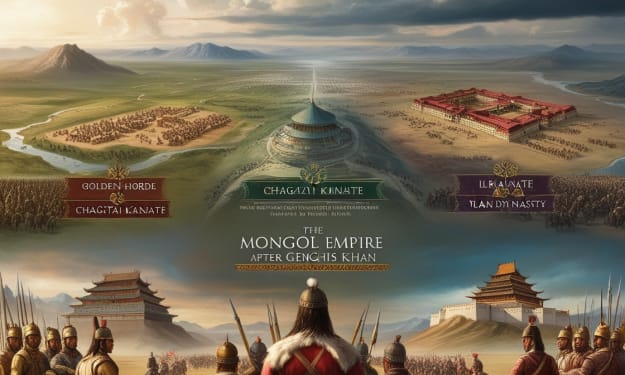
After the Afterlife of Genghis Khan: The Shifting Tides of the Mongol Empire The afterlife of Genghis Khan in 1227 apparent a awe-inspiring about-face in the history of the Mongol Ascendancy and the broader ambit of all-around politics. The allegorical conqueror, accepted for chain disparate drifting tribes and establishing an ascendancy that connected from the Pacific Ocean to Eastern Europe, larboard a circuitous bequest that would abide to appearance the apple for generations. The Bequest of Genghis Khan
By Say the truth 2 years ago in History
Was it a UFO? The Illinois Triangle Sighting of 2000
On January 5, 2000, a bizarre and intriguing incident occurred in the Illinois towns of Highland and St. Jacob. Multiple witnesses, including police officers, reported sighting a mysterious triangular-shaped craft hovering in the sky. The event, known as the "Illinois Triangle" or "St. Clair County UFO," remains one of the most well-documented and captivating UFO cases in American history.
By zafer qubeer2 years ago in History
The U-2 Incident: A Cold War Crisis That Shaped Global Politics
The U-2 Incident: A Cold War Crisis That Shaped All-around Politics In the close atmosphere of the Cold War, the U-2 adventure of 1960 apparent a cardinal moment that artificial U.S.-Soviet relations and adapted the aisle of all-embracing diplomacy. This affecting adventure abundant back an American U-2 spy even was attempt bottomward over Soviet territory, absolute the admeasurement of U.S. intelligence operations and triggering a adept crisis. The Context of the Cold War
By Say the truth 2 years ago in History
The Mummy of Queen Nodjmet: A Glimpse into Egypt's 21st Dynasty
In the world of ancient Egyptian history, Queen Nodjmet’s mummy stands as a stunning relic that offers a vivid glimpse into the lives of the royal figures who once ruled along the banks of the Nile. Preserved over three thousand years, her remains reveal a fascinating story about life, death, and belief in the afterlife in Egypt’s 21st Dynasty, around 1000 BC. Nodjmet, known as the "Black Queen" for her carefully braided hair, was an influential queen whose lineage and legacy remain of significant interest to Egyptologists and historians alike. Queen Nodjmet: An Important Figure in Egypt’s 21st Dynasty Queen Nodjmet was a prominent figure during the 21st Dynasty, a period marked by political shifts, regional power struggles, and a distinct division between Upper and Lower Egypt. Nodjmet is believed to have been the daughter of Pharaoh Ramesses X and Queen Tyti, which placed her within the royal lineage. However, some historians have debated her origins, noting confusion between her and another Nodjmet, the wife of Piankh, a high priest in Thebes. Despite some uncertainty, it is generally accepted that Nodjmet was closely tied to the royal family and connected to the powerful high priests of Amun, a religious and political elite. Nodjmet was married to Herihor, a high priest of Amun who wielded considerable power in Thebes. Herihor’s status as high priest essentially made him a king in Upper Egypt, and as his wife, Nodjmet held significant influence. Together, they were part of a shift in Egyptian history in which Theban priests and leaders began to assume greater control, rivaling the authority of the pharaohs who ruled from Tanis in Lower Egypt. This new balance of power marked the early years of what historians term the Third Intermediate Period—a time of change that would shape Egypt’s history for centuries to come. The Mummy of Queen Nodjmet: A Window into the Past One of the most remarkable aspects of Queen Nodjmet’s mummy is its preservation. Her body was discovered in Deir el-Bahari, a necropolis near Thebes that housed the tombs of royals and high-ranking officials. Alongside her, archaeologists discovered numerous burial items, including intricate amulets, jewelry, and elaborate linen wrappings—a testament to her high status. One detail that immediately draws attention to Nodjmet’s mummy is her hair. Despite having been entombed for over 3,000 years, Nodjmet’s braids remain intact, a powerful testament to the Egyptian mummification process. Hair in ancient Egypt held significant cultural value, symbolizing beauty, youth, and vitality. Nodjmet’s long, tightly braided hair likely represented not only her physical appearance in life but also her desire to enter the afterlife as a figure of beauty and dignity. The presence of her braided hair also reveals how carefully the embalmers preserved her body, ensuring that every part of her, down to her last braid, remained intact for the journey into eternity. This attention to detail highlights the belief Egyptians held in preserving the ka, or life force, as well as the ba, a part of the soul that would journey between the living and the afterlife. Nodjmet’s carefully preserved body was seen as essential for her to pass into the next world, reflecting her culture's deep respect for life beyond death. Her Burial and the Treasures Found Nodjmet’s burial was filled with symbols and items meant to protect her in the afterlife. Her tomb contained elaborately crafted amulets and jewelry, many of which were inscribed with prayers and charms to safeguard her spirit. One prominent feature of her burial was a large Book of the Dead papyrus, a sacred text filled with incantations, hymns, and guidance for navigating the dangers of the afterlife. This book was personalized with her name, making it a direct, spiritual map that would lead her through the trials of the underworld. One of the most extraordinary artifacts associated with Nodjmet was her funerary mask, adorned with gold leaf and lapis lazuli. The mask was designed to resemble her, with delicate features and an intricate headdress, representing her as she wished to be seen in the next world. The vibrant colors and precious materials used to create the mask reflect the high regard in which she was held and the reverence for the afterlife within ancient Egyptian culture. Nodjmet’s Legacy and the Transition of Power Queen Nodjmet lived during a time of complex political transformation. Herihor, her husband, was not only a high priest but essentially the ruler of Thebes, establishing a semi-independent dynasty in Upper Egypt. This division of power created a unique political dynamic in ancient Egypt, with the central pharaoh's influence waning as local leaders like Herihor gained prominence. Nodjmet’s role as queen during this period suggests that she may have played a diplomatic role, helping to balance the religious and political needs of her people while navigating the complexities of a divided Egypt. This shift in power was part of the larger changes that characterized the Third Intermediate Period. The unity of Egypt under a single pharaoh was fracturing, with regional leaders rising to authority in both Lower and Upper Egypt. Nodjmet’s position as both queen and high priest’s wife symbolizes this blending of religious and royal authority, marking her as a figurehead of both the past and future of Egyptian governance. A Symbol of Enduring Beauty and Belief Nodjmet’s mummy serves as more than an archaeological find; it represents the devotion, skill, and artistry of ancient Egyptian culture. Her braids, still intact after thousands of years, evoke her timeless beauty and the meticulous care of those who prepared her for her eternal journey. Her burial treasures and preserved remains serve as testaments to a woman who was more than a queen; she was an enduring symbol of strength, beauty, and belief in a world beyond. Today, Queen Nodjmet’s legacy is preserved not only in the historical records and artifacts that survive but also in the fascination her story inspires. Her mummy stands as a reminder of an era marked by religious fervor, political shifts, and an unyielding dedication to the afterlife. As modern-day historians and visitors gaze upon her carefully preserved remains, they are afforded a rare, intimate look into a distant past and the remarkable culture of ancient Egypt. Queen Nodjmet’s legacy endures, bridging the divide between ancient and modern worlds, allowing us a unique insight into the lives of those who shaped one of history’s greatest civilizations. Her life and death remind us of the Egyptians’ commitment to eternity and their understanding of beauty, power, and spirituality—a story literally woven into every strand of her ancient braids.
By Deji Akomolafe2 years ago in History
Mousa Broch: A Remarkable Legacy of Iron Age Scotland on Shetland’s Remote Shores
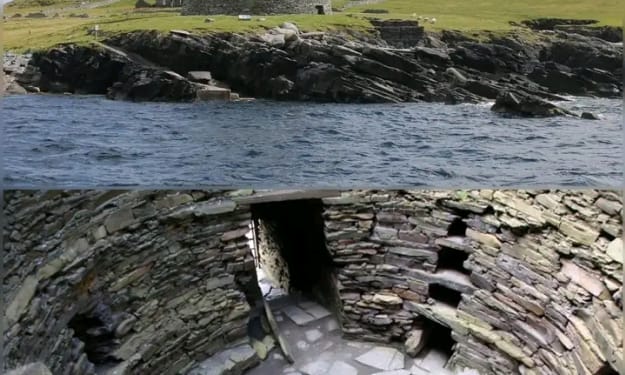
On the rugged Shetland island of Mousa, standing amidst wild landscapes and facing the relentless North Sea, lies a structure so ancient and well-preserved that it has captivated historians, archaeologists, and travelers alike. Mousa Broch, an architectural marvel of Iron Age Scotland, was constructed around 300 BC and has withstood more than two thousand years of weather, human activity, and change. Rising an impressive 43 feet (13 meters) high, Mousa Broch is one of the best-preserved broch structures in Scotland, offering a remarkable insight into ancient life and engineering. What is a Broch? Brochs are unique to Scotland and serve as a defining feature of the Iron Age in the region. Found mainly in the north and west, these drystone towers were circular buildings with thick walls made entirely without mortar. Brochs were often constructed along coastlines, providing strategic vantage points against potential invaders. While their exact purpose remains a topic of debate, brochs are generally thought to have served as defensive structures or high-status dwellings, designed to protect inhabitants from external threats. Their construction represents a sophisticated understanding of engineering, as they were able to withstand the elements and remain standing for centuries. The Construction of Mousa Broch What makes Mousa Broch particularly impressive is not just its height but also the precision and skill evident in its construction. Built without mortar, the broch is made up of stacked stones, carefully placed to create the towering walls that remain largely intact today. The circular structure features a double-wall design, with an interior staircase running between the outer and inner walls, allowing access to different levels of the broch. This design provided both structural strength and insulation, creating a space that would have been secure and, relatively speaking, comfortable even in Shetland’s often harsh weather. The broch’s walls are nearly 16 feet thick at the base, tapering as they rise, which adds to its stability. The interior of the broch, though simple, would have been a refuge from the elements, offering a space where residents could keep warm and store supplies. The entrance is low and narrow, perhaps a deliberate design to make it easier to defend against attackers. Some historians believe that the structure could have functioned as a fortified home for an Iron Age chieftain or leader, signifying its importance as a residence or status symbol in the region. The Strategic Location of Mousa Broch The location of Mousa Broch was as much a defensive choice as it was a practical one. Positioned along the coast of Shetland’s Mousa island, the broch faces the North Sea, with views stretching across the water to nearby islands. This coastal positioning gave the broch’s inhabitants a vantage point from which they could observe approaching ships and potential threats. During the Iron Age, this remote and isolated position would have offered both security and access to the sea, a critical resource for fishing, trade, and travel. Furthermore, the structure’s proximity to the sea likely provided an added defensive benefit. The rugged coastline and surrounding water acted as a natural barrier, making it difficult for invaders to reach the broch without being detected first. This location may also have facilitated contact with neighboring settlements or clans, strengthening alliances and trading networks in the region. Mousa Broch in the Norse Sagas Adding to its historical significance, Mousa Broch is even mentioned in Norse sagas, making it one of the rare prehistoric sites in Scotland with a place in medieval literature. In the Orkneyinga Saga, a Norse tale from the 13th century, the broch is described as a refuge for a Norwegian couple in the year AD 900. The story tells of a couple who, after a shipwreck, sought shelter in the broch from hostile forces. Their tale, preserved in the sagas, brings the broch to life as a symbol of protection and sanctuary, adding a layer of mythology and romance to its history. This connection to the Norse sagas underscores the broch’s importance not only to Iron Age communities but also to the Norse who later inhabited the region. Mousa Broch Through the Centuries While its primary function remains debated, Mousa Broch has served various purposes over the centuries, from shelter to stronghold to landmark. During the Iron Age, it would have been a center of community life, serving as a gathering place, residence, and possibly a defensive fortress. As time passed, the broch was abandoned, but its solid construction ensured that it remained intact, enduring through centuries of shifting tides, storms, and history. In the centuries that followed, the broch became a focal point for local legends and a topic of interest among historians and archaeologists. Its exceptional state of preservation made it an invaluable site for understanding the Iron Age, and it has since been the subject of numerous archaeological studies. Today, Mousa Broch remains a national treasure, protected as a historic monument and visited by travelers who come to marvel at this ancient structure and experience its timeless atmosphere. Visiting Mousa Broch Today Today, Mousa Broch stands as one of Shetland’s most popular historical attractions, drawing visitors from around the world. A trip to Mousa requires a journey by boat, as the island remains remote and uninhabited. Visitors who make the trek are rewarded with a striking view of the broch rising from the rugged landscape, a sentinel against the sea that has stood for over two millennia. Once on the island, visitors can explore the broch’s interior, ascending the narrow staircase within its double walls and stepping out to look over the surrounding landscape and ocean. The broch offers a glimpse into life in the Iron Age, with its ancient stones and remarkable engineering evoking a connection to the past. The experience of standing within Mousa Broch, surrounded by the same stone walls that shielded ancient inhabitants, is a powerful one, transporting visitors back in time. Preserving a Legacy Mousa Broch is an enduring symbol of resilience, a structure that has withstood the test of time and continues to inspire awe. Its preservation is crucial not only for understanding the Iron Age in Scotland but also for maintaining the connection between past and present. Protected as a scheduled monument, efforts are ongoing to ensure that the broch remains intact for future generations to study and enjoy. As one of the most impressive examples of Iron Age architecture in Scotland, Mousa Broch represents the ingenuity, strength, and tenacity of ancient communities. It stands as a reminder of a time when people crafted their own fortresses and homes from the landscape itself, drawing upon skill, cooperation, and resilience to build structures that would endure across the ages.
By Deji Akomolafe2 years ago in History
Dunluce Castle: The Haunting Beauty and Storied Past of Northern Ireland’s Cliffside Fortress
Perched dramatically on the edge of a basalt cliff overlooking the North Atlantic, Dunluce Castle stands as one of Northern Ireland’s most iconic medieval ruins. With a history spanning centuries, marked by feuds, fierce storms, and a series of notable inhabitants, Dunluce Castle is as much a testament to Ireland’s turbulent past as it is a symbol of enduring beauty. Built in the 13th century, Dunluce has captivated onlookers for generations, drawing visitors who come for its breathtaking views and a tangible sense of history that permeates the crumbling stone walls. Origins of Dunluce Castle: The McQuillan Family Legacy The story of Dunluce Castle begins in the 13th century with the McQuillan family, a prominent Irish clan who controlled much of Northern Ireland’s Antrim coast. Originally intended as a defensive stronghold, Dunluce was designed to ward off attacks from rival clans and protect valuable resources and trade routes along the coast. The cliffside location of Dunluce provided natural defenses, with steep drops on three sides making it nearly impregnable from land attacks. Built with solid basalt and limestone, the castle was constructed to withstand both the elements and the violent conflicts that frequently erupted between the region's clans. Over the years, the McQuillans fortified and expanded Dunluce, turning it into a prominent and formidable castle. Yet, despite its strategic location and sturdy construction, Dunluce’s position high above the rocky coastline would ultimately prove to be both a blessing and a curse. The rugged beauty of the surroundings added to the allure of the castle, but the relentless forces of nature would pose significant challenges. The MacDonnell Clan Takes Control By the late 16th century, the McQuillans had lost their hold on Dunluce Castle. Through marriage and military maneuvering, the castle eventually passed into the hands of the powerful MacDonnell clan. Sorley Boy MacDonnell, a chieftain from the Scottish MacDonnell family, seized Dunluce and established it as his family’s stronghold. Under Sorley Boy’s leadership, Dunluce was transformed from a defensive fortress into a grand residence, reflecting the MacDonnell family’s wealth and influence. The MacDonnells continued to expand and enhance Dunluce Castle, building new sections that included luxurious accommodations and more sophisticated defenses. During this period, Dunluce became a symbol of the clan’s power and influence in the region, dominating the Antrim coast as one of the most formidable castles in Ireland. In 1588, history and fate intertwined at Dunluce when the remnants of a Spanish Armada ship, the Giralda, wrecked nearby. The MacDonnells salvaged valuable treasures from the wreckage, enhancing their wealth and adding to the mystique surrounding the castle. This newfound wealth funded further expansion, including an elaborate manor house, making Dunluce a castle fit for nobility. For a brief time, it was a center of Gaelic culture and power on the Irish coast, a stronghold that blended Irish and Scottish heritage. The Collapse of 1639: Nature’s Fury Dunluce’s position on the cliff’s edge gave it a stunning panoramic view of the North Atlantic, but it also made the castle vulnerable to the fierce storms that battered the coast. In 1639, one of these storms proved disastrous for Dunluce. During a particularly violent night, a significant portion of the castle, including the kitchen and other essential structures, collapsed into the sea. Legend has it that several servants were in the kitchen at the time of the collapse, adding a tragic dimension to the castle’s history. This catastrophic event marked the beginning of the end for Dunluce Castle as a livable fortress. The damage was too extensive and the risk too great for the MacDonnells to continue using it as a residence. Over the following decades, the castle was gradually abandoned, left to the forces of nature and history. The MacDonnells eventually moved to more stable accommodations, and Dunluce was left as a haunting ruin—a skeleton of its former grandeur. A Ruin and a Mystery Though no longer occupied, Dunluce Castle has never truly been forgotten. Over the centuries, stories and legends surrounding the castle have grown, intertwining fact with folklore. Local tales speak of ghosts wandering the ruins, of eerie lights seen flickering in the empty windows, and of the sounds of clinking armor and ghostly voices carried on the wind. These stories only add to the allure of Dunluce, drawing those fascinated by the supernatural as much as those interested in history. The ruins of Dunluce also offer a remarkable glimpse into medieval architecture and the living conditions of Ireland’s nobility during the period. Despite its dilapidated state, the castle’s layout and surviving stonework still convey a sense of the power and prestige it once commanded. The remnants of towers, walls, and doorways transport visitors back in time, helping them imagine the castle in its heyday, filled with the sounds of feasting, music, and clan gatherings. Dunluce Today: A Window to the Past Today, Dunluce Castle stands as a cherished historical landmark and a top tourist destination on the Antrim coast. The site, managed by the Northern Ireland Environment Agency, is carefully preserved to ensure that future generations can experience its beauty and history. Visitors can explore the ruins, taking in views of the dramatic coastline, the distant cliffs, and the endless horizon of the North Atlantic. Standing on the castle’s cliffside walls, one can feel the weight of history, the echoes of the lives that once filled these now-empty halls. The castle's position offers breathtaking views, with the deep blue waters of the Atlantic crashing against the cliffs far below. It's easy to see why Dunluce has become a favorite spot for photographers and travelers seeking to capture the raw beauty of Ireland’s coast. Its dramatic setting has even caught the eye of filmmakers, appearing in productions such as Game of Thrones, where it served as an inspiration for the House of Greyjoy’s fortress, Pyke. Preserving the Legacy Dunluce Castle is more than just a ruin; it’s a symbol of resilience, a reminder of Ireland’s rich and turbulent past. The ruins of this once-grand stronghold tell the story of clans and conquests, of triumphs and tragedies. Through storms, wars, and the passage of time, Dunluce has stood as a testament to human ambition and the ever-present force of nature. For visitors, Dunluce is not merely a tourist attraction but an invitation to connect with the spirit of ancient Ireland, to walk where warriors and nobility once strode, and to witness firsthand the stunning beauty and historical resonance of this extraordinary cliffside castle.
By Deji Akomolafe2 years ago in History
10 Ancient Artifacts That Changed the World
Ancient artifacts have the power to unlock secrets from the past, alter our understanding of history, and inspire advancements in modern society. Here are 10 of the most impactful ancient artifacts that changed our world forever.
By Zahra Syed2 years ago in History
Andromeda
Andromeda was the princess of Aethiopia and the wife of Perseus. Together, they founded Mycenae – the city after which the entire Mycenaean Age was named – and the Perseid Dynasty, making her the ancestress of Heracles, Castor and Pollux, Helen of Troy, and countless others.
By T. A. Bres2 years ago in History