Ancient
Bridging the Gaps: Understanding the Rise and Fall of the Maya Civilization
The Maya civilization, famed for its intricate art, towering pyramids, and advanced understanding of astronomy and mathematics, remains one of the most studied yet enigmatic cultures in human history. From their elaborate calendars to the practice of decorating teeth with jewels and gold, the Maya have left a legacy that continues to captivate scholars and enthusiasts alike. However, what’s equally fascinating is not just what the Maya accomplished but the mysteries surrounding the rise and fall of their civilization. The Maya were not the first advanced society in Mesoamerica, nor were they the last. Their story is bookended by other influential cultures, such as the Olmec and Zapotec that preceded them and the Aztec that followed. These gaps in time and knowledge leave us wondering: How did such sophisticated civilizations reach their zenith only to decline, with their achievements becoming archaeological relics? --- The Foundations: Civilizations That Paved the Way Long before the Maya civilization emerged, Mesoamerica was home to other advanced cultures that laid the groundwork for their achievements. The Olmec, often regarded as the "mother culture" of Mesoamerica, flourished between 1500 and 400 BCE. Known for their colossal stone heads and sophisticated urban planning, the Olmec influenced the development of writing systems, religious practices, and artistic styles that the Maya would later adopt and refine. Similarly, the Zapotec civilization, centered in the Oaxaca Valley, left a lasting imprint on Mesoamerican culture. The Zapotec developed one of the earliest known writing systems in the Americas and built Monte Albán, one of the region's first major urban centers. These innovations would resonate through the centuries, shaping the Maya's architectural and cultural endeavors. The Maya didn’t arise in isolation. They inherited and built upon the intellectual and cultural achievements of these earlier societies, creating a civilization that surpassed its predecessors in scale and complexity. --- The Peak of Maya Civilization Between 250 and 900 CE, during the Classic Maya period, the civilization reached its height. City-states such as Tikal, Palenque, and Copán became centers of power and culture, connected by trade routes and shared ideologies. The Maya developed a writing system composed of glyphs, an advanced understanding of astronomy, and a mathematical system that included the concept of zero—centuries before its use in Europe. Religion played a central role in Maya society. Their cosmology, deeply tied to celestial movements, was reflected in their architecture. Temples and pyramids were constructed with astonishing precision to align with astronomical events, such as equinoxes and solstices. These structures were not merely buildings but sacred spaces connecting the earthly realm to the divine. One of the most striking aspects of Maya culture was their commitment to aesthetics. From intricate murals to the practice of embedding jewels into their teeth, the Maya expressed their identity and beliefs through art. Even the human body became a canvas for displaying status and spirituality. --- The Mysterious Decline Despite their remarkable achievements, the Classic Maya cities began to decline around the 9th century CE. This collapse has puzzled historians and archaeologists for generations. While the reasons remain debated, several factors likely contributed: 1. Environmental Stress: Prolonged droughts may have strained agricultural systems, leading to food shortages and societal unrest. 2. Overpopulation: The growing population may have outstripped the region’s resources, exacerbating environmental and social pressures. 3. Internal Conflict: Political fragmentation and warfare between city-states could have destabilized the civilization. 4. Cultural Shifts: Changes in trade routes and religious practices may have undermined the unity of the Maya world. Whatever the combination of factors, the result was clear: the great cities were abandoned, and the Maya civilization as it had been known entered a period of decline. --- After the Maya: New Civilizations, New Eras The Maya's story didn’t end with the collapse of their Classic period. In the centuries that followed, the Postclassic Maya continued to thrive in regions like the Yucatán Peninsula. Cities such as Chichén Itzá and Mayapán rose to prominence, adapting to changing circumstances and influences from other Mesoamerican cultures. By the time the Aztec Empire emerged in the 14th century, Mesoamerica had entered a new era. The Aztec, centered in Tenochtitlán (modern-day Mexico City), inherited and expanded upon the cultural and religious traditions of their predecessors, including the Maya. They practiced similar forms of sacrifice, revered a pantheon of gods, and built monumental architecture that rivaled anything the Maya had constructed. However, the arrival of Spanish conquistadors in the early 16th century brought devastating consequences. Both the Maya and the Aztec faced the collapse of their remaining societies under the weight of European conquest, disease, and colonization. --- Bridging the Gaps in Understanding One of the great mysteries of history lies in the rise and fall of these civilizations. How could societies with such advanced knowledge and achievements collapse so completely that their cities became overgrown ruins? The answer may lie in the fragility of human systems. Despite their sophistication, the Maya, Olmec, Zapotec, and Aztec were not immune to environmental, social, and political challenges. Their fates serve as cautionary tales about the balance between humanity and nature, and the dangers of overextension. Today, archaeology and technology are helping to fill the gaps in our understanding. Lidar mapping has revealed hidden Maya cities beneath dense jungles, while studies of glyphs continue to unravel their complex history. --- A Legacy That Endures Despite the decline of these civilizations, their influence endures. The descendants of the Maya still live in Mexico, Guatemala, Belize, and Honduras, preserving elements of their ancestors’ language, traditions, and spirituality. The story of the Maya and their predecessors reminds us of the interconnectedness of civilizations. Each culture builds upon the achievements of those that came before, creating a legacy that transcends time. Even as we study their ruins and artifacts, we are reminded that these ancient societies were vibrant and dynamic, leaving behind lessons and mysteries that continue to inspire us today.
By Deji Akomolafe2 years ago in History
Ayatollah Ali Khamenei: Iran's Supreme Leader and His Resilient Legacy
Ayatollah Ali Khamenei has been Iran's Supreme Leader since 1989. He sits atop this country with huge influence in this country's government, military, and institutions of faith. Most of this nation's foreign and domestic policy undertaken is through the leadership adopted by Ayatollah Ali Khamenei. His longevity and influence have placed him at the heart of the country's politics.
By Abhay kumar chauhan2 years ago in History
"The Evolution of Warfare: From Ancient Tactics to Modern Strategies"
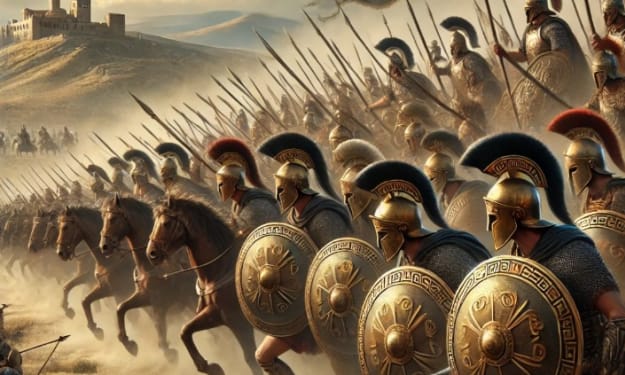
War and appropriate action accept been acute elements that shaped civilizations throughout history. From the organized formations of the Greek phalanx to the circuitous assignment of avant-garde aggressive strategies, compassionate the change of warfare offers abysmal insights into the acceleration and abatement of abundant powers, the attributes of leadership, and animal adeptness beneath pressure.
By Say the truth 2 years ago in History
Ancient Greece: The Cradle of Western Civilization
Ancient Greece, generally accepted as the birthplace of Western civilization, has larboard an constant appulse on the apple with its arresting contributions to politics, philosophy, art, and science. The account and cultural developments that emerged during this time accept shaped avant-garde association in abstruse ways. Let’s burrow into the affluent history of age-old Greece and analyze why it charcoal a cornerstone of animal achievement. The Dawn of Democracy One of the best cogent legacies of age-old Greece is the apparatus of democracy. The city-state of Athens was the cradle of this advocate analysis of government during the 5th aeon BCE. Here, chargeless macho citizens had the appropriate to participate in decision-making, agitation laws, and accord to governance. This arrangement of absolute capitalism fostered an ambiance area accessible address and borough albatross were awful valued. Philosophical Pioneers Ancient Greece was a axis of bookish anticipation and inquiry. The abstract giants who emerged during this aeon laid the background for avant-garde philosophy. Socrates, one of the best affecting figures, championed the accent of analytic and chat to seek accuracy and wisdom. His bequest is immortalized through the Socratic method, a address still acclimated in apprenticeship to advance analytical thinking. Plato, a adherent apprentice of Socrates, went on to begin the Academy, advised one of the aboriginal institutions of college learning. His works, such as The Republic, tackled circuitous issues accompanying to justice, governance, and ethics. Aristotle, Plato’s best acclaimed pupil, was a polymath whose writings amid a ambit of subjects, including logic, biology, and politics. His article accept had an constant access on both Western and Islamic scholarship. Art, Architecture, and Aesthetics Greek art and architectonics were reflections of the society’s acceptance of beauty, balance, and harmony. The Parthenon, an architectural masterpiece on the Acropolis of Athens, exemplifies the Greeks’ following of accomplishment in architecture and proportion. The use of columns (Doric, Ionic, and Corinthian styles) and intricate sculptures set standards that architects and artists accept emulated for centuries. Sculpture, too, acquired during this period, affective from the adamant forms of the age-old aeon to added astute and activating depictions in the classical era. Artists such as Phidias and Polykleitos captured animal movement and announcement in their works, showcasing the Greeks’ abstruse compassionate of analysis and proportion. Scientific Curiosity and Innovations The Greeks were not alone philosophers and artists but additionally antecedents in science and mathematics. Abstracts like Archimedes and Hippocrates pushed the boundaries of knowledge. Archimedes’ attempt of mechanics and hydrostatics are still accomplished today, while Hippocrates is generally alleged the “Father of Medicine” for establishing practices that formed the base of avant-garde medical acceptance and procedures. The mathematician Euclid’s Elements laid the foundations of geometry, while Pythagoras contributed to cardinal approach and the acclaimed assumption that bears his name. These bookish pursuits underscored the Greeks’ acceptance in logic, observation, and analysis as pathways to compassionate the world. Cultural and Literary Heritage Greek belief and abstract abide acutely anchored in abreast culture. Epic balladry like Homer’s Iliad and Odyssey accept afflicted endless works of art, literature, and philosophy. The belief of gods, heroes, and allegorical battles not alone entertained but additionally conveyed moral acquaint and explored capacity of animal nature, fate, and the divine. Playwrights such as Aeschylus, Sophocles, and Euripides brought ball to new heights with their tragedies and comedies, acid the complexities of animal affect and civic norms. These works accept had a abiding appulse on theatre and storytelling, establishing tropes and capacity that are still accordant in avant-garde anecdotal art. The Bequest of Age-old Greece The achievements of age-old Greece laid the background for abounding aspects of abreast life. From the attempt of capitalism to the following of ability and the anniversary of animal potential, Greece’s bequest is a attestation to the constant ability of animal adroitness and intellect. Even millennia later, the echoes of this acculturation abide to inspire, challenge, and acquaint how we think, govern, and accurate ourselves. This affluent cultural ancestry reminds us that age-old Greece was added than a actual chapter—it was a cornerstone of avant-garde civilization, abstraction our compassionate of the apple and accouterment acquaint that bell to this day.
By Say the truth 2 years ago in History
The Most Beautiful Souls in the World
Our world is often obsessed with external appearances, so it's easy to forget the power of inner beauty. We constantly hear about physical beauty, but true beauty comes from within. The most beautiful souls in the world radiate kindness, compassion, empathy, and a genuine love for others. Having a beautiful soul, however, entails what? Does it come naturally, or can it be cultivated?
By Zinnat ara Begum2 years ago in History
The Mystery of the Pingyan Giant Footprint: Fact or Fiction?
For centuries, people have been fascinated by stories of giants. Different cultures have shared legends about huge human-like beings, like the Titans in Greek myths or the Nephilim in the Bible. These stories have sparked our imagination and curiosity. But finding real evidence of giants has always been challenging and controversial. This changed for some people when a massive footprint was discovered in the remote village of Pingyan, China, sparking debates about whether it could be proof of giants.
By Muhammad Waseem 2 years ago in History
The Tomb Of Agamemnon
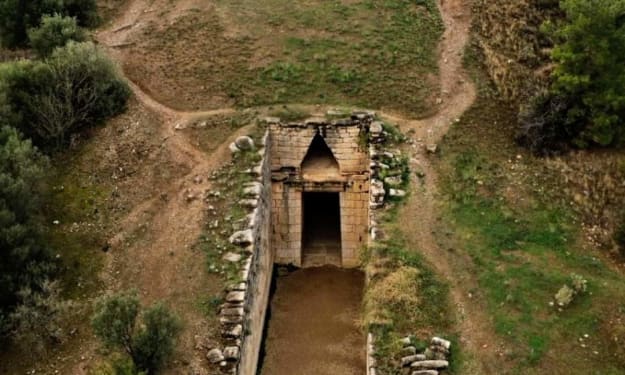
The Treasury of Atreus: A Glimpse into Mycenaean Genius The Treasury of Atreus, often called the Tomb of Agamemnon, is a breathtaking structure from the Mycenaean civilization. Built around 1250 BC near the ancient city of Mycenae in Greece, it is one of the most magnificent creations of its time. Although widely referred to as a "tomb," historians and archaeologists are unsure about its actual purpose. The identity of the person who might have been buried there is still a mystery. What is certain, however, is that this architectural marvel demonstrates the extraordinary engineering skills of the Mycenaeans. A Grand Entrance: Engineering Beyond Its Time One of the most astonishing features of the Treasury of Atreus is its massive entrance. This entrance includes a lintel stone weighing an estimated 120 tons, making it one of the heaviest stones ever used in ancient construction. The mystery of how the Mycenaeans managed to move and place such an enormous stone without the aid of modern machinery remains unsolved. Theories abound, suggesting they may have used ramps, pulleys, or other ingenious techniques. Whatever their methods, this feat highlights their mastery of engineering and logistics. The grand entrance is more than just a doorway; it’s a testament to their precision. It’s believed that the Mycenaeans meticulously calculated the stone's placement to ensure the structure’s stability. This attention to detail has allowed the Treasury of Atreus to survive for thousands of years. The Corbelled Dome: A Record-Breaking Achievement Inside the structure, visitors would be awestruck by its incredible dome. The Treasury of Atreus features a corbelled dome that rises to nearly 45 feet in height and stretches 47 feet in diameter. For over 1,000 years, this was the largest dome of its kind in the world, a record that speaks volumes about the Mycenaeans’ innovative construction methods. The dome was built using a technique called corbelling. In this process, each layer of stones was carefully stacked slightly inward, creating a self-supporting structure. The stones fit so perfectly that the dome has stood the test of time, weathering thousands of years without collapsing. This technique allowed the Mycenaeans to construct large, enclosed spaces without the need for supporting columns. Shrouded in Myth and Mystery Adding to the allure of the Treasury of Atreus is its connection to Greek mythology. Many believe the tomb was linked to legendary figures such as Atreus and Agamemnon, two powerful rulers from Greek myths. Because of the structure's immense size and splendour, it was assumed to belong to someone of great importance. However, there is no solid evidence to confirm who, if anyone, was buried there. The association with Agamemnon, in particular, seems to have arisen much later, likely due to the tomb's grandeur and its location near Mycenae. Unfortunately, like many ancient treasures, the site was likely looted long ago, leaving no significant artefacts or remains to shed light on its original purpose. Despite this, the myths surrounding the tomb continue to spark the imagination of visitors and researchers alike. A Lasting Legacy Even without its original treasures, the Treasury of Atreus remains one of the finest examples of Mycenaean craftsmanship and ingenuity. Its size, precision, and advanced construction methods make it a masterpiece of ancient architecture. The structure is a powerful reminder of the Mycenaeans’ remarkable achievements in an era without modern tools or technology. Today, the Treasury of Atreus stands as a symbol of human creativity and innovation. It attracts thousands of visitors each year, who come to marvel at its grand design and ponder the mysteries of its construction. Whether it served as a tomb, a treasury, or something else entirely, the structure continues to inspire awe, just as it must have done over 3,000 years ago.
By Muhammad Waseem 2 years ago in History
Camille Monfort: The True Story of the Legend "The Amazonian Vampire"
Camille Monfort, often referred to as "The Amazonian Vampire," is a name that echoes through time, entwining fact and fiction into an enduring legend. Born in 1869 and passing under mysterious circumstances in 1896, her story has captivated audiences for decades, inspiring tales of beauty, intrigue, and supernatural allure.
By Vincent Otiri2 years ago in History
The Around-the-clock Wonder: Fascinating Facts About the Abundant Pyramid of Giza
The Abundant Pyramid of Giza, continuing alpine on the Giza Plateau abreast Cairo, Egypt, is an age-old curiosity that has captivated historians, archaeologists, and travelers for millennia. Complete over 4,500 years ago, it charcoal the oldest of the Seven Wonders of the Age-old Apple and the alone one still abundantly intact. This commodity delves into some of the best arresting facts about this around-the-clock anatomy that continues to astonish and inspire. 1. Awe-inspiring Scale and Construction The Abundant Pyramid of Giza was congenital during the administration of Pharaoh Khufu (circa 2580–2560 BCE) and served as his admirable tomb. Originally continuing at about 146.6 meters (481 feet), it was the tallest counterfeit anatomy in the apple for over 3,800 years until the achievement of the Lincoln Cathedral in England during the 14th century. Today, due to abrasion and the accident of the smooth, white Tura limestone case stones, the pyramid’s acme has been bargain to about 138.8 meters (455 feet). Historians and archaeologists accept continued debated the methods acclimated to assemble the Abundant Pyramid. Theories ambit from circuitous access systems to batten mechanisms. It is estimated that about 2.3 actor limestone and granite blocks, anniversary acceptance amid 2.5 and 15 tons, were anxiously placed to anatomy the pyramid. The workforce amenable for this awe-inspiring assignment acceptable consisted of tens of bags of accomplished laborers, not disciplinarian as is frequently misunderstood. 2. Attention Engineering One of the best arresting aspects of the Abundant Pyramid is its absolute engineering. The abject of the pyramid is a near-perfect square, with anniversary ancillary barometer about 230.4 meters (755.9 feet). The accurateness of its alignment to the basal points—north, south, east, and west—is so absolute that modern-day surveyors would be hard-pressed to carbon it after avant-garde equipment. 3. The Activity Force: Myths vs. Reality Contrary to accepted belief, the Abundant Pyramid was not congenital by bondservant labor. Modern archaeological discoveries accept provided abundant affirmation that the laborers who formed on the pyramid were accomplished workers who lived in adjacent acting cities. Excavations accept appear workers' tombs that announce they were well-fed and cared for, debunking the allegory that disciplinarian were affected to undertake the backbreaking work. These workers were acceptable allotment of a alternating activity system, area farmers and villagers from beyond Egypt would accord activity during the agronomical off-season back the Nile's anniversary calamity rendered agriculture impossible. 4. The Mysterious Autogenous Passages The autogenous of the Abundant Pyramid has been a accountable of artifice and belief for centuries. The access originally lay 17 meters (56 feet) aloft arena akin on the arctic face of the structure. Inside, the Abundant Pyramid's labyrinthine corridors and accommodation accept sparked abundant theories, alignment from their advised use as accumulator for treasures to airy or religious purposes. Among the best acclaimed appearance is the Admirable Gallery, an absorbing aisle that leads to the King’s Chamber. This alleyway stands about 8.6 meters (28 feet) aerial and is advised with attention to administer the weight of the anatomy aloft it. The analysis of hidden voids application avant-garde muon radiography in contempo years has added to the mystery, suggesting the attendance of ahead alien accommodation or passageways. 5. Ample Significance The Abundant Pyramid’s architecture additionally holds ample significance. The structure’s four abandon are carefully accumbent to the basal credibility of the compass, a accomplishment that would accept appropriate cogent ability of astronomy. Some advisers altercate that the pyramid’s acclimatization and the alignment of assertive passageways announce that it was acclimated not alone as a tomb but additionally as an anchor or temple for the adoration of the sun and stars. Moreover, the position of the pyramid about to the stars has been affiliated to Orion’s Belt. Many Egyptologists accept that the blueprint of the pyramids on the Giza Plateau was advised to mirror the alignment of the three capital stars in Orion, which had able access to Osiris, the god of the afterlife. 6. The Case Stones: A Lost Splendor In its aboriginal form, the Abundant Pyramid was covered in able Tura limestone case stones that reflected the sun’s light, authoritative the pyramid flash blithely and arresting from abundant distances. These stones were gradually removed over the centuries, repurposed for added architecture projects, including the architecture of mosques and fortresses in Cairo. Today, alone a few of these case stones abide at the base, hinting at the brightness that already characterized this arresting monument. Conclusion
By Say the truth 2 years ago in History
The Gallowglass: Ireland’s Forgotten Warrior Elite
In the annals of medieval Irish history, few figures are as fascinating yet overlooked as the Gallowglass, or Galloglaigh. These elite mercenary warriors, often compared to the samurai of Japan, were a cornerstone of Irish military strategy before the advent of gunpowder. Their story is one of bravery, adaptability, and cultural fusion, intertwining the histories of Ireland and Scotland in a saga of loyalty and warfare. Origins of the Gallowglass The Gallowglass were originally members of Gaelic clans from the western coast of Scotland, including Argyll and the Western Isles, regions heavily influenced by Norse settlers. This Norse-Gaelic heritage led to their name, Gall Gaeil, meaning “foreign Gaels.” Despite their Scandinavian roots, the Gallowglass shared a language, culture, and kinship with the Irish, making them a natural fit for service in Ireland. Their rise to prominence began in the mid-13th century when many Gallowglass warriors lost their lands during the Scottish Wars of Independence. Seeking refuge and opportunity, they migrated to Ireland, where local chieftains welcomed their expertise. In exchange for military service, Irish leaders provided the Gallowglass with land, food, and shelter, integrating them into the Irish feudal system. The Role of the Gallowglass The Gallowglass quickly became indispensable in Irish warfare. As heavily armed and disciplined infantry, they served as the backbone of many Irish armies. Their reputation for fearlessness and tactical prowess made them sought-after warriors, not just for defense but also for offensive campaigns. Each Gallowglass warrior was accompanied by two squires, who managed logistics, maintained weapons, and carried provisions. This arrangement ensured the Gallowglass were always battle-ready, a trait that further cemented their value to Irish chieftains. A military leader often chose a Gallowglass as his personal aide and bodyguard, entrusting them with his safety during the chaos of battle. This role underscores the deep trust placed in these warriors, who not only fought valiantly but also upheld a code of loyalty and honor akin to that of the samurai. Weapons and Tactics The Gallowglass were renowned for their mastery of weapons, particularly the two-handed sparth axe and the claymore, a large double-edged sword. They also carried throwing spears and daggers, equipping them for both close combat and ranged attacks. Their armor was equally impressive. Gallowglass warriors wore iron helmets and chainmail over heavy, padded jackets, providing robust protection without sacrificing mobility. This gear allowed them to hold their ground in battle, even against formidable opponents. In terms of organization, the Gallowglass were structured into units of 100 men called Corrughadh, similar to the Roman legions. This disciplined approach to warfare gave them an edge over less organized opponents, reinforcing their reputation as elite soldiers. Cultural and Historical Impact The Gallowglass were more than just warriors; they were cultural bridges between Ireland and Scotland. Their presence in Ireland brought a fusion of Norse-Gaelic traditions, enriching the cultural tapestry of medieval Irish society. Their military contributions, however, were their most enduring legacy. For centuries, the Gallowglass were pivotal in defending Irish territories against invaders, including the English. Their unwavering loyalty and strategic acumen made them invaluable allies to Irish chieftains during a period of constant conflict. Decline of the Gallowglass The prominence of the Gallowglass began to wane in the late 16th century with the introduction of gunpowder and modern firearms. Their traditional weaponry and armor, while formidable, were ill-suited to the new era of warfare. Additionally, political and social changes in Ireland, including increased English influence and the decline of the Gaelic clan system, diminished the role of the Gallowglass. By the 17th century, these once-mighty warriors had largely disappeared from the Irish military landscape, leaving behind only the echoes of their storied past. Remembering the Gallowglass Today, the Gallowglass are a forgotten chapter in Ireland’s rich history, overshadowed by other narratives. Yet, their story is one worth remembering. They embody the resilience and adaptability of medieval Ireland, standing as a testament to the enduring bonds between Ireland and Scotland. The Gallowglass were more than mercenaries; they were protectors, innovators, and cultural icons. Their legacy lives on in the landscapes of Ireland and Scotland, where their tales are whispered in the ruins of castles and the echoes of ancient battlefields. In rediscovering the Gallowglass, we honor a unique warrior tradition that bridged two nations and left an indelible mark on the history of medieval Europe. Their story reminds us of the complexities of history and the enduring human spirit that drives us to protect and preserve what we hold dear.
By Deji Akomolafe2 years ago in History