Ancient
Exploring Stogursey Castle: A Medieval Gem in Somerset
Nestled in the picturesque village of Stogursey in Somerset, England, lies the fascinating Stogursey Castle, a historic site brimming with centuries of stories and intrigue. Dating back to the late 11th or early 12th century, this medieval stronghold was constructed by the de Courcy family and served as a significant motte-and-bailey fortification. Its strategic location near the River Parrett highlights its role in defending the region and maintaining control over surrounding lands during a tumultuous period of English history. The Origins of Stogursey Castle Stogursey Castle was built shortly after the Norman Conquest of England, a time when William the Conqueror and his followers sought to solidify their hold over the country. The de Courcy family, Norman lords with close ties to the ruling elite, established the castle as both a defensive structure and a symbol of their power. The castle was constructed in the traditional motte-and-bailey style, which was popular during the Norman period. This design featured a wooden or stone keep situated atop a raised earth mound (the motte) and an enclosed courtyard (the bailey) surrounded by a protective ditch and palisade. The elevated motte provided a vantage point for observing potential threats, while the bailey housed living quarters, storage facilities, and other essential structures. Strategic Importance Stogursey Castle’s location near the River Parrett was a deliberate choice. The river acted as a natural barrier, providing additional protection against invaders. Its proximity to important trade and travel routes also allowed the de Courcy family to exert control over the movement of goods and people, strengthening their influence in the region. The castle not only served as a defensive stronghold but also functioned as the administrative center for the surrounding area. As the seat of power for the de Courcy family, it played a crucial role in managing agricultural production, collecting taxes, and maintaining law and order. The Evolution of Stogursey Castle Over the centuries, Stogursey Castle underwent several changes, both in ownership and structure. The original timber fortifications were gradually replaced with stone, making the castle more durable and better suited to withstand sieges. During the 13th century, the castle passed into the hands of the Fitzpayne family and later the Bonville family, both of whom contributed to its maintenance and expansion. By this time, the castle had become an important local landmark, symbolizing stability and continuity in a region that often experienced political and social upheaval. However, like many medieval castles, Stogursey began to lose its strategic importance as the centuries progressed. Advances in military technology and the changing nature of warfare rendered such fortifications less effective. By the late medieval period, the castle had fallen into decline, and its once-imposing structures were repurposed or abandoned altogether. A New Chapter: Restoration and Preservation Despite its decline, Stogursey Castle remained a site of historical and architectural significance. Efforts to preserve and restore the castle began in the 20th century, ensuring that this remarkable piece of England’s heritage would not be lost to time. Today, visitors to Stogursey Castle can explore its remains and learn about the rich history of the site. The surviving elements of the castle, including portions of the stone walls and the surrounding moat, provide a glimpse into the past and offer a unique opportunity to connect with the medieval world. The moat, in particular, is a striking feature of the castle. Still filled with water, it serves as a reminder of the ingenuity and practicality of medieval builders. The moat not only provided an additional layer of defense but also reflected the castle’s status and importance. The Village of Stogursey The village of Stogursey itself is steeped in history and charm, making it an ideal destination for those interested in exploring England’s medieval heritage. The village’s name derives from “Stoke de Courcy,” a nod to the de Courcy family who founded the castle. One of the village’s standout features is Stogursey Priory, a 12th-century church that was originally part of a Benedictine monastery. The priory, like the castle, has undergone numerous changes over the centuries but remains a beautiful and tranquil site for visitors to enjoy. Stogursey Castle in the Modern Era While much of Stogursey Castle lies in ruins, its legacy endures as a symbol of England’s rich medieval past. The castle’s story reflects the broader history of Norman England, from the establishment of feudal power structures to the eventual decline of fortified residences. For history enthusiasts and casual visitors alike, Stogursey Castle offers a captivating glimpse into a bygone era. Walking among its remains, one can imagine the bustling activity of the bailey, the watchful eyes of guards on the motte, and the daily lives of those who called the castle home. Conclusion Stogursey Castle is more than just a historical site; it is a testament to the resilience and adaptability of England’s medieval heritage. From its origins as a Norman fortification to its role as a center of local governance, the castle has witnessed centuries of change and continues to inspire those who visit. Whether you’re drawn to its architectural features, its strategic significance, or the stories of the people who lived and worked there, Stogursey Castle is a place where history comes alive. As you explore its grounds and the surrounding village, you’ll find yourself transported back in time, gaining a deeper appreciation for the enduring legacy of this medieval marvel.
By Deji Akomolafe2 years ago in History
The Hobo Nickel: Art and Survival During the Great Depression
In the midst of the Great Depression, a period of widespread poverty and unemployment in the United States, creativity became a tool for survival. Among the many inventive ways people coped with economic hardship was the creation of "Hobo Nickels"—hand-engraved five-cent coins that turned simple currency into miniature works of art. These unique coins, often adorned with intricate designs and fascinating motifs like skeletons or historical figures, tell a story of resilience, resourcefulness, and artistry during one of the toughest eras in American history. What Are Hobo Nickels? A Hobo Nickel is an ordinary coin, usually a Buffalo Nickel minted between 1913 and 1938, that has been transformed through detailed hand engraving. Hobos, itinerant workers or wanderers, would modify these nickels by carving designs into their surfaces. This creative process elevated the value of the coin from its nominal worth to something far more valuable—both as a piece of art and as a bartering tool. The practice allowed hobos to exchange these unique coins for food, transportation, or small services, giving them a way to survive in a society where resources were scarce. While the coins themselves were worth just five cents, the time and effort put into their redesign turned them into items of sentimental and practical value. The Art of the Hobo Nickel The art of creating Hobo Nickels was as diverse as the hobos themselves. The designs carved into the coins ranged from whimsical to macabre, with skulls and skeletons being particularly popular motifs. Other common themes included portraits of Native Americans, animals, and even depictions of famous historical or fictional characters. The skeleton motif, for example, was not only a display of artistic skill but also a poignant reminder of the hardships faced during the Great Depression. The imagery of death and survival resonated deeply in a time when many people were struggling to find enough food or a place to sleep. Tools used for engraving were often improvised. Hobos relied on knives, nails, or other sharp objects they could find, showcasing their resourcefulness. Despite the rudimentary tools, many Hobo Nickels exhibit astonishing levels of detail and craftsmanship. Some designs even rival the work of professional engravers, a testament to the skill and dedication of these artists. The Buffalo Nickel as a Canvas The Buffalo Nickel, also known as the Indian Head Nickel, was the coin of choice for most hobo engravers. Designed by sculptor James Earle Fraser, the Buffalo Nickel featured a Native American profile on one side and a bison on the other. Its large size and thick metal made it an ideal "canvas" for engraving. Hobo artists often modified the Native American profile, transforming it into a wide array of characters. With skillful carving, the portrait could be turned into a cowboy, a soldier, or even a clown. The bison on the reverse side was also reimagined, sometimes as a skeleton or another animal entirely. A Symbol of Creativity and Survival The Hobo Nickel reflects the spirit of the Great Depression—a time when people had to rely on ingenuity and resourcefulness to make ends meet. For the hobos, these coins were more than just currency; they were a means of self-expression and a way to connect with others. When a hobo handed over a Hobo Nickel in exchange for a meal or a ride on a train, they were not only paying for a service but also sharing a piece of themselves. The coins carried stories, emotions, and reflections of the harsh realities of life during the 1930s. Hobo Nickels also fostered a sense of community among the itinerant workers. As the practice grew, hobos would often trade tips and techniques, sharing their carving skills with one another. Some individuals became particularly well-known for their work, creating nickels that were highly sought after even within the hobo community. The Legacy of Hobo Nickels While the practice of carving Hobo Nickels declined after the Great Depression, these coins have become valuable collector’s items in the modern era. Original Hobo Nickels, particularly those created by skilled engravers, can fetch thousands of dollars at auction. Collectors are drawn to their uniqueness, historical significance, and the stories they carry. In addition to authentic pieces from the Depression era, contemporary artists have revived the tradition, creating modern Hobo Nickels that pay homage to the ingenuity of the original carvers. These modern coins often feature elaborate designs and are produced using advanced tools, yet they still capture the spirit of the Depression-era pieces. Why Hobo Nickels Matter Hobo Nickels are more than just collectible coins; they are artifacts of resilience. They reflect a period of American history when creativity and resourcefulness were essential for survival. Each coin tells a story of struggle, ingenuity, and hope during one of the most challenging economic periods in modern history. For those who study or collect Hobo Nickels, these coins offer a tangible connection to the past. They remind us that even in the face of adversity, human beings find ways to create, adapt, and persevere. The intricate designs and detailed engravings are a testament to the enduring power of art, even when created under the most difficult circumstances. Conclusion The story of the Hobo Nickel is a story of art, survival, and the human spirit. What began as a way for itinerant workers to make a few extra cents has become a cherished part of American history, reflecting the creativity and resilience of a generation that refused to be defeated by hardship. Today, whether viewed as collectible treasures or historical artifacts, Hobo Nickels stand as a powerful reminder that art has the ability to transform even the humblest of materials into something extraordinary. They are a symbol of hope and creativity that continues to inspire people around the world.
By Deji Akomolafe2 years ago in History
Medieval Marvel: The Trinity Bridge of Crowland and Its Vanished River
In the heart of Crowland, a quaint town in Lincolnshire, England, stands the remarkable Trinity Bridge, a testament to medieval engineering and architectural ingenuity. Once a vital crossing over the confluence of the River Welland and its tributary, the bridge now arches gracefully over a dry riverbed, the waters beneath it long gone due to river diversions in the mid-17th century. Yet, even without a river to span, Trinity Bridge remains an enduring symbol of the creativity and craftsmanship of its medieval builders. The History of Trinity Bridge The origins of Trinity Bridge date back to the late 14th century, when it was constructed between 1360 and 1390 to replace earlier wooden structures that had served the town for centuries. Crowland’s importance as a hub of transportation and trade during medieval times demanded a more durable and permanent crossing. The bridge’s strategic location over the River Welland and its tributary made it an essential link for both travelers and goods. However, the history of this crossing goes back even further than the construction of the stone bridge. Historical records mention a crossing in Crowland as early as 716, during the reign of King Æthelbald of Mercia. King Æthelbald himself was a significant figure in Crowland’s history, as he founded Crowland Abbey, which became an influential monastic center. Later, in a charter from King Eadred in 943, further references to this crossing highlight its importance to the region. Trinity Bridge’s historical and architectural significance earned it the status of a scheduled monument and a Grade I listed building, preserving it as a cultural treasure for future generations. The Unique Design of Trinity Bridge What makes Trinity Bridge truly extraordinary is its unique design. Unlike most medieval bridges, which were straightforward structures spanning a single waterway, Trinity Bridge features three triangular arches that meet at a central point. This design allowed the bridge to serve as a crossing over multiple streams at once, eliminating the need to construct three separate bridges. The triangular shape is not only a feat of functionality but also a symbol of medieval ingenuity. At the center of the bridge, where the three spans meet, there is a flat platform, creating a point of convergence for all who cross. The bridge’s three staircases lead up to this central platform, allowing travelers to cross from any direction seamlessly. Built from Barnack stone, a limestone quarried about ten miles west of Crowland, the bridge’s construction reflects the resourcefulness of its builders. The stone was likely transported along the River Welland, showcasing the importance of waterways in medieval trade and construction. The material’s durability has contributed to the bridge’s remarkable preservation over the centuries. The Disappearance of the River Today, one of the most striking aspects of Trinity Bridge is the absence of the rivers it was built to span. In the mid-17th century, as part of efforts to drain the surrounding Fens and redirect watercourses, the River Welland and its tributary were diverted away from Crowland. These changes left Trinity Bridge standing over a dry riverbed, its arches no longer serving their original purpose. While this might have rendered the bridge obsolete in a practical sense, it has allowed the structure to become a fascinating relic of history. Its continued existence offers a glimpse into the medieval landscape and the vital role rivers played in shaping towns and trade routes. Trinity Bridge as a Cultural and Historical Landmark Despite its transformation into a "bridge to nowhere," Trinity Bridge has retained its allure and significance. As a Grade I listed building and scheduled monument, it attracts historians, architects, and tourists who marvel at its enduring craftsmanship. The bridge is also a point of pride for the residents of Crowland, serving as a symbol of their town’s rich history and resilience. Local legends and lore add to the bridge’s mystique. Some say the triangular design of Trinity Bridge symbolizes the Holy Trinity, reflecting the deep religious influence of Crowland Abbey during the medieval period. Others speculate that the bridge was part of a larger network of structures that supported trade and pilgrimage routes. Preserving the Legacy of Trinity Bridge Efforts to preserve Trinity Bridge highlight the importance of safeguarding historical landmarks that tell the story of human ingenuity and adaptation. As the landscape around it has changed dramatically over the centuries, the bridge has stood steadfast, a reminder of the medieval period’s innovative spirit. Modern visitors to Crowland often find themselves drawn to the bridge, not just for its architectural brilliance but also for the stories it represents. Standing atop its central platform, one can imagine the bustling activity that once surrounded it — merchants transporting goods, pilgrims traveling to Crowland Abbey, and locals relying on the rivers for their livelihoods. Conclusion The Trinity Bridge of Crowland is much more than a relic of medieval engineering; it is a symbol of adaptation, survival, and the enduring power of design. Though the rivers it once crossed have disappeared, the bridge continues to span the centuries, connecting us to a time when craftsmanship and resourcefulness were paramount. For anyone interested in history, architecture, or the mysteries of the past, Trinity Bridge offers a captivating journey back in time. As it gazes down at its parched riverbed, this medieval marvel reminds us of the stories that lie beneath the surface of even the most seemingly ordinary landmarks. Trinity Bridge is not just a bridge — it is a monument to the ingenuity and resilience of the human spirit.
By Deji Akomolafe2 years ago in History
"The Hidden Lifeline: Unveiling the Advantages of Libya’s Underground Water Resources"
The Advantages of Libya’s Underground Baptize Resources Libya, one of the best barren nations in the world, owes abundant of its adaptation to its underground baptize resources. In a country area condensate is deficient and apparent baptize about non-existent, the all-inclusive aquifers hidden below the arid bank accommodate a basal lifeline. These underground reservoirs, primarily the Nubian Sandstone Aquifer System and others like the Kufra and Murzuk Basins, accept enabled Libya to advance admitting its acrid environment. This commodity explores the advantages of Libya’s underground baptize assets and their role in the country’s economic, social, and ecology development. 1. A Basal Antecedent of Freshwater
By Say the truth 2 years ago in History
The Unique "Chicken Legs" Home of Hattfjelldal: Norway's Stabbur
In the remote municipality of Hattfjelldal in Nordland County, Norway, stands a structure unlike any other — a home with a foundation built on what can only be described as "chicken legs." This strange yet fascinating building is one of the oldest and most iconic in the region, and it is a perfect example of Norway's rich architectural history and its resourceful approach to design. Known as a Stabbur, this unusual structure has stood the test of time for centuries, serving both practical and cultural purposes. The Stabbur, with its distinct tree stump foundation, is not just a quirky relic of history but a testament to Norwegian ingenuity and survival in harsh climates. Let’s dive into the history and significance of this remarkable structure and explore why it has captivated visitors and locals alike for generations. The Origins of the Stabbur The Stabbur, which translates to "storehouse" in Norwegian, is a type of traditional storage building that dates back to the early Middle Ages. These structures were built to store food and other essential items, especially in rural areas where access to fresh provisions was limited during the long winter months. In Norway, where cold winters and unpredictable weather are the norm, preserving food became vital for survival, and the Stabbur was the perfect solution. The design of the Stabbur is rooted in practicality. Raised above the ground on wooden posts or tree stumps, the building allowed for air circulation beneath it, which helped keep the interior cool and dry. By elevating the structure, the Norwegians kept food safe from rodents, insects, and even larger animals like moose or bears that roamed the forests. The elevated design also protected the stored items from the dampness of the ground, which could cause food to spoil. The “Chicken Legs” Foundation What makes this particular Stabbur in Hattfjelldal stand out, though, is its striking appearance. The building is elevated on a series of thick tree stumps, which seem to resemble the legs of a giant chicken. The legs, made from large, solid tree trunks, are arranged in a way that gives the structure an almost anthropomorphic look, as though it could walk away at any moment. This unique foundation was not just a design choice but a practical solution to the challenges of the local environment. The tree stumps served as a durable base that could withstand the harsh weather conditions of Norway’s cold and wet climate. Over the years, the original wooden posts were replaced or reinforced to ensure the structure’s stability. Today, the building still stands proudly on its distinctive "legs," defying the test of time. The choice to use tree stumps as a foundation is also linked to the abundance of timber in the area. Norway has vast forests, and wood has long been a primary building material for the country. By utilizing tree stumps, the builders could create a strong, stable foundation without the need for extensive excavation or expensive materials. The Role of the Stabbur in Norwegian Life Historically, the Stabbur played an essential role in Norwegian daily life. It wasn’t just a storage facility; it was a part of the larger farmstead, where food preservation was a crucial task. The Stabbur allowed families to store grains, dried meats, dairy products, and other preserved foods, ensuring that they had enough provisions to survive the long, dark winters. The elevated structure also allowed for easier access and organization of stored items, with shelves and compartments built inside for added convenience. In addition to food storage, the Stabbur was often used to store other valuables and supplies, such as tools, textiles, and even clothing. Some Stabburs were also used as workshops, where families could perform tasks like weaving or knitting during the winter months. The multi-functional nature of these buildings made them a vital part of rural Norwegian life for centuries. Preservation and Cultural Significance Over time, as modern conveniences like refrigerators and freezers became widely available, the role of the Stabbur diminished. However, these buildings have not been forgotten. Many Stabburs are preserved today as cultural landmarks and are considered important symbols of Norway’s rural heritage. The Stabbur in Hattfjelldal, for example, is one of the oldest surviving structures in the region, attracting visitors from around the world who are fascinated by its unusual design and historical significance. The preservation of Stabburs is crucial not only for their cultural value but also for understanding the adaptive strategies employed by past generations to survive in harsh environments. The ingenuity behind the Stabbur’s design is a testament to the resourcefulness of the Norwegian people, who have long had to adapt to the natural challenges of their environment. In a world where architecture is often driven by aesthetics and modern conveniences, the Stabbur serves as a reminder of the deep connection between people and the land they inhabit. A Glimpse Into the Past Visiting the Stabbur in Hattfjelldal offers more than just a glimpse of an unusual structure; it provides a window into a different time, when life was more closely tied to nature and survival. As you stand before this iconic "chicken-legged" building, it’s easy to imagine the families that once relied on it for food and shelter, and to appreciate the thoughtfulness and practicality that went into its construction. While the Stabbur may no longer be in active use, its place in Norwegian history is secure. It stands as a testament to the resilience and creativity of the people who built it, and it serves as an enduring symbol of Norway’s rich cultural heritage. Conclusion The Stabbur in Hattfjelldal is a perfect example of how architecture can reflect both practicality and the environment in which it is built. With its tree stump foundation that resembles "chicken legs," it is an enduring symbol of the ingenuity and resourcefulness that has defined Norwegian architecture for centuries. Though its role in daily life has changed, the Stabbur remains a cherished part of Norway’s rural heritage, reminding us of the importance of innovation and adaptation in the face of nature’s challenges. Whether you're a history enthusiast, an architecture lover, or simply a curious traveler, the "Chicken Legs" home of Hattfjelldal is a must-see piece of Norwegian history.
By Deji Akomolafe2 years ago in History
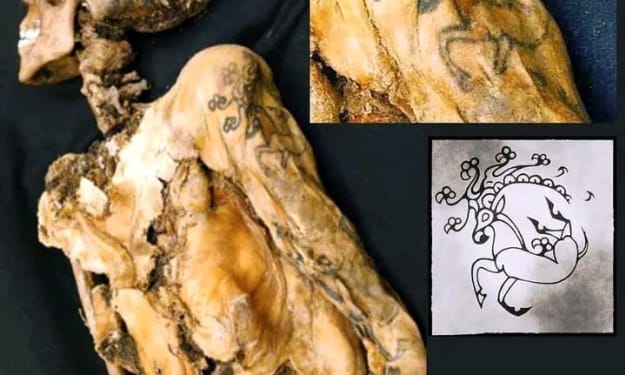
The Tattooed Mummy: Unraveling the Mystery of the Siberian Ice Maiden
Beneath the frozen expanses of the Siberian tundra lies a story preserved for millennia, one of artistry, culture, and resilience. The "Siberian Ice Maiden," a 2,500-year-old mummy unearthed from the Altai Mountains in 1993, is a testament to the sophisticated practices of the ancient Scythians. Among the many remarkable aspects of this discovery is the intricate tattoo found on her body—a depiction of a Scythian deer, one of the earliest known examples of tattoo art in human history. This extraordinary find sheds light on the enigmatic world of the Scythians, a nomadic people who once roamed the vast Eurasian steppes. The Ice Maiden's frozen resting place, her elaborate burial, and the mysterious tattoos etched into her skin provide a rare glimpse into the cultural practices of a civilization that has long since vanished. --- The Discovery: Unearthing the Past In 1993, Russian archaeologist Natalia Polosmak made an astounding discovery in the permafrost of the Ukok Plateau. Encased in ice within a burial mound, or kurgan, was the remarkably preserved body of a young woman. Her resting place, undisturbed for over two millennia, offered a treasure trove of artifacts and clues to her life. The burial chamber contained intricate wooden carvings, pottery, and traces of what may have been a ceremonial feast. The Ice Maiden herself was dressed in fine garments, including a long, woolen skirt and a headdress that indicated her high social status. Yet, it was the tattoos on her body that truly captivated the world. --- The Tattoos: Ancient Art on Skin The Ice Maiden’s most notable tattoo is an intricate design of a Scythian deer, rendered in a style that showcases the artistic sophistication of her people. The tattoo features swirling patterns and exaggerated features, such as antlers that extend in ornate curves. The deer’s body is elongated, almost abstract, reflecting the Scythian penchant for stylized, symbolic art. This tattoo wasn’t merely decorative. Among the Scythians, tattoos likely held deep cultural and spiritual significance. They may have been used as markers of identity, social status, or tribal affiliation. Some researchers believe they also had protective or magical purposes, serving as talismans against harm or as expressions of the wearer’s connection to the natural world. --- The Scythians: A Nomadic Civilization The Scythians were a nomadic people who thrived from around the 9th century BCE to the 3rd century BCE, spanning a vast territory from the Black Sea to Siberia. They were renowned for their skill in horseback riding, their prowess in battle, and their intricate art. Despite their nomadic lifestyle, the Scythians developed a rich culture marked by elaborate burial practices, exquisite gold craftsmanship, and a profound connection to nature. The Ice Maiden’s burial reflects these traits, from the artifacts that accompanied her to the elaborate tattoos that adorned her body. The Scythians’ tattoo art, in particular, reveals their reverence for animals. Many of their designs depict creatures such as deer, leopards, and birds, often stylized to emphasize their power and beauty. These tattoos serve as a visual record of the Scythians’ beliefs, values, and artistic traditions. --- Life and Death of the Ice Maiden Who was the Siberian Ice Maiden, and what role did she play in Scythian society? While much about her remains a mystery, her burial suggests she was a person of high status. Her elaborate clothing, the rich artifacts found in her tomb, and her carefully preserved body all point to her significance within her community. Researchers believe the Ice Maiden was in her twenties when she died, possibly from an illness such as breast cancer or complications related to a fall. Her headdress, adorned with carved figures and horsehair, may have indicated her role as a shaman or priestess. If true, her tattoos could have held spiritual meanings tied to her duties as an intermediary between her people and the divine. --- Preservation Through Ice The Ice Maiden’s remarkable preservation is due to the permafrost of the Siberian plateau, which acted as a natural freezer for over two millennia. The ice prevented decay, keeping her body, clothing, and even her tattoos remarkably intact. The discovery of such well-preserved remains offers archaeologists a unique opportunity to study the Scythians’ physical characteristics, health, and even diet. Analysis of the Ice Maiden’s body revealed a diet rich in meat and dairy, as well as signs of wear on her joints consistent with a life spent on horseback. --- Cultural Insights from the Ice Maiden The Ice Maiden’s discovery has deepened our understanding of Scythian culture and the significance of tattoos in their society. Her tattoos serve as a window into the artistic traditions of her people, showcasing their skill in creating intricate designs that blended natural and mythical elements. Her burial, too, provides clues to Scythian beliefs about the afterlife. The care taken in preparing her tomb suggests a belief in an existence beyond death, one in which she would need her clothing, jewelry, and even her tattoos. --- A Legacy of Art and Mystery The Siberian Ice Maiden stands as a bridge between the ancient and modern worlds. Her tattoos, preserved for thousands of years, remind us of the enduring power of art and its ability to tell stories across time. They also challenge us to consider the cultural significance of body art in our own societies. Today, the Ice Maiden’s remains are preserved in a museum in Siberia, where they continue to inspire wonder and curiosity. Her story is a testament to the resilience of human creativity and the ways in which art can connect us to the past, transcending the boundaries of time and culture. Through her, the Scythians’ world—one of beauty, mystery, and profound connection to nature—comes alive once more, offering a glimpse into a long-lost civilization.
By Deji Akomolafe2 years ago in History
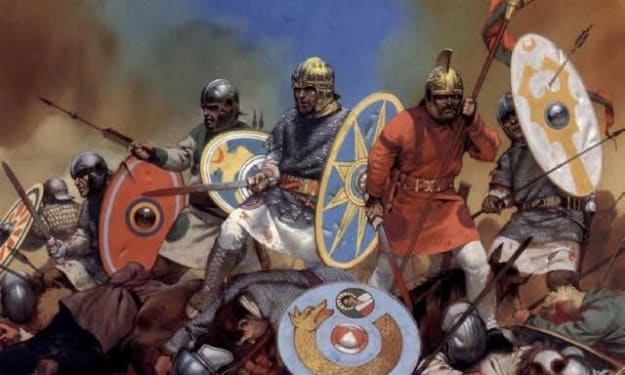
The Roman Legion: The Ultimate Military Machine
When it comes to military innovation, few forces in history can match the brilliance of the Roman legion. Often referred to as the "dream team" of the ancient world, the legion was a dynamic and highly adaptable fighting force. It evolved from the rigid, old-school phalanx formation of earlier armies into a flexible and efficient system that combined discipline, strategy, and raw power. This transformation made the legion a dominant force for centuries, shaping the course of history and leaving a legacy that continues to fascinate today. --- From Phalanx to Flexibility The Roman military system didn’t start as the finely-tuned machine we know from history. Early Roman armies relied on the phalanx, a formation borrowed from the Greeks. While effective in some scenarios, the phalanx was a rigid and unwieldy system. Soldiers stood shoulder-to-shoulder in tightly packed rows, armed with long pikes. While this formation was devastating in head-on combat, it was ill-suited to the varied terrain of the Italian peninsula and the unpredictable nature of Rome's enemies. By the time of the Roman Republic, the legion had emerged as a revolutionary new concept. Instead of relying on a single monolithic block of soldiers, the Romans divided their army into smaller, more agile units called maniples. Arranged in a chessboard-like pattern, these maniples could move independently, giving the army greater flexibility on the battlefield. This was a game-changer. The legion could now adapt to the terrain, exploit enemy weaknesses, and respond quickly to unexpected threats. --- A Soldier's Arsenal: Gladius and Pilum The strength of the Roman legion wasn’t just in its organization; it was also in its weaponry. Roman soldiers, known as legionaries, were equipped with tools that epitomized efficiency and versatility. - The Gladius: This short sword became one of the most iconic weapons in history. Designed for close-quarters combat, the gladius was perfect for stabbing and thrusting in the tight spaces of a melee. Its design was so effective that it remains a symbol of Roman military prowess. - The Pilum: The Roman javelin added a long-range component to the legionary's arsenal. With a carefully designed shaft and tip, the pilum was a weapon of devastating precision. Once thrown, the pilum would bend upon impact, making it useless for the enemy to throw back. This combination of offense and defense ensured that every legionary could strike at a distance before closing in for hand-to-hand combat. This dual capability of stabbing and throwing made Roman soldiers versatile and lethal, allowing them to dominate a wide range of combat scenarios. --- A Variety of Troops for Every Role The legion wasn’t just about heavy infantry. The Romans understood the importance of a balanced force and incorporated a mix of troop types to address different battlefield needs. - Light Infantry: These nimble soldiers acted as skirmishers, harassing the enemy with missiles and creating confusion before the main battle lines clashed. - Auxiliaries: Recruited from non-Roman subjects and allies, auxiliaries provided specialized skills such as archery, cavalry, or engineering. These troops brought unique strengths that complemented the core legionary forces. - Heavy Infantry: The backbone of the legion, these soldiers formed the solid block that could hold ground, push forward, or execute complex maneuvers. This diversity in troop composition allowed the legion to function as a complete battlefield ecosystem, capable of handling any challenge. --- Brains Over Brawn: Command and Strategy What truly set the legion apart was its command system. Roman officers, from the centurions leading individual maniples to the generals overseeing entire legions, operated within a clear and efficient hierarchy. Orders could be relayed quickly, and each level of command understood its role within the broader strategy. The legion's adaptability was on full display in battles like Ruspinum, where Caesar’s troops famously executed a mid-battle turnaround to face cavalry attacking from behind. Such maneuvers required not only discipline but also a deep understanding of battlefield dynamics. In contrast, older formations like the phalanx would have struggled to adjust to such rapid changes, often resulting in chaos and defeat. The Roman emphasis on strategy, combined with a professional approach to training and logistics, ensured that the legion could outthink as well as outfight its enemies. --- Standards of Unity and Morale Every Roman legion carried a set of standards, most notably the eagle (aquila), which symbolized the unity and honor of the unit. Losing the eagle in battle was considered a catastrophic failure, while recovering it was a moment of immense pride. These standards weren’t just symbols; they were rallying points for soldiers and a source of cohesion on the battlefield. They reinforced a sense of identity and purpose, reminding every legionary that they were part of something greater. --- The Legacy of the Legion The Roman legion was more than just a military unit; it was a symbol of Roman innovation, discipline, and determination. Its influence extended far beyond the battlefield. Roman roads, fortifications, and infrastructure were often built by legionaries, leaving a lasting mark on the empire’s territories. Even in modern times, the principles of organization, training, and adaptability that defined the legion continue to inspire military strategists and historians. The legion was not just an army—it was a living embodiment of Roman civilization, carrying the empire’s ideals across three continents and securing its place in history. --- Conclusion: A Force Like No Other The Roman legion’s evolution from a rigid phalanx into a dynamic and flexible fighting force was a revolution in military history. Combining cutting-edge weaponry, diverse troop types, strategic brilliance, and unwavering discipline, the legion became an unstoppable force that shaped the ancient world. More than 2,000 years later, its legacy remains a benchmark for military excellence and a testament to the ingenuity of the Roman people.
By Deji Akomolafe2 years ago in History
Unearthing History: The Istanbul Building with a Roman Cistern Foundation
Istanbul, a city straddling continents and empires, is a treasure trove of historical marvels. Among its rich architectural tapestry is a now-famous building whose foundation holds the secrets of centuries past. Beneath its modern façade lies a Roman cistern, buried and forgotten for centuries until rediscovered. This unique structure embodies the layers of Istanbul’s history, with each floor representing a different era. From the Roman Empire to the Ottoman period and beyond, this building tells a story of resilience, transformation, and the deep cultural currents that have shaped the city over millennia. --- The Forgotten Roman Cistern The story begins with the Roman cistern that forms the foundation of the building. Built during the Roman or Byzantine period, the cistern served as a crucial water storage system for the bustling mercantile district it once stood beneath. The area, known for its numerous merchants and traders, required reliable water supplies to sustain daily activities and commerce. Constructed using large stone blocks and supported by sturdy columns, the cistern showcased Roman engineering brilliance. Over time, however, the rise of the ground level due to sediment accumulation, combined with the region’s frequent earthquakes, caused the cistern to be buried and forgotten. For centuries, it lay hidden beneath layers of history, its existence fading from memory. It was only during later excavations and renovations that this underground marvel was rediscovered, shedding light on Istanbul’s rich Roman past. --- Layers of History Above the Cistern What makes this building particularly fascinating is how each floor represents a distinct historical period. As new civilizations built over the remains of their predecessors, the structure evolved, incorporating architectural elements from different eras. 1. Roman Foundation: At its base, the Roman cistern stands as a testament to ancient engineering. Its spacious interior, with arched ceilings and stone pillars, once stored water that sustained life above. 2. Byzantine Additions: During the Byzantine period, the cistern likely continued to function as a water source for the surrounding area. Historical records suggest the cistern may have even supplied water to a nearby bathhouse, which later served Ottoman Janissaries. 3. Ottoman Period: In the 15th and 16th centuries, the Ottomans constructed new buildings and infrastructure above the cistern, adapting the site to their needs. The nearby historical bathhouse, used by elite Janissary soldiers, may have drawn water from the cistern, integrating Roman engineering into Ottoman life. 4. Modern Era: Over time, the building transformed again, with its upper levels adapted to serve modern purposes. Today, the structure combines contemporary architecture with its historical foundations, creating a living museum of Istanbul’s past. --- The Janissary Bathhouse Connection A short distance from the building lies a historical bathhouse, a striking reminder of the Ottoman period. Bathhouses, or hammams, played a significant role in Ottoman culture, serving as centers for hygiene, relaxation, and socialization. This particular bathhouse, used by the elite Janissary soldiers, reflects the grandeur of Ottoman architecture. Its proximity to the Roman cistern raises intriguing questions about their connection. Did the cistern supply water to the bathhouse during the Ottoman era? While no definitive evidence confirms this, the possibility adds another layer of intrigue to the building’s story. The convergence of Roman engineering and Ottoman ingenuity in such close quarters highlights Istanbul’s role as a bridge between civilizations. --- Rediscovery and Modern Significance The rediscovery of the Roman cistern beneath the building has transformed it into a site of historical importance. Excavations revealed not only the cistern’s structural details but also artifacts that hint at the lives of those who once lived and worked above it. Today, the building has become a celebrated landmark, attracting history enthusiasts, architects, and tourists alike. Guided tours offer visitors a chance to descend into the cistern, where they can marvel at the stone columns and arches that have withstood the test of time. The building’s upper levels, adapted to modern use, serve as a reminder of Istanbul’s continuous evolution. It stands as a symbol of the city’s ability to preserve its rich heritage while embracing progress. --- A Living Timeline of Istanbul This remarkable building encapsulates the essence of Istanbul—a city where the past and present coexist in harmony. Its Roman cistern foundation anchors it in antiquity, while its layers of Byzantine, Ottoman, and modern influences reflect the city’s dynamic history. Visiting this site offers more than just a glimpse into the architectural ingenuity of past civilizations; it provides a tangible connection to the lives, struggles, and achievements of those who came before. From the merchants of the Roman and Byzantine eras to the Ottoman Janissaries and modern residents, this building tells a story that spans centuries. --- Conclusion: A Bridge Between Eras The building with its Roman cistern foundation is more than just a historical curiosity—it is a microcosm of Istanbul itself. It demonstrates the city’s enduring legacy as a crossroads of cultures, where each layer of history enriches the one before it. Whether you are drawn by the engineering marvel of the cistern, the allure of Ottoman bathhouses, or the broader narrative of Istanbul’s past, this site offers an unparalleled journey through time. It is a place where history is not just remembered but actively lived, reminding us of the intricate tapestry of human civilization that continues to shape our world today.
By Deji Akomolafe2 years ago in History
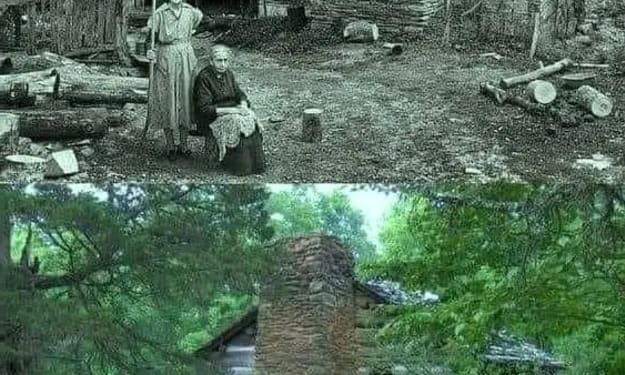
The Walker Family Cabin: A Window into Appalachian History
Nestled in the serene Great Smoky Mountains National Park in Tennessee, the Walker family cabin stands as a testament to the rugged determination and resilience of early Appalachian settlers. Built in the early 19th century, this modest log structure once sheltered 13 members of the Walker family and remains a poignant symbol of the lives lived in this remote and challenging environment. Today, it is preserved as part of the National Park’s historical collection, allowing visitors to step back in time and experience a slice of life as it was in the Smokies over 150 years ago. --- The Walker Family and Their Legacy The Walkers were among the many families who homesteaded in the Smoky Mountains long before the area became a protected national park. Settlers in the region relied on ingenuity, hard work, and a deep connection to the land to sustain their lives. The Walker family cabin, built entirely by hand from locally sourced timber, reflects the practicality and resourcefulness that defined Appalachian homesteaders. At its peak, the cabin was home to 13 family members—a remarkable feat given its small size. Despite the hardships of frontier life, the Walkers thrived in their mountain home, tending livestock, growing crops, and crafting essential tools and furniture. The cabin’s design, with its sturdy walls, simple furnishings, and functional layout, speaks to the resourceful spirit that enabled the Walkers to survive and prosper in the rugged wilderness. --- Life in the Cabin: A Simple, Rugged Existence Life in the Walker family cabin was far from easy. The Smoky Mountains, while breathtakingly beautiful, presented numerous challenges, including harsh winters, difficult terrain, and isolation from nearby communities. Settlers like the Walkers had to be self-reliant, producing or bartering for everything they needed. The cabin itself was constructed using the “saddle-notch” technique, in which logs are cut to fit snugly together without the use of nails. This method provided durability and insulation against the elements. Inside, the cabin featured a single room for cooking, eating, and sleeping. A simple stone fireplace served as the primary source of heat and was used for cooking meals. The Walkers’ lifestyle centered around subsistence farming and craftsmanship. They cultivated corn, beans, and other crops, raised livestock, and relied on hunting and fishing to supplement their diet. The tools and furniture found in the cabin today, many of which were crafted by the family, provide a glimpse into the resourcefulness required to live in such an isolated environment. --- The Walker Sisters: Guardians of Tradition The cabin remained a family home for over 150 years, with its last occupants being the Walker sisters, who lived there until 1966. These remarkable women became iconic figures in the Smoky Mountains, embodying the self-sufficient lifestyle of their ancestors even as the modern world encroached upon their way of life. In a famous 1960 black-and-white photograph, two of the Walker sisters are depicted standing outside their cabin, surrounded by the beauty of the Smokies. The image captures a moment in time when the traditions of the past were still alive, even as change loomed on the horizon. The sisters resisted the sale of their land to the federal government for the creation of the Great Smoky Mountains National Park, valuing their independence and heritage. Eventually, they reached an agreement that allowed them to live out their days in the cabin while the land around them became part of the park. Their story is one of resilience and dedication to preserving their family’s legacy. --- The Cabin Today: A Living Museum Today, the Walker family cabin is one of the most popular historical sites in the Great Smoky Mountains National Park. It has been carefully preserved, with much of its original structure, furniture, and tools still intact. Visitors to the cabin can explore its interior, which features displays of everyday items used by the Walker family, from cooking utensils to handmade furniture. The site also provides an opportunity to learn about the broader history of Appalachian settlers and their contributions to the cultural fabric of the region. Interpretive signs and guided tours offer insights into the challenges and triumphs of mountain life, connecting visitors to a way of life that has all but disappeared. Set against the stunning backdrop of the Smoky Mountains, the Walker cabin serves as a poignant reminder of the connection between people and the land. Its simple design and rustic charm stand in stark contrast to modern life, inviting visitors to reflect on the values of self-reliance, community, and harmony with nature. --- Preserving the Legacy of the Smokies The Walker family cabin is more than just a historical structure—it is a symbol of the enduring spirit of the people who shaped the Appalachian region. Its preservation as part of the Great Smoky Mountains National Park ensures that future generations can learn from and be inspired by the stories of early settlers like the Walkers. Visiting the cabin is an opportunity to step into the past and experience a simpler way of life, one defined by resilience, ingenuity, and an intimate relationship with nature. As you walk through the cabin’s weathered doors and gaze upon the breathtaking mountain views, it is easy to imagine the lives of the Walker family and the countless others who called the Smokies home. --- Conclusion: A Legacy of Resilience and Connection The Walker family cabin stands as a lasting tribute to the history and heritage of the Great Smoky Mountains. It reminds us of the strength and determination of the people who lived in harmony with this rugged land, crafting lives of purpose and meaning amidst the challenges of frontier life. Whether you are a history enthusiast, a lover of the outdoors, or simply curious about the stories of the past, a visit to the Walker family cabin is a journey worth taking. It is a chance to honor the legacy of the Walkers and to connect with the enduring spirit of the Smoky Mountains.
By Deji Akomolafe2 years ago in History
Leif Eriksson and the Discovery of Vinland: A Viking Saga of Exploration
Over 500 years before Christopher Columbus set sail across the Atlantic, a Viking explorer named Leif Eriksson charted a course to North America. The son of Erik the Red, who established settlements in Greenland, Leif Eriksson is celebrated as one of history's greatest explorers. Around 1000-1001 AD, according to Icelandic sagas, Eriksson and his crew reached a mysterious land they called “Vinland.” This "land of grapes" or "land of wine" was so named for the abundance of wild grapes or berries found there. Leif Eriksson’s journey to Vinland marked a significant moment in history, providing the earliest known evidence of Europeans reaching the Americas. His story, preserved in the sagas, offers a fascinating glimpse into the Viking Age and their remarkable seafaring prowess. --- The Viking Spirit of Exploration The Norse people of the Viking Age were renowned for their maritime skills and exploratory spirit. Beginning in the late 8th century, Vikings ventured far beyond their Scandinavian homelands, establishing settlements, trade routes, and colonies across Europe, the North Atlantic, and even as far as the Mediterranean and Central Asia. By the late 10th century, Erik the Red had founded a settlement in Greenland after being exiled from Iceland. Greenland’s harsh environment spurred the Vikings to look further afield for new lands with richer resources. This adventurous spirit was inherited by Erik’s son, Leif Eriksson, who would go on to lead one of history’s most daring voyages of exploration. --- The Journey to Vinland Leif Eriksson’s journey to North America is recounted in two Icelandic sagas: the Saga of the Greenlanders and the Saga of Erik the Red. These medieval texts, though written centuries after the events they describe, provide a detailed narrative of Eriksson’s voyage. According to the sagas, Leif Eriksson set sail from Greenland with a crew of around 35 men. Some accounts suggest that he had heard tales of lands to the west from another Norseman, Bjarni Herjólfsson, who had sighted the coast of North America but did not land. Determined to explore further, Eriksson followed Bjarni’s route and made landfall in a series of locations that he named based on their characteristics. The first land he encountered was a barren, rocky area he called Helluland (“Land of Flat Stones”), thought to be modern-day Baffin Island. From there, he sailed south to a forested region he named Markland (“Land of Forests”), likely Labrador. Finally, he reached a place he called Vinland (“Land of Grapes”), which many historians believe corresponds to the coastal areas of Newfoundland. --- Life in Vinland Eriksson and his crew spent the winter in Vinland, establishing a temporary settlement. The sagas describe Vinland as a fertile land with an abundance of natural resources, including fish, game, and wild berries. Most famously, the land was said to produce wild grapes, which the Vikings associated with wine production. While scholars debate whether the "grapes" were actual grapes or another type of berry, such as cranberries or gooseberries, the name Vinland reflects the Vikings’ perception of the land’s richness and potential. The temporary settlement in Vinland is often identified with L’Anse aux Meadows, an archaeological site on the northern tip of Newfoundland. Discovered in 1960, this site provides physical evidence of Norse presence in North America, including the remains of Viking-style buildings, tools, and artifacts. While L’Anse aux Meadows is small and likely served as a seasonal camp, it confirms the accuracy of the sagas’ accounts and establishes Eriksson’s voyage as the earliest known European exploration of the Americas. --- Vinland’s Legacy Despite its promise, Vinland was not permanently settled by the Norse. The sagas suggest that the Vikings faced challenges in maintaining their foothold in the New World, including conflicts with the indigenous peoples they called Skrælings. These encounters, combined with the logistical difficulties of maintaining a colony so far from Greenland and Iceland, likely deterred further attempts at settlement. Nevertheless, Eriksson’s journey to Vinland left a lasting legacy. It demonstrated the incredible range of Viking exploration and their ability to navigate vast, uncharted waters. It also added a new chapter to the history of human migration, challenging the traditional narrative that Columbus “discovered” the Americas in 1492. While the Norse presence in Vinland was brief, it symbolizes a remarkable moment in the history of exploration. The story of Leif Eriksson and his voyage to the New World continues to inspire curiosity and admiration, offering a glimpse into the courage and determination of the Viking Age. --- Leif Eriksson’s Place in History Leif Eriksson is remembered as one of the greatest explorers of all time, and his achievements are celebrated in modern culture. In the United States, Leif Erikson Day is observed annually on October 9, honoring his pioneering spirit and early contributions to the history of the Americas. Eriksson’s journey to Vinland stands as a testament to the adventurous spirit of the Vikings and their remarkable achievements in exploration. It challenges us to reconsider the complexity of human migration and the interconnectedness of ancient civilizations. --- Conclusion: The First European to Reach the Americas Leif Eriksson’s voyage to Vinland around 1000 AD represents a pivotal moment in the history of exploration. As the first known European to set foot in North America, Eriksson paved the way for future exploration and highlighted the extraordinary capabilities of the Norse people. The sagas of Vinland, combined with archaeological discoveries like L’Anse aux Meadows, remind us of the richness and complexity of history. They also invite us to marvel at the courage and ingenuity of those who ventured into the unknown, leaving an indelible mark on the story of humanity.
By Deji Akomolafe2 years ago in History
The Anglo-Saxon Settlement of Britain: A Turning Point in History
In 410 AD, as the Roman Empire retreated from Britain, a significant and transformative migration began. Germanic tribes, particularly the Anglo-Saxons, started settling in the fertile lands of the island. This migration not only reshaped the demographic and cultural makeup of Britain but also left a lasting imprint on its language, traditions, and place names. Among the most notable legacies of this period is the naming of "Wales" and the term "Welsh," both of which stem from Germanic words meaning "strangers" or "foreigners." The story of the Anglo-Saxon settlement and its impact on the native Celtic peoples of Britain is a tale of displacement, cultural transformation, and the forging of a new identity for the island. --- The Context of Anglo-Saxon Migration The departure of the Romans in 410 AD marked the end of an era of centralized governance and infrastructure in Britain. The island, which had been part of the Roman Empire for nearly four centuries, was left vulnerable to external invasions and internal strife. Without the Roman legions to defend them, the Britons faced increasing pressure from northern tribes like the Picts and Scots, as well as seafaring raiders from across the North Sea. It was in this climate of instability that the Anglo-Saxons arrived. Comprising various Germanic tribes, including the Angles, Saxons, and Jutes, these newcomers were initially invited as mercenaries to help defend Britain from external threats. However, they soon began settling the land themselves, establishing control over large swathes of territory and pushing the native Celtic population to the peripheries of the island. --- The Displacement of the Celtic Britons As the Anglo-Saxons established their dominance in Britain, the native Celtic Britons were gradually displaced from their ancestral territories. This displacement was not a sudden event but rather a gradual process that unfolded over several centuries. The Anglo-Saxons settled primarily in the fertile lowlands, where they established new villages, towns, and kingdoms. Meanwhile, the Celtic Britons retreated to the mountainous and less accessible regions of the island, such as modern-day Wales, Cornwall, and Scotland. This movement of peoples led to the creation of distinct cultural and linguistic regions in Britain. The Celtic Britons retained their own languages, such as Welsh, Cornish, and Cumbric, which were derived from the earlier Brythonic language. In contrast, the Anglo-Saxons brought their Germanic dialects, which eventually evolved into Old English. The linguistic divide between these two groups would shape the cultural landscape of Britain for centuries to come. --- The Origin of "Wales" and "Welsh" One of the most enduring legacies of the Anglo-Saxon settlement is the naming of Wales and the Welsh people. The Anglo-Saxons referred to the Celtic Britons as "wealas," a term derived from the Old English word for "foreigners" or "strangers." This reflects the Anglo-Saxon perspective of the Celtic Britons as an alien population, despite their deep historical roots in the land. The term "wealas" eventually gave rise to the modern English name "Wales" and the adjective "Welsh." Ironically, the Celtic Britons were the original inhabitants of the island, yet they were labeled as outsiders by the Anglo-Saxon settlers. This linguistic legacy highlights the power dynamics of the period and the cultural dominance of the Anglo-Saxons in shaping the narrative of Britain’s history. --- The Cultural and Political Transformation of Britain The arrival of the Anglo-Saxons did not merely displace the Celtic Britons—it also brought about a profound cultural transformation. The Anglo-Saxons introduced their own customs, laws, and religious practices, many of which became foundational to English identity. Pagan beliefs dominated in the early years of settlement, but by the 7th century, the Anglo-Saxons had largely converted to Christianity, blending their traditions with those of the Celtic Church. Politically, the Anglo-Saxons established a patchwork of kingdoms, including Wessex, Mercia, and Northumbria, each vying for supremacy over the others. These kingdoms laid the groundwork for the eventual unification of England in the 10th century. The influence of Anglo-Saxon governance, with its emphasis on local rule and tribal loyalty, can still be traced in aspects of English law and culture today. --- The Enduring Legacy of the Celtic Britons While the Anglo-Saxons dominated much of Britain, the Celtic Britons retained their identity and culture in the regions to which they retreated. In Wales, for example, the Welsh language and traditions have endured for over a millennium, serving as a living testament to the resilience of the Celtic people. The term "Welsh," once used to mark the Britons as outsiders, has been reclaimed as a badge of cultural pride. Today, Wales celebrates its unique heritage through its language, literature, and festivals, such as the Eisteddfod, which showcases Welsh music and poetry. Similarly, the Cornish language has seen a revival in recent years, and Scotland continues to embrace its Gaelic traditions. --- Conclusion: A Story of Displacement and Resilience The Anglo-Saxon settlement of Britain in 410 AD was a turning point in the island’s history. It marked the beginning of a new cultural era, one in which the native Celtic Britons were pushed to the margins of their own land. Yet, despite the displacement and cultural dominance of the Anglo-Saxons, the Celtic peoples of Britain preserved their identity and traditions, leaving an indelible mark on the island’s history. The names "Wales" and "Welsh," rooted in the Anglo-Saxon perception of the Britons as foreigners, serve as a reminder of this complex and layered history. They reflect not only the divisions of the past but also the enduring strength of the Celtic identity in the face of adversity. As we look back on this pivotal period, we gain a deeper appreciation for the resilience of the Celtic Britons and the profound cultural transformations that shaped the Britain we know today.
By Deji Akomolafe2 years ago in History