Ancient
The Enigma of London Stone
Every day, thousands of commuters shuffle along Cannon Street, making their way through the dense fog that rolls over London’s financial district. But among the hustle and bustle, few notice an oddity standing almost inconspicuously in a glass enclosure: London Stone. It’s a lump of rock, certainly not impressive at first glance, but this stone holds a mysterious past that has captivated Londoners for centuries.
By llaurren's reads2 years ago in History
A Christmas Miracle
The night before Christmas, and the small town of Willow brook was covered in a thick blanket of snow. The streets were quiet, with only the faint glow of Christmas lights twinkling through the frosty windows. For most families, it was a time of joy, laughter, and celebration. But for Emma, a single mother living on the edge of town, this Christmas felt colder than ever.
By Ahmed raza2 years ago in History
The Lost Child of the Black Forest
The Lost Child of the Black Forest In a village nestled on the edge of the Black Forest, there was a young child named Jakob. Jakob was known throughout the village for his wild imagination and gentle heart. On a cold, misty autumn morning, Jakob wandered into the woods, chasing the bright red and orange leaves swirling in the wind. He had no fear; he believed the forest was alive and kind, watching over him like a guardian. But as he ventured deeper, the trees grew taller, their twisted branches intertwining like fingers reaching for the sky, and the forest floor became thick with moss and shadows.
By Ahmed raza2 years ago in History
Katherine of Aragon and the Unfulfilled Marriage Dreams of Princess Mary
The history of the Tudor dynasty is filled with drama, political intrigue, and tangled webs of ambition. One of the lesser-known but deeply significant stories revolves around Princess Mary, the daughter of Katherine of Aragon and King Henry VIII, and her potential marriage to Reginald Pole, a prominent English cardinal. This marriage, which could have had profound implications for both the English monarchy and the Catholic Church, was thwarted by the very man whose actions would dramatically shape both: Henry VIII. The Marriage Proposal Before Henry VIII’s famous break with Rome and the subsequent establishment of the Church of England, his first wife, Katherine of Aragon, had hoped for a marriage between her daughter Mary and Reginald Pole. Reginald was not only a talented and respected scholar but also a member of a prominent English family. His mother, Margaret Pole, was a close friend of Katherine of Aragon, and the two women shared a strong bond. It was this friendship that sparked the idea of a marriage between their children. At the time, Reginald Pole was seen as one of the most suitable matches for Princess Mary. He was well-educated, ambitious, and had a good standing within the Catholic Church, having been made a cardinal by Pope Clement VII in 1519. Moreover, his lineage as a member of the Pole family, which was closely related to the royal family, made him a noble match that many would have considered advantageous. For Katherine, the union seemed like a natural progression. She had already suffered greatly at the hands of Henry VIII, who had sought an annulment of their marriage to marry Anne Boleyn. By the time her daughter Mary had grown into womanhood, Katherine had been cast aside, and her hopes for a secure future for Mary were fading. A marriage to Reginald Pole would have not only cemented Mary's status but also strengthened ties with the Catholic Church, which Katherine remained loyal to even after her marriage had been dissolved. Reginald Pole’s Rising Star Reginald Pole was a man of immense intellect and had already garnered a great reputation across Europe, particularly for his writings on theology and his opposition to King Henry VIII’s actions, which had led to England’s break from the Catholic Church. In the early 1530s, Pole became a staunch critic of Henry’s divorce from Katherine and his subsequent marriage to Anne Boleyn. His opposition to Henry’s policies and his alignment with the papacy marked him as a key figure in the Catholic resistance against the king’s religious reforms. Because of his ecclesiastical status and his strong Catholic credentials, Pole was considered one of the most eligible bachelors in Europe. His marriage to Mary, therefore, seemed like a perfect solution to Katherine’s predicament. A union between the two would have united English Catholicism under a powerful religious figure and could have kept England aligned with Rome, had it been allowed to happen. Henry VIII’s Opposition However, Henry VIII’s relationship with both his daughter and his former wife had soured. By the time Mary had reached marriageable age, Henry had divorced Katherine and declared himself Supreme Head of the Church of England, cutting ties with the papacy. Henry’s desire for absolute control over his marriages and the future of his dynasty took precedence over any attempts to solidify Mary’s position through a political marriage. The proposal between Mary and Reginald Pole was one of many that Henry rejected for his daughter. Henry had, by this point, turned his back on Katherine and Mary’s Catholic heritage, and he would go to great lengths to ensure that Mary did not find a suitable Catholic match. While Mary was still considered a legitimate heir to the throne, Henry was determined to distance her from the old order, which included any suggestion that she might marry a man loyal to the Pope. Henry’s interference with Mary’s romantic prospects was not merely a matter of royal power; it was also driven by a deep fear of opposition. Pole, who had vocally denounced Henry’s actions, was seen as a potential leader of a Catholic rebellion. To align Mary with someone so strongly opposed to his own authority would have been politically disastrous. Furthermore, Henry’s efforts to control his daughter’s future were also a manifestation of his desire to establish his own line of succession, one that would be uncontested by the likes of Mary and her Catholic allies. The Broken Dreams of Katherine and Margaret For Katherine of Aragon and Margaret Pole, the prospect of a marriage between their children was more than just a political maneuver—it was a personal dream. Both women were committed to preserving Catholicism in England and were devoted to the legacy of their shared faith. A marriage between Mary and Reginald would have symbolized a reunion with the old religious order and a potential for hope in the face of Henry’s devastating reforms. But Henry’s rejection of the match between Mary and Reginald Pole not only crushed Katherine and Margaret’s dreams but also deepened the rift between the Catholic and Protestant factions in England. While Henry would go on to marry Anne Boleyn and later Jane Seymour, the issue of Mary’s marriage remained unresolved, and her future continued to hang in the balance. The Political and Religious Fallout In the years that followed, Mary’s position became increasingly precarious. After the deaths of both Anne Boleyn and Jane Seymour, Henry’s plans for the English succession remained fluid. It wasn’t until after Henry’s death and Mary’s eventual ascension to the throne that the religious and political landscapes shifted once more. Interestingly, Reginald Pole, who had long been estranged from Henry, would eventually return to England during Mary’s reign. In 1554, he was appointed Archbishop of Canterbury and played a significant role in the religious restoration of Catholicism under Mary. Though Mary and Pole never married, their political and religious alliances did finally come to fruition—albeit under very different circumstances than either Katherine or Margaret had envisioned. Conclusion The failed marriage between Princess Mary and Reginald Pole is a story of unfulfilled ambitions and thwarted hopes. For Katherine of Aragon, it was a missed opportunity to secure her daughter’s future and maintain England’s Catholic allegiance. For Reginald Pole, it was a reminder of how deeply personal and political struggles often intersected during the turbulent years of the Tudor dynasty. Though the marriage never came to pass, the legacy of these untold stories continues to shape our understanding of the complex web of loyalty, power, and religion that defined the Tudor era.
By Deji Akomolafe2 years ago in History
The Head of Henry VII's Funeral Effigy: A Masterpiece of Renaissance Portraiture
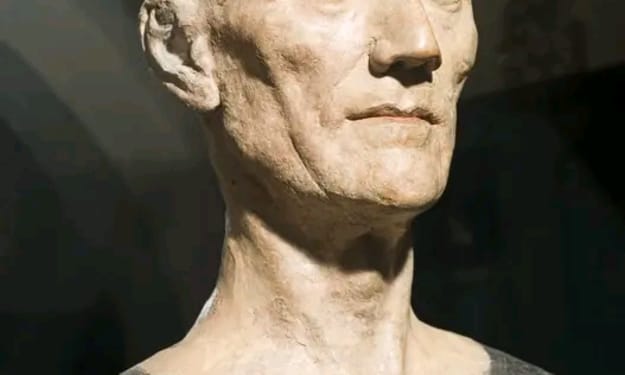
In the world of royal funerary art, few pieces stand out as prominently as the head from Henry VII’s funeral effigy. This exquisite work of craftsmanship not only captures the likeness of England’s first Tudor monarch but also provides a remarkable insight into the evolving sophistication of royal portraiture during the Renaissance period. As one of the finest examples to survive from the era, the head serves as a testament to the artistry and historical significance of effigies, which were an essential part of royal funerals from the 14th to the 17th centuries. --- Funeral Effigies: A Tradition in Royal Burials Royal funerals during the medieval and Renaissance periods were elaborate events designed to honor the deceased monarch’s life and legacy. One of the most notable features of these ceremonies was the effigy, a life-sized sculptural representation of the monarch, which was carried in the funeral procession. These effigies were created to reflect the royal individual in death, often in a highly idealized form, and played a central role in public mourning. Effigies were traditionally made from wood, wax, or cloth and could take on a variety of forms depending on the time period and available resources. For a king or queen, the effigy was not only a representation of their physical appearance but also a symbol of their power and the enduring legacy of their reign. In some cases, these effigies were so realistic that they seemed to come to life, capturing the solemnity and reverence of the funeral proceedings. --- The Effigy of Henry VII Henry VII, the founder of the Tudor dynasty, reigned from 1485 until his death in 1509. His reign was marked by significant political and cultural changes in England, including the consolidation of the Tudor family’s hold on the throne following the tumultuous Wars of the Roses. After his death, Henry VII’s funeral was a grand affair befitting his royal status. At the heart of the procession was his funeral effigy, created to reflect his likeness for the last time before he was laid to rest at Westminster Abbey. Unlike many earlier effigies, which were relatively crude in their depiction of the deceased, Henry VII’s effigy was a work of art that showcased the growing sophistication of royal portraiture during the Renaissance. The attention to detail in the effigy’s creation reflects not only the skill of the artists but also the importance placed on the monarch’s image at the time. This was a period when portraiture was becoming an essential means of communicating power, prestige, and lineage, particularly for royal families. --- A Study in Renaissance Portraiture The head from Henry VII’s effigy stands out as one of the finest examples of royal portraiture from the period. Created with remarkable skill, it offers a strikingly realistic depiction of the king’s facial features, capturing both the dignity and the personality of the ruler. The facial expression is serene and noble, conveying a sense of calm and authority that was essential for any king. The sculptor also took great care in rendering the king’s features in minute detail, from the carefully carved beard and hair to the regal folds of his attire. This realism was part of a broader shift in art during the Renaissance, where there was a growing emphasis on humanism and the accurate representation of the individual. Portraits were no longer idealized or stylized; instead, artists sought to create lifelike depictions of their subjects, capturing their essence and personality. This development was evident not only in paintings but also in sculpture, as seen in Henry VII’s funeral effigy. The head, in particular, reflects this trend, offering a rare glimpse into the king’s appearance and the artistic standards of the time. --- Symbolism and Significance The funeral effigy of Henry VII was not only an accurate representation of the king’s physical likeness but also a symbol of his royal authority. During the procession, the effigy would have been carried through the streets, where it was viewed by the public as a final display of the king’s power and influence. The effigy, as with other royal representations, served to reinforce the monarch’s status and legacy, ensuring that their memory lived on long after their death. The highly detailed and refined nature of the head from the effigy also speaks to the importance of royal portraiture as a tool for shaping public perception. For Henry VII, the effigy served as both a commemorative and political symbol, reinforcing his rightful place on the throne and the strength of the Tudor dynasty. By presenting an idealized, yet realistic, image of the king, the effigy allowed the people to mourn their monarch while also remembering the greatness of his reign. --- The Legacy of the Effigy The head from Henry VII’s funeral effigy is an invaluable artifact, not only because of its artistic beauty but also because it offers a rare window into the world of royal funerary practices in Renaissance England. As one of the finest surviving examples of its kind, the effigy reflects the cultural and political climate of the time and marks a pivotal moment in the evolution of royal portraiture. Though much of the funeral effigy has been lost to time, the surviving head continues to captivate historians, art lovers, and royal enthusiasts alike. It serves as a reminder of the skill and artistry of the period, as well as the enduring importance of the monarch’s image in shaping the legacy of a ruler. --- Conclusion The head from Henry VII’s funeral effigy remains one of the most significant pieces of Renaissance portraiture to survive from the period. Its creation is a testament to the skill of the artists and the growing sophistication of royal image-making during the late 15th and early 16th centuries. More than just a lifelike depiction of a monarch, the effigy served as a powerful symbol of royal authority, reflecting both the political climate of the time and the importance placed on the king’s legacy. As we continue to study and admire this remarkable artifact, we are reminded of the complex interplay between art, power, and memory in the world of Renaissance England. Through its exquisite craftsmanship and symbolic meaning, Henry VII’s funeral effigy continues to serve as a link between the past and the present, offering a timeless representation of one of England’s most important monarchs.
By Deji Akomolafe2 years ago in History
The Roman Toilet of Caracalla: A Glimpse Into Ancient Luxury and Innovation
The Roman Empire is celebrated for its monumental architecture, engineering marvels, and the luxuries of daily life afforded to its citizens. Among the most fascinating artifacts of this era is the Roman marble toilet from the Baths of Caracalla, dating back to the 2nd-3rd century AD. This toilet, intricately designed to mimic a carriage, is more than just a utilitarian object—it offers an insight into the sophistication, societal norms, and cultural values of ancient Rome. --- The Baths of Caracalla: A Wonder of Ancient Rome The Roman toilet in question was discovered in the Baths of Caracalla, one of the largest and most opulent bathing complexes in the ancient world. Constructed during the reign of Emperor Caracalla (211–217 AD), the baths were not just a place for hygiene but a hub of social interaction, leisure, and even political discourse. Capacity and Structure The Baths of Caracalla had a staggering capacity to accommodate 1,600 people simultaneously, with an estimated 6,000 to 8,000 visitors passing through daily. Spanning an area of approximately 25 hectares, the complex included hot baths (caldarium), warm baths (tepidarium), and cold baths (frigidarium), as well as gymnasiums, libraries, and gardens. The grandeur and scale of the baths made them one of the seven wonders of ancient Rome, a title well-deserved for their architectural innovation and cultural significance. Public and Social Spaces The baths were a microcosm of Roman society. They were accessible to all free citizens, regardless of social status, and provided a setting where people could relax, exercise, and engage in conversation. The inclusion of toilets like the one found in the Baths of Caracalla highlights the Romans’ attention to detail and their commitment to public comfort. --- The Toilet of Caracalla: Design and Functionality The Roman marble toilet unearthed in the baths stands out for its unique design, which imitates a carriage. Such an elaborate and decorative approach to a simple utility object is a testament to the Roman philosophy of blending functionality with artistry. Materials and Craftsmanship Crafted from marble, the toilet exemplifies the Romans’ preference for durable and luxurious materials. Marble, often reserved for statues and monumental architecture, was used here to elevate a mundane object into a symbol of sophistication. The intricate carving mimics the appearance of a carriage, suggesting that even the most private aspects of daily life were imbued with a sense of elegance and humor. Sanitation and Hygiene Roman toilets were part of an advanced sanitation system that was unparalleled in the ancient world. They were connected to a complex network of aqueducts and sewers that ensured waste was efficiently removed and hygiene maintained. Public latrines, often communal in nature, were a standard feature of Roman baths, reflecting the communal spirit of Roman society. The presence of the marble toilet in the Baths of Caracalla underscores the importance placed on hygiene and convenience, even in public settings. The innovative design and integration of toilets into the bathing complex reveal a culture that prioritized cleanliness and the well-being of its citizens. --- The Cultural Significance of Roman Toilets While modern perspectives may view toilets as purely functional, in ancient Rome, they held cultural and social importance. A Space for Social Interaction Roman toilets, especially in public baths, were communal spaces. People often sat side by side, engaging in conversation while attending to their needs. This openness reflects a societal norm where privacy was less emphasized, and communal life was the cornerstone of Roman civilization. Artistry in Everyday Life The decorative nature of the marble toilet highlights the Roman ethos of bringing beauty to all aspects of life. From mosaics on bathhouse floors to carvings on utilitarian objects, art was an integral part of Roman identity. The toilet’s design, resembling a carriage, may also have had symbolic connotations, perhaps evoking a sense of movement or travel—a reminder of life’s journey. --- The Decline of the Baths and Their Legacy By the 5th century AD, the Baths of Caracalla had reached their peak, celebrated as one of the wonders of Rome. However, the eventual decline of the Roman Empire led to the abandonment of the baths. The infrastructure fell into disrepair, and the site was gradually repurposed or forgotten. Despite their decline, the baths, and artifacts like the marble toilet, remain enduring symbols of Roman ingenuity and luxury. Today, they provide invaluable insights into the daily lives of ancient Romans, their priorities, and their accomplishments. --- Preserving Ancient Heritage The discovery and preservation of artifacts like the marble toilet are crucial for understanding the complexities of ancient civilizations. They remind us that the Romans were not only master builders and engineers but also people who valued comfort, aesthetics, and the art of living well. Modern Relevance The Roman approach to public sanitation, hygiene, and community spaces continues to influence urban planning and architecture today. Their innovations laid the groundwork for modern plumbing systems and public amenities, demonstrating the lasting impact of their ingenuity. --- Conclusion The Roman marble toilet from the Baths of Caracalla is far more than an artifact; it is a window into the world of ancient Rome. Its intricate design, functional excellence, and cultural context speak to a society that excelled in blending practicality with artistry. As we admire this remarkable object today, we are reminded of the Romans’ unparalleled achievements and their enduring legacy in shaping the foundations of modern civilization. Whether as a tool of hygiene or a symbol of luxury, the toilet reflects a civilization that understood the importance of beauty, functionality, and community in every aspect of life—even in the most unassuming places.
By Deji Akomolafe2 years ago in History
The Filles du Roi: France's Bold Plan to Build New France
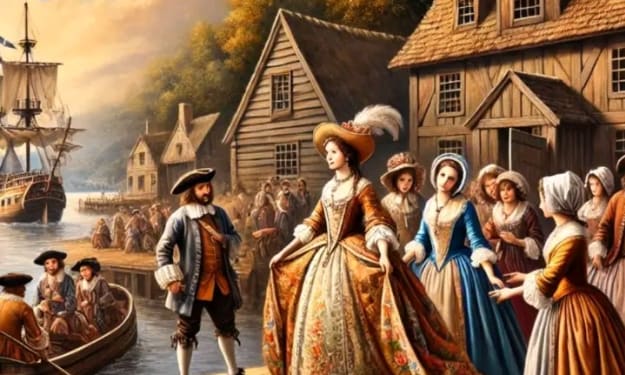
In the mid-17th century, New France (now Quebec) was a fledgling colony struggling to thrive. Its sparse population and the overwhelming imbalance of men to women made it difficult to establish stable communities. To address this issue, King Louis XIV of France launched a groundbreaking initiative: he sent nearly 800 women, known as the Filles du Roi (“Daughters of the King”), to Quebec between 1663 and 1673. This bold social experiment not only transformed the colony but also laid the foundation for modern French-Canadian society. --- The Need for the Filles du Roi By 1663, New France faced a demographic crisis. With only a few thousand settlers and a male-to-female ratio of approximately six to one, the colony struggled to sustain its population. Most men were fur traders or soldiers living isolated lives in a rugged and often dangerous environment. Without women to form families, the colony's growth was stagnant. Governor Jean Talon, New France’s intendant, recognized this challenge and persuaded King Louis XIV to intervene. The solution was simple but ambitious: recruit young women from France, sponsor their journey to the New World, and encourage them to marry settlers, thereby fostering family life and population growth. --- Who Were the Filles du Roi? The Filles du Roi were not of royal blood, but their journeys were financed by the crown—hence the name “Daughters of the King.” These women were typically aged between 15 and 25 and came from a variety of backgrounds. Many were orphans raised in convents, while others were daughters of poor families seeking better opportunities. Contrary to some misconceptions, the Filles du Roi were not forced into this arrangement. They volunteered, motivated by the promise of a better life, a dowry provided by the king, and the chance to escape poverty. The French government carefully vetted candidates, ensuring they were of good moral character and physically fit to endure the challenges of frontier life. Each woman received a dowry that included money, household goods, and farming supplies. These resources were meant to help them establish a new life in New France. Upon arrival, they would meet potential husbands, often within days or weeks, and were married shortly after. --- The Journey Across the Atlantic The voyage from France to Quebec was arduous and perilous, lasting about two to three months. The women traveled in cramped ships, enduring seasickness, unsanitary conditions, and the constant threat of storms. Some did not survive the journey. Once they arrived, the Filles du Roi were housed temporarily in shelters, often run by nuns, where they could recover and prepare for their new lives. Here, they were introduced to local bachelors, including farmers, artisans, and soldiers. Marriage negotiations were swift, as there was immense pressure to settle quickly and contribute to the colony’s growth. --- Impact on New France The Filles du Roi initiative was an extraordinary success. Over the ten years of the program, nearly all of the 800 women married and began families. Their efforts doubled the population of New France within a decade. These women played a vital role in shaping the colony’s social and cultural fabric. They raised large families, often bearing 10 or more children, and worked alongside their husbands to build farms, businesses, and communities. Despite the hardships of colonial life—harsh winters, threats from Indigenous warfare, and isolation—they contributed to the colony’s resilience and expansion. --- Legacy of the Filles du Roi The influence of the Filles du Roi extends far beyond their lifetimes. Today, two-thirds of the French-Canadian population can trace their ancestry back to these remarkable women. Their descendants include politicians, artists, and other notable figures who have shaped Canadian history and culture. The initiative also stands out as one of the earliest examples of state-sponsored immigration aimed at demographic growth. It demonstrated the power of policy to address population imbalances and foster community development in frontier regions. In Quebec, the Filles du Roi are celebrated as pioneers and cultural icons. Their story is taught in schools, and genealogical organizations help French Canadians trace their roots back to these women. Monuments and plaques commemorate their courage and contributions, ensuring their legacy endures. --- Challenges and Controversies While the Filles du Roi program is often praised, it was not without challenges and criticisms. Some historians argue that it placed immense pressure on women to marry quickly, leaving little room for choice. Others point out that the program’s focus on population growth overshadowed the personal agency of the women involved. Despite these concerns, the Filles du Roi initiative was undeniably effective in achieving its primary goal. It not only saved New France from demographic collapse but also provided opportunities for hundreds of women to escape poverty and build new lives. --- Conclusion The story of the Filles du Roi is one of resilience, bravery, and transformation. These young women ventured into the unknown, braving perilous journeys and the hardships of colonial life, to lay the foundation for a thriving society. Their impact continues to resonate, a testament to the power of determination and the enduring legacy of immigration in shaping the world we know today. For French Canadians, the Filles du Roi are more than historical figures—they are symbols of strength and heritage, a reminder of the challenges their ancestors overcame to create a vibrant and enduring culture in the heart of North America.
By Deji Akomolafe2 years ago in History
The Most Beautiful People in History
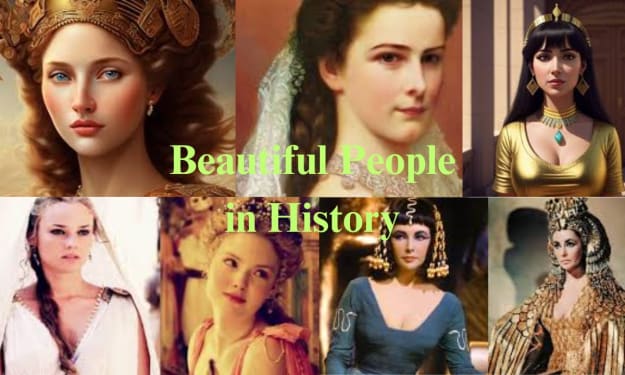
The Most Beautiful People in History: A Journey Through Timeless Beauty When we think of beauty, we often consider physical appearance, charm, and charisma. However, beauty is not just about looks — it’s about the influence, personality, and legacy that someone leaves behind. Throughout history, many individuals have captured the world’s imagination with their extraordinary beauty, elegance, and grace. In this blog, we will explore some of the most beautiful people in history whose allure transcended time and continues to inspire us today.
By Zinnat ara Begum2 years ago in History
**IPL 2025: Rishabh Pant is the Costliest Player, Shreyas Iyer and Arshdeep Singh Trail: An Exciting Auction**. Content Warning. AI-Generated.
The IPL 2025 auction has left fans and cricket experts in awe as some record-breaking bids make headlines. The auction saw **Rishabh Pant** become the costliest player in IPL history as Lucknow Super Giants picked him for a whopping ₹27 crore. Right behind this humongous deal was **Shreyas Iyer** who was sold to Kolkata Knight Riders for a staggering ₹26.75 crore and **Arshdeep Singh**, who has been sold to Punjab Kings for an amount of ₹18 crores. Record-breaking signing is all ready to make the crowd expectant and excited with the premium matches during the IPL season of 2025.
By Abhishek Singh Anand2 years ago in History
Ningyo
In the intricate landscape of Japanese folklore, the Ningyo emerges as one of the most intriguing and enigmatic beings. Frequently compared to mermaids in Western legends, Ningyo embody a distinctive combination of allure, mystery, and an ethereal quality that symbolizes Japan's profound relationship with the ocean and the natural world. However, the Ningyo transcends the role of a mere mythical aquatic entity; it encompasses rich cultural meanings, moral teachings, and even elements of the supernatural.
By A História2 years ago in History
The Impact of Social Media on Mental Health
Social media has transformed the way we communicate, share experiences, and perceive the world around us. With billions of people worldwide using platforms like Instagram, Facebook, Twitter, and TikTok, social media has become a central part of daily life. It offers countless benefits, including staying connected with friends and family, finding support communities, and gaining access to information and entertainment. However, as social media continues to permeate every aspect of our lives, concerns about its impact on mental health have grown significantly. Is social media a tool that enriches our lives, or is it a double-edged sword that can harm our mental well-being?
By dokis sris2 years ago in History
The Enigma of the Shell Grotto: A Mysterious Underground Wonder
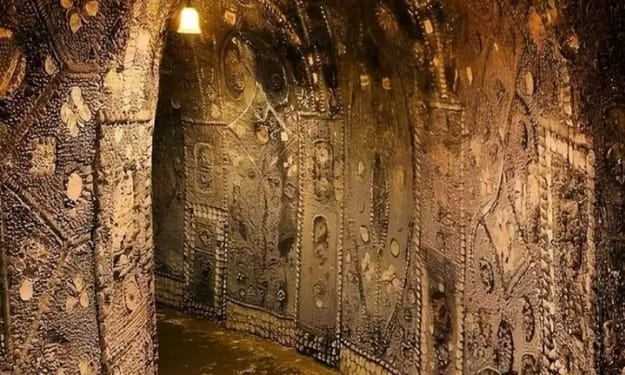
Nestled beneath the unassuming streets of Margate, Kent, England, lies one of the most perplexing and enchanting sites in the world—the Shell Grotto. Discovered in 1835, this underground passageway is a masterpiece of meticulous craftsmanship, adorned with over 4.6 million shells that form intricate mosaics covering every surface. Despite its undeniable beauty, the Shell Grotto’s origins, purpose, and creators remain shrouded in mystery, captivating the imaginations of visitors and researchers alike. Discovery of the Grotto The Shell Grotto was stumbled upon by accident in 1835 when a local man named James Newlove was digging a duck pond in his backyard. His son lowered himself into the hole that had been uncovered and found an underground passage lined with shells, stretching 70 feet and leading to a circular chamber. What Newlove had uncovered was not merely a cave but a space of astonishing complexity. Every inch of the grotto’s walls and ceilings was encrusted with shells arranged in elaborate designs. Symbols, geometric patterns, and even what appear to be depictions of people or deities were meticulously created using shells of varying sizes and colors. The sheer volume of shells—estimated at over 4.6 million—was staggering, and the craftsmanship suggested the work of someone with an extraordinary level of skill and patience. Newlove quickly recognized the potential of his find, opening the grotto to the public as a tourist attraction. However, the questions of who built it, when, and why have puzzled historians, archaeologists, and enthusiasts ever since. --- Theories About Its Origins Over the years, countless theories have been proposed about the Shell Grotto’s origins, each as intriguing as the grotto itself. 1. Ancient Temple One of the most popular theories is that the grotto served as a temple for an ancient civilization. The designs and symbols in the mosaics have led some to speculate that the grotto was a sacred site, possibly dating back to Roman or even Phoenician times. Certain patterns are thought to resemble sun worship or fertility symbols, suggesting that the grotto might have been used for rituals or ceremonies. 2. Medieval Construction Others argue that the grotto was built during the medieval era. The Middle Ages saw the rise of underground chapels and hidden places of worship, particularly during times of religious persecution. Could the grotto have been a secret meeting place for a clandestine group? 3. 18th or 19th-Century Folly A more pragmatic theory is that the Shell Grotto was created in the 18th or early 19th century as a folly—a decorative, whimsical structure built purely for aesthetic or recreational purposes. This was a common trend among wealthy landowners of the time. If this theory is true, the creator of the grotto must have been a person of considerable resources and eccentricity. 4. Secret Society The cryptic symbols and secretive nature of the grotto have fueled speculation that it was a meeting place for a hidden society, such as the Freemasons or another esoteric group. The mosaics might hold coded messages or rituals known only to its initiates. 5. Artistic Undertaking Another possibility is that the grotto was an ambitious art project, created by a visionary individual or group with a passion for beauty and mystery. The lack of records could mean it was a personal endeavor meant to remain hidden from public view. --- The Intricate Craftsmanship One of the most remarkable aspects of the Shell Grotto is its artistry. The mosaics are composed of local shells, including whelks, oysters, mussels, and cockles, as well as some exotic species. The designs are astonishingly detailed, with patterns ranging from geometric shapes to floral motifs and enigmatic symbols. The effort required to create the grotto is almost unimaginable. Gathering millions of shells, preparing the surfaces, and arranging the designs with such precision would have taken years, if not decades. The absence of any documentation or oral tradition about its construction only deepens the mystery. --- Modern Interpretations and Preservation Today, the Shell Grotto is a Grade I listed site and a popular tourist attraction. Visitors marvel at its otherworldly beauty while grappling with its unanswered questions. The grotto’s preservation has become a priority, as the shells are vulnerable to damage from moisture, pollution, and human contact. Modern technology has been used to analyze the grotto, but definitive answers remain elusive. Carbon dating the shells is challenging, as they could have been gathered long after their natural lifespan. Meanwhile, the meaning of the designs continues to be debated. --- The Allure of Mystery Part of the Shell Grotto’s enduring appeal is its mystery. In a world where so much is known and cataloged, the grotto stands as a rare enigma. It invites visitors to speculate, to imagine, and to connect with a past that remains tantalizingly out of reach. The grotto also serves as a reminder of humanity’s capacity for wonder and creativity. Whoever built it, and for whatever purpose, left behind a legacy of beauty and intrigue that continues to inspire. --- Conclusion The Shell Grotto of Margate is more than just an underground wonder; it is a riddle that transcends time. Its origins, purpose, and creators may never be definitively known, but perhaps that is what makes it so special. As you wander through its shell-lined passages, you are not merely observing history—you are stepping into a story that defies explanation. For the modern visitor, the grotto offers a rare opportunity to experience the magic of the unknown. It is a place where craftsmanship and mystery intertwine, leaving all who enter its depths with a sense of awe and curiosity. Whether a sacred temple, a whimsical folly, or an artistic masterpiece, the Shell Grotto remains one of the most fascinating and mysterious landmarks in the world.
By Deji Akomolafe2 years ago in History