Ancient
The Equal Rights Amendment
The Equal Rights Amendment (ERA) is a proposed change to the United States Constitution. Its goal is to guarantee equal rights for all Americans, regardless of gender. For decades, people have debated whether the ERA is necessary and how it could impact society. This article explains what the ERA is, its history, and why it remains a topic of discussion today.
By Farhan Sayed2 years ago in History
Unearthing the Past: The Discovery and Reconstruction of a Roman Ceremonial Chariot
In 2021, archaeologists in Italy made a breathtaking discovery that illuminated a remarkable facet of ancient Roman life. A nearly intact ceremonial chariot was unearthed in Civita Giuliana, a villa complex just a few hundred meters north of Pompeii. This 2,000-year-old chariot, buried by the catastrophic eruption of Mount Vesuvius in AD 79, was not just a practical vehicle but a symbol of ritualistic and ceremonial grandeur. The intricate craftsmanship and the meticulous reconstruction efforts have made this discovery a profound insight into Roman ceremonial practices. --- The Context of the Discovery Civita Giuliana, a suburban villa near the ancient city of Pompeii, has yielded numerous archaeological treasures over the years. In 2021, during an excavation conducted to combat illegal tunneling and looting, archaeologists uncovered the chariot within a portico-like area near a stable where the remains of three horses were previously discovered. The chariot was buried under layers of volcanic ash and pumice, preserving it in an astonishing state of completeness. Despite the destruction wrought by the eruption, this artifact emerged as a rare glimpse into Roman ceremonial life. Massimo Osanna, the outgoing director of the Archaeological Park of Pompeii at the time, described the find as exceptional. "What we have is a ceremonial chariot, probably the pilentum referred to by some sources, which was employed not for everyday use or agricultural transport, but to accompany community festivities, parades, and processions," he explained. --- The Pilentum: A Chariot of Prestige The pilentum was a special kind of chariot mentioned in ancient Roman texts. Unlike utilitarian carts used for agriculture or daily transport, the pilentum was designed for ceremonial purposes. It played a significant role in parades, religious rituals, and public festivities. This chariot exemplifies Roman attention to detail and artistic sensibility. Its decorations include beautiful bronze and tin components, floral patterns, and other intricate designs that elevate it from a mere vehicle to a ceremonial masterpiece. The pilentum was not just a means of transport; it was a statement of social status and cultural importance. --- The Preservation and Reconstruction Process The state of preservation of the chariot is nothing short of remarkable. According to the Archaeological Park of Pompeii, the find included iron components, mineralized wooden remains, and even imprints of organic materials such as ropes and floral decorations. These materials provided invaluable clues about the chariot's construction and purpose. However, reconstructing such a delicate artifact required both skill and innovation. Plaster casts were made of the organic materials that had decayed over the centuries, allowing experts to visualize and restore the chariot to its former grandeur. Combining these casts with the surviving materials, archaeologists were able to piece together a vivid picture of what the chariot would have looked like 2,000 years ago. This meticulous reconstruction effort showcases the expertise of the archaeologists, conservators, and researchers involved. Their work not only preserved the artifact but also brought to life the grandeur of Roman ceremonial traditions. --- Details of the Chariot The ceremonial chariot is a four-wheeled marvel, adorned with bronze and tin decorations that reveal the artistic prowess of Roman craftsmen. The designs include detailed floral patterns and possibly other symbolic motifs, suggesting that the chariot was meant to impress onlookers and convey a sense of occasion. The preservation of mineralized wood and organic material imprints provides crucial insight into how the chariot was constructed and decorated. These details indicate that the chariot likely featured vibrant colors and floral arrangements during ceremonies, adding to its visual impact. --- A Window into Roman Ceremonial Life The discovery of the chariot offers a rare glimpse into the cultural and ceremonial practices of ancient Rome. While utilitarian carts and wagons are more commonly found in archaeological sites, ceremonial chariots like this one are far rarer. The pilentum would have been used in parades, religious ceremonies, and other public spectacles, underscoring the importance of pageantry in Roman society. Such events were not only displays of wealth and power but also opportunities for communal participation and celebration. This artifact also highlights the role of craftsmanship and artistry in Roman culture. The intricate decorations on the chariot reflect the emphasis placed on aesthetics and symbolism, even in functional objects. --- Significance of the Find The Civita Giuliana chariot stands out as one of the most significant discoveries from the Pompeii area in recent years. Its exceptional preservation and ceremonial nature make it a unique artifact, offering new insights into Roman engineering, artistry, and cultural practices. Furthermore, the chariot underscores the importance of ongoing efforts to combat looting and illegal excavations. Had the site not been protected and properly excavated, this extraordinary find might have been lost or irreparably damaged. --- Conclusion The 2021 discovery of the Roman ceremonial chariot at Civita Giuliana is a testament to the enduring legacy of ancient Rome and the skill of modern archaeologists. Through meticulous excavation and reconstruction, this artifact has been restored as a vivid reminder of the grandeur and sophistication of Roman ceremonial life. This chariot is not just a relic of the past; it is a bridge to a world of parades, processions, and public festivities that shaped the cultural identity of an empire. As it stands reconstructed today, it serves as a symbol of human ingenuity—both ancient and modern—and a reminder of the stories still waiting to be unearthed beneath the surface of history. By preserving and studying treasures like the Civita Giuliana chariot, we honor the craftsmanship and traditions of the past while deepening our understanding of the world that came before us. It is through such discoveries that history continues to live, inspiring awe and curiosity in generations to come.
By Deji Akomolafe2 years ago in History
The Hidden Treasure of Cleopatra
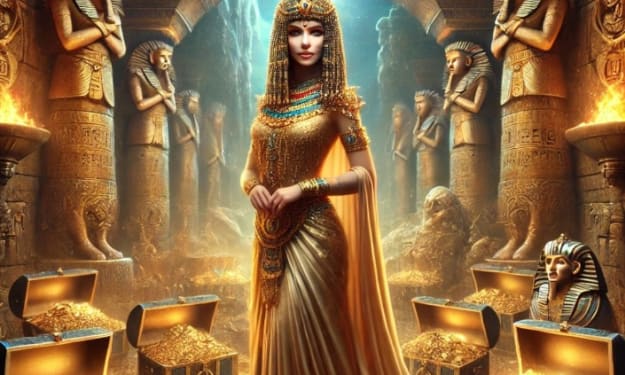
The Hidden Abundance of Cleopatra: Abundance of the Aftermost Pharaoh Cleopatra VII Philopator, the aftermost Pharaoh of Egypt, charcoal one of history’s best arresting figures. Renowned for her intelligence, political savvy, and allegorical beauty, Cleopatra additionally bedevilled immense abundance that helped her advance adeptness in a agitated era. Her treasure, both accurate and symbolic, has been the accountable of endless belief and speculations. But how did Cleopatra aggregate her fortune, and what became of it afterwards her death?
By Say the truth 2 years ago in History
Unraveling the Threads of Time
Today we will explore the history of human colonization in North America, tracing the path from the first inhabitants to the first interactions with European explorers. Using archaeological insights, we will reveal ancient enigmas related to the indigenous populations that flourished on this varied continent. It is essential to recognize the diverse and unique trajectories of various indigenous cultures in North America. The evolution of these cultures has not adhered to a standardized timeline; rather, it has been shaped by their specific environments and interactions.
By A História2 years ago in History
"The Timeless Beauty of Cleopatra: Secrets of the Last Pharaoh"
The Timeless Beauty of Cleopatra: A Legacy Beyond the Throne Cleopatra VII Philopator, the last Pharaoh of Egypt, has captured the imagination of historians, poets, and artists for centuries. Known not just for her intelligence and political acumen, Cleopatra’s beauty has become legendary—a symbol of allure, elegance, and self-empowerment. But what was it that made her beauty so renowned? Was it merely physical, or did it transcend into the realms of charisma, intellect, and self-care? This is a story that intertwines the truth of Cleopatra’s beauty with the practices she employed to maintain her radiance and the captivating personality that left an indelible mark on history.
By Say the truth 2 years ago in History
Queen Cleopatra: The Last Pharaoh of Egypt
Queen Cleopatra: The Last Pharaoh of Egypt Introduction Few figures in history have captured the imagination like Cleopatra VII Philopator, the last active ruler of the Ptolemaic Kingdom of Egypt. Her life was marked by power struggles, legendary romances, and a tragic demise, yet her story endures as one of resilience, intelligence, and the fight for her nation's survival. Born in 69 BCE, Cleopatra was a descendant of the Macedonian Greek dynasty founded by Alexander the Great's general, Ptolemy I. Despite her Greek heritage, Cleopatra embraced Egyptian culture and even learned the native language, becoming the only Ptolemaic ruler to do so. This connection with her people set her apart as a ruler who sought unity in a time of division. Rise to Power
By Say the truth 2 years ago in History
Halloween of Antiquity. AI-Generated.
Halloween, as we know it – a night of tricks, treats, and questionable costume choices – actually has its roots in a festival that is over 2,500 years old. This festival, called Samhain, wasn’t about candy or costumes at all. It was about something much more powerful – the boundary between light and dark, between the world of the living and the world of the dead.
By ADIR SEGAL2 years ago in History
Story of the Richest king . AI-Generated.
Early Life and Reign Mansa Musa was born in 1280 AD in the kingdom of Mali, West Africa. He rose to power in 1307 AD and ruled for over 25 years. The Golden Empire During his reign, Mansa Musa expanded the Mali Empire, conquering several neighboring kingdoms and territories. He established trade routes across the Sahara Desert, connecting Mali to Egypt, Morocco, and other parts of North Africa. Wealth and Prosperity Mansa Musa's empire became incredibly wealthy due to its rich gold and salt deposits. He controlled the trade of these valuable commodities, amassing enormous wealth. The Famous Pilgrimage In 1324 AD, Mansa Musa embarked on a famous pilgrimage to Mecca, bringing with him an entourage of thousands, including slaves, soldiers, and nobles. He carried so much gold that the value of gold in Egypt and other parts of North Africa plummeted for years. Legacy Mansa Musa's legacy extends beyond his wealth. He established schools, mosques, and universities, promoting education and Islamic scholarship. He also encouraged the development of art, architecture, and literature. Estimated Wealth Estimates of Mansa Musa's wealth vary widely, but some historians believe he amassed a fortune equivalent to over $400 billion in today's dollars. Mansa Musa's story is a testament to the power of vision, leadership, and strategic trade. He remains one of the most fascinating figures in African history, and his legacy continues to inspire people around the world. Mansa Musa's Accomplishments Mansa Musa's reign was marked by numerous accomplishments that transformed the Mali Empire: 1. *Architectural Developments*: He commissioned the construction of numerous architectural projects, including the famous Djingareyber Mosque in Timbuktu. 2. *Education and Scholarship*: Mansa Musa encouraged education and Islamic scholarship, establishing schools and universities throughout his empire. 3. *Trade and Commerce*: He expanded trade routes, establishing connections with European and Middle Eastern merchants. 4. *Military Conquests*: Mansa Musa led successful military campaigns, expanding the Mali Empire's borders. Challenges and Decline Despite his many accomplishments, Mansa Musa faced challenges that ultimately contributed to the decline of the Mali Empire: 1. *Succession Crisis*: Mansa Musa's death led to a succession crisis, with various factions vying for power. 2. *External Threats*: The Mali Empire faced external threats from neighboring kingdoms and the rising Songhai Empire. 3. *Economic Decline*: The empire's economy declined due to a combination of factors, including over-reliance on gold and salt trade. Legacy and Impact Mansa Musa's legacy extends far beyond his wealth and accomplishments: 1. *Cultural Exchange*: He facilitated cultural exchange between West Africa, North Africa, and the Middle East. 2. *Islamic Scholarship*: Mansa Musa's patronage of Islamic scholarship helped spread Islamic knowledge throughout West Africa. 3. *Empowerment of Women*: He empowered women in his empire, appointing them to key positions and promoting their education. Mansa Musa's Personal Life Despite his immense wealth and power, Mansa Musa's personal life remains somewhat of a mystery: 1. _Family_: He had several wives and children, but little is known about his family life. 2. _Personality_: Accounts describe Mansa Musa as a just and fair ruler, loved by his people. 3. _Spirituality_: He was a devout Muslim, and his pilgrimage to Mecca remains one of the most famous in history. The Legend of Mansa Musa Mansa Musa's legacy has endured for centuries, inspiring countless stories, songs, and legends: 1. _The Golden King_: In West African folklore, Mansa Musa is often depicted as a wise and generous king, with a heart of gold. 2. _The Mecca Pilgrimage_: His famous pilgrimage to Mecca has been immortalized in literature, art, and music. 3. _The Richest Man in History_: Mansa Musa's wealth and opulence have become the stuff of legend, inspiring countless tales of adventure and riches. Mansa Musa's Impact on Modern Society Mansa Musa's legacy extends far beyond his own time and place: 1. _Cultural Heritage_: He helped spread Islamic culture and knowledge throughout West Africa. 2. _Economic Development_: Mansa Musa's trade networks and economic innovations helped establish West Africa as a major player in global commerce. 3. _Inspiration_: His story continues to inspire people around the world, serving as a reminder of the power of vision, leadership, and determination. Mansa Musa's life and legacy serve as a testament to the enduring power of human achievement and the importance of remembering and celebrating our shared cultural heritage. Mansa Musa's Legacy in Modern Times Mansa Musa's impact can still be seen in modern times: 1. _Timbuktu's Revival_: The city of Timbuktu, which Mansa Musa helped establish as a major center of trade and learning, is still an important cultural and economic hub in West Africa. 2
By Etini mfon Akpan2 years ago in History