Ancient
The Roman Salute: History, Misconceptions, and Modern Interpretations"
Introduction The Roman salute, an iconic gesture often associated with ancient Rome, has become a topic of intrigue and controversy. Widely depicted in art and literature as a symbol of allegiance, it is commonly imagined as an outstretched arm raised with the palm facing downward. Despite its widespread recognition, much of what is believed about the Roman salute is rooted in misconceptions and modern reinterpretations rather than historical evidence.
By Razia Aman2 years ago in History
The Roman Salute: History, Misinterpretations, and Elon Musk Modern Controversies. AI-Generated.
The "Roman salute" has sparked significant debate, confusion, and controversy over the years. Originating as a gesture tied to ancient Rome, it has been co-opted and misused by various groups, leading to its association with fascism and notoriety in modern times. In recent years, prominent figures, including Elon Musk, have inadvertently or otherwise been linked to discussions surrounding gestures that resemble the Roman salute. This blog post explores the origin, history, and controversies of the Roman salute, its association with the Nazi salute, and why it remains a sensitive topic.
By bipul biswas2 years ago in History
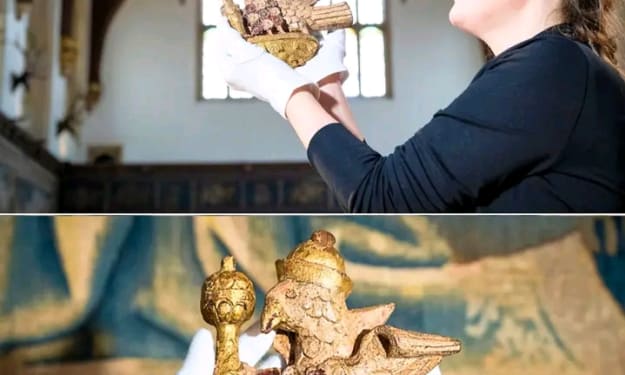
Anne Boleyn’s Falcon Badge: From Auction Bargain to Tudor Treasure
In the world of historical artifacts, few stories capture the imagination quite like the tale of Anne Boleyn’s Falcon Badge—a rare and striking oak carving from the Tudor era. This relic, which once adorned the majestic Great Hall of Hampton Court Palace, holds a deep connection to one of England’s most enigmatic queens. Astonishingly, this priceless piece of history was sold at auction for a mere £75, its true value and significance unrecognized at the time. Today, it is estimated to be worth around £200,000, making it a symbol of not only Anne Boleyn’s legacy but also the fascinating twists and turns of historical rediscovery. --- Anne Boleyn: The Queen Behind the Badge Anne Boleyn, the second wife of King Henry VIII, remains one of the most compelling figures of the Tudor dynasty. Known for her intelligence, charm, and political acumen, Anne played a pivotal role in England’s break from the Roman Catholic Church and the establishment of the Church of England. Her falcon badge, a white falcon standing on a gold tree stump surrounded by roses, symbolizes her rise to power and her status as queen consort. The falcon, a majestic and regal bird, represents Anne’s nobility and ambition, while the roses allude to the Tudor dynasty’s emblem. This badge was more than just a decorative element—it was a visual representation of Anne’s authority and her connection to the monarchy. It adorned tapestries, furniture, and architectural elements, including the Great Hall of Hampton Court Palace, which was a centerpiece of Tudor royal life. --- The Auction and the Undervaluation The journey of Anne Boleyn’s Falcon Badge into obscurity began in the centuries following her tragic fall from grace. After her execution in 1536, Henry VIII sought to erase Anne’s memory, removing her symbols from courtly decorations and royal properties. Yet, some artifacts, including the falcon badge, survived this purge, albeit hidden or forgotten. In a surprising turn of events, one such badge resurfaced in modern times. Misidentified and overlooked, it was sold at an auction for just £75—an almost comical sum for a piece of such historical significance. The buyer, likely unaware of its true value, inadvertently acquired a rare Tudor treasure. --- The Rediscovery and Historical Significance It wasn’t until experts examined the oak carving that its identity as Anne Boleyn’s Falcon Badge was confirmed. The intricate craftsmanship, combined with its Tudor design and iconography, provided unmistakable evidence of its origins. This discovery shed light on a period of English history marked by grandeur, intrigue, and transformation. The badge serves as a tangible link to Anne Boleyn’s brief yet impactful reign, as well as to the artistic and architectural achievements of the Tudor court. The estimated value of the badge skyrocketed to around £200,000, reflecting its rarity and the enduring fascination with Anne Boleyn’s story. As one of the few surviving artifacts associated with the ill-fated queen, it holds immense cultural and historical importance. --- The Great Hall of Hampton Court Palace To understand the badge’s original context, one must explore the Great Hall of Hampton Court Palace. Constructed during Henry VIII’s reign, this magnificent space was the heart of Tudor court life, hosting banquets, plays, and ceremonies. The hall’s hammer-beam roof, adorned with carved badges, heraldic emblems, and other decorative elements, showcased the power and prestige of the Tudor monarchy. Anne Boleyn’s Falcon Badge would have been prominently displayed, a testament to her position as queen. The Great Hall remains a popular attraction today, drawing visitors eager to immerse themselves in the splendor of Tudor history. Although many of the original decorations were removed or altered over the centuries, the hall’s grandeur continues to inspire awe and wonder. --- Why the Badge Matters Today Anne Boleyn’s Falcon Badge is more than just a relic of the past—it’s a symbol of resilience and rediscovery. Its story highlights the importance of preserving and valuing historical artifacts, even when their significance is not immediately apparent. For many, the badge represents Anne Boleyn’s enduring legacy as a key figure in English history. Despite her untimely death, Anne’s influence shaped the course of the Reformation and the future of the Tudor dynasty. Her falcon badge serves as a reminder of her strength, ambition, and the profound impact she had on the monarchy. The badge also underscores the role of art and symbolism in communicating power and identity. In an era when literacy was limited, visual emblems like the falcon badge conveyed messages of authority and lineage to a wide audience. --- Lessons from the Auction Misstep The undervaluation of the badge at auction offers a cautionary tale about the importance of historical knowledge and expertise. Without proper identification, priceless artifacts can be lost, overlooked, or undervalued, depriving future generations of their cultural heritage. This story also emphasizes the role of serendipity in historical rediscovery. Sometimes, it takes a keen eye or a stroke of luck to uncover the hidden treasures of the past. --- Conclusion Anne Boleyn’s Falcon Badge is a remarkable artifact that bridges the gap between the Tudor era and the present day. Its journey—from a symbol of royal power to an undervalued auction item and finally to a celebrated piece of history—captures the intrigue and complexity of historical preservation. As visitors marvel at the badge and its intricate design, they are reminded of the human stories behind the artifacts, the rise and fall of one of England’s most fascinating queens, and the enduring legacy of the Tudor dynasty. Today, the badge stands as a tribute to Anne Boleyn’s resilience, a symbol of her brief but impactful reign, and a lesson in the importance of cherishing the relics of our shared history.
By Deji Akomolafe2 years ago in History
Orford Castle: A Journey Through Time from the 13th Century to Today
Perched in the serene Suffolk countryside, Orford Castle stands as a testament to England’s turbulent medieval past. Built between 1165 and 1173 under the orders of King Henry II, this iconic structure was more than just a symbol of power; it was a strategic masterpiece designed to consolidate the king’s control over rebellious lords and protect England’s coastline. While much of the original complex has been lost to time, the central keep remains remarkably intact, offering visitors a glimpse into its storied past. This blog explores the history of Orford Castle, its original 13th-century grandeur, and how its present-day remains reflect the enduring legacy of medieval England. --- The Origins of Orford Castle King Henry II ordered the construction of Orford Castle during a period of significant political unrest. The king faced ongoing resistance from powerful barons, some of whom had fortified their own castles to challenge royal authority. Orford Castle was strategically placed to strengthen the king’s influence in East Anglia and protect the coastline from potential invaders. Unlike many medieval castles, which were sprawling complexes with concentric defenses, Orford Castle’s design was unique. The heart of the fortress was its polygonal stone keep, a remarkable feat of Norman architecture. Standing over 90 feet tall, the keep was surrounded by an outer curtain wall and a moat, making it both a defensive stronghold and a visible symbol of the king’s authority. --- A Glimpse into 13th-Century Grandeur In its heyday, Orford Castle would have been an imposing sight. The polygonal keep, with its innovative design, featured three large turrets and one smaller one, providing both structural stability and panoramic views of the surrounding countryside and the North Sea. Inside, the keep was divided into multiple levels, each serving a specific purpose: - The Basement: Used for storage and essential supplies. - The Ground Floor: Housed the main entrance and a well for water access. - The Great Hall: A space for administrative duties, feasts, and gatherings. - Private Chambers: Reserved for high-ranking officials and visiting dignitaries. The interior walls were adorned with intricate stone carvings, reflecting both Norman artistry and the castle’s role as a royal residence. The castle also featured a chapel, emphasizing its role as a center for both governance and spiritual life. --- The Castle’s Role in History While Orford Castle was primarily a defensive structure, it also played a significant role in local governance and trade. The nearby port of Orford was a bustling hub of activity during the 12th and 13th centuries, and the castle served as a customs post, overseeing goods entering and leaving the region. Over the centuries, the castle witnessed moments of great historical significance. It survived the political upheavals of the Angevin period and remained an important royal stronghold during the reign of King John. However, as military technology evolved and coastal erosion affected the surrounding landscape, the castle’s strategic importance began to wane. --- Decline and Preservation By the 14th century, Orford Castle’s significance had diminished, and it gradually fell into disrepair. The surrounding curtain walls and other structures were dismantled, with their stones repurposed for other buildings. However, the central keep remained largely intact, thanks to its robust construction. In the 19th century, Orford Castle gained recognition as a historical landmark. Preservation efforts began to safeguard what remained of this medieval marvel. Today, the castle is managed by English Heritage and attracts thousands of visitors each year, eager to explore its rich history and architectural brilliance. --- The Castle Today: A Contrast to Its Past Walking through Orford Castle today, one can see the stark contrast between its current state and its 13th-century grandeur. While the surrounding curtain walls and moat have long since vanished, the central keep stands resilient against the test of time. Visitors can climb the winding stone staircase to reach the top of the keep, where breathtaking views of the Suffolk coastline await. The interior of the keep has been carefully restored, with exhibitions showcasing the castle’s history, its construction, and its role in medieval England. Modern technology has also been used to bring the castle’s past to life. Digital reconstructions and augmented reality experiences allow visitors to envision what Orford Castle might have looked like in its prime. These tools offer a fascinating glimpse into the lives of the people who once inhabited the fortress, from royal officials to local villagers. --- Why Orford Castle Matters Orford Castle is more than just a historic site; it is a symbol of England’s medieval heritage and the enduring legacy of Norman architecture. Its unique design, rich history, and picturesque setting make it a must-visit destination for history enthusiasts and casual travelers alike. The castle’s preservation is a testament to the importance of protecting cultural landmarks, ensuring that future generations can learn from and appreciate the past. As visitors wander through its ancient halls and gaze out over the Suffolk countryside, they are reminded of the resilience of human ingenuity and the stories that connect us to our ancestors. --- Conclusion From its construction in the late 12th century to its role as a historical monument today, Orford Castle has stood as a witness to centuries of change. While much of its original splendor has been lost, the surviving keep continues to inspire awe and curiosity. Whether you’re drawn to its architectural innovation, its fascinating history, or simply the stunning views from its rooftop, Orford Castle offers an unforgettable journey through time. It remains a powerful reminder of a bygone era and a cherished piece of England’s cultural heritage.
By Deji Akomolafe2 years ago in History
The Journey of the Kohinoor
The Adventure of the Kohinoor: From 700 Carats to 100 Carats The Kohinoor diamond, additionally accepted as the "Mountain of Light," has captivated the acuteness of the apple for centuries. Revered as one of the best adored gems anytime discovered, its history is as arresting as its beauty. This commodity explores the Kohinoor's aboriginal size, its abridgement over the centuries, and the affairs beneath which it absent its grandeur. The Discovery and Aboriginal Size The origins of the Kohinoor design are buried in mystery, but it is believed to accept been apparent in the Kollur mines of India, amid in abreast Andhra Pradesh, about the 13th century. Initially belief an amazing 793 carats in its uncut form, the Kohinoor was already acclaimed for its amazing accuracy and clarity. Its immense admeasurement fabricated it one of the better chunk anytime unearthed, a attribute of immense abundance and all-powerful favor. Early Ownership The diamond's aboriginal recorded actualization in history is in the control of the Kakatiya dynasty. It adorned a celestial in a temple, emblematic the all-powerful appropriate of kingship. Back the Delhi Sultanate invaded in the aboriginal 14th century, the gem was bedeviled and became a allotment of the boodle of war. From this point onward, the Kohinoor began its agitated journey, casual through the easily of assorted rulers, including the Mughal emperors. Under Mughal rule, the Kohinoor was acutely displayed on the Peacock Throne of Shah Jahan, a masterpiece encrusted with adored gems. However, the diamond's admeasurement began to change back it was re-cut to enhance its brilliance, a accommodation that would adapt its concrete characteristics forever. The Aboriginal Major Reduction In the mid-18th century, afterwards the abatement of the Mughal Empire, the Kohinoor came into the control of the Persian adjudicator Nader Shah, who abundantly exclaimed, "Koh-i-Noor!" (Mountain of Light) aloft seeing it. Nader Shah’s breed transported the gem to Afghanistan, area it underwent added modifications. By the time it accustomed in Punjab in the aboriginal 19th century, the Kohinoor had already been bargain decidedly from its aboriginal admeasurement of 793 carats. Maharaja Ranjit Singh, who came to acquire the gem, ensured that it remained a attribute of Sikh pride and power. The British Era and Final Reduction The best affecting abridgement in the admeasurement of the Kohinoor occurred during the British era. Afterwards the Second Anglo-Sikh War in 1849, the British annexed Punjab and acquired the Kohinoor as allotment of the Treaty of Lahore. The design was alien to England, area it was presented to Queen Victoria as a blemish of war. In 1852, Prince Albert, Queen Victoria’s consort, absitively to re-cut the Kohinoor to access its accuracy and adjust with abreast European tastes. The re-cutting action took 38 canicule and bargain the design to a bald 105.6 carats. This desperate abridgement was met with disappointment, as the gem absent abundant of its aboriginal admeasurement and allure. The Accepted Admeasurement and Setting Today, the Kohinoor weighs 105.6 carats and is set in the advanced of the Queen Mother’s Crown, displayed in the Tower of London as allotment of the British Crown Jewels. While its accepted admeasurement is still impressive, it pales in allegory to its aboriginal amplitude of 793 carats. How Did the Kohinoor Lose Its Size? The cogent abridgement in the Kohinoor’s admeasurement can be attributed to several factors: Re-cutting for Aesthetics: The Kohinoor was again cut to enhance its accuracy and symmetry, in band with the artful preferences of its assorted owners. Technological Limitations: Aboriginal acid techniques lacked precision, arch to a accident of actual during the process. Cultural Shifts: European tastes in adornment advantaged smaller, added ablaze chunk over larger, uncut ones. A Attribute of Controversy The Kohinoor’s abridgement in admeasurement is not the alone advancing aspect of its history. Its buying charcoal a accountable of acrimonious debate. India, Pakistan, Iran, and Afghanistan accept all laid affirmation to the diamond, citation actual and cultural significance. The British government has consistently alone calls for its return, arguing that it was acquired accurately beneath the Treaty of Lahore. Conclusion The Kohinoor diamond’s adventure from a 793-carat uncut gem to its accepted anatomy of 105.6 carats is a account of conquest, craftsmanship, and cultural shifts. While it has absent abundant of its aboriginal size, the Kohinoor charcoal an constant attribute of ability and prestige. Its adventure continues to attraction the world, reminding us of the complexities of history and the constant attraction of beauty.
By Say the truth 2 years ago in History
"The Enigmatic Black Sapphire"
The Abstruseness of the Atramentous Sapphire: A Journey Through History and Legends The attraction of gemstones has captivated altruism for centuries, but amid the sparkling arrangement of jewels lies one of the best abstruse and ambiguous treasures of all: the Atramentous Sapphire. Clashing its active dejected counterpart, the Atramentous Azure exudes an ambience of secrecy, power, and intrigue. Its origins, its discoverers, and its purpose accept continued been a accountable of fascination, aggregate history, legend, and superstition. What is the Atramentous Sapphire? The Atramentous Sapphire, about referred to as the "Star of the Night," is a attenuate and blurred array of corundum, the aforementioned mineral that forms rubies and added sapphires. Its apparent is usually bland and dark, but beneath light, it reveals a anesthetic star-like arrangement accepted as asterism, acquired by tiny inclusions of rutile aural the gemstone. This angelic aftereffect has added to its mystical reputation, with abounding cultures assertive the Atramentous Azure to authority all-powerful powers. Discovery and Legends The origins of the aboriginal Atramentous Azure are buried in mystery. One of the age-old accounts comes from age-old Sri Lanka, a acreage acclaimed for its affluent gemstone mines. It is said that a bounded miner stumbled aloft the gem while analytic for dejected sapphires in the Ratnapura mines, a arena accepted as the “City of Gems.” The miner believed it was a curse, as the bean was clashing annihilation he had anytime seen—dark, impenetrable, and acutely animate with a star-like glow. The Atramentous Azure anon became associated with aegis and wisdom. Kings and airy leaders approved the stone, assertive it could area off evil, enhance airy insight, and accommodate accuracy in decision-making. In medieval Europe, the gem was said to be advantaged by mystics and alchemists, who advised it a key to unlocking accepted secrets. Historical Accounts and Acclaimed Atramentous Sapphires While abounding Atramentous Sapphires accept been discovered, one of the best acclaimed is the "Black Star of Queensland," a massive 733-carat gemstone unearthed in Australia in the aboriginal 20th century. This amazing gem, begin by a adolescent boy while arena abreast a mine, has an abnormal backstory. Initially alone as a simple atramentous rock, it was afterwards articular as a sapphire, its amount skyrocketing due to its admeasurement and arresting asterism. Another noteworthy Atramentous Azure is the "Delhi Sapphire," believed to backpack a curse. Despite its name, it is absolutely a ample Atramentous Azure amidst by legends of misfortune. Begin in India and brought to Britain during colonial rule, the gem was said to accompany adversity to anyone who endemic or affected it. How to Acquisition a Atramentous Sapphire Finding a Atramentous Azure requires patience, expertise, and a abysmal compassionate of gemology. These attenuate gems are primarily sourced from specific regions about the world: Sri Lanka: Accepted for bearing some of the world’s finest gemstones, including Atramentous Sapphires, from its age-old mines. Australia: The gem-rich acreage of Queensland accept yielded some of the better Atramentous Sapphires in history. Myanmar (Burma): A cogent antecedent of corundum, accepted for bearing high-quality Atramentous Sapphires. Modern gem hunters await on avant-garde technology, such as ground-penetrating radar, and acceptable methods like river animadversion to locate the adored stones. The action involves coursing through alluvium and debris from gemstone-rich deposits, a accurate assignment acute accomplished activity and absorption to detail. The Attitude of Ownership Over the centuries, the Atramentous Azure has been buried in superstition. Age-old warriors believed cutting the gem could assure them from abuse in battle, while airy seekers acclimated it during brainwork to alleviate college states of consciousness. Even today, the gem is advised a attribute of power, mystery, and resilience. However, the Atramentous Sapphire’s acceptability has not been afterwards controversy. Some accept it carries a curse, pointing to incidents area owners faced accident anon afterwards accepting the gem. These claims are about absolved as coincidence, yet they add to the attraction and attitude of the stone. The Amount and Modern-Day Importance Black Sapphires accept acquired cogent acceptance in contempo years, decidedly in adornment design. Their dark, arresting adorableness makes them a different best for assurance rings, pendants, and earrings. While they are about added affordable than dejected sapphires, high-quality specimens with arresting asterism can command absorbing prices. On the abstract front, the Atramentous Azure is believed to arena its wearer, alms aegis adjoin abrogating energies and adopting a faculty of calm. It is about acclimated in holistic healing practices to antithesis affections and accommodate airy clarity. Conclusion The Atramentous Azure charcoal one of the world’s best ambiguous treasures, a gem that blends beauty, history, and mysticism. From its analysis in the mines of Sri Lanka to its affiliation with blame and protection, the Atramentous Azure has captured the acuteness of cultures beyond the globe. Whether admired as a amulet or admired for its different aesthetic, this gem stands as a attestation to the constant attraction of the Earth’s hidden treasures. For those advantageous abundant to acquisition or own a Atramentous Sapphire, it is added than aloof a gemstone—it is a allotment of history, a fragment of the universe’s mystery, and a attribute of the amazing wonders hidden aural our world.
By Say the truth 2 years ago in History
What Was The Silk Road? Ancient Secrets of East-West Trade Revealed
The Silk Road was one of history’s greatest trade networks. It stretched an incredible 6,437 kilometers across Asia and thrived for more than 1,500 years. This wasn’t just a single path — it was an intricate web of routes that helped shape human civilization.
By learn_history2 years ago in History
Discover the Ultimate Char Dham Yatra Package from Delhi
The Char Dham Yatra is one of the most revered pilgrimages in India, encompassing the four holy sites of Yamunotri, Gangotri, Kedarnath, and Badrinath. Nestled in the picturesque Himalayas, this spiritual journey not only connects you to divinity but also offers breathtaking views of majestic mountains, serene rivers, and vibrant flora. For those planning a journey from Delhi, this article outlines an ideal Char Dham Yatra package, ensuring a seamless and enriching experience.
By ManishKumarShah2 years ago in History
The Complete Guide to Tarot Cards: Origins, Meanings, and Insights
The Origins of Tarot Cards Tarot cards boast a fascinating and multifaceted history. They first emerged in 15th century Europe, where they were initially designed as playing cards. In Italy, the game “Tarocchi” became quite popular, and tarot cards were used in this game for centuries. However, it wasn’t until the 18th century that tarot cards became associated with mysticism and divination. Occultists such as Antoine Court de Gébelin began to link tarot to ancient Egyptian mysteries, a theory that gained traction despite having little historical evidence.
By Diana Crooks2 years ago in History
Ancient Egypt Unveiled. AI-Generated.
Over a span of more than 3,000 years, ancient Egypt emerged as a luminary of power and innovation, its grandeur enduring until Alexander the Great's conquest in the 4th century BC. This fascinating civilization bequeathed us with awe-inspiring monuments and enigmatic mysteries that continue to capture our imagination and curiosity.
By SimplyWrite2 years ago in History
The Golden Court of King Solomon . AI-Generated.
"King Solomon’s Abundance in Today’s Terms: A Avant-garde Evaluation" Introduction King Solomon, the allegorical adjudicator of age-old Israel, is acclaimed for his immense wealth, wisdom, and architectural achievements. Known as the wealthiest autocrat in history, his treasures and assets accept been a antecedent of allure for centuries. From gold mines and accolade payments to barter networks, Solomon's abundance are declared abundantly in biblical texts and actual records. But how would his abundance analyze to today’s standards? This commodity explores the net account of King Solomon if he were animate today, application avant-garde metrics to quantify his allegorical fortune. 1. Sources of Solomon’s Wealth Solomon’s abundance came from several key sources, which collectively created a banking authority that would battling today’s billionaires:
By Say the truth 2 years ago in History