Ancient
The Majestic Wealth of King Solomon
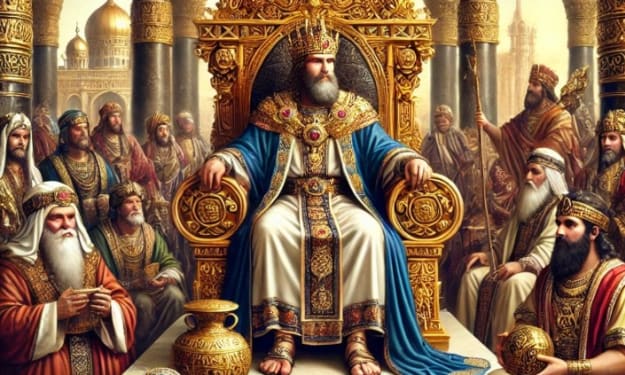
"The Allegorical Abundance of Baron Solomon" Introduction: The name Baron Solomon evokes visions of unparalleled wealth, wisdom, and power. As the son of Baron David and the adjudicator of the United Commonwealth of Israel, Solomon’s reign, which lasted from about 970 to 931 BCE, has been immortalized in biblical texts, actual accounts, and cultural lore. Known as the wealthiest baron in history, Solomon’s abundance was said to be so all-inclusive that it became a antecedent of attraction for centuries. But what fabricated Baron Solomon’s abundance so extraordinary? This commodity explores the sources of his prosperity, the amplitude of his kingdom, and the constant abstruseness surrounding his allegorical riches. 1. The Sources of Solomon’s Wealth King Solomon’s immense abundance was acquired from assorted sources, anniversary accidental to his allegorical status. a. Barter and Commerce: Solomon’s cardinal position in the age-old apple accustomed him to boss key barter routes amid Africa, Asia, and Europe. His agile of ships, congenital with the advice of Hiram, the Baron of Tyre, enabled Israel to authorize amphibian barter with abroad acreage like Ophir and Sheba. These voyages brought aback gold, silver, ivory, spices, and adored stones, adorning his commonwealth immensely.
By Say the truth 2 years ago in History
Arundel Castle: A Majestic Testament to England’s History
Nestled in the picturesque countryside of West Sussex, England, Arundel Castle is a magnificent medieval stronghold that has stood the test of time. Built in 1067 by Roger de Montgomery, the Earl of Arundel, this grand fortress has witnessed nearly a thousand years of history, serving as both a strategic defensive structure and a family residence. Today, Arundel Castle is one of the longest-inhabited castles in the United Kingdom, offering visitors a captivating journey through England’s rich past. --- A Castle Born in the Aftermath of the Norman Conquest Arundel Castle was established shortly after the Norman Conquest of 1066. King William the Conqueror granted the earldom of Arundel to Roger de Montgomery, one of his most trusted allies, who was tasked with fortifying the area. The original structure was a motte-and-bailey castle, a common Norman design featuring a wooden keep atop a man-made hill (motte) surrounded by a protective enclosure (bailey). Over the centuries, the wooden structure was replaced with stone, transforming Arundel into a formidable medieval fortress. The castle’s strategic location overlooking the River Arun allowed it to control key trade routes and defend against potential invaders. --- A Family Legacy Spanning Centuries Unlike many medieval castles, which fell into ruin or were abandoned, Arundel Castle has remained a family home for nearly a millennium. Since the late 11th century, it has been the seat of the Dukes of Norfolk, one of the most prominent noble families in England. The castle has undergone numerous renovations and expansions, reflecting the evolving needs and tastes of its inhabitants. The original Norman keep, towering over the castle grounds, is a striking reminder of its medieval origins. Meanwhile, later additions, such as the opulent interiors and beautifully landscaped gardens, showcase the influence of Gothic, Renaissance, and Victorian styles. --- Historical Highlights Arundel Castle has played a significant role in England’s history, serving as a backdrop to key events and hosting notable figures: 1. The English Civil War (1642–1651): During the tumultuous Civil War, Arundel Castle changed hands multiple times between Royalist and Parliamentarian forces. The castle suffered significant damage, particularly to its defenses, but was eventually restored in the 18th and 19th centuries. 2. Royal Visits: Over the centuries, the castle has hosted several monarchs, including Queen Victoria and Prince Albert, who visited in 1846. The grandeur of the castle impressed the royal couple, cementing its status as one of England’s finest estates. 3. World Wars: During World War II, parts of the castle were used by the British military. Its historical artifacts and priceless treasures were carefully safeguarded, ensuring their preservation for future generations. --- Exploring the Castle Today Arundel Castle is not just a historical relic—it is a vibrant attraction that invites visitors to explore its fascinating past and stunning surroundings. - The Norman Keep: One of the oldest parts of the castle, the keep offers panoramic views of the River Arun and the South Downs. Climbing its ancient stone steps is a journey back to the Norman era. - The State Rooms: The opulent interiors of the castle reflect its status as a ducal residence. Visitors can admire intricate woodwork, exquisite paintings, and historical artifacts, including suits of armor and medieval weaponry. - The Gardens: Arundel Castle boasts magnificent gardens that are a feast for the senses. The Collector Earl’s Garden, a contemporary reinterpretation of a Jacobean formal garden, features fountains, floral displays, and charming structures like the Oberon’s Palace. - Special Events: The castle hosts a variety of events throughout the year, including jousting tournaments, medieval reenactments, and seasonal celebrations, bringing history to life for visitors of all ages. --- A Timeless Treasure Arundel Castle’s enduring appeal lies in its ability to connect the past with the present. As one of England’s best-preserved castles, it offers a glimpse into the lives of the nobility, the strategies of medieval warfare, and the evolution of architectural styles over the centuries. What sets Arundel Castle apart is its status as a living history site. It remains the family home of the Duke and Duchess of Norfolk, blending centuries-old traditions with modern stewardship. This continuity makes Arundel Castle not just a monument to history, but a part of England’s cultural fabric. --- Plan Your Visit Arundel Castle is easily accessible and makes for a perfect day trip. Located in the heart of West Sussex, it is a short journey from London and other major cities in southern England. 📍 Address: Arundel Castle, Arundel, West Sussex, England 🕒 Opening Hours: The castle is typically open to visitors from spring to autumn, with specific dates and times varying each year. 💷 Tickets: Visitors can choose from various ticket options, including access to the gardens, the castle interiors, and the keep. Discounts are available for families, students, and groups. --- Conclusion Arundel Castle is more than a historic site; it is a symbol of resilience, heritage, and beauty. Whether you are a history enthusiast, an architecture lover, or simply seeking a day of exploration in a stunning setting, Arundel Castle offers an unforgettable experience. From its Norman origins to its role as a modern-day cultural landmark, Arundel Castle stands as a testament to England’s rich and layered history. A visit to this majestic castle is not just a journey into the past—it is a celebration of the enduring legacy of one of Britain’s most iconic fortresses.
By Deji Akomolafe2 years ago in History
Ravana: The King of Wisdom and Power
"Ravana: The Hidden Story of Sri Lanka’s Legendary King" Introduction King Ravana, a central figure in the Indian epic Ramayana, is often portrayed as the antagonist in the tale of Lord Rama. However, beyond his depiction as a demon king, Ravana is revered in many traditions for his unparalleled knowledge, wisdom, devotion, and governance. In Sri Lanka, Ravana is celebrated as a learned ruler, a master of arts and sciences, and a devoted follower of Lord Shiva. This article explores the hidden facets of Ravana's life, shedding light on his multifaceted personality and contributions. Ravana’s Origins and Wisdom Ravana was born to the sage Vishrava and the Rakshasa princess Kaikesi. His lineage combined the divine wisdom of sages and the physical might of Rakshasas, making him a unique figure in mythology. Named "Dashanana" for his ten heads, Ravana’s heads symbolized his vast intellect and mastery over the six shastras (scriptures) and four Vedas. He was a polymath, excelling in fields such as Ayurveda, astrology, music, and architecture. Ravana is credited with authoring the Ravana Samhita, a treatise on astrology, and is believed to have advanced medical knowledge that he used to create life-saving potions and remedies. The Rule of Lanka Ravana ascended to the throne of Lanka, transforming it into a land of unparalleled prosperity. Under his rule, Lanka was a thriving kingdom with advanced architecture and infrastructure. The golden city of Lanka, described in the Ramayana, was a testament to his vision and leadership. It was said to be adorned with gold, jewels, and structures that defied the imagination. Ravana was a just ruler who cared deeply for his people. He ensured that his subjects lived in harmony and that the kingdom flourished economically and culturally. His governance was marked by discipline and innovation, setting a standard for other rulers of his time. Ravana’s Devotion to Lord Shiva One of Ravana’s most defining characteristics was his unwavering devotion to Lord Shiva. Ravana is often depicted as a devout Shiva bhakta (devotee), and his acts of devotion are legendary. According to mythology, Ravana composed the Shiva Tandava Stotram, a hymn that praises the glory of Lord Shiva. This composition reflects his deep spiritual understanding and poetic genius. In one tale, Ravana attempted to lift Mount Kailash, the abode of Shiva, to demonstrate his strength and devotion. When Shiva pressed the mountain down with his toe, pinning Ravana beneath it, the king played his veena (a stringed instrument) and sang praises to Shiva. Pleased by his devotion, Shiva granted him the Chandrahas, a celestial sword, as a boon. Ravana’s Love and Relationships Ravana’s personal life was marked by love and complexity. He was a devoted family man, deeply caring for his siblings and children. His brother, Vibhishana, and sister, Surpanakha, played crucial roles in the events of the Ramayana. Ravana’s love for his wife, Mandodari, was profound. Mandodari, known for her wisdom and virtue, often advised Ravana to avoid unnecessary conflict and adhere to dharma. Despite his flaws, Ravana’s respect and admiration for Mandodari highlight his human side, showing that he was not merely a tyrant but a man capable of great love and devotion. The Abduction of Sita The most controversial act associated with Ravana is the abduction of Sita, Lord Rama’s wife. While this act is central to his portrayal as the antagonist in the Ramayana, alternative interpretations suggest that Ravana’s actions were driven by complex motives, including familial loyalty and perceived injustice. Ravana never harmed Sita during her captivity in Ashok Vatika, a gesture that some interpret as a sign of respect and adherence to a code of conduct. His treatment of Sita reflects the complexity of his character—a balance between arrogance and a sense of honor. Ravana’s Downfall and Redemption Ravana’s downfall was ultimately a result of his ego and refusal to heed wise counsel. Despite warnings from Mandodari, Vibhishana, and others, Ravana’s pride prevented him from releasing Sita and avoiding war with Lord Rama. The epic battle between Rama and Ravana is one of the most celebrated episodes in the Ramayana. Despite his defeat, Ravana’s death is portrayed as a moment of redemption. Rama, recognizing Ravana’s greatness, instructed Lakshmana to learn statecraft and governance from the dying king. This act underscores the respect Ravana commanded, even from his adversaries. Ravana’s Legacy in Sri Lanka In Sri Lanka, Ravana is celebrated as a cultural hero. Folklore and traditions honor him as a symbol of knowledge, strength, and devotion. The Ravana Ella Falls, Ravana Cave, and other landmarks are associated with his legacy, attracting tourists and devotees alike. Sri Lankan versions of the Ramayana often depict Ravana in a more sympathetic light, emphasizing his achievements and human qualities rather than his flaws. This perspective highlights the cultural significance of Ravana beyond the traditional narrative. Lessons from Ravana’s Life Ravana’s story is a tapestry of contradictions—wisdom and arrogance, devotion and ego, love and ambition. His life serves as a reminder of the complexities of human nature and the consequences of unchecked pride. While Ravana is often remembered as a villain, his intellectual achievements, devotion to Shiva, and contributions to his kingdom offer a more nuanced perspective. His story encourages us to seek balance in life, value knowledge and wisdom, and recognize the power of humility. Conclusion King Ravana of Lanka is more than a character in mythology; he is a symbol of human potential and fallibility. His story, rich with lessons on governance, devotion, and the pitfalls of hubris, continues to inspire and intrigue. As a ruler, scholar, and devotee, Ravana’s legacy transcends the Ramayana, leaving an enduring mark on history and culture.
By Say the truth 2 years ago in History
The Maritime and Military Power of the Tamil Dynasties
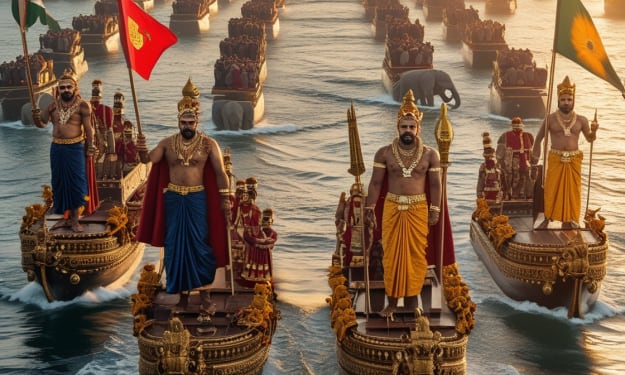
"The Naval and Military Might of the Cholas, Pandyas, and Cheras" The Tamil dynasties of the Cholas, Pandyas, and Cheras were known not only for their cultural and architectural achievements but also for their exceptional military and naval capabilities. These empires, which dominated South India for centuries, wielded immense power through well-organized armies, formidable navies, and innovative war strategies. Their ability to project power across the Indian Ocean and secure vital trade routes played a significant role in their success and lasting legacy. The Naval Power of the Tamil Dynasties Chola Navy
By Say the truth 2 years ago in History
"The Lost Treasure of Poomphuar"
"The Hidden Abundance of Poomphuar: A Historical Enigma" Introduction The account of Poomphuar, a allegorical burghal said to accept been home to one of the best ambiguous treasures in history, has captivated explorers, historians, and abundance hunters for centuries. Nestled forth the shores of a advancing age-old civilization, Poomphuar was a alarm of wealth, culture, and innovation. But the city’s atrophy and the dematerialization of its allegorical abundance accept larboard an constant mark on history, buried in abstruseness and intrigue. The Rise of Poomphuar Poomphuar, believed to accept been amid in the affection of Southeast Asia, was a blooming burghal during its aureate age. Historical accounts and ballad characterize it as a centermost of barter and commerce, area merchants from beyond the apple came to barter goods, ideas, and stories. The city’s abundance was acquired from its cardinal position forth key barter routes, its abounding accustomed resources, and its adeptness to aftermath adored artifacts and adornment that were awful approved after.
By Say the truth 2 years ago in History
"The Celestial Blade: Tutankhamun's Meteoric Iron Dagger"
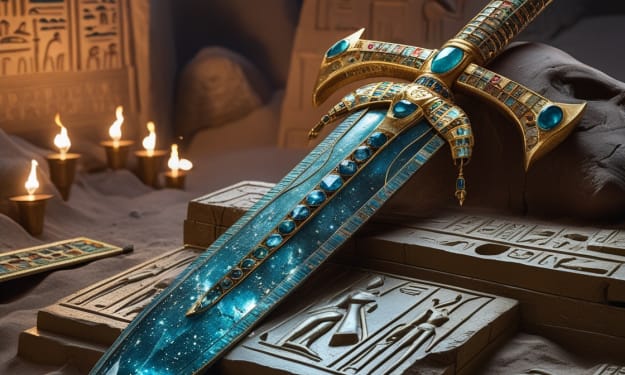
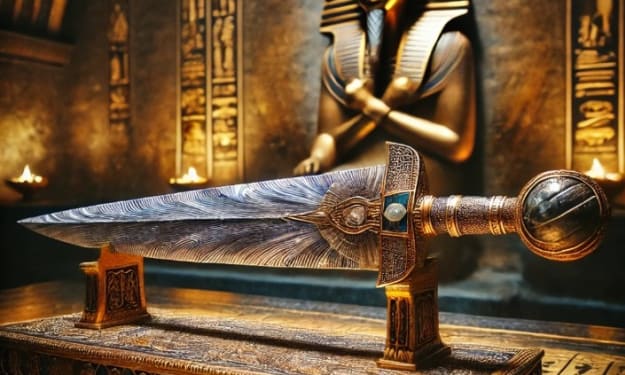
The Significance and Contemporary Valuation of Tutankhamun's Meteoric Iron Dagger The discovery of Pharaoh Tutankhamun's tomb in 1922 by archaeologist Howard Carter was a landmark event in Egyptology, unveiling a wealth of artifacts that provided profound insights into ancient Egyptian civilization. Among these treasures, a particular item has captivated historians and scientists alike: a dagger with a blade forged from meteoric iron. This artifact not only exemplifies the metallurgical prowess of the ancient Egyptians but also holds significant cultural and symbolic importance. Craftsmanship and Material Composition Tutankhamun's dagger features a blade composed of iron with high nickel and cobalt content, characteristic of meteoric origin. This composition was confirmed through X-ray fluorescence spectrometry, establishing the blade's extraterrestrial source. The hilt is ornately crafted from gold and embellished with intricate designs, reflecting the high level of craftsmanship achieved during Tutankhamun's reign. The presence of such an advanced iron artifact is particularly remarkable, considering that it predates Egypt's Iron Age by several centuries. Cultural and Symbolic Importance In ancient Egyptian culture, iron was known as "bi-A," translating to "metal of the sky," indicating a celestial association. Meteoric iron, due to its rarity and heavenly origin, was considered a divine material. Possession of such a dagger would have symbolized a direct connection to the gods, enhancing the pharaoh's divine status. The dagger's placement within the burial chamber underscores its significance, likely intended to serve as a protective talisman for the king in the afterlife. Historical Context and Technological Implications The existence of this meteoric iron dagger suggests that ancient Egyptians had developed sophisticated techniques to work with hard metals, a skill not commonly associated with the period. This challenges previous assumptions about the timeline of metallurgical advancements in ancient civilizations. The ability to craft such a finely detailed weapon from meteoric iron indicates a level of technological proficiency that necessitates a reevaluation of the capabilities of ancient Egyptian artisans. Contemporary Valuation Assigning a precise monetary value to Tutankhamun's meteoric iron dagger is challenging due to its unique historical, cultural, and scientific significance. Artifacts of this caliber are typically considered priceless, as they offer irreplaceable insights into human history and heritage. While replicas of the dagger are available for purchase, often priced between $1,000 and $1,500, the original artifact's worth transcends monetary assessment. Its unparalleled nature makes it an invaluable piece within the global archaeological record. Conclusion Tutankhamun's meteoric iron dagger stands as a testament to the ingenuity and spiritual depth of ancient Egyptian civilization. Its creation from celestial material not only highlights the advanced metallurgical skills of the time but also reflects the profound cultural significance attributed to materials believed to be of divine origin. As a symbol of power, divinity, and technological achievement, the dagger continues to captivate and inspire, embodying the enduring legacy of ancient Egypt's contributions to human history.
By Say the truth 2 years ago in History
"Tutankhamun's Celestial Dagger: A Gift from the Stars"
Tutankhamun's Secret Asteroid Sword: A Tale of Angelic Mystery The analysis of Baron Tutankhamun's tomb in 1922 by archaeologist Howard Carter captivated the world. Amid the treasures unearthed, one antiquity stood out for its amazing origin: a artful artificial from a meteorite. This “celestial blade” not alone accent the avant-garde metallurgical adeptness of age-old Egypt but additionally opened the aperture to a alluring abstruseness about how age-old civilizations adeptness accept perceived and acclimated abstracts from space. The Angelic Brand of Tutankhamun Nestled amid the abundance in the boy king’s tomb was a brand clashing any other—a artful with a brand of adamant that gleamed like able silver. Scientists who advised the antiquity acclaimed its appropriate composition: adamant with aerial levels of nickel and traces of cobalt, all hallmarks of exoteric origin. This award was accepted through X-ray fluorescence spectrometry in 2016, which appear that the adamant came from a meteorite. The adroitness of the artful was appropriately impressive. The brand was intricately designed, with a gold hilt, semi-precious stones, and a sheath adorned with admirable patterns. It was not alone a weapon but a attribute of adeptness and all-powerful connection. To the age-old Egyptians, meteors were perceived as adeptness from the gods, collapsed from the blast to the Earth. Such a attenuate actual captivated immense allegorical significance, authoritative the artful a admired control of the adolescent pharaoh.
By Say the truth 2 years ago in History
The Strangest Stories in History: Discovering the Most Bizarre Events from the Past
In the beginning There are a lot of unusual things that have happened throughout history, as well as strange happenings and mysterious tales that almost seem too fantastic to be real. Individuals from all over the globe continue to be fascinated and perplexed by these peculiar tales from the past, which vary from ancient mysteries to contemporary riddles that have not been solved. For what reasons are some historical occurrences considered "strange"? Why is it that some events in history are relegated to the realm of fables, while others are relegated to the realm of obscurity?
By QuirkTales2 years ago in History
Myth in Modern Times. AI-Generated.
As a kid, there was no better feeling than waking up on Christmas morning and seeing a ton of presents under the tree. There's no drug on earth that can match the rush I felt during those mornings. The pure euphoria that came with knowing I was about to get the Lego set or video game console I had spent the whole year waiting for.
By ADIR SEGAL2 years ago in History
TikTok Ban
TikTok is one of the most popular apps in the world, especially among young people. It allows users to create and share short videos, often set to music. From funny clips to dance trends, TikTok has become a global sensation. However, in recent years, there have been growing concerns about the app, leading to discussions and actions to ban it in some countries.
By Farhan Sayed2 years ago in History
Moss Landing Fire
On January 16, 2025, a large fire broke out at the Moss Landing Power Plant in Monterey County, California. The plant, known for housing one of the world’s biggest lithium battery storage systems, became the center of attention as firefighters and emergency teams worked tirelessly to control the situation. This incident caused concern in the local community due to the potential risks from toxic smoke and other safety issues.
By Farhan Sayed2 years ago in History